

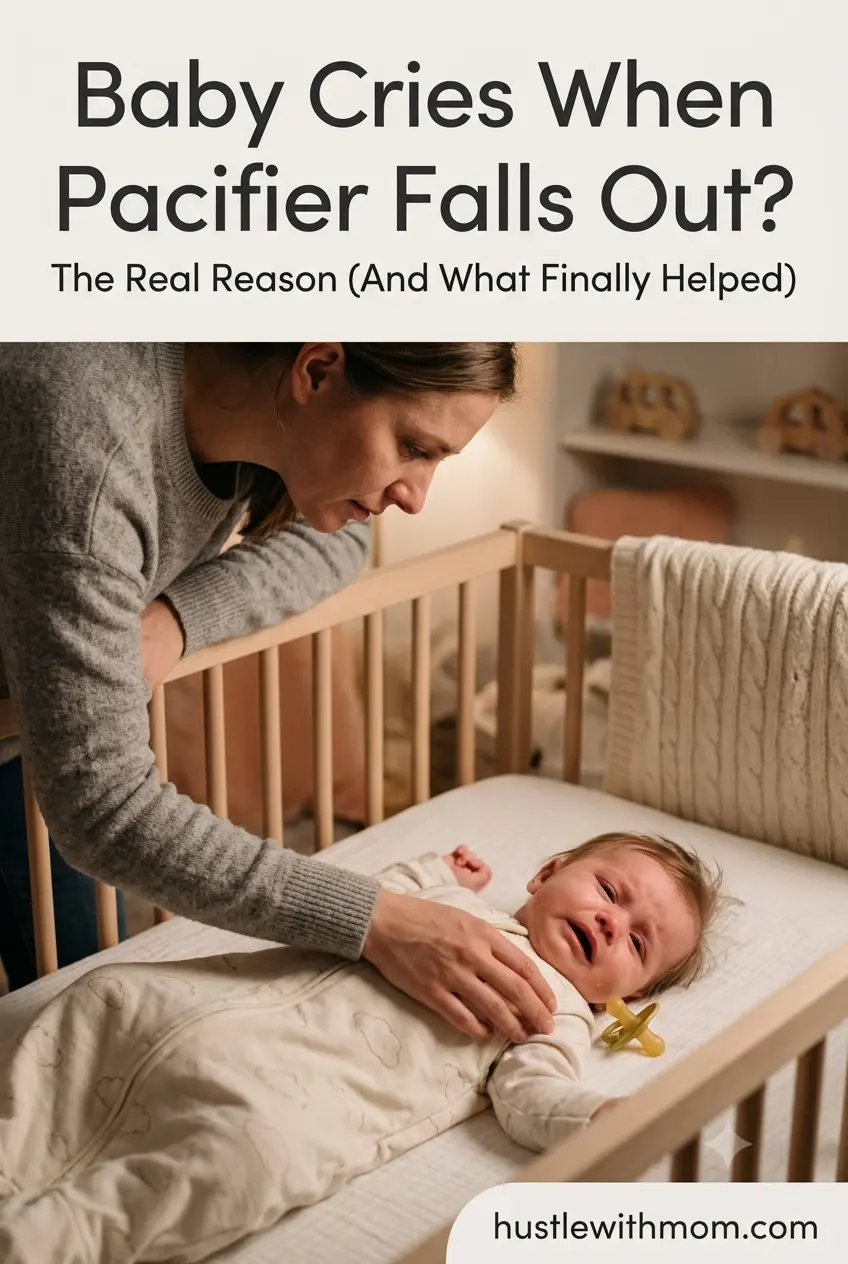
It was 2:47 AM. I know the exact time because I’d been staring at my phone screen between rounds of walking back and forth to the crib. My daughter would fall asleep, sucking away on her pacifier like it was the last one on Earth, and the second it slipped out of her mouth screaming. Not fussing. Screaming.
I’d tiptoe in, pop it back in, and creep out feeling like a ninja who’d just defused a bomb. Ten, fifteen, sometimes twenty minutes later? Same alarm. Same scream. Same walk down the hallway.
If you’re reading this at some ungodly hour with a baby monitor glowing next to you, I want you to know two things right away: this is incredibly common, and no, you didn’t “ruin” your baby by giving them a pacifier in the first place. There’s a real reason this happens, and once I understood it, I stopped panicking every time it happened and actually started fixing it.
Why This Actually Happens (It’s Not Really About the Pacifier)
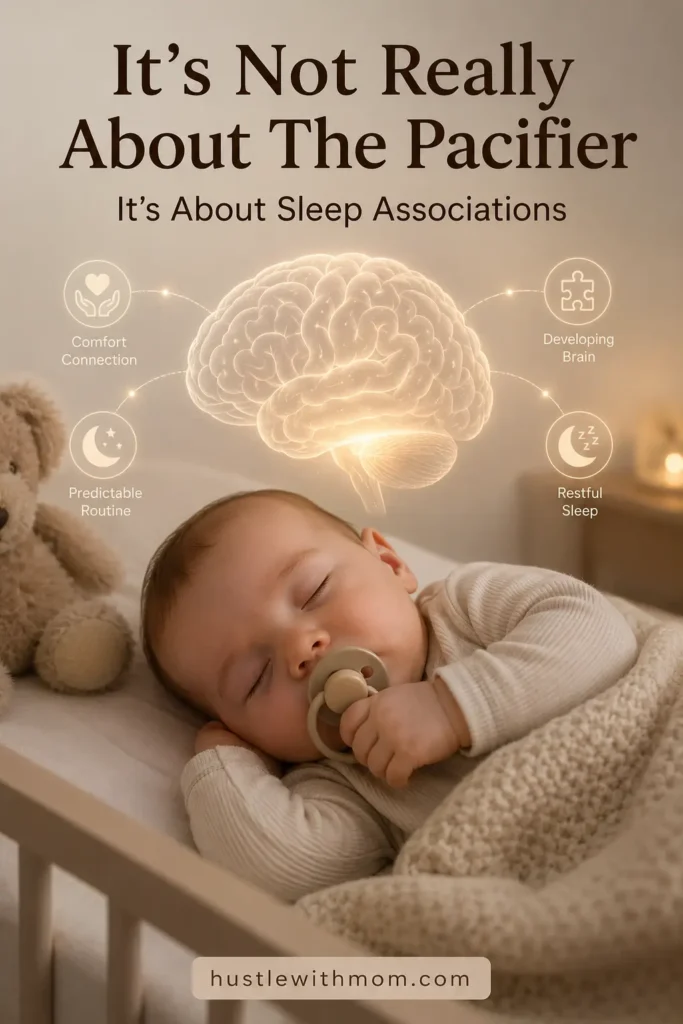
Here’s the thing I wish someone had told me sooner: the pacifier itself isn’t really the problem. It’s what we call a sleep association basically, something your baby has linked to the feeling of falling asleep. For some babies it’s a pacifier, for others it’s being rocked, nursed, or held. Whatever the sleep association is, when it disappears mid-sleep, the baby’s brain treats it like something’s wrong, even if nothing actually is.
Babies also have a very strong sucking reflex built in from birth; it’s literally how they’re wired to soothe themselves and feel secure. When that sucking sensation gets interrupted, especially for a baby who hasn’t learned to self-soothe yet, it can feel jarring enough to fully wake them up.
And then there’s the sleep cycle thing, which honestly explained so much for me. Babies cycle through light and deep sleep roughly every 45–60 minutes, much shorter cycles than adults. Every time they pass through a lighter stage, they briefly surface, almost wake up, and check their environment. If the pacifier’s gone, that “check” turns into a full wake-up and a cry for help.
So really, your baby isn’t spoiled or manipulative. They’re doing exactly what their nervous system is telling them to do.
Is This Normal? Here’s What Changes by Age
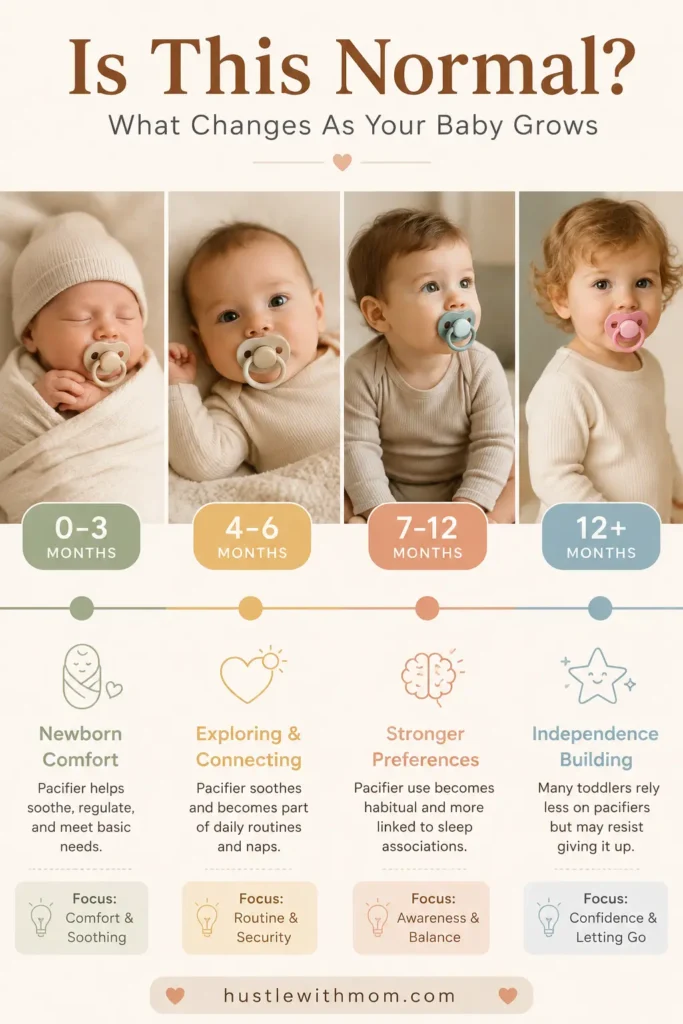
I noticed this looked completely different at 6 weeks versus 5 months versus almost a year old, and that’s not a coincidence.
Newborns (0–3 months): Newborns tend to sleep so deeply that a dropped pacifier often doesn’t even register. If your newborn is the one screaming every time it falls out, it’s more likely something else going on hunger, a wet diaper, gas, or just wanting to be held. Don’t assume it’s “just the pacifier” at this stage.
3–4 months: This is where things get loud. Around this age, babies’ sleep architecture matures and starts looking more like an adult’s which, ironically, is why the four-month sleep regression is so brutal. Sleep cycles shorten, wake-ups increase, and if the pacifier is the way your baby falls asleep, they’ll want it back every single time they surface. I actually wrote a whole post about this stretch because it blindsided me if your baby’s also started waking painfully early. My post on why your baby is waking up at 5am covers a lot of overlapping causes.
5–9 months: This was peak “paci-pong” season in our house, the game where you plug it back in, walk out, and it pops right back out ten minutes later. Babies this age are more mobile and more attached to the pacifier as a comfort object, but still don’t reliably have the fine motor skills to find and reinsert it themselves.
9+ months and toddlers: Once babies understand object permanence that things still exist even when they can’t see them, losing the pacifier can trigger a different kind of distress, closer to separation anxiety. This is usually also the age where they’re finally capable of finding and replacing it on their own, if you give them the chance to practice.
Daytime Crying vs. Nighttime Crying Treat Them Differently
I used to lump these together, and that was a mistake. They’re not the same problem.
Daytime crying is more likely to be about something other than sleep overtiredness, teething pain, overstimulation, or just wanting connection. Before assuming “pacifier fell out” is the whole story during the day, run through the basics: hungry, wet, gassy, overheated, overtired. A pacifier is a comfort tool, not always the root cause.
Nighttime crying is much more likely to be the true sleep-association pattern I described above the sleep cycle wake-up where the pacifier’s absence is the actual trigger. If it’s happening on a predictable, repeating schedule (every 45–90 minutes, like clockwork), that’s a strong sign it’s a sleep-prop issue rather than anything medical.
What Actually Helped Us (Step-by-Step)
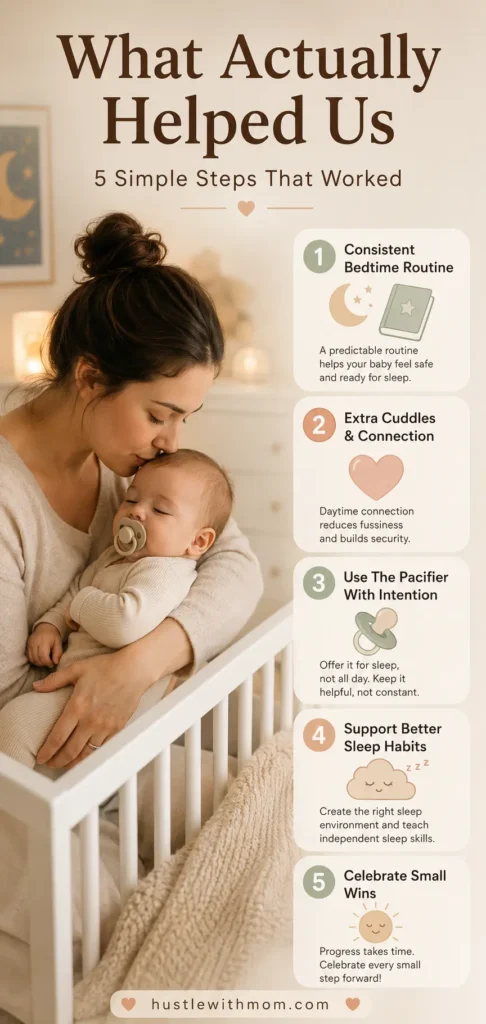
I tried a lot of things before landing on what worked. Here’s the order I’d actually recommend, from least to most involved.
1. Load the crib with backups. Instead of one pacifier, we started putting 3–4 identical ones scattered around the crib (once she was old enough to be safely unswaddled and rolling). More pacifiers meant more chances she’d bump into one and reinsert it herself instead of needing us.
2. Practice the “self-replace” skill during awake time. This one felt silly at first, but it worked. During daytime play, I’d let her hold and mouth the pacifier herself, occasionally taking it out and letting her figure out how to get it back in with my hand guiding hers loosely. Practicing this skill while calm and awake made a real difference once she started doing it independently at night.
3. Try a pacifier that’s actually built to stay in. Not all pacifiers are created equal here. We went through three different brands before finding one that worked for her. A WubbaNub (the stuffed-animal-attached style) was great for the newborn stage because the extra weight and surface area made it easier for tiny hands to find and hold. Later, we switched to a MAM pacifier, which has a flatter, more symmetrical shield that seemed to sit better against her face. Every baby’s mouth shape and preference is different, so don’t be afraid to try a couple of brands before giving up.
4. Use a pacifier clip safely. A pacifier clip attached to her sleeper (never anything long enough to reach her neck, and never left in the crib during unsupervised sleep before she could sit up and remove it herself) kept it within arm’s reach during awake, supervised time. I want to be clear: clips are for daytime and supervised naps, not for unattended overnight crib sleep, because of strangulation risk.
5. Adjust the bedtime routine and wake windows. This surprised me. When I tightened up her wake windows so she wasn’t going down overtired, the paci-pong sessions genuinely decreased. An overtired baby wakes up more easily and has a harder time settling back down, pacifier or not.
6. Try the “pull” technique. Pediatric sleep folks (I first heard this from a sleep consultant on Instagram, and it’s floated around parenting circles ever since) suggest gently tugging the pacifier while your baby is actively sucking on it with just enough resistance that they instinctively suck harder to keep it in. Over time this can build the muscle memory to hold onto it better during sleep.
7. Pause before rushing in. Not cry-it-out, just a beat. I started counting to 30 before going in. Sometimes she’d resettle on her own before I even got there. Other times she needed me, and that was fine too. The point wasn’t to ignore her; it was to stop treating every single whimper as an emergency requiring instant intervention.
If you’re deep in the trenches of sleep deprivation while trying all this (relatable), I found a lot of comfort in these honest tips for exhausted new moms. Some of it isn’t about the baby at all, it’s about surviving the season yourself.
When It’s Time to Stop Replacing It
At some point, you might realize you’re replacing the pacifier more than your baby is actually sleeping. That was our sign.
Common signs it might be time to wean:
- You’re doing multiple wake-ups a night just for pacifier replacement
- Your baby is old enough (usually 6+ months) to have other self-soothing tools available
- The pacifier is now disrupting sleep more than it’s helping it
You have two real paths: gradual weaning (limiting it to sleep-only, then shortening how long it’s offered at bedtime) or cold turkey (removing it entirely and riding out a few rough nights). We did a hybrid cold turkey at night, kept it for naps a bit longer and honestly, the first three nights were rough, but by night four it was like she forgot it ever existed.
Whatever you choose, staying consistent matters more than which method you pick. And if you need backup for staying level-headed through a few hard nights, these tips on being a calmer mom genuinely got me through it.
When to Call the Pediatrician
Most of the time, this is a completely normal developmental phase, not a medical issue. But it’s worth checking in with your pediatrician if you notice:
- Crying that doesn’t settle even once the pacifier is back in
- Fever, feeding refusal, or signs of illness alongside the crying
- Crying that seems to come from pain rather than frustration (arching the back, pulling at ears)
- A sudden dramatic change in sleep patterns with no obvious cause
Trust your gut here. You know your baby better than any blog post, including this one.
Common Mistakes I Made (So You Don’t Have To)
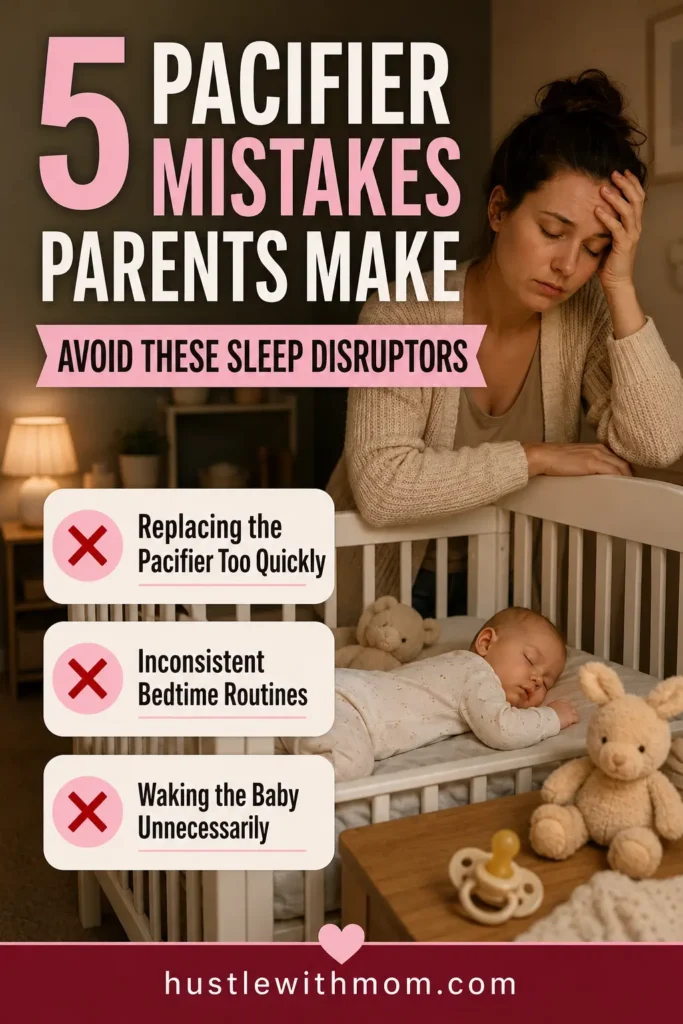
- Assuming it was always hunger. I overfed her more than once at 3 AM because I panicked and grabbed a bottle before trying the pacifier first.
- Using a pacifier clip in the crib overnight. I didn’t know this was a safety risk until I read more about safe sleep guidelines. Clips are for supervised, awake time only.
- Waiting too long to try other pacifier brands. I stuck with one brand for months out of stubbornness before realizing a different shape made a huge difference.
- Rushing in at the very first sound. Giving her a few seconds to resettle on her own would’ve saved both of us a lot of sleep, sooner than I realized.
Final Thoughts
If you’re in the thick of this right now, exhausted and Googling at an hour you’re not proud of, I promise it gets easier. This phase has a shelf life; most babies either grow out of needing the pacifier for sleep or develop the coordination to pop it back in themselves within a few months.
In the meantime, be a little kind to yourself about it. You’re not doing anything wrong by using a pacifier, and you’re not doing anything wrong by being tired of getting up fifteen times a night either. Both things are just true at once.
For more real-talk parenting stuff that actually helped me get through the newborn fog, you might also like my post on how long babies can safely sleep in a bassinet or my running list of mom hacks that actually work some of them are silly, but a few genuinely saved my sanity.
Sources referenced for safety and medical guidance: Mayo Clinic Pacifiers: Are They Good for Your Baby? and American Academy of Pediatrics Pacifier Safety, HealthyChildren.org.
FAQs
Why does my baby wake up every time the pacifier falls out? Most often it’s because the pacifier has become a sleep association, something your baby’s brain has linked to falling asleep, so its absence during a natural sleep-cycle wake-up triggers a full wake and cry for help.
Is it bad to keep replacing the pacifier all night? Not “bad,” but if it’s happening many times a night and disrupting everyone’s sleep, it may be a sign it’s time to either try strategies to help your baby reinsert it themselves or begin weaning.
What age do babies learn to put the pacifier back in themselves? Most babies develop coordination somewhere between 6 and 10 months, though it varies a lot. Giving them supervised practice during awake time can speed this up.
Should I let my baby cry it out over the pacifier? That’s a personal decision. Many parents find a gentler middle ground pausing a few seconds before responding helps without going full cry-it-out.
What’s the best pacifier that doesn’t fall out? There’s no single “best” ; it depends on your baby’s mouth and preferences. WubbaNub-style pacifiers and MAM pacifiers are two of the more popular choices parents report success with.
Does swaddling help keep the pacifier in? Indirectly a well-swaddled baby (before they start rolling) tends to startle less, which can reduce how often the pacifier gets knocked loose in the first place.