

The first time I pulled my hair into a ponytail four months after having my son, I remember staring at how thin it felt in my hand and genuinely panicking. I had gone from thick, glossy pregnancy hair to a hairline that looked like it was retreating in real time. If you’re going through the same thing right now, googling postpartum hair loss remedies at midnight with a baby on your chest, I want you to know two things. First, this is incredibly common. Second, there are things you can actually do about it, and I tried nearly all of them.
I’m not a dermatologist. I’m just a mom who went through this twice and learned what actually made a difference versus what was just marketing. This is everything I wish someone had told me before I spent way too much money on products that didn’t do much.
Why Your Hair Falls Out After Having A Baby
Nobody warned me about this part. During pregnancy, your hormone levels, especially estrogen, stay high and basically pause your normal hair shedding cycle. That’s why so many women get that thick, full “pregnancy hair” everyone compliments.
The catch is that all that hair was supposed to fall out gradually over nine months, and instead it got put on hold. Once you deliver and your hormones crash back down, all of it decides to leave at once. This is called telogen effluvium, and according to the Cleveland Clinic, it’s a completely normal, temporary reaction to the hormonal shift after birth.
For me it started right around the three month mark, which lines up with what most experts say. If you’re still pregnant or newly postpartum and reading this ahead of time, this is a great moment to also read up on what else your body goes through during the fourth trimester, because hair loss is rarely the only surprise.
When Does It Start And When Does It Stop
With my first baby, the shedding kicked in around week 12 and felt worst around month four or five. It slowly leveled out by the time she turned one. My second time around, it was milder but lasted a bit longer, probably because I was breastfeeding longer.
Most sources agree that shedding typically begins two to three months postpartum, peaks around four to five months, and calms down within six to twelve months. If you’re someone who likes tracking symptoms and milestones, keeping a simple postpartum log alongside a postpartum planner can actually help you see the pattern instead of just feeling like it’s never ending.
What Actually Helped Me
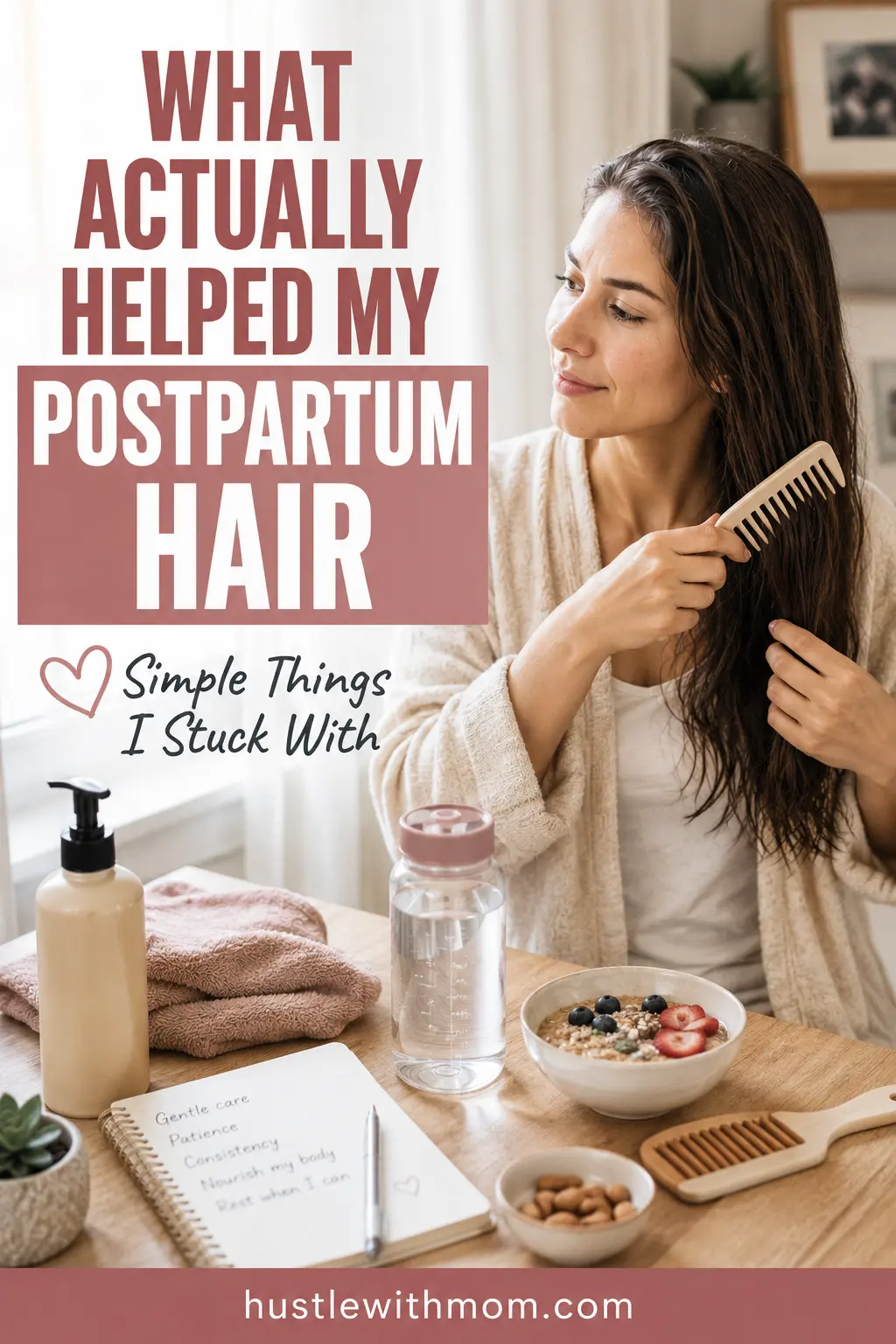
I tried a lot of things. Some were genuinely worth it, some were a waste of a Target run. Here’s the breakdown.
1. Switching My Shampoo And Conditioner
I was using the same rich, moisturizing shampoo I used during pregnancy, and it was making my thinning hair look even flatter and more lifeless. Switching to a volumizing, sulfate-free shampoo made an immediate visual difference, even before regrowth kicked in.
I liked Olaplex No. 4 Bond Maintenance Shampoo because it’s gentle enough for a sensitive postpartum scalp but still added body. You don’t need that exact one, just look for something labeled volumizing and free of harsh sulfates.
2. Scalp Massage Actually Made A Difference
This one surprised me. I started doing a two minute scalp massage every night while watching TV, sometimes with a little argan oil, sometimes with nothing at all. It increases blood flow to your follicles and honestly just felt good after a long day.
I used a simple silicone scalp massager, similar to the ones sold under brands like Wet Brush or Vegamour, and it became part of my wind down routine.
3. Fixing My Diet, Not Just Taking A Random Vitamin
I assumed my prenatal vitamin would cover everything. It didn’t. Prenatal vitamins are built for pregnancy needs, not for hair regrowth after delivery. What actually made a difference was paying attention to protein, iron, and zinc.
I leaned on quick, high protein meals because honestly cooking elaborate food with a newborn wasn’t happening. If you’re in that same boat, this pregnancy and postpartum meal prep guide saved me more than once.
4. Being Gentler With Styling
I used to throw my hair into a tight bun without thinking twice. During the worst of my shedding, tight styles pulled visibly more hair out at the hairline. I switched to loose braids and low, soft ponytails, and I stopped blow drying on high heat.
I also swapped my regular cotton pillowcase for a silk one, similar to Slip brand pillowcases, which reduced the breakage I was seeing from friction while I slept.
5. A Shorter Cut Helped Mentally And Visually
Around month four, I got a lob with soft layers. It wasn’t a magic fix, but it made my hair look fuller immediately and was so much easier to manage while holding a baby with one arm. Sometimes the psychological boost matters just as much as the physical remedy.
6. Managing Stress, Even In Small Doses
Stress doesn’t cause postpartum shedding on its own, but I noticed my worst days for shedding lined up with my most exhausted, most stressed weeks. Sleep deprivation and hormonal chaos are already a lot without adding constant anxiety about hair loss on top of it.
I started carving out tiny pockets of self care, even ten minutes, and it genuinely helped my mood if not my hairline directly. If you need ideas, this list of self care gifts for women is a good place to start, and pairing that with these tips for staying calm as a new mom made a real difference in how I handled the whole postpartum season.
7. Considering A Postnatal Supplement
I did eventually add a postnatal hair supplement with biotin, collagen, and vitamin D, but only after checking with my doctor since I was breastfeeding. Brands like Nutrafol Postpartum are popular for a reason, though results vary and they’re not a guaranteed fix. Always run new supplements by your OB-GYN or lactation consultant first, since oral supplements aren’t regulated the same way medications are.
Mistakes I Made Along The Way
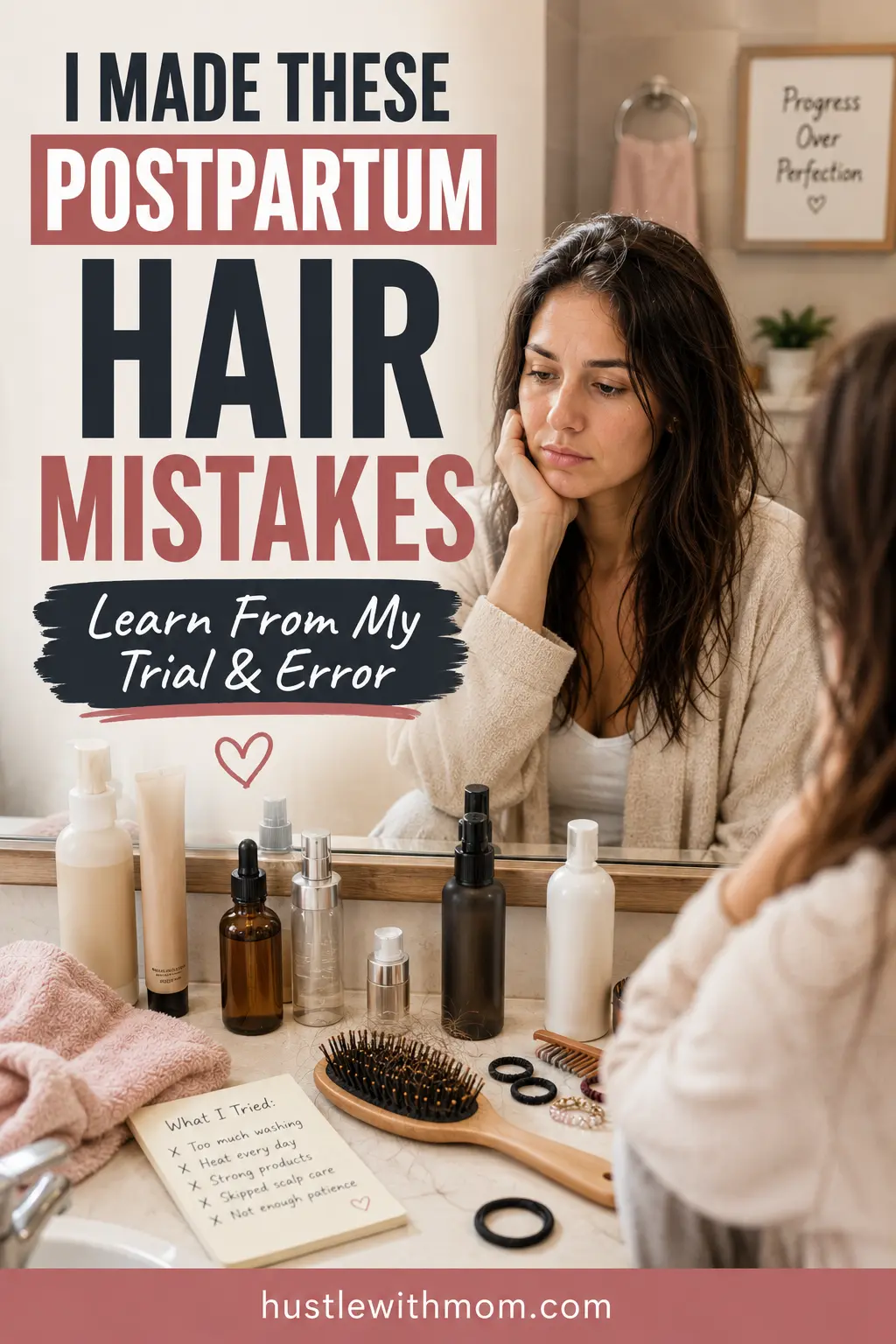
I want to be honest about what didn’t work or what I did wrong, because I think that’s more useful than a perfect highlight reel.
I panicked too early. I started aggressively researching treatments before three months, when honestly the shedding hadn’t even ramped up yet. That anxiety was wasted energy I could have saved for later.
I over washed my hair thinking it would help. It didn’t. It just left my scalp irritated and my hair drier, which made the thinning look worse, not better.
I bought expensive serums before fixing the basics. I dropped money on a pricey growth serum before I’d even switched my shampoo or fixed my diet. Start with the free and cheap changes first.
I compared myself to other moms constantly. Every postpartum body and hormone timeline is different. My sister barely noticed any shedding after her baby, and I lost handfuls. Genetics, breastfeeding duration, and delivery type all play a role.
When It’s More Than Just Normal Shedding
Most postpartum hair loss resolves on its own, but there are times it’s worth calling your doctor. If shedding continues well past twelve months, if you’re noticing actual bald patches instead of overall thinning, or if it comes with fatigue, weight changes, or other symptoms, it’s worth asking about your thyroid and iron levels.
The American Academy of Dermatology has solid guidance on when postpartum shedding crosses into something that needs a professional look, and it’s worth bookmarking if you’re feeling unsure.
Real Talk On Timeline And Patience
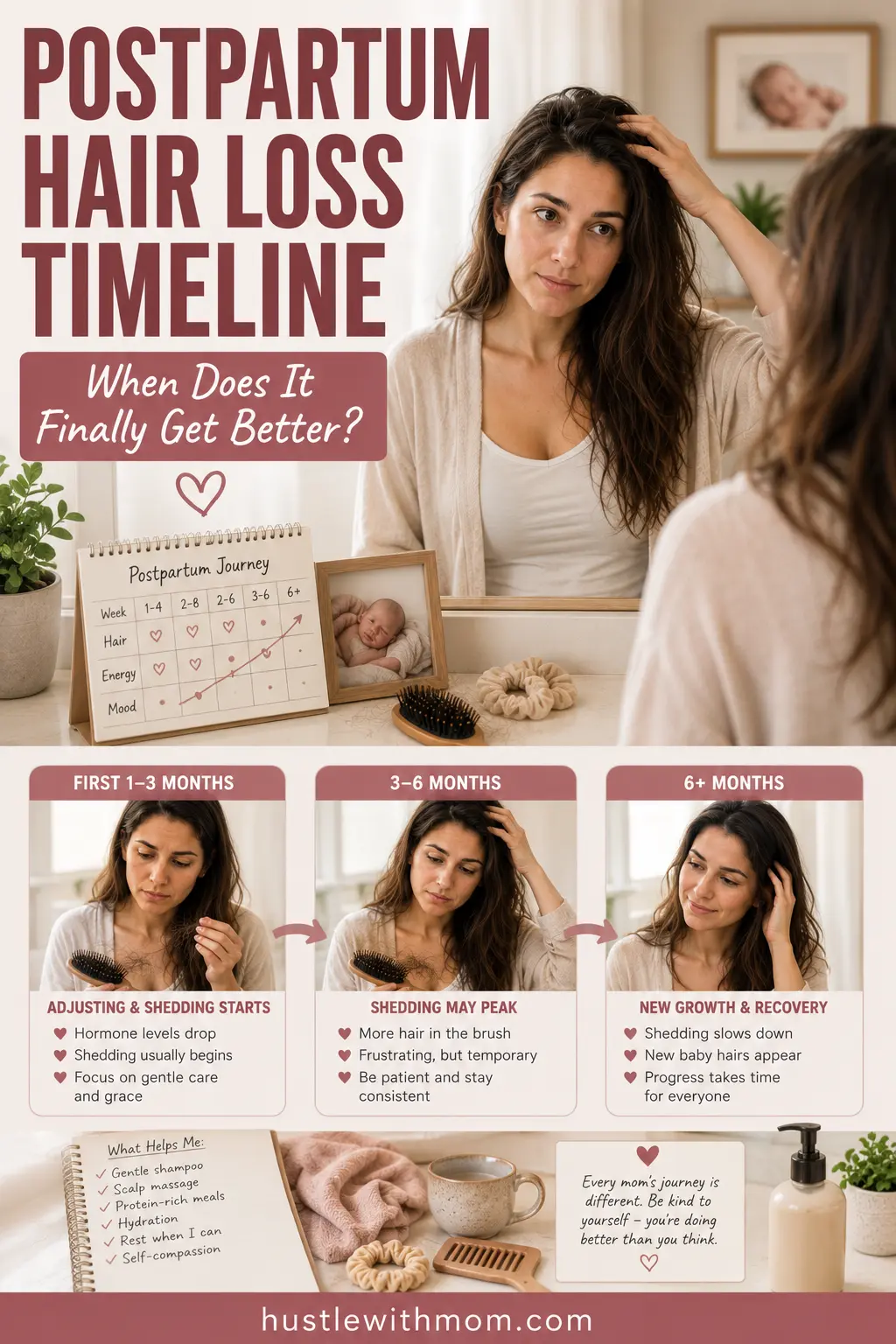
If there’s one thing I’d tell a friend going through this right now, it’s that the shedding phase feels endless in the moment but it genuinely does end. My hair wasn’t fully back to normal until close to my daughter’s first birthday, and honestly the new growth that came in around my hairline looked wild and frizzy for months before it smoothed out. That’s normal too.
Give yourself grace here. You’re recovering from birth, running on broken sleep, and your body is doing a lot of quiet work behind the scenes. Hair is just one visible piece of a much bigger hormonal reset.
Final Thoughts
Postpartum hair loss remedies won’t stop the shedding completely, because this is your hormones doing exactly what they’re supposed to do after birth. But the right shampoo, a gentler styling routine, better nutrition, and a little scalp care can genuinely soften the process and protect the hair you have while new growth comes in.
If you’re deep in the thick of new motherhood right now, be kind to yourself. Your hair will come back. In the meantime, focus on the small things that make daily life easier, whether that’s a better meal plan, a solid self care routine, or just accepting that a messy bun is a completely valid hairstyle for this season of life.