


How fathers can bond with a newborn is one of the most common questions new parents ask, and the answer matters for the whole home. Many dads feel unsure in the first weeks. Many moms feel stretched thin. When a mom has lack of support at home, exhaustion and frustration can build fast. For some, it turns into intense anger or even uncontrollable rage. That is often called postpartum mom rage, and it is more common than people admit. Some estimates say 1 in 4 new moms feel these swings. A hands-on dad can ease that load. He also builds a father-infant bonding foundation that lasts for years. This guide explains how fathers can bond with a newborn step by step. You will learn the science, the daily habits, and the warning signs. You will also see how bonding protects infant mental health and the emotional well-being of babies. If a question stays in your mind, the conclusion will answer it.
What Is Father-Newborn Bonding?
Father-newborn bonding is the emotional connection between father and baby. It grows through touch, voice, eye contact, and daily care. Think of it like planting a tree. You don’t see roots at first. But every feeding and cuddle feeds them. This is the heart of dad and newborn bonding.
Bonding is not the same as secure attachment, though the two are linked. Attachment is the deep trust a baby feels over time. Bonding is the set of small moments that build it. So how fathers can bond with a newborn comes down to responsive parenting. You notice a cry. You respond with care. Repeat that thousands of times, and fatherly love becomes visible to your baby. The American Academy of Pediatrics also stresses that both parents shape a baby’s growth.
Why Does Bonding Feel Different for Fathers Than for Mothers?

Moms carry the baby for nine months. They give birth. Many breastfeed. That gives them a head start. Dads often feel like helpers instead of parents. This can lead to sadness, guilt, and fear of doing things wrong. It is also a reason father-infant attachment can feel slower. Dads also go through rapid hormonal fluctuations. Testosterone often dips. Oxytocin and prolactin can rise. Your body is getting ready for fatherhood and bonding, even if your mind lags behind.
Culture adds pressure too. Many American dads grew up hearing that men should be providers first. That idea can make tenderness feel awkward. Yet how fathers can bond with a newborn depends on showing that softer side. Another trap is gatekeeping. A well-meaning mom or grandparent may step in too fast. Dads then pull back. Talk about it openly. A safe space at home lets both parents grow in confidence. Read more in this guide on helping dads bond with baby.
Does Bonding Always Happen Immediately?
No, it doesn’t. Many dads feel nothing special in the hospital. They feel tired or nervous instead. That is normal. Early bonding experiences help, but love often grows slowly. If you feel flat, you are not a bad dad. You are simply early in the fatherhood journey. Be compassionate with yourself. Guilt only makes the gap feel bigger.
Bonding usually deepens around six to eight weeks. That is when babies give a social smile and follow your face. Suddenly your dad’s relationship with baby feels two-way. Until then, keep showing up. Understanding how fathers can bond with a newborn means trusting the process. The table below clears up common myths.
| Myth | Reality |
| Dads bond at birth | Many bond over weeks or months |
| Moms bond better | Babies attach to both parents |
| Feeling nothing means failure | It is common and usually temporary |
| Only feeding builds bonds | Play, touch, and voice count too |
Does Your Newborn Already Know Who You Are?
Quite possibly. Babies hear sounds in the womb during the third trimester. A dad who talks to the belly gives his baby a familiar voice. After birth, your newborn may calm to that voice. That is a quiet win for newborn development. Babies also learn your smell and your touch within days. These early bonding experiences shape the baby’s sense of security.
Your voice carries special value. Lower tones often stand out from mom’s voice. This gives your baby a new sound to learn. For deployed, traveling, or night-shift dads, try recording a bedtime story before birth. Play it later when you can’t be there. It’s a simple tool for building a bond with your baby across distance. It also shows the importance of fathers in a baby’s life from the very start.
What Are the Most Effective Ways for Fathers to Bond With a Newborn?
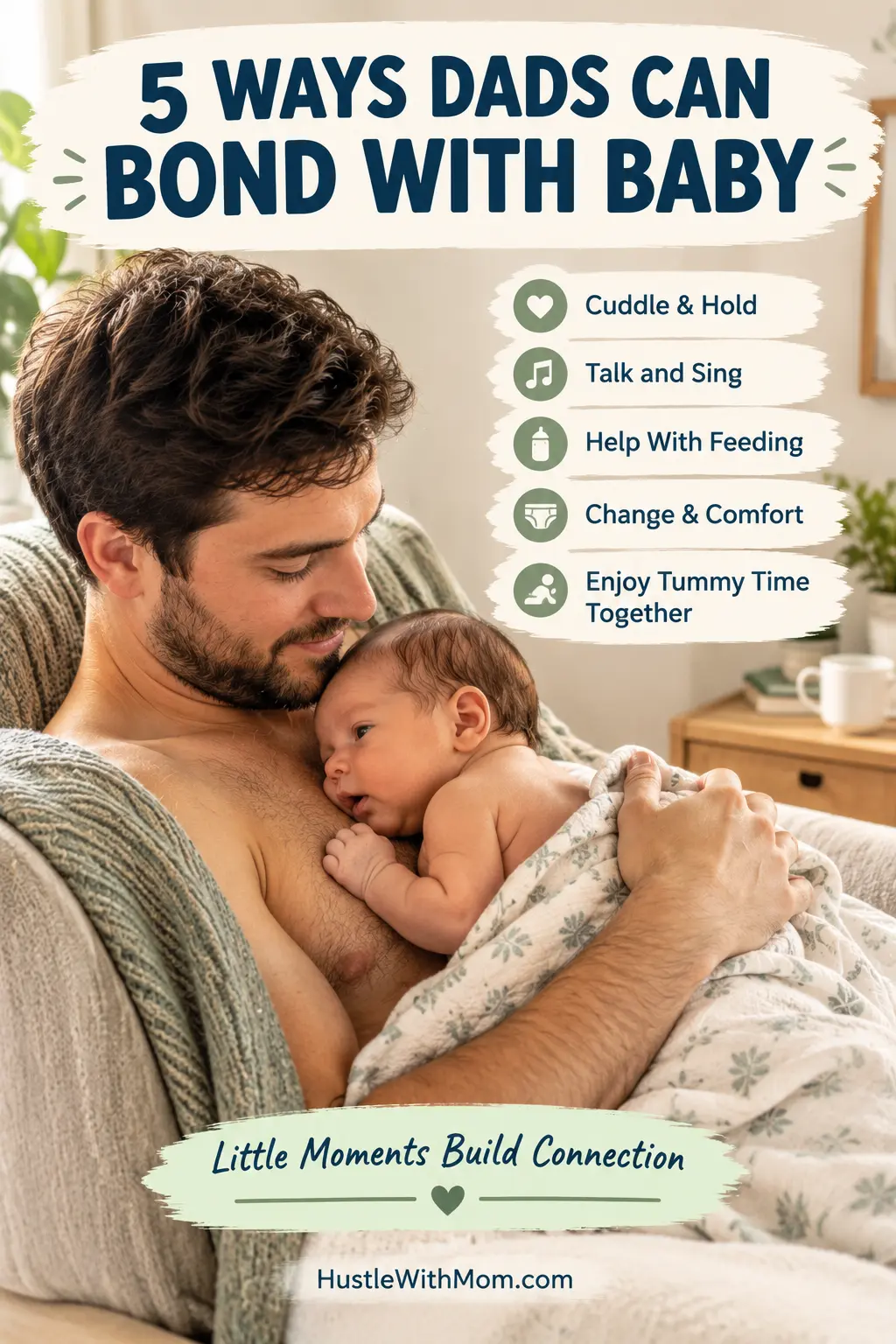
Small habits beat big gestures. That is the key lesson on how fathers can bond with a newborn. You don’t need fancy gear or hours of free time. You need steady presence and warm attention. These habits support bonding with newborn babies and boost paternal involvement over time. Each one helps social development in infants too.
Below are six proven ways to build paternal bonding. Try one at a time. Pick what fits your family. Over a few weeks, you will see your baby respond more. That response is your reward. It also strengthens the father-child relationship for years ahead.
Skin-to-skin contact
Place your baby, wearing only a diaper, on your bare chest. Cover them both with a blanket. This kangaroo care steadies your baby’s heart rate and temperature. It can also calm crying and raise your own oxytocin. Keep your baby awake, upright, and supervised. Make sure the nose and mouth stay clear. It is a simple way to start building a bond with your baby.
Talking, singing, and reading to your baby
Narrate your day out loud. Say what you’re cooking or where you’re walking. Use a high, sing-song tone. It captures attention and supports language growth. Sing lullabies even if you can’t carry a tune. Your baby won’t judge. Reading from day one adds rich words to their world. Groups like Reach Out and Read back this habit for early childhood development.
Diaper changes, bath time, and feeding
Routine care is prime bonding time. Take the bottle shift with pumped milk or formula. Handle the burping. Turn diaper changes into eye contact games. This is where active father involvement becomes real. It also gives mom rest. That matters when she faces breastfeeding challenges, lack of sleep, or the early signs of postpartum rage. Care routines build parental responsiveness quickly.
Babywearing
A soft wrap or carrier keeps your baby close and your hands free. Walk the dog. Fold laundry. Your baby feels your heartbeat and warmth. Follow the T.I.C.K.S. safety rules. Keep the carrier tight and your baby in view. Keep them close enough to kiss. Keep the chin off the chest. Support the back. This habit builds a nurturing relationship with little effort.
Soothing and night-time care
Swaddle, shush, rock, or play white noise. Try a warm bath for fussy evenings. These steps help with infant colic too. Always follow safe sleep rules. Place your baby on the back on a firm, flat surface with an empty crib. Take one night shift each week. You gain confidence and mom gets real sleep. It also builds baby’s trust and security.
One-on-one time with baby
Take solo time every day. Even 20 to 30 minutes counts. Put your phone down. Go for a stroll or sit on the floor and talk. Solo time proves to you that you can handle things. It also teaches your baby that you are a safe person. This is how a new dad bonding with baby becomes a true hands-on dad.
How Can Fathers Bond in the First Weeks After Birth?
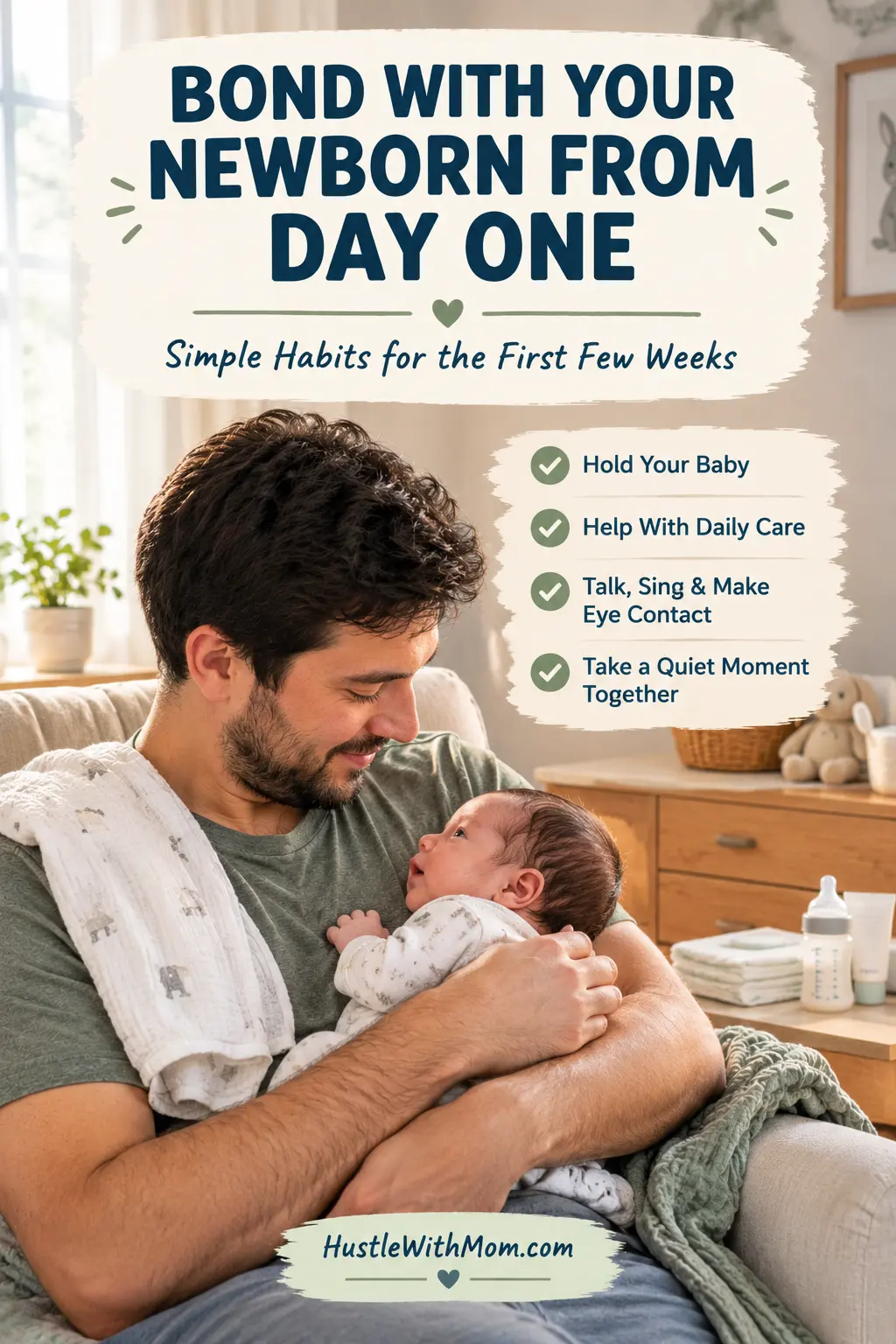
The first weeks set the tone. In the hospital, ask for skin-to-skin time right away. Pack well too. This hospital bag for dad list helps you stay comfortable. Once home, take over burping, diaper changes, and baths. Help with meals and laundry as well. Mom is healing during the postpartum period. Lifting her load protects her mental health support needs. Read more on preparing for the fourth trimester.
Work and money can get in the way. In the U.S., the Family and Medical Leave Act offers up to 12 weeks of unpaid leave for eligible workers. Some states also offer paid family leave. If you must return early, create small rituals. Do the morning feeding. Video call on your lunch break. Set aside weekend “dad days.” These are practical ways how fathers can bond with a newborn when time is short.
What If You Are Struggling to Bond With Your Baby?
Some dads struggle for deeper reasons. Paternal postpartum depression affects roughly 1 in 10 new fathers. Signs include irritability, mood swings, withdrawal, overworking, and negative thoughts. Some dads feel overwhelm or emotional distress. Others feel emotional instability or sudden frustration. Risk grows with stress about baby’s health, job loss, divorce, or the death of a loved one. A family history of mental illness or a personal history of depression raises the odds too. If this sounds familiar, you’re not alone.
Please act early. Early treatment leads to better outcomes. Talk to your doctor. Consider talk therapy with a certified therapist. In some cases, medication such as antidepressants can help. Build coping strategies and make time for self-care. Reach out to Postpartum Support International for mental health support. In a crisis, call or text 988. Moms need this too. Read about postpartum rage symptoms, causes, and treatment if rage shows up at home.
Why Does Father-Newborn Bonding Matter So Much for Your Child’s Future?
Research links early father involvement to better emotional control, stronger language skills, and fewer behavior problems. This is the dad’s role in baby development. It supports infant development, baby’s emotional development, and fatherhood and child development overall. A dad who responds with warmth builds healthy parent-child attachment. That gives your child a base for friendships and school later.
Babies can form many secure bonds at once. A baby with two attached parents has a wider safety net. This is why father-child attachment matters beyond the early months. Positive parenting from both sides improves the parent-child relationship and the emotional well-being of babies. The CDC also shares early childhood resources that support involved parenting. Your effort today pays off for many years.
How Does Bonding Benefit Fathers and the Whole Family?

Dads gain too. You feel more confident. You feel less stressed. You also find a deeper sense of purpose. Involved fatherhood often improves a dad’s own mood and daily routine. The benefits spread across the home, as the table shows.
| Who benefits | How |
| Baby | Stronger trust and calmer mood |
| Dad | More confidence and purpose |
| Mom | More rest and less stress |
| Couple | Better teamwork and fewer fights |
Shared care also helps couples. Many common fights couples have after baby come from unequal workloads. When both parents pitch in, resentment drops. Mom can focus on self-care and being compassionate with herself. If she feels guilt, remind her she is not a bad mom. A united team creates a calm, warm home. That is good for every sibling and grandparent too.
What Does Bonding With a Newborn Teach You About Being a Father?
It teaches patience first. Then comes presence. You learn to slow down and notice small things, like a tiny yawn or a first grin. You also learn humility. You will mess up. Every parent does. That is part of the fatherhood journey. Over time, you see that fatherly love is built by action, not by instinct.
So keep going. Try one new habit tonight. Sing a song. Hold your baby skin to skin. Take the bedtime shift. These choices shape the father and child connection for life. This is how fathers can bond with a newborn, one day at a time. You will grow as much as your baby does.
FAQ’s
How long does it take for dads to bond with their baby?
It varies for every dad. Many feel a strong father-infant bonding by six to eight weeks, once the baby starts smiling. Some take a few months, and that’s perfectly normal.
Do dads struggle to bond with babies?
Yes, many do at first. Tiredness, nerves, and feeling like a helper can slow dad and newborn bonding. Steady daily care usually fixes this over time.
Which parent-child bond is the strongest?
No single bond wins. Babies form secure attachment with each caregiver who responds with warmth. A strong bond depends on consistent, loving care, not on whether the parent is mom or dad.
Do babies bond more with mom or dad?
Newborns often lean toward mom early on because of feeding and closeness. However, father-child attachment grows just as deep when dads give regular, hands-on care.
Which months are the hardest with a baby?
The first three months are usually toughest because of lack of sleep, infant colic, and constant feeding. Many parents also struggle during the four-month sleep regression.
At what age do boys need their dad the most?
Boys need their dad at every age. The importance of fathers in a baby’s life starts at birth. Dads also play a big role during the toddler years and the teen years.
Which child is usually the father’s favorite?
There is no fixed rule. Most dads love all their kids deeply. Fatherly love shows up differently with each child, based on age, personality, and shared interests.
Do daughters prefer fathers or mothers?
It depends on the child and the stage of life. Many daughters turn to moms for daily comfort and to dads for confidence and encouragement. Both matter for a healthy father-child relationship.
Conclusion
How fathers can bond with a newborn is simple to say and powerful to do. Bonding is a process, not a switch. It starts with skin-to-skin time and a familiar voice. It grows through diapers, baths, walks, songs, and night shifts. It may feel slow at first. That doesn’t mean something is wrong.
Remember the key points. Moms and dads bond differently. Newborns may already know your voice. Six habits work best: skin-to-skin contact, talking and reading, daily care, babywearing, soothing, and solo time. If you feel stuck, look for signs of depression and seek help early. Support from a doctor, a therapist, or a group can change everything.
The payoff reaches far. Babies gain security and stronger development. Moms get rest and fewer rage triggers. Dads grow into the parents they hoped to be. If you still wonder how long it takes, the answer is weeks to months. If you work long hours, small rituals count. If you feel no spark yet, be patient and be compassionate with yourself. Start tonight. Your baby is waiting.