

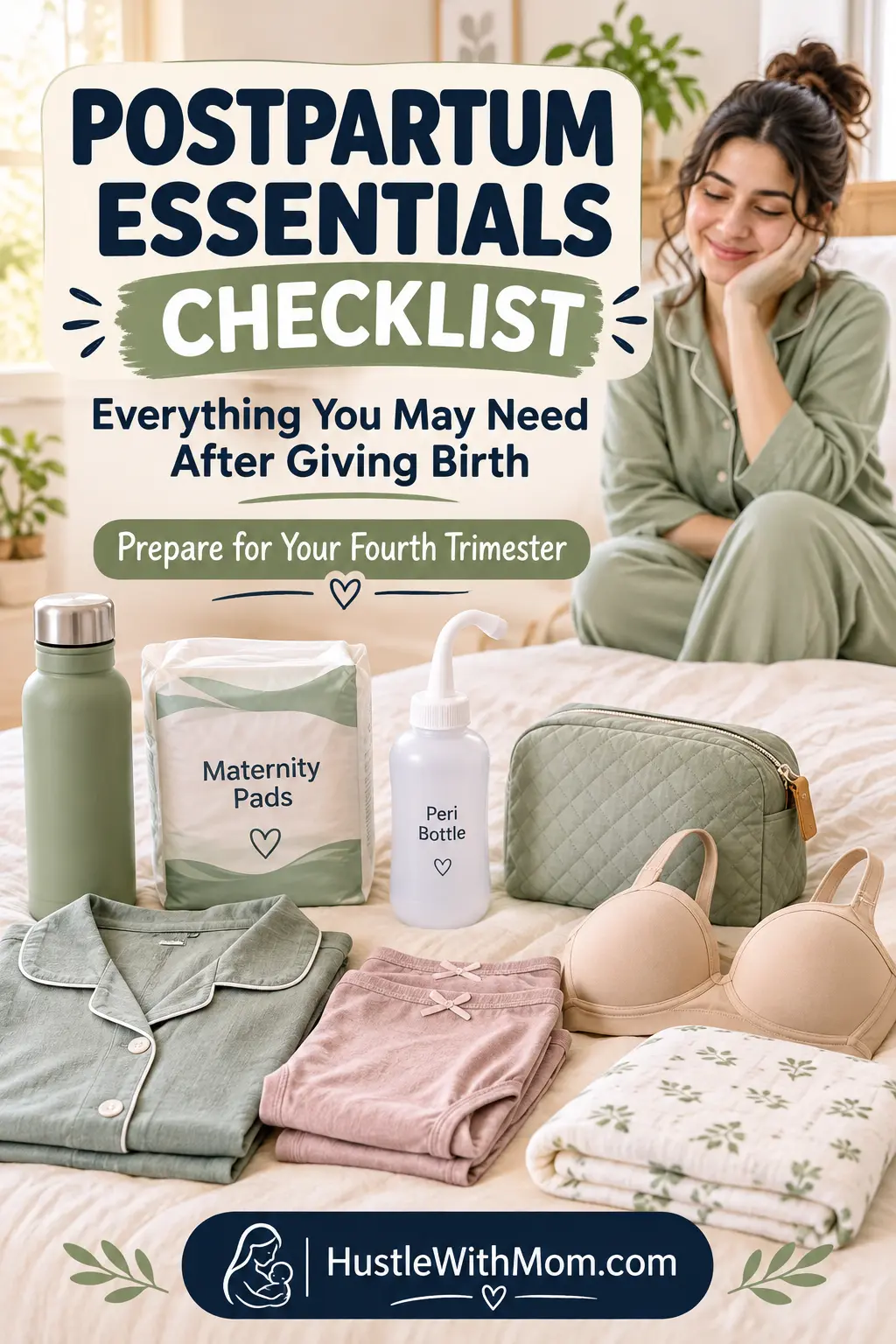
Postpartum essentials are the simple items that help your body heal after birth. The short answer is this. You need a peri bottle, heavy maternity pads, mesh underwear, stool softeners, witch hazel pads, and lanolin nipple cream if you plan to nurse. Add a heating pad, an ice pack, and a few easy meals in the freezer. This guide is for first-time and repeat parents. It works for vaginal birth and for c-section recovery. It also answers the big questions, such as what you need after giving birth and what to buy for postpartum recovery. Most new parents never get a clear list, so you will find one here.
The postpartum recovery period is often called the fourth trimester. It starts the moment your baby arrives. Your body now has to heal, make milk, and adjust to deep hormonal changes. Your mind has to adjust too. That is a lot to handle on little sleep. A good postpartum care kit takes some of the stress away. You will also learn when to call your healthcare provider. The final section answers the last few questions that may linger in your mind. This article is general education and does not replace advice from your doctor or midwife.
What Is the Postpartum Period? (The Fourth Trimester Explained)
So, what is the postpartum period? It is the time after birth when your body returns to a non-pregnant state. Many people call it the fourth trimester because your baby still needs constant care and you still need healing. Your uterus shrinks back to size. Your hormonal changes can swing your mood from joy to tears in one hour. Your abdomen may feel soft and sore. All of this is normal. The American College of Obstetricians and Gynecologists (ACOG) explains that care after birth should be an ongoing process and not a single visit (ACOG).
Many parents in the US feel underprepared. You spend months planning the nursery but only minutes thinking about your own recovery. That gap is why postpartum essentials matter so much. Think of them as a first-aid kit for your body. You may never need every item. Still, having the right things within arm’s reach makes the early days calmer. Your partner or a friend can also help you set them up before the due date.
How Long Does the Postpartum Period Last?
Most doctors schedule a checkup around 4 to 6 weeks after delivery. That visit checks your healing and your mood. However, full recovery often takes much longer. Many experts describe 12 weeks as the true fourth trimester. Some people feel normal sooner while others need six months or more. Both are fine. ACOG now encourages early contact with your provider within the first three weeks and a full visit by 12 weeks. Use these dates as guides and not as deadlines for your body.
What Your Body Goes Through After Birth
Your body does a lot of quiet work in the first weeks. You may feel cramps called afterpains as your uterus shrinks. You will have postpartum bleeding that starts heavy and fades slowly. Your perineum may feel swollen or bruised. Night sweats are common because your hormones drop fast. Your breasts may feel full and tender when milk comes in. Around month three or four, many parents notice hair shedding. It sounds scary but it is normal. Your hair simply returns to its usual cycle after pregnancy.
Vaginal Birth vs. C-Section Recovery
The type of delivery changes what you need most. After a vaginal birth, the soreness sits mainly in the perineal area. You may have vaginal tears, stitches, or an episiotomy. After a planned c-section, the pain centers on the c-section incision and your core. Doctors usually advise you not to lift anything heavier than your baby for several weeks. Both groups bleed and both need rest. The table below shows the main differences.
| Feature | Vaginal Birth | C-Section |
| Main pain area | Perineum and lower pelvis | Incision and abdomen |
| Top items | Peri bottle, sitz bath, padsicles | High-waisted bottoms, heating pad, bidet |
| Movement limits | Avoid sitting hard on stitches | No heavy lifting and careful twisting |
| Hospital stay | Often 1 to 2 days | Often 2 to 4 days |
Postpartum Recovery Checklist at a Glance
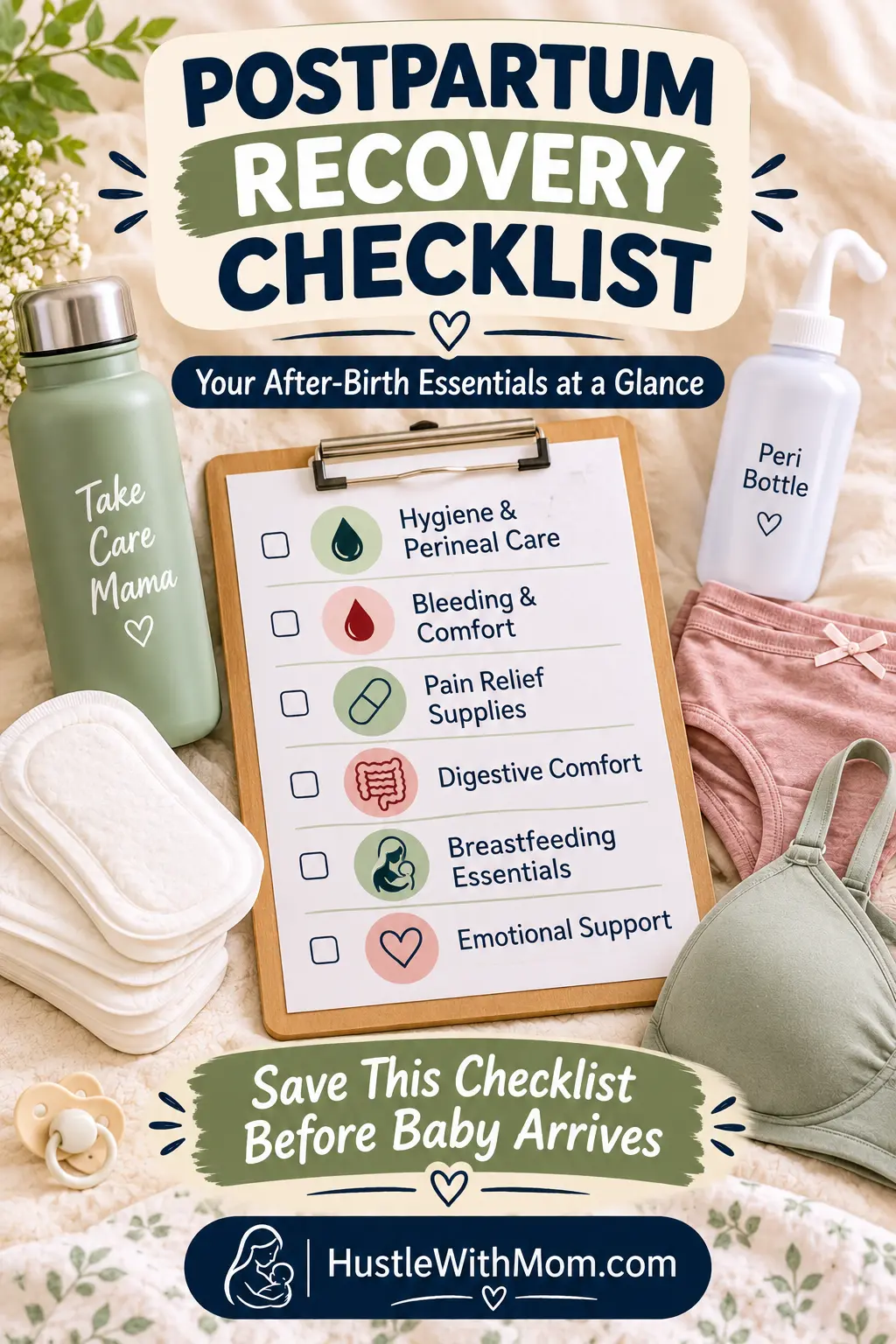
Here is your quick postpartum essentials checklist. Print it or screenshot it. Buy the “now” items before delivery. Buy the “later” items once you know how you feel. Ask your provider about the rest. This simple system keeps you from overspending. Many parents also use their FSA or HSA funds for items like pumps and some recovery supplies, so check your plan first.
This is also your postpartum care kit checklist. If you wonder what to buy for postpartum recovery, start with the first eight rows. Each one solves a very common problem. Share the list with your partner so they can shop with you. A shared list also makes baby showers easier because friends know what to gift.
| Item | Purpose | When You Need It | Tag |
| Peri bottle | Gentle cleaning | Day 1 | Buy now |
| Maternity pads | Bleeding | Day 1 to week 6 | Buy now |
| Mesh underwear | Comfort | First week | Buy now |
| Witch hazel pads | Soothe swelling | Week 1 to 2 | Buy now |
| Stool softener | Easy bowel movement | Day 1 | Ask your provider |
| Sitz bath kit | Healing | Week 1 to 2 | Buy now |
| Lanolin nipple cream | Sore nipples | Day 2 onward | Buy later |
| Heating pad | Cramps | First two weeks | Buy later |
| Belly binder | Core support | Week 1 onward | Ask your provider |
| Prenatal vitamins | Nutrition | Daily | Ask your provider |
Postpartum Hygiene and Perineal Care Essentials
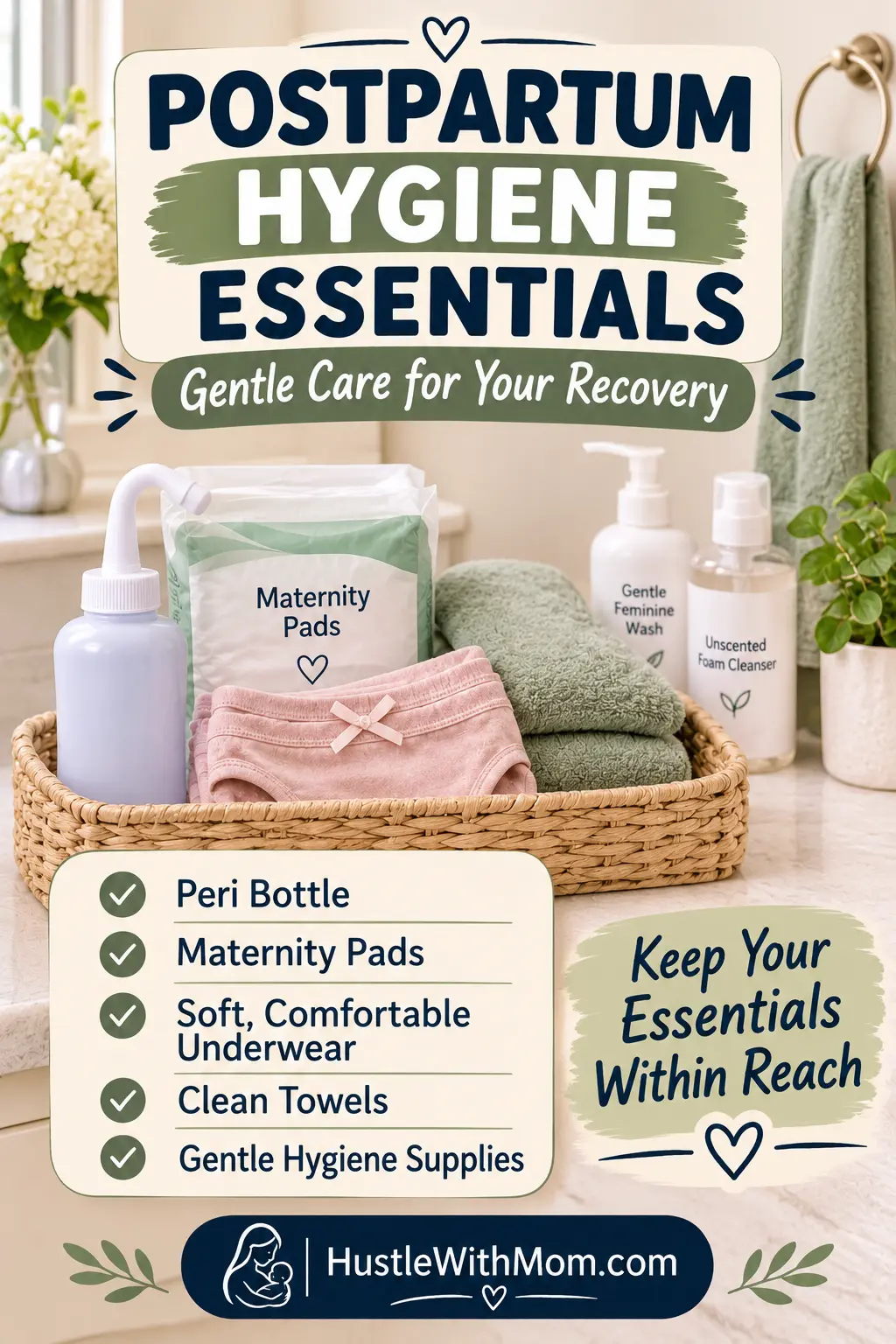
Gentle cleaning is the base of healing. The perineal area stays sore and tender for days. Harsh wiping can make it worse. Your goal is to keep it clean, cool, and dry. Most items in this section help you rinse, soothe, and heal without rubbing. Set up a small basket by every toilet in your home. That way you never have to hunt for supplies while you are in pain.
Start building this basket before your due date. Pack the same items in your hospital bag. Many hospitals send you home with a peri bottle and a few pads, but the amount is rarely enough. Order extras online so you are not shopping at midnight. Also look for products with simple ingredients. The fewer the additives the lower the chance of skin irritation in such a delicate area.
Peri Bottle (Peri Rinse Bottle)
A peri bottle, also called a peri rinse bottle, is a small squirt bottle for rinsing after you use the toilet. Fill it with warm water. Spray from front to back while you pee. Then pat dry with a soft cloth or a clean cotton pad. Do not rub. Many hospitals give you an angled bottle, so ask the nurse for one to take home. This bottle is the cheapest and most useful item on your list. It protects stitches and eases burning.
Witch Hazel Pads and Spray
Witch hazel pads and witch hazel spray calm itching and swelling. Many parents ask if witch hazel is safe postpartum. For most people it is fine when you pick an alcohol-free and fragrance-free product. Place a pad on top of your maternity pad for a cool layer of relief. It also helps with hemorrhoids. Use it as often as the label allows and ask your health care provider if you have broken skin or an allergy.
Perineal Spray and Numbing Spray
A perineal spray is a soothing mist, often made with herbs like calendula or witch hazel. A numbing spray works differently because it contains a pain-relief ingredient. You can buy both over the counter. Read the label with care and follow the directions. Ask your provider before you use a numbing product on fresh stitches. Keep the spray in the bathroom so you can reach it fast. Many parents say the spray is the item they wish they had packed sooner.
Sitz Bath: How Often and How Long
A sitz bath is a shallow warm soak for your bottom. You can use a sitz bath kit that fits over the toilet or you can simply use a clean bathtub. Fill it with warm water and soak for 15 to 20 minutes. Repeat two or three times a day. Many people ask how long to do a sitz bath. Twenty minutes is the upper limit. Skip the Epsom salt unless your provider says yes. Pat dry gently when you finish.
Padsicles and Ice Packs
Padsicles are frozen maternity pads. To make one, open a pad and spread a thin layer of alcohol-free witch hazel and pure aloe vera gel on top. Fold it and freeze it in a zip bag. Use one during the first 24 to 72 hours to ease swelling. A regular ice pack wrapped in a cloth works too. Never place ice straight on your skin. Limit each use to about 20 minutes.
Bidet Attachment for Postpartum
Do you need a bidet after giving birth? You do not need one but you may love it. A bidet toilet attachment cleans you with a gentle stream of water. That means less wiping and less pain. It also helps after a c-section when twisting feels hard. Many attachments cost under $50 and install in minutes. Choose one with adjustable pressure so you can keep the setting very low at first.
Gentle Intimate Wash and Moisturizer
Your skin needs mild care right now. A pH-balanced, fragrance-free intimate wash cleans the outside of the perineum without stripping natural moisture. Avoid scented soaps and douches. Breastfeeding lowers estrogen, so vaginal dryness is common. A gentle moisturizer can help once your provider clears you for intimacy. Products like the Sensitive with Cucumber Aloe Intimate Wash and the Organic Agave Moisturizing Lubricant fit this need. Add your own product links here before you publish.
Fragrance-Free Laundry Detergent
Your underwear, pads, and nightgowns touch healing skin all day. Heavy scents can cause irritation. Switch to a fragrance-free laundry detergent a few weeks before delivery. Wash baby clothes in it too because newborn skin is thin and sensitive. Look for fabrics with an OEKO-TEX label, which means the textile was tested for harmful substances. Skip fabric softener sheets as they often leave a scented film.
Postpartum Bleeding (Lochia): What to Expect and What to Wear
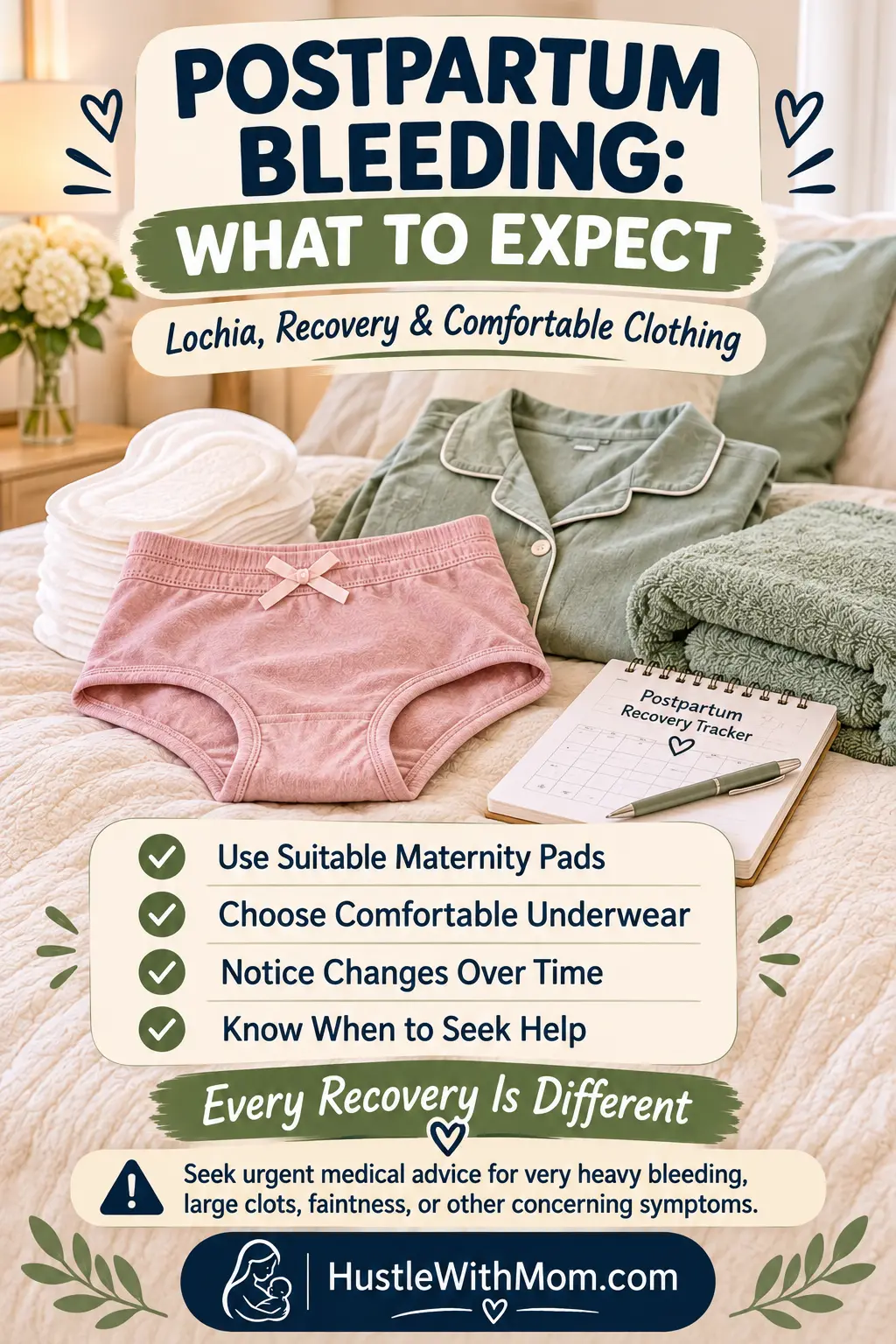
Every parent bleeds after birth. This is called lochia. It is a mix of blood, mucus, and tissue from the place where the placenta was attached. Vaginal bleeding can last 4 to 6 weeks. People often ask how long postpartum bleeding lasts. Most see a slow fade from heavy red to pink and then to a pale yellow or white. You may notice a short return of red when you do too much. That is your body asking you to rest.
The flow is heaviest in the first four days. You may pass a few small clots. Large clots or soaking a pad in an hour are not normal. Call your provider right away in that case. The table below shows the usual pattern. Keep in mind that every person differs a little.
| Stage | Color | Typical Timing | What It Feels Like |
| Lochia rubra | Bright to dark red | Days 1 to 4 | Heavy flow with small clots |
| Lochia serosa | Pink or brown | Days 4 to 12 | Lighter and watery |
| Lochia alba | Yellow or white | Weeks 2 to 6 | Very light discharge |
Maternity Pads and Menstrual Pads
Maternity pads are longer and thicker than regular ones. They handle heavy flow and prevent leakage. Regular overnight menstrual pads work well after the first week. Plan to buy two or three big packs. Change your pad every few hours even if it is not full. This lowers the risk of infection. Choose cotton-top pads if you have sensitive skin. Stock a few in the car and in your diaper bag too.
Postpartum Underwear (Mesh and Disposable)
The best postpartum underwear depends on your needs. Mesh underwear is soft, stretchy, and breathable. Disposable underwear is easy because you can toss it after use. Some parents also wear adult diapers for the first night or two. After a c-section, pick high-waisted bottoms that sit above the incision. Here is a quick comparison.
| Type | Best For | Pros | Cons |
| Mesh | Hospital and week 1 | Soft and stretchy | Must be washed |
| Disposable | First 3 to 5 days | No laundry | Costs more over time |
| High-waisted cotton | C-section and later weeks | Covers incision and holds pads | Can feel warm |
Why Tampons and Menstrual Cups Are Not Recommended
Never use tampons or menstrual cups while you bleed after birth. Your cervix is still healing and your tissues are tender. Inserting something raises the risk of infection. So can you use tampons after birth? Wait until your provider gives clear approval. That is often after the 6-week visit. Stick with pads until then. If bleeding returns after it stopped, call your provider and describe how heavy it is.
Postpartum Pain Relief and Comfort Essentials
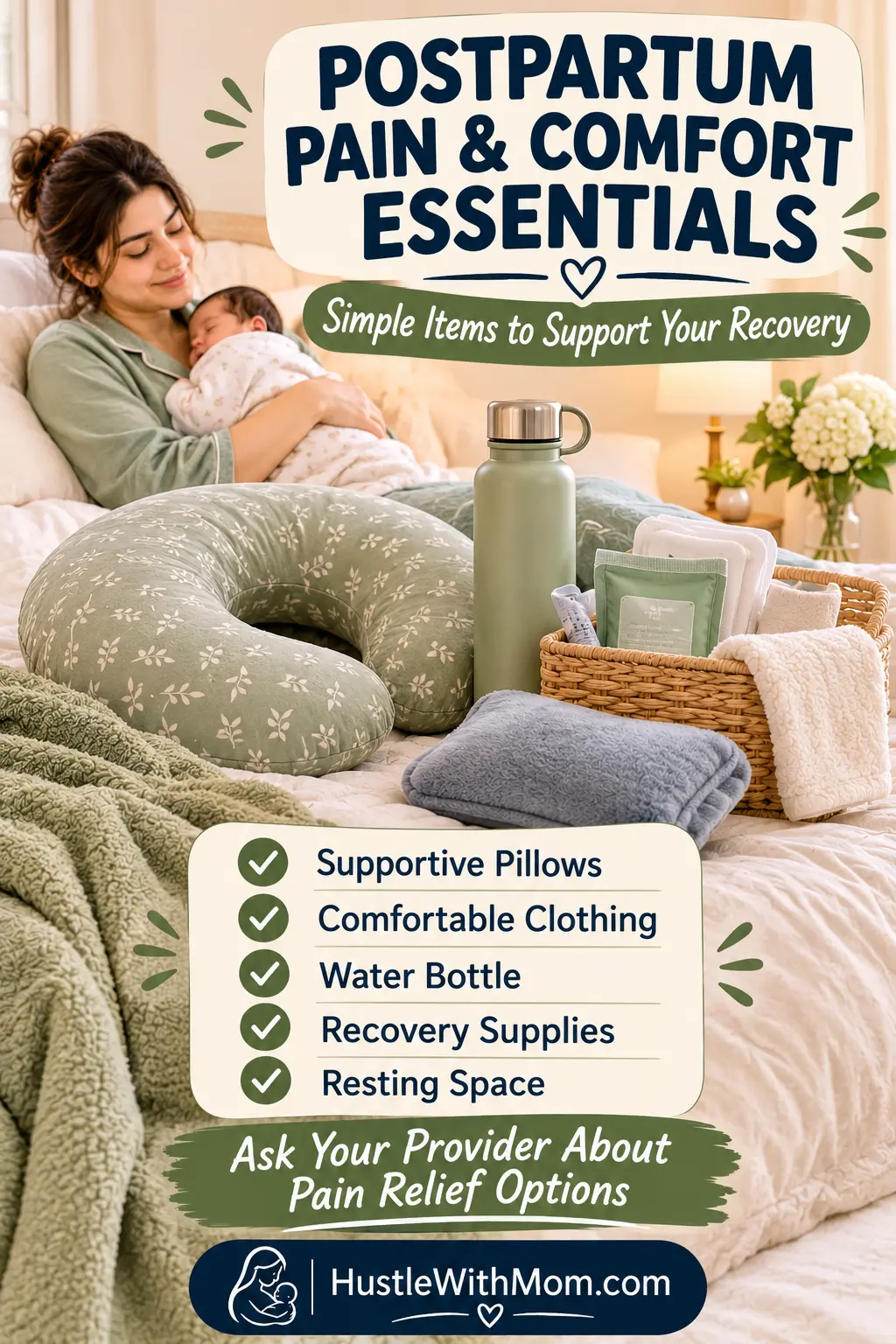
Pain after birth surprises many parents. Afterpains, sore muscles, and stitches all add up. The goal is comfort so you can rest and bond with your baby. Good pain relief medicine helps you move and sleep. Combine it with simple tools like heat, cold, and good support. A few small comforts can change your whole day. They also lower exhaustion, which makes everything else feel easier.
Always talk with your provider before taking any drug. Ibuprofen and acetaminophen are common choices and many people use them while nursing. Still, your doctor knows your history. Follow the dose on the label. Do not mix products that contain the same ingredient. The Mayo Clinic offers helpful guidance on recovery after birth (Mayo Clinic). Keep a small notebook by your bed so you can track each dose and time.
Ice Packs vs. Heating Pads
Use cold for swelling and heat for cramping. An ice pack works best in the first 48 hours on the perineum or near a c-section incision. A heating pad eases tight muscles and afterpains. Always place a cloth between the pad and your skin. Limit each use to 15 to 20 minutes. Some parents also warm their breasts before feeding and chill them after to reduce inflammation. Never fall asleep on a heating pad.
Supportive Underwear and Belly Binder
Supportive underwear gives gentle compression to your core. A belly binder does the same with more coverage. Both can ease back strain and calm a sore incision. They may also support weak pelvic floor muscles in the early days. Do not wear them too tight. Ask your provider first, especially after a c-section. Some people develop diastasis recti, which is a gap between belly muscles. A pelvic floor therapist can help. Many brands sell these as postpartum recovery garments.
Comfortable Postpartum Clothing
Soft clothes make a real difference. Choose loose, dark, breathable pieces so stains do not worry you. Comfortable clothing like robes, button-up tops, and maternity leggings works well. After a c-section, pick high-waisted bottoms that do not press on the cut. Nursing-friendly nursing tops save time at 3 a.m. Bring two extra sets to the hospital. You will likely change more than once. Cotton and bamboo fabrics keep you cool during night sweats.
Pillows for Postpartum Recovery
Pillows are small heroes. A pregnancy pillow supports your back and hips as you sleep. A nursing pillow lifts your baby to the right height. A donut cushion may seem helpful for stitches. Yet it can add pressure in some cases, so ask your provider first. A folded towel or a firm cushion often works just as well. Place pillows on your bed, couch, and favorite chair so comfort is always close.
Postpartum Digestive Comfort Essentials
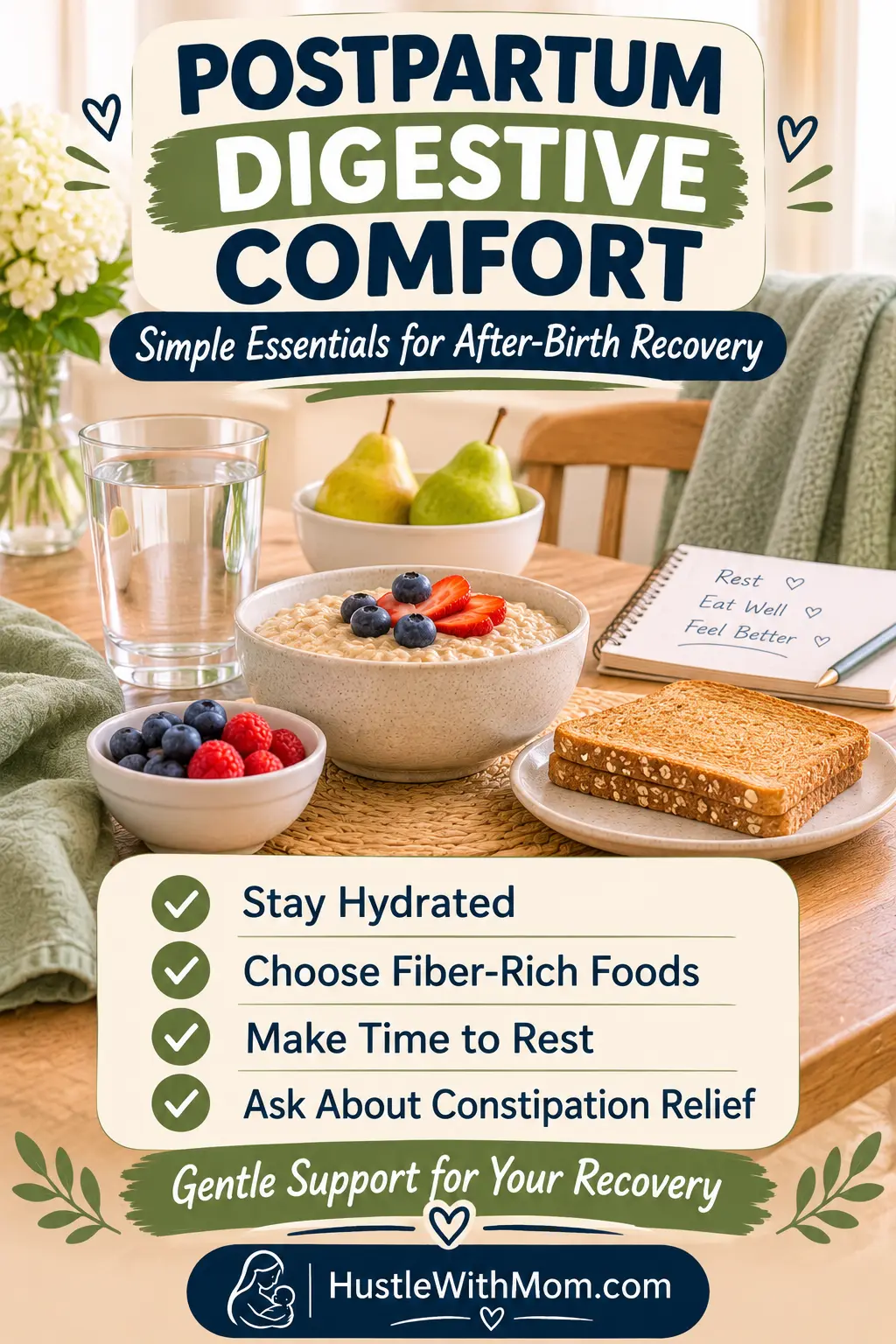
Nobody warns you about the first bowel movement. It can feel scary. Fear of pain causes people to hold it in. That makes constipation worse. Pain medicine, iron pills, and less movement also slow your gut. Be kind to yourself and plan ahead. A little prep makes that first trip far easier. Most people have a bowel movement within the first four days. Tell your provider if it takes longer.
Good habits make the biggest difference. Drink plenty of water because strong fluid intake keeps stool soft. Eat fruit, oats, beans, and leafy greens. Walk a little each day if your provider agrees. Rest your feet on a small stool while you sit on the toilet. That position opens the path for easier passing. Never strain hard because it can stress your stitches and worsen hemorrhoids.
Stool Softeners and Suppositories
Stool softeners add water to stool and make it easier to pass. They are gentle and widely used after birth. Suppositories work from below and help when softeners are not enough. Do not take both without advice. Ask your health care provider which one fits you and when to start. Many hospitals offer a softener right after delivery. Keep taking it while you use iron or strong pain medicine. Stop only when your doctor says so.
Hemorrhoid Cream and Relief
Many parents get hemorrhoids after pushing. They can itch, burn, or throb. Hemorrhoid cream from the pharmacy can calm the area. Witch hazel pads and a warm sitz bath help as well. Cold packs reduce the swelling. Keep your stool soft to prevent flare-ups. Most hemorrhoids shrink within a few weeks. If you see heavy bleeding or the pain gets worse, call your provider so they can check.
Postpartum Nutrition and Supplements
Eating for two turns into eating to heal. Your body needs fuel to repair tissue and to make milk. Keep taking your prenatal vitamins because they replenish nutrients you lost during pregnancy. Are prenatal vitamins good after birth? In most cases yes. They help with iron, folate, and other needs while nursing. Ask your doctor about the best dose for you. The CDC also shares helpful nutrition tips for new parents (CDC).
Cooking feels impossible with a newborn. That is why freezer meals are a gift. Before birth, make soups, lasagna, burritos, baked oatmeal cups, and chicken casseroles. Label them with the date. Friends can also start a meal train, where each person brings a meal on a set day. Drink water every time you feed your baby. Iron-rich foods like beans, lean meat, and spinach help rebuild your strength. Good milk production needs enough calories and fluids too.
Breastfeeding and Nursing Essentials
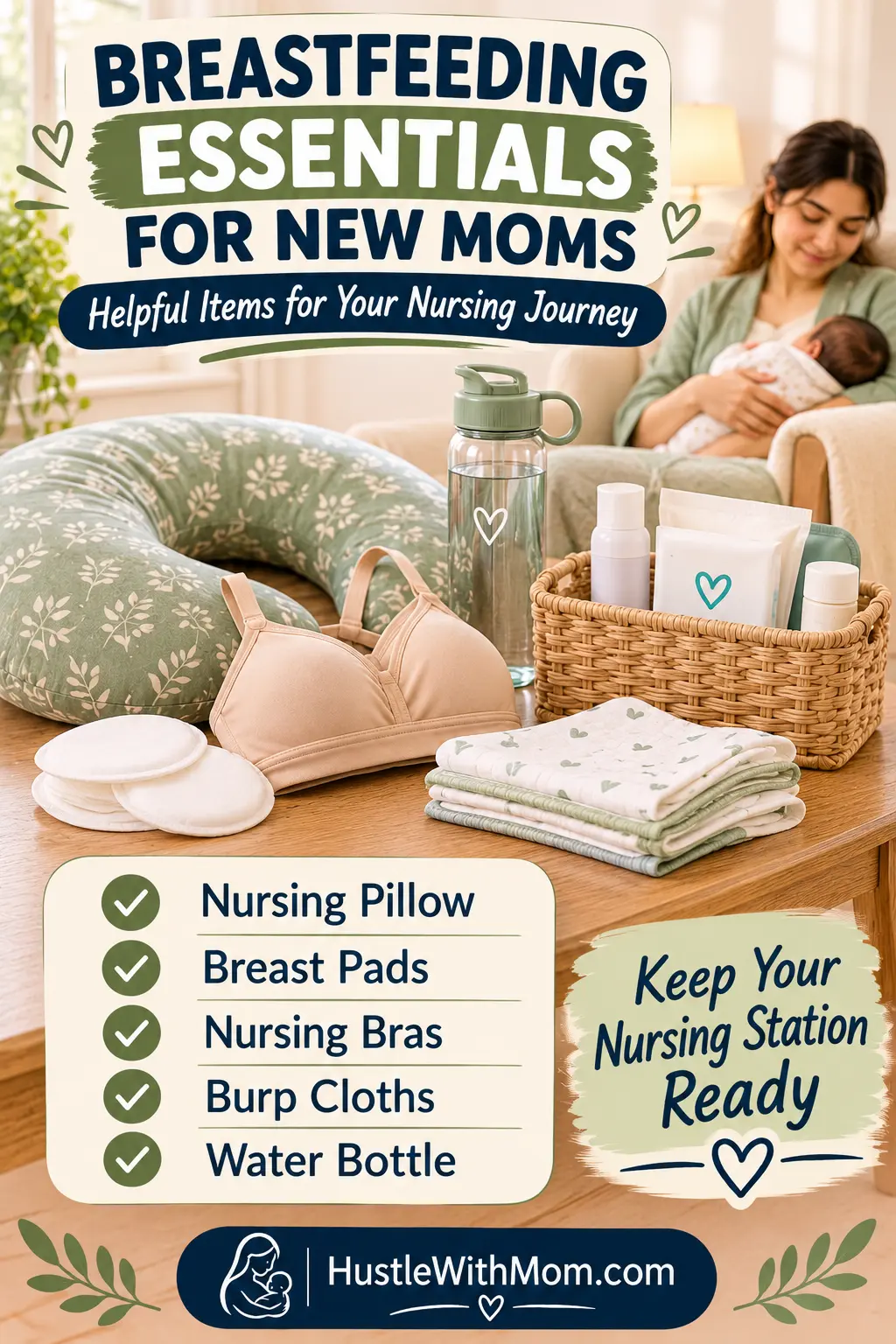
Nursing is natural but it is not always easy. Both you and your baby are learning. A good latch may take a few tries. Do not worry if it feels awkward at first. The items below can make the journey smoother. Remember that every postpartum essentials list must fit your own feeding goals. Some parents nurse. Some pump. Some use formula. All are valid ways to feed a baby.
If you plan to nurse, set up a comfy spot early. Keep water, snacks, burp cloths, and your phone nearby. Many parents say the first two weeks feel the hardest. Support makes a huge difference. Your hospital may offer classes before delivery. Take one if you can. Knowing what to expect lowers stress and helps you spot problems early. Engorgement can happen when milk comes in, so be ready with cold packs and gentle hand expression.
Lanolin Nipple Cream
Lanolin nipple cream soothes dry and cracked nipples. Is lanolin safe for babies? Yes. Pure lanolin is safe and you do not need to wipe it off before a feed. Look for a product with a single ingredient and no fragrance. If you have a wool allergy, choose a plant-based balm instead. Apply a small amount after each feed. Pain that stays strong may signal a poor latch, so ask for help.
Nursing Pads
Nursing pads catch breast milk leakage inside your bra. Leaks are common in the early weeks. Disposable pads are handy for travel. Washable cotton or bamboo pads are softer and save money. Change them when they feel damp because moisture can irritate your skin. Wear a fresh pair at night as well. Keep a spare set in your bag, car, and nightstand so you are always covered.
Nursing Bras, Covers and Tops
A nursing bra, also called a breastfeeding bra, has clips that open with one hand. Choose a wire-free style in the early weeks because tight bands can cause clogged ducts. Buy just one or two before birth. Then get a proper fit after your milk comes in. A breastfeeding cover adds privacy in public. Nursing tops with hidden slits make feeding easy. Soft fabrics feel best on tender skin.
Breast Pumps and Nursing Pillows
A breast pump lets you store milk and share feeding duties. Under the Affordable Care Act, many US health plans cover a pump at no cost, so call your insurer early. A hand pump suits occasional use. An electric pump suits daily use. A hospital-grade pump is stronger and helps in special cases. Some hospitals run a pump loaner program. Use a nursing pillow for support but never let your baby sleep on it.
Working With a Lactation Consultant
A lactation consultant helps with latch, pain, and low supply. Look for the IBCLC credential. Many hospitals, clinics, and WIC offices offer free or low-cost visits. Book one in the first week if you can. Call sooner if you notice hard lumps, redness, or fever. Those can be signs of clogged ducts or mastitis. Early help often prevents bigger problems and builds your confidence as a new parent.
Hospital Bag vs. Home Recovery Station
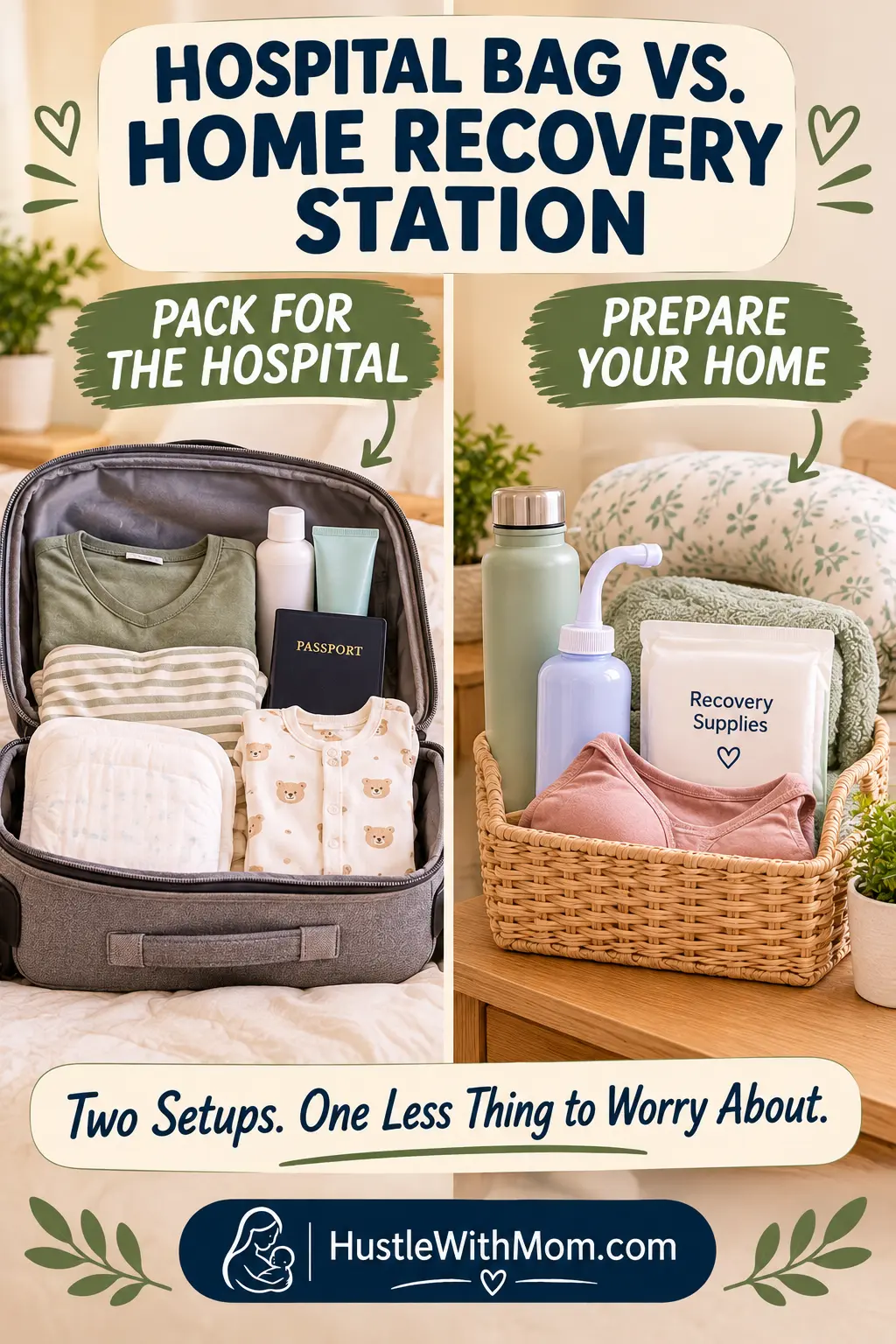
Your hospital bag holds the postpartum essentials you need for the first two days. Your home station holds the ones you need for the next six weeks. Splitting them keeps your bag light and your house ready. Pack items you cannot easily borrow, like your own pads, nursing bra, and robe. This also answers the common question about the hospital bag postpartum essentials. The hospital supplies many basics but quantities are limited.
At home, build four small stations. Put the peri bottle, pads, and witch hazel in the bathroom. Place water, snacks, and pain medicine by your bed. Keep pillows, a blanket, and burp cloths on the couch. Stock the nursery with diapers and wipes. A rolling cart or caddy makes it easy to move supplies. The table below shows a simple split.
| Hospital Bag | Home Recovery Station |
| Robe, slippers, and nursing bra | Sitz bath kit and Epsom salt (if approved) |
| Maternity pads and mesh underwear | Heating pad and ice packs |
| Lanolin cream and nursing pads | Freezer meals and snacks |
| Phone charger and insurance card | Stool softeners and hemorrhoid cream |
| Going-home outfit for baby | Pillows, blankets, and fragrance-free detergent |
Postpartum Recovery Timeline: Week by Week
Healing is not a straight line. Some days feel great. Others feel hard. Using postpartum essentials well means knowing which ones help at each stage. Use the timeline below as a rough map. Your doctor may adjust it for your case. Rest whenever you can. Walking short distances helps blood flow and mood. Say yes when someone offers help. Skip the pressure to “bounce back.” Your body just did something huge.
Keep a small log of your symptoms and questions. Bring it to every appointment. You will forget details when you are tired. A written note solves that. If you ever feel something is wrong, trust your gut. Call your provider and describe what you see. You are never bothering them. They would rather hear from you early than late.
First 24-48 Hours
Expect heavy bleeding, afterpains, and tender breasts. Your first pee and first bowel movement can feel scary. Use your peri bottle with every bathroom trip. Apply padsicles or an ice pack for swelling. Ask the nurse for pain medicine on schedule. Try skin-to-skin contact with your baby as soon as you can. Eat and drink often. Rest between feedings even if visitors arrive.
Weeks 1-2
Milk usually comes in around day three to five. Fatigue peaks now. Stitches stay tender. Take sitz baths, wear loose clothing, and keep the stool softener going. Your meal train should be in full swing. Many parents have their first clinic visit for the baby in the first 3 to 5 days. Ask the pediatrician about feeding and weight. Limit visitors so you can recover and bond.
Weeks 3-6
Lochia slowly tapers. Energy returns bit by bit. Take gentle walks and stretch lightly. Schedule your postpartum visit if you have not yet. Talk about birth control, mood, and sleep. Many parents feel more social now. Others still feel tired. Both are normal. Do not rush back to hard workouts or heavy lifting. Your pelvic floor muscles are still recovering from pregnancy and birth.
After 6 Weeks
Your provider may clear you for exercise and intimacy. Go slow and listen to your body. A pelvic floor physical therapist can help with leaks, pain, or a belly gap. Hair shedding may begin around this time. Keep your prenatal vitamins and stay hydrated. Continue to ask for help with chores and night feeds. Full recovery can take up to a year for some people, and that is okay.
Baby Must-Haves for the First Weeks
A calm baby makes recovery easier. That is why postpartum essentials for you should come with a few for your newborn. You need diapers, wipes, and rash cream with zinc oxide or petrolatum to prevent diaper rash. A changing pad gives you a safe spot to change your baby. Stock swaddle blankets, burp cloths, and bibs. Add a baby thermometer to check for fever. Soft scratch mittens protect delicate skin.
Pick a pacifier only if you wish and use it in moderation. Follow the American Academy of Pediatrics safe sleep rules (AAP). Always place your infant on the back on a firm, flat surface with no loose bedding. Never let your baby sleep on a nursing pillow or the couch. Keep the crib clear. Do not skip the car seat check either. Many fire stations and hospitals offer free fitting help.
Emotional Recovery After Birth
Birth changes your mind as much as your body. Joy and worry can show up together. Sleep deprivation and hormonal changes can leave you teary or anxious. Many people feel overwhelmed and then guilty about it. Please know this is common. Your mental health is part of healing and not an extra. Treat it with the same care you give your stitches. The right mental health support can change how you feel.
Talk openly with your partner and your doctor. Say how you really feel. Many parents hide their struggles because they fear judgment. Yet honest talks protect your health. Simple habits like fresh air, a hot shower, and a short walk can lift your mood. They will not fix everything. They do help. If sadness lingers or grows stronger, reach out for help right away.
Baby Blues vs. Postpartum Depression
Baby blues affect many new parents. You may cry easily or feel moody. These feelings usually fade within two weeks. Postpartum depression lasts longer and feels heavier. It can make daily tasks very hard. You may also feel strong postpartum anxiety. The table below helps you compare. The National Maternal Mental Health Hotline offers free, confidential help at 1-833-852-6262, any time of day.
| Feature | Baby Blues | Postpartum Depression |
| Start | Days 2 to 3 | Weeks to months after birth |
| Length | Up to 2 weeks | Longer than 2 weeks |
| Feelings | Teary and moody | Hopeless, numb, or very anxious |
| Daily life | Mostly manageable | Hard to eat, sleep, or bond |
| Action | Rest and support | Call your provider |
Building Your Support Network
A strong support network matters. Remember that it takes a village. Your village can include your partner, family, friends, a postpartum doula, and local support groups. A doula helps with feeding, sleep, and chores. Hold regular partner check-ins to share needs and feelings. You can even say a simple script such as, “I need an hour to sleep, can you hold the baby?” Most people love to help when they know how.
Self-Care Habits That Help
Self-care does not need to be fancy. Sleep in shifts with your partner. Take a daily shower. Eat a real meal. Enjoy skin-to-skin time or kangaroo care with your baby because it calms you both. Set clear rules for visitors. It is fine to say no or to ask them to bring food. Try gentle parenting ideas such as soft voices and patience, even in the early weeks. Small habits fight exhaustion over time.
When to Call Your Doctor: Postpartum Warning Signs
When should you call the doctor after birth? Call if anything feels wrong. Trust your gut. Serious problems can appear days or even weeks after you leave the hospital. The CDC’s Hear Her campaign teaches that urgent warning signs deserve quick attention (CDC Hear Her). Do not wait for your next visit. Call 911 for chest pain, trouble breathing, seizures, or thoughts of harming yourself or your baby.
Call your healthcare provider right away for a fever of 100.4°F or higher. Call for extreme bleeding, such as soaking a pad every hour, or for large clots. Call if your c-section incision is red, leaking, or separating. Foul discharge, severe headache, vision changes, leg swelling, or severe pain also need quick care. These can point to infection, preeclampsia, or a blood clot. Acting early protects you and your baby.
FAQ’s
What items do I need after giving birth?
Core postpartum essentials include a peri bottle, maternity pads, mesh underwear, witch hazel pads, and stool softeners. Add an ice pack, a heating pad, and comfortable clothing. Nursing parents also need lanolin nipple cream, nursing pads, and a nursing bra.
What is the 5 5 5 rule for postpartum?
The 5-5-5 rule is a popular postpartum recovery guide: five days in bed, five days on the bed, and five days near the bed. It promotes rest during the first two weeks. It isn’t a medical rule, so confirm with your healthcare provider.
What are the essentials for postpartum recovery?
Postpartum recovery essentials fall into four groups: hygiene (peri bottle, sitz bath kit, perineal spray), bleeding care (maternity pads, disposable underwear), comfort (supportive underwear, pillows), and nourishment (prenatal vitamins, freezer meals). A strong support network completes the list.
What are the essential things to take care of after giving birth?
Prioritize rest, hydration, nutritious meals, and gentle perineal care. Monitor postpartum bleeding and watch for signs of infection, fever, or an incision that’s separating. Take your prenatal vitamins, seek mental health support if sadness lingers, and attend every checkup.
What to buy a new mother after giving birth?
Choose practical, fragrance-free gifts that ease recovery: a peri bottle, padsicle kit, soft robe, large water bottle, nursing pads, or a meal train contribution. A postpartum doula visit or food delivery gift card is especially thoughtful.
What are the best postpartum snacks?
The best postpartum snacks are one-handed, high in fiber, protein, and iron, such as oatmeal bites, nuts, bananas, Greek yogurt, hard-boiled eggs, and hummus. They support milk production, ease constipation, and replenish nutrients during night feeds.
Conclusion:
Let’s wrap up. The best postpartum essentials are simple. You need a peri bottle, heavy pads, mesh underwear, witch hazel, stool softeners, a heating pad, and an ice pack. Add nipple cream and nursing pads if you nurse. Stock freezer meals and ask for help. Remember that postpartum bleeding can last up to six weeks and that tampons are off the table until your provider says yes. Pain, swelling, and mood swings are common but never ignore warning signs.
Still have questions? Here are quick answers. What do you need after giving birth? Gentle hygiene tools, pads, comfort items, food, and support. What helps c-section recovery? High-waisted bottoms, a pillow for your incision, and slow movement. What about postpartum essentials for breastfeeding moms? Nipple cream, pads, a good bra, and a lactation consultant. How long does the postpartum recovery period last? Many parents need 12 weeks or more. Prepare early, lean on others, and be kind to yourself. Your body is doing remarkable work. Share this checklist with your partner and start building your kit today.