
Introduction:
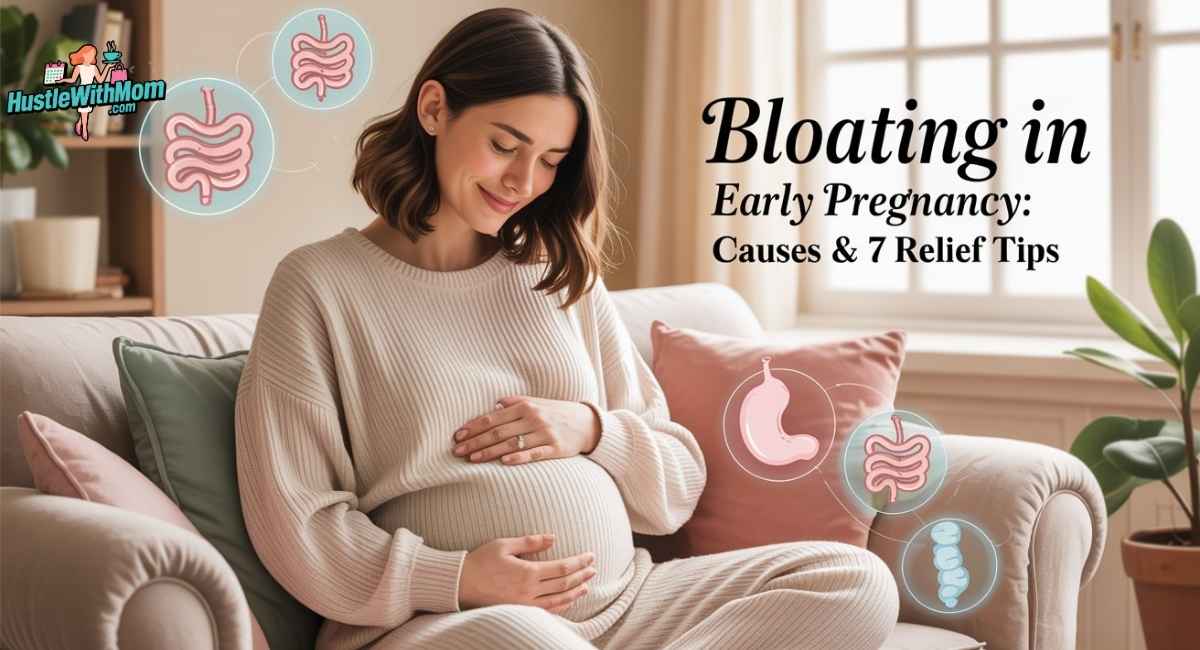
Many women notice bloating in early pregnancy, and it can feel surprising or uncomfortable. Your body starts changing quickly in the first few weeks, slowing digestion and causing gas, fullness, and mild abdominal discomfort. Most of the time, this is normal and one of the common early pregnancy symptoms you may notice in the first trimester of pregnancy tips. Using a pregnancy calculator can help you track your trimester and understand when these symptoms might start. Understanding why it happens can help you feel calmer and find simple ways to feel better.
Is Bloating Normal in Early Pregnancy?
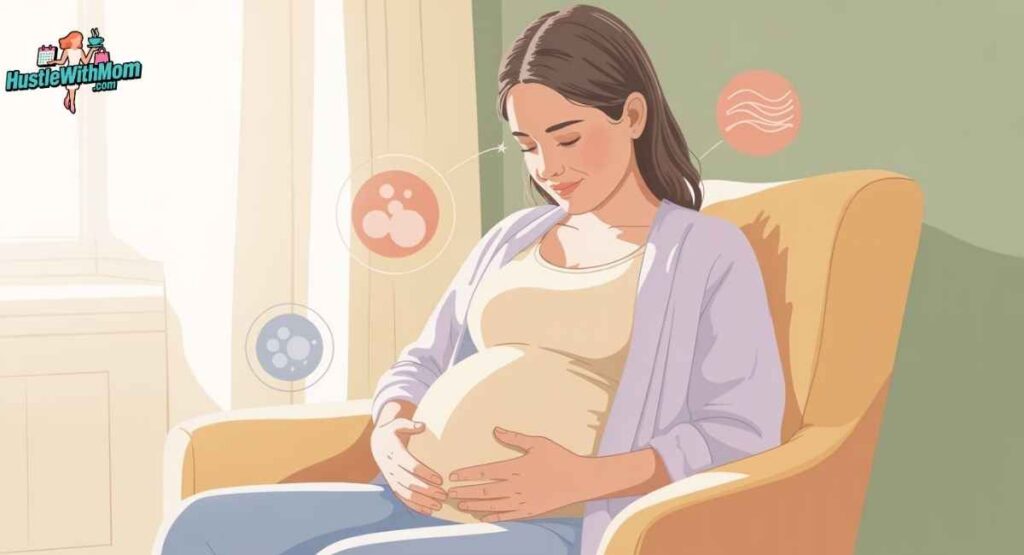
Yes, Bloating in Early Pregnancy is normal for most women. Your body releases hormones that slow digestion, which can lead to gas, fullness, and a feeling of abdominal tightness. These changes often start in the first few weeks and are not usually a sign of a problem. Other common discomforts in the first trimester include leg cramps and mild swelling leg cramps during pregnancy. If the bloating comes with strong pain, vomiting, or other unusual symptoms, it is a good idea to consult with a doctor. Most of the time, it is just one of the early pregnancy symptoms your body goes through.
What Causes Bloating in Early Pregnancy?
1. Increased Progesterone Levels
Higher progesterone slows digestion, which can cause gas, fullness, and a swollen feeling. This is one of the main reasons behind Bloating in Early Pregnancy.
2. Slower Gastrointestinal Motility
Your digestive system moves food more slowly during early pregnancy. This slower movement can lead to gas buildup and abdominal pressure.
3. Early Uterine Expansion
As the uterus begins to grow, it can put light pressure on the digestive organs. This pressure can add to the feeling of bloating and tightness.
4. Fluid Retention
Hormonal changes can make the body hold extra water, which may cause swelling and a bloated feeling in the stomach.
5. Dietary Triggers
Foods like beans, broccoli, fried foods, carbonated drinks, and artificial sweeteners can increase gas and make bloating feel stronger during early pregnancy.
6. Stress or Anxiety
Feeling stressed or anxious can affect digestion and lead to more gas and bloating. Relaxation can often help ease these symptoms.
Symptoms of Early Pregnancy Bloating
Common Signs
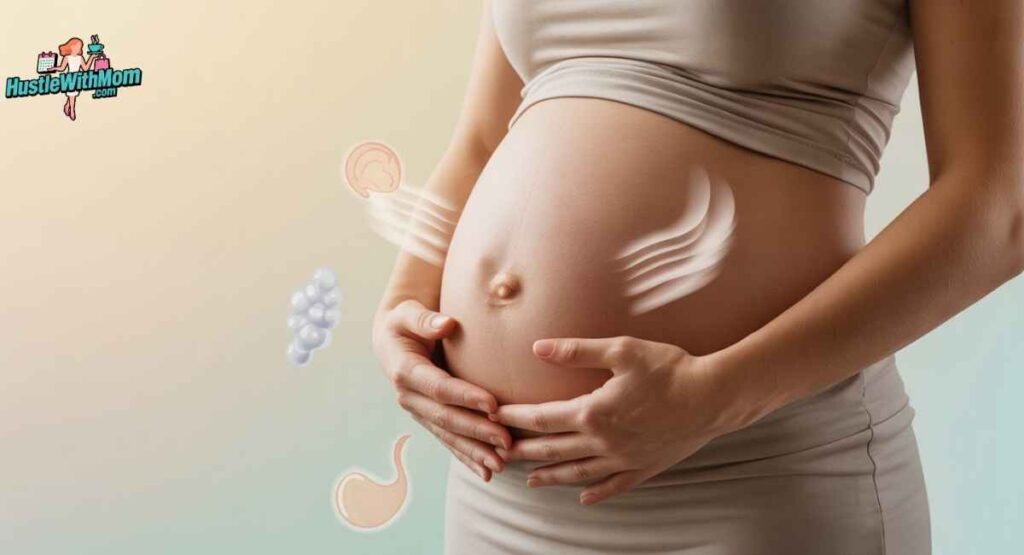
Bloating in Early Pregnancy often feels like gas, fullness, or a tight stomach. You may notice a slightly swollen belly, mild abdominal pressure, or discomfort after small meals. Burping and extra gas are also common as digestion slows in the first few weeks.
Bloating vs. Cramping What’s the Difference?
Bloating usually feels like pressure, tightness, or gas buildup in the stomach. Cramping feels more like a pulling, pinching, or light period-like pain. Mild cramping can be normal in early pregnancy, but bloating is mainly linked to slow digestion and trapped gas. If pain becomes sharp or heavy, it’s best to check with a doctor.
7 Safe Ways to Ease Early Pregnancy Bloating
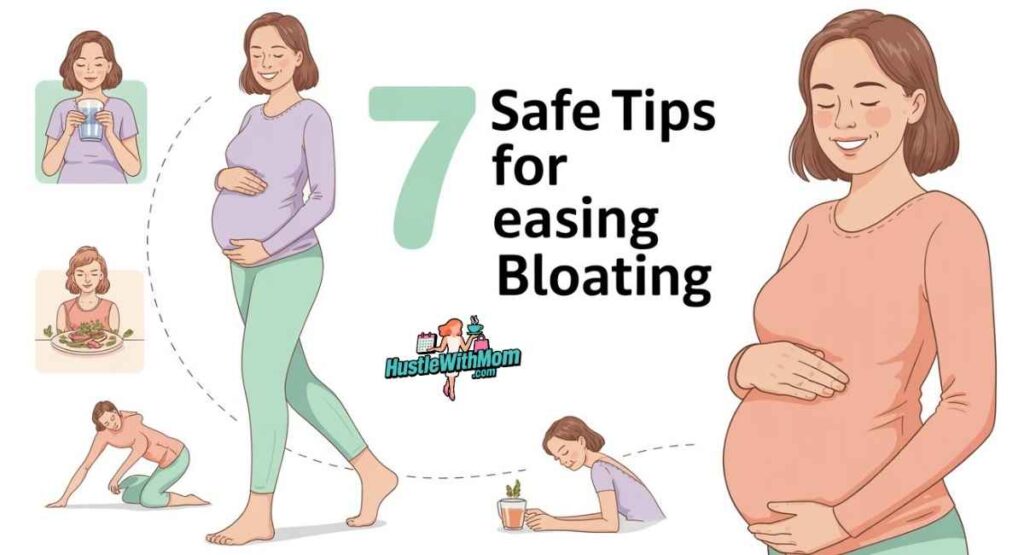
1. Eat Smaller, Frequent Meals
Eating small meals throughout the day can ease gas, fullness, and stomach pressure. It helps your body digest food slowly without overloading the stomach.
2. Stay Hydrated
Drinking enough water supports digestion and helps reduce bloating. It also prevents constipation, which can make symptoms worse.
3. Avoid Gas-Producing Foods
Foods like beans, broccoli, cabbage, fried foods, and carbonated drinks can cause more gas. Limiting them may help ease bloating in Early Pregnancy.
4. Increase Fiber Gradually
Adding fiber can improve digestion, but increase it slowly. A sudden jump can cause more gas, so go step by step with fruits, vegetables, and whole grains.
5. Light Walking After Meals
A short walk after eating helps your body move gas through the digestive system. This simple habit can ease discomfort and reduce pressure.
6. Reduce Salt Intake
Too much salt can cause water retention, which makes bloating feel stronger. Reducing salt may help salt pregnancy test.
7. Try Prenatal-Safe Herbal Teas (If Approved by Your Doctor)
Some teas, like ginger or peppermint, may help with bloating, but only if your doctor approves them. Always check first to keep it safe during pregnancy.
Foods That May Reduce Bloating Safely
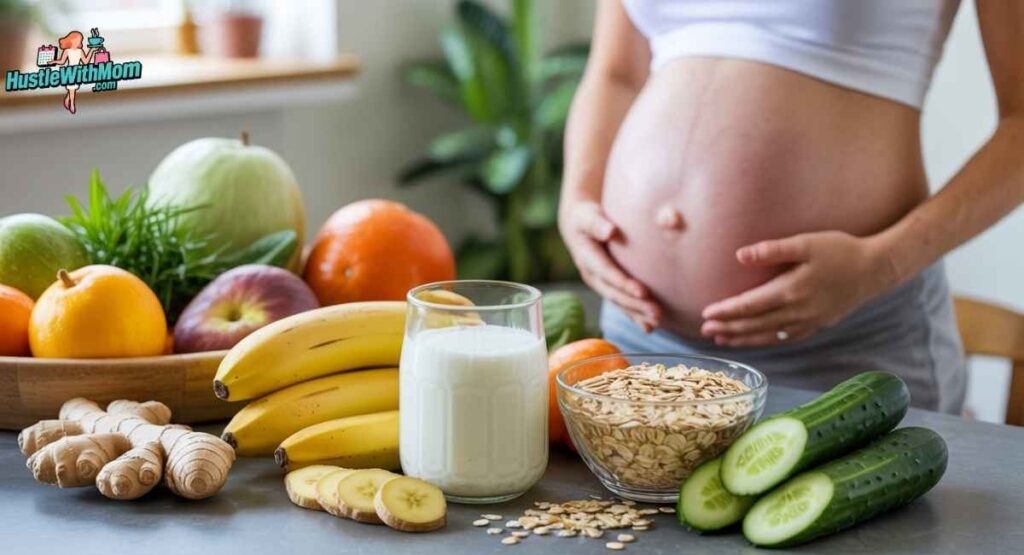
Certain foods can help ease bloating in Early Pregnancy and make digestion more comfortable.
- Ginger: Helps reduce gas and stomach discomfort naturally.
- Bananas: Rich in potassium, they help prevent water retention.
- Yogurt with Probiotics: Supports healthy digestion and can reduce bloating.
- Cucumbers: Light and high in water content, helping flush out excess fluid.
- Oats: Gentle on the stomach and help maintain smooth digestion.
Including these safe foods along with other first trimester tips can help first trimester of pregnancy tips.
Foods That Can Worsen Bloating
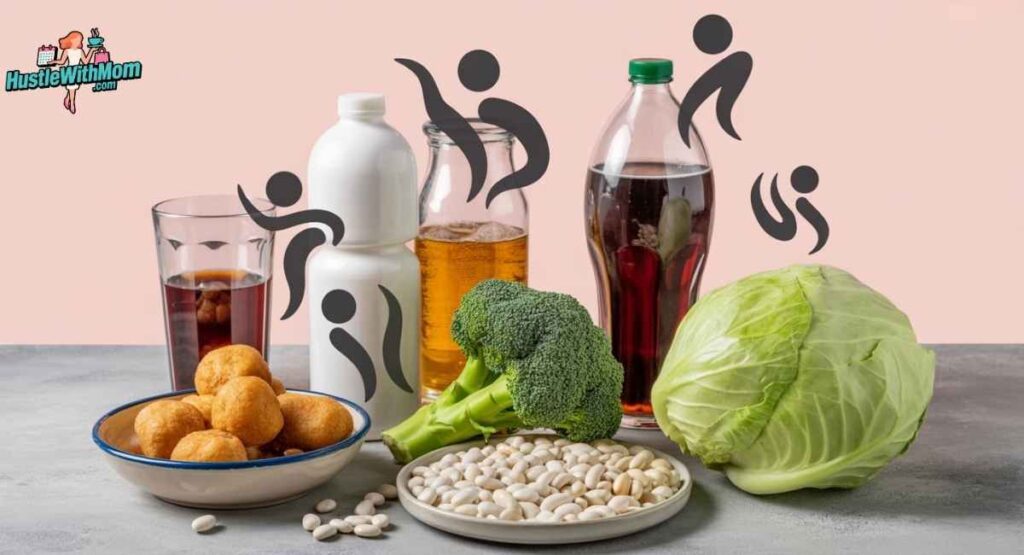
Some foods can make Bloating in Early Pregnancy worse by increasing gas, fullness, or abdominal pressure.
- Beans and Lentils: Can cause extra gas if eaten in large amounts.
- Broccoli, Cabbage, and Cauliflower: Healthy but may increase bloating.
- Carbonated Drinks: Add air to your stomach, making it feel swollen.
- Fried and Greasy Foods: Slow down digestion and increase fullness.
- Artificial Sweeteners: Sugar substitutes can lead to more gas and discomfort.
Limiting these foods or eating them in small amounts can help reduce early pregnancy bloating.
When to Talk to a Doctor
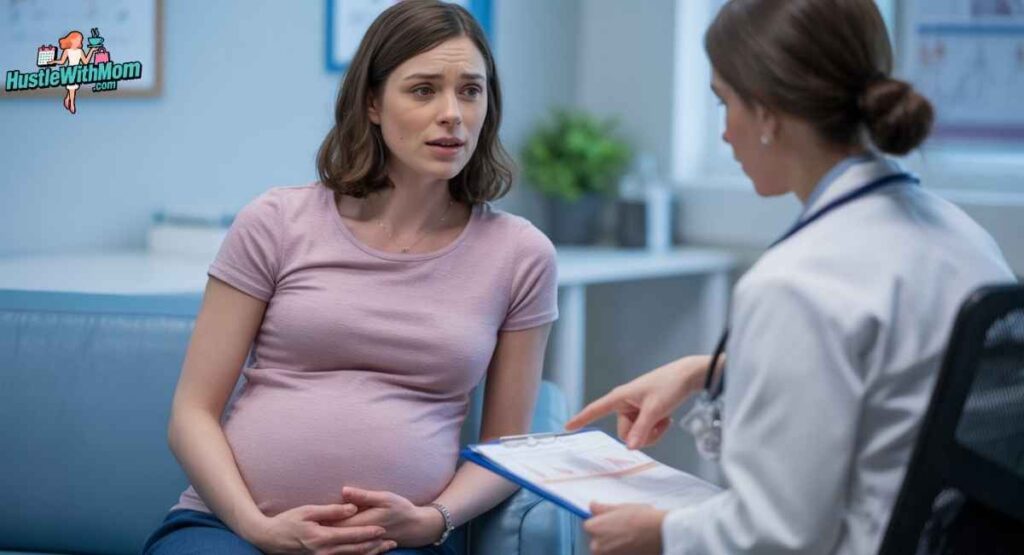
Most bloating in early pregnancy is normal, but you should contact a doctor if you notice unusual symptoms.
- Severe or sharp abdominal pain that doesn’t go away
- Persistent vomiting or nausea that prevents eating
- Hard or swollen stomach accompanied by discomfort
- Bleeding, dizziness, or fainting
Checking with your doctor ensures both your safety and peace of mind, especially if you’re managing pregnancy on your own solo parenting pros and cons.
Conclusion:
Bloating in early pregnancy is very common and usually nothing to worry about. It happens because your body is adjusting to new hormones, slower digestion, and other early changes. Simple steps like eating smaller meals, staying hydrated, and avoiding gas-producing foods can help ease discomfort. Paying attention to your body and knowing when to talk to a doctor can make this early stage more comfortable. With a few safe habits, most women can manage bloating and focus on enjoying their pregnancy.
FAQ’s
How long does bloating last in early pregnancy?
Bloating in early pregnancy can start within the first few weeks and may continue through the first trimester. For most women, it comes and goes, often easing after meals or with simple lifestyle changes.
Does early pregnancy cause gas?
Yes. Hormone changes slow digestion, which can trap gas in the stomach and intestines. This is a common part of first trimester bloating and usually not a cause for concern.
What are 5 signs of bloating?
Common signs include:
- Swollen or tight stomach
- Feeling full quickly
- Excess gas or burping
- Mild abdominal discomfort
- Slight stomach pressure or heaviness
What does early pregnancy bloating look like?
It usually shows as a slightly swollen belly, often soft to touch. Your stomach may feel tight, and clothes may feel snug even if your weight hasn’t changed.
How to differentiate between bloating and pregnancy?
Bloating often comes and goes and is mostly linked to meals or digestion. Early pregnancy symptoms may include missed periods, nausea, breast tenderness, and persistent stomach fullness alongside bloating.
Which side of the stomach do you feel early pregnancy?
Early pregnancy bloating usually affects the lower abdomen and can feel on either side. Mild pressure or fullness may be more noticeable depending on the position of the uterus.
What are the 5 most common signs of early pregnancy?
- Missed period
- Nausea or morning sickness
- Bloating in early pregnancy
- Breast tenderness
- Fatigue
Can you bloat at 2 weeks pregnant?
Yes. Hormonal changes start very early, so some women notice gas, fullness, or mild abdominal swelling as early as 2 weeks after conception.
What are the symptoms of rising hCG levels?
Rising hCG can cause:
- Mild cramping
- Bloating and fullness
- Tender or swollen breasts
- Fatigue
- Mood changes
Other early pregnancy discomforts can include leg cramps, which are also common in the first trimester leg cramps during pregnancy.