


Is cranberry juice good for pregnancy? Millions of expecting mothers ask this question, and the answer is a reassuring yes, with a few important conditions. Cranberry juice offers real nutritional value, supports urinary tract health, and fits well into a balanced prenatal diet. But not all cranberry juice is created equal, and how much you drink matters. Here’s everything you need to know before reaching for that glass.
What Makes Cranberry Juice Special During Pregnancy

Cranberry juice stands apart from most fruit juices because of its unique mix of plant compounds and essential nutrients. It contains vitamin C, vitamin E, vitamin K, folate, manganese, and dietary fiber, all of which support maternal health and fetal development. Doctors and nutritionists often recognize it as one of the more nutrient-dense juice options for pregnant women.
Beyond basic vitamins, cranberry juice delivers powerful phytonutrients called proanthocyanidins. These compounds actively block harmful bacteria from attaching to your urinary tract lining. This protective action makes cranberry juice genuinely useful during pregnancy, not just a refreshing drink.
Key Nutrients Found in Cranberry Juice
Every sip of pure cranberry juice provides several building blocks your body needs during pregnancy. Folate supports healthy neural tube development in your baby during the early weeks. Vitamin C strengthens your immune system and aids iron absorption, which is crucial when your blood volume expands.
Manganese and copper found in cranberries also contribute to bone and tooth development in your baby. The antioxidant polyphenols in cranberry juice support fetal brain and heart development. These nutrients work together to deliver consistent value across all three trimesters.
How Much Cranberry Juice Is Safe in Pregnancy
Moderation is the golden rule when it comes to cranberry juice in pregnancy. Most health professionals consider 150 to 240 milliliters, about one cup, per day a safe and beneficial amount. A 2008 pilot study found that pregnant women who drank at least 240 ml daily saw a 57 percent reduction in urinary bacteria and 41 percent fewer UTIs.
You don’t need to wait until a specific trimester to start. Cranberry juice is safe during all three trimesters, based on findings from a large 2013 study involving over 68,000 women. No increased risks of complications were found among the hundreds of women in that study who consumed cranberry products throughout pregnancy.
Top Benefits of Cranberry Juice During Pregnancy

Drinking cranberry juice consistently during pregnancy gives your body several practical health advantages. It works quietly in the background, supporting your urinary tract, immunity, and gut while your body goes through rapid hormonal and physical changes. These benefits make it a smart daily addition for many expecting mothers.
The benefits are not just theoretical. Research from peer-reviewed studies backs the value of cranberry compounds for pregnant women specifically. When you choose the right product and drink it in appropriate amounts, you get meaningful health support without unnecessary risk.
UTI Prevention During Pregnancy
Urinary tract infections affect roughly 8 percent of all pregnancies and can escalate into serious complications if left untreated. Cranberry juice contains A-type proanthocyanidins (PACs) that prevent E. coli, the bacteria responsible for most UTIs, from sticking to the bladder wall. This mechanism makes cranberry juice one of the most well-studied natural options for UTI prevention in pregnancy.
A meta-analysis published in peer-reviewed research confirmed that a daily PAC intake of at least 36 milligrams reduced UTI risk by 18 percent. Pure cranberry juice is one way to reach that threshold. However, if you already have a UTI, you need medical treatment. Cranberry juice prevents infections but cannot cure an existing one.
You may also want to read about managing SI joint pain during pregnancy since untreated UTIs can sometimes worsen overall pregnancy discomfort and musculoskeletal strain.
Immune System and Antioxidant Support
Pregnancy naturally suppresses parts of the immune system to protect the developing baby. This makes you more vulnerable to infections and oxidative stress. Cranberry juice is rich in vitamin C, a well-known immune-boosting antioxidant that helps rebuild immune defenses and neutralize free radicals in the body.
The polyphenol antioxidants in cranberry juice go further by reducing cellular inflammation. These compounds support healthy blood pressure levels, which matters because pregnancy increases cardiovascular load significantly. Regular, moderate intake adds a layer of protection that synthetic supplements alone can’t fully replicate.
Digestive Health and Constipation Relief
Constipation is one of the most common and uncomfortable complaints during pregnancy. Cranberry juice contains dietary fiber that encourages healthy gut motility and eases digestion. It also supports a balanced gut environment, which in turn reduces bloating and abdominal discomfort.
If you’re already dealing with bloating in early pregnancy, adding a small daily serving of cranberry juice to your routine may provide gentle, natural relief. The fiber content works progressively, so consistency matters more than quantity when you’re trying to improve digestion.
Risks of Drinking Cranberry Juice While Pregnant
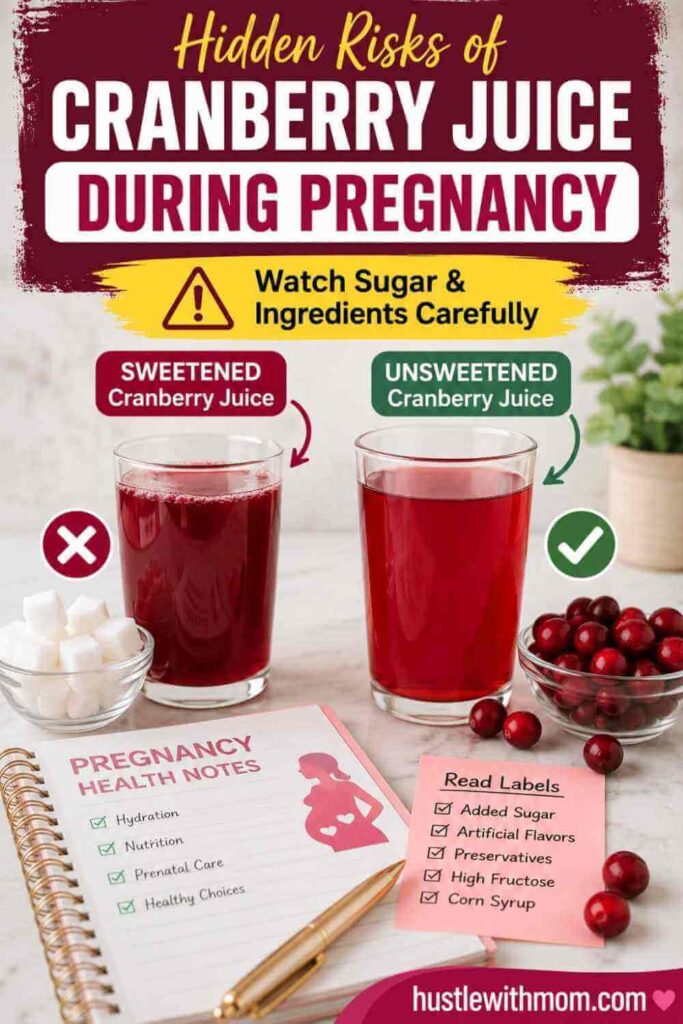
Cranberry juice is safe for most pregnant women, but it’s not without potential downsides. Understanding the risks helps you make smarter choices and avoid the pitfalls that come from consuming the wrong type or too much of it. Most risks are tied to product quality and portion size rather than cranberry itself.
Being aware of these concerns lets you enjoy the benefits without unnecessary worry. The key is choosing wisely and staying within recommended amounts. Your prenatal care provider can help you determine what’s appropriate for your specific health situation.
Sugar Content and Gestational Diabetes Risk
Most commercial cranberry juice products contain high amounts of added sugar. Pure cranberry juice is naturally tart, so manufacturers blend it with other juices and sweeteners to improve palatability. Drinking sweetened versions daily can spike blood sugar levels and increase your risk of gestational diabetes.
Always check the nutrition label before buying. Look for 100 percent pure, unsweetened cranberry juice with no added sugars or artificial flavors. If it tastes too sour, sweeten it naturally with a small amount of stevia or monk fruit sweetener. You can also blend it into a prenatal smoothie with fruits and vegetables to balance the flavor.
Drug Interactions and Blood Thinning
Cranberry juice may interact with blood-thinning medications, particularly warfarin. The compounds in cranberries can amplify the effects of anticoagulants, which increases bleeding risk. If your doctor has prescribed any blood thinners during pregnancy, discuss cranberry juice specifically before adding it to your diet.
Some women may also experience digestive upset, including bloating or diarrhea, when they consume cranberry juice in large amounts. This is largely due to its high fiber and acidic content. Starting with smaller portions and observing how your body responds is always the smarter approach when introducing any new food or drink during pregnancy.
How to Choose the Right Cranberry Juice During Pregnancy

Choosing the right cranberry juice makes the difference between real benefit and hidden risk. Walk through the juice aisle and you’ll find dozens of options, but most of them are cranberry cocktails, not actual cranberry juice. These cocktails contain very little real cranberry and a lot of added sugar, artificial coloring, and flavoring agents.
Your goal is to find 100 percent pure, unsweetened cranberry juice, or a juice blend where cranberry is the primary ingredient with no added sweeteners. Read every label carefully. Some brands market themselves as healthy but contain as much sugar per serving as a can of soda.
What to Look for on the Label
A good cranberry juice label will say 100 percent juice with no added sugar. The ingredient list should be short. Ideally, it reads: cranberry juice, water, and nothing else. If you see high-fructose corn syrup, cane sugar, or artificial sweeteners in the first few ingredients, put it back.
Organic options reduce exposure to pesticide residues, which matters more during pregnancy. If pure cranberry juice feels too strong, dilute it with filtered water or combine it with a small amount of 100 percent apple or pomegranate juice. Homemade versions using fresh or frozen cranberries give you the most control over ingredients and quality.
When to Talk to Your Doctor About Cranberry Juice

Cranberry juice is generally safe, but your pregnancy is unique. If you have a history of kidney stones, your doctor may advise limiting cranberry intake because its oxalate content can increase the risk of calcium oxalate stone formation. Women with a known allergy to berries should also avoid cranberry products.
Any time you suspect a UTI during pregnancy, contact your healthcare provider immediately. Do not rely on cranberry juice alone to address an active infection. Untreated UTIs during pregnancy can lead to kidney infections, preterm labor, and other serious complications. Cranberry juice works as prevention, not treatment.
If you’re navigating the complexities of pregnancy nutrition alongside other physical demands, check out these helpful first trimester of pregnancy tips to build a stronger nutritional foundation from the very start.
Conclusion
Is cranberry juice good for pregnancy? Yes, it genuinely is, when you choose the right kind and drink it in reasonable amounts. It supports your urinary tract, strengthens your immune system, aids digestive health, and delivers important nutrients your body needs during this critical time. The research backs it up, and most healthcare providers consider it a safe addition to a prenatal diet.
The most important thing to remember is this: choose 100 percent pure, unsweetened cranberry juice. Stick to about one cup per day. And if you have any existing health conditions or take prescription medication, talk to your doctor before making it a daily habit. Your pregnancy nutrition deserves both smart choices and personalized guidance.