

When my friend Ashely texted me at 2 a.m. asking, “Wait, is my baby going to roll out of this thing?” I totally got it. That bassinet panic is real. You bring your newborn home, tuck them into this cozy little bed right beside you, and somewhere around week eight or nine, you start wondering: how long can a baby sleep in a bassinet, actually?
I’m not going to give you a one-size-fits-all answer right away, because the truth is a little more nuanced than that, and knowing the full picture will save you a stressful midnight scramble to figure out the crib situation.
Let me walk you through everything I’ve learned, including the mistakes parents (myself included) make along the way.
The Short Answer: Most Babies Use a Bassinet Until 4–6 Months
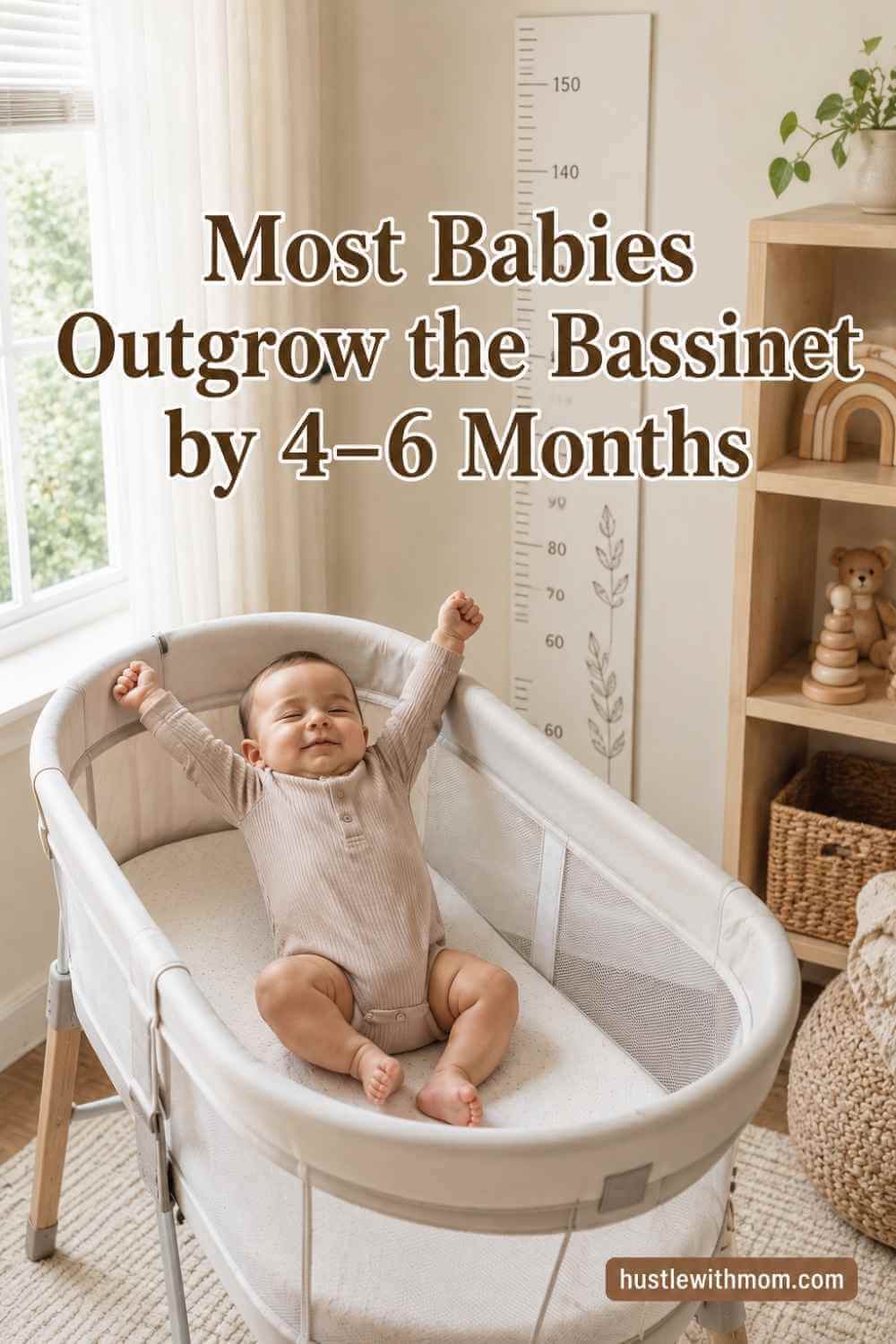
Most experts recommend that infants can safely use a bassinet until they reach around 4 to 6 months of age. But here’s the thing that’s just the average. What actually matters more than the calendar is your baby’s body and behavior.
Some babies outgrow their bassinet by 3 months. Others comfortably sleep in one until closer to 6. And a few chunky, fast-growing babies? They hit the weight limit way before you expect.
What Actually Determines When to Stop
1. Weight Limits
Most bassinets max out around 20 pounds. Always check your specific model’s guidelines. If your baby is trending big on the growth charts, don’t wait until they’re squirming uncomfortably. Start watching the scale around the 3-month mark.
2. Rolling Over or Pushing Up
This one is non-negotiable. Regardless of a baby’s physical size, the time to transition from the bassinet to a crib is when a baby begins rolling over, sitting up, or assuming a crawling position. This newfound movement increases their risk of falling out of the bassinet.
Even if your baby is only 10 pounds and technically under the weight limit, once they start pushing up on their hands or doing that half-roll during the night it’s time to move them. Safety always wins.
3. They’re Just Too Long
Even if weight limits aren’t reached, babies often outgrow bassinets by length. If their head or feet touch the bassinet’s ends, it’s time to transition to a larger sleep space.
It sounds obvious, but in the exhausted newborn haze, it’s easy to miss. One day, you glance over, and your baby is basically folded in half. That’s your sign.
4. Their Sleep Is Getting Worse
Sometimes it’s not a safety issue at all; it’s a comfort one. As babies grow, they may need more space to move freely, and some babies simply outgrow the snug space sooner and sleep better once they have room to stretch out in a crib.
If your baby, who used to sleep 3-hour stretches, is suddenly waking every 45 minutes, the bassinet might genuinely be too cramped. Don’t overlook this.
AAP Safe Sleep Guidelines: What You Need to Know
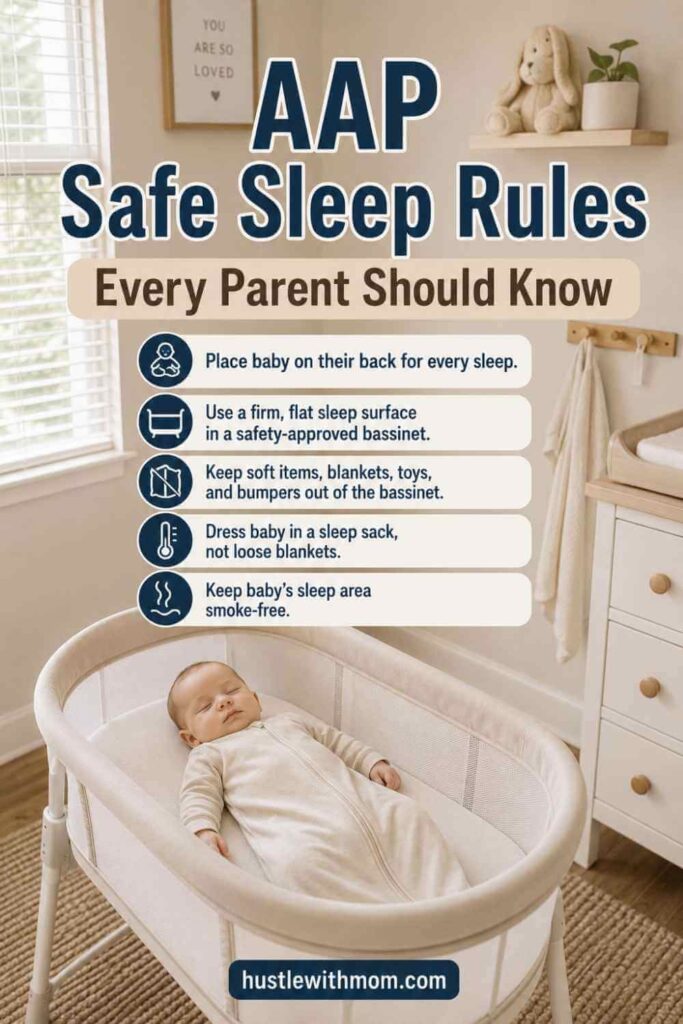
The American Academy of Pediatrics (AAP) is the gold standard here, and their guidance is clear:
For at least the first six months of life, the AAP advises that infants sleep in a bassinet (or crib) in their parents’ room. Sharing a room with your baby until they’re at least 6 months old reduces the risk of SIDS, per the CDC.
But room-sharing doesn’t mean bed-sharing. The bassinet keeps your baby close without the risks of co-sleeping on an adult mattress.
Key safe sleep rules for any bassinet:
- Always place the baby on their back every single time
- Firm, flat surface only, no soft inserts, inclined positioners, or padding
- Empty sleep space, no pillows, blankets, stuffed animals, or bumpers
- No overheating, a sleep sack is safer than a loose blanket
The AAP recommends that newborns sleep in the same room as their parents for the first six months and maybe up to a year, but not in the same bed.
The Mistake Most New Parents Make

Here’s the one I see most often: waiting too long because everything seems fine.
Your baby hasn’t rolled yet. They’re technically under the weight limit. The bassinet still looks roomy enough. So you keep going.
But safe sleep transitions shouldn’t happen reactively. You don’t want to be doing a middle-of-the-night scramble to figure out the crib because your baby just had their first real roll at 4 a.m. (ask me how I know this happens).
The smarter move: start crib practice naps around 3 months, even while your baby still sleeps in the bassinet at night. This way, the full transition feels gradual instead of sudden.
Step-by-Step: How to Know It’s Time
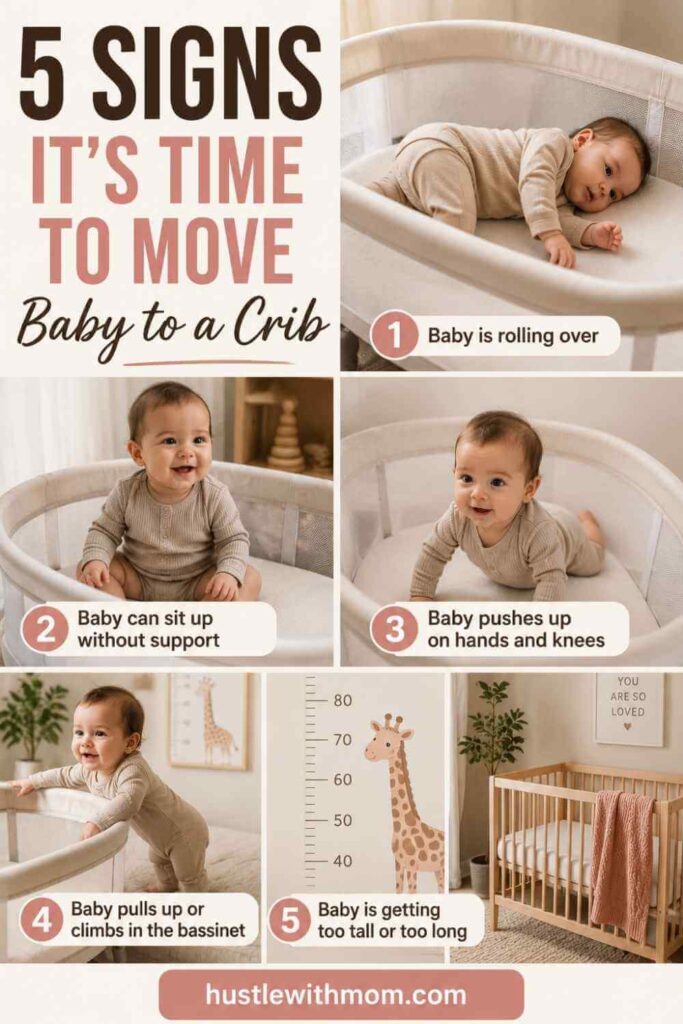
Use this simple checklist. If you check any of these boxes, it’s time to move to a crib:
- ✅ Baby is 4–6 months old
- ✅ Baby is rolling or attempting to roll
- ✅ Baby is pushing up on hands and knees
- ✅ Baby is approaching or has hit the bassinet weight limit (usually 15–20 lbs)
- ✅ Baby’s head or feet are touching the ends
- ✅ Baby’s sleep quality has noticeably gotten worse
- ✅ You just… feel like the space is too small
Trust your gut on that last one. You’re around this baby 24/7, you’ll notice things before any app or chart does.
Tips for a Smooth Bassinet-to-Crib Transition
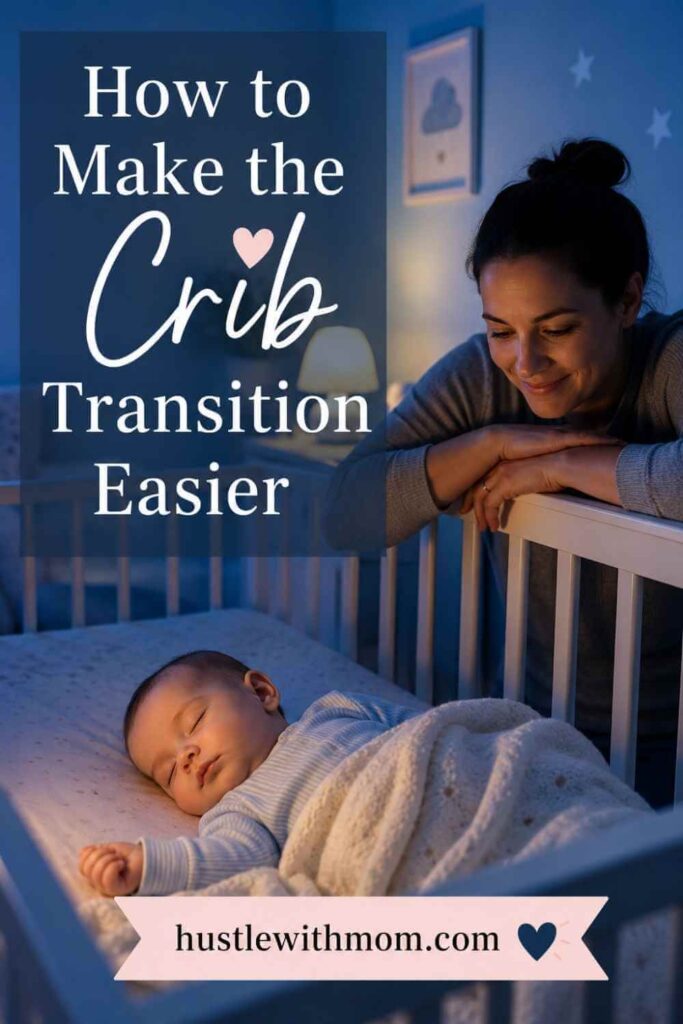
The transition doesn’t have to be dramatic. Here’s what actually helps:
Start with naps in the crib first. Daytime naps are lower stakes. Use them to get your baby used to the new sleep environment before tackling nighttime.
Keep the sleep association consistent. Whatever routine you’ve been doing, white noise, swaddle, feed, then sleep, keep it identical in the crib. The routine is what signals sleep, not the specific bed.
Move the crib into your room if possible. Pick a time when your baby is healthy, not going through any big new developments like teething, and when your family routine is pretty calm. If you’re room-sharing (which the AAP recommends for 6 months), move the crib to your bedroom during the transition to keep familiarity.
Use a white noise machine. Apps like Hatch Baby Rest or the LectroFan are game-changers. The consistent sound masks household noise and signals to your baby that it’s sleep time, regardless of where they are.
Don’t rush it. Some babies need a week. Some need two. There’s no race.
If you’re dealing with early wake-ups during or after the transition, you might find some answers in this post on why your baby is waking at 5 AM. It’s more common than you think and usually fixable.
What About Daytime Naps in the Bassinet?

Absolutely fine and actually recommended for the newborn stage. Bassinets also come in handy not just overnight but during the day, too.
The portability factor is huge. Rolling the bassinet from the bedroom to the living room means your baby can nap nearby while you actually function as a human being. This is especially helpful in those first weeks when you’re running on no sleep and need to keep eyes on the baby constantly.
Just remember: the same safe sleep rules apply for naps. Back to sleep, firm flat surface, no extras in the sleep space.
Popular Bassinets Worth Knowing About

Not all bassinets are created equal, and the limits vary by model. Here are a few commonly used ones:
- SNOO Smart Sleeper (by Happiest Baby) weight limit of 25 lbs, but is designed for babies up to 6 months or when they start rolling
- Halo Bassinest’s weight limit is 20 lbs; the swivel design is genuinely helpful for nighttime feeds
- 4moms mamaRoo Sleep Bassinet, weight limit 20 lbs, includes app connectivity and motion settings
- Arm’s Reach Co-Sleeper is the first company to offer a bedside bassinet, developed by parents who wanted a safe place for their baby to sleep within arm’s reach
Whatever bassinet you’re using, look up the exact manufacturer guidelines. The general “20 lb / 4–6 months” rule is a starting point, but your specific model may have different specs.
Common Bassinet Sleep Myths Busted

“My baby sleeps better at an incline, so it’s fine.” Nope. The AAP specifically warns against inclined sleepers. Babies can slump into unsafe chin-to-chest positions on inclines. Always flat.
“If they’re not rolling yet, they’re safe.” Rolling can happen fast and without warning. Don’t use “hasn’t rolled yet” as a reason to delay the transition past 6 months.
“A bigger bassinet means they can use it longer.” Some extended-use bassinets (like the Snoo or certain convertible models) do accommodate babies a bit longer. Some are designed for babies up to 24 months or until they can push up on hands and knees, roll over unassisted, or reach 20 lbs, whichever comes first. But even with a large bassinet, motor development milestones still override the time limit.
“Soft bedding makes them sleep better.” It might look cozy, but loose bedding is a SIDS risk. A firm mattress with a fitted sheet is all they need.
Real Talk: What Nobody Prepares You For

The hardest part of this whole bassinet stage isn’t the transition itself it’s the sleep deprivation that colors every decision you make.
When you’re running on three-hour chunks of sleep, you’re not always thinking clearly about safety. This is when shortcuts happen: letting the baby sleep in the swing “just this once,” or adding a blanket because it’s cold. If you’re feeling overwhelmed, these honest tips for exhausted new moms are worth a read real advice that doesn’t make you feel judged.
And if you’re a breastfeeding mom trying to figure out what you can and can’t have while nursing (including that body armor drink everyone’s talking about), your exhaustion makes total sense. You’re doing a lot.
FAQs About Baby Sleep in Bassinet
Can a newborn sleep in a bassinet from day one? Yes! Bassinets are designed specifically for newborns. As long as you’re following safe sleep guidelines (back to sleep, firm flat surface, empty sleep space), your baby can sleep in a bassinet from birth.
Can my baby sleep in a bassinet all night? Absolutely, and it’s encouraged in the newborn stage. Just make sure the sleep space is safe and the bassinet is placed near your bed for room-sharing.
What if my baby hates the bassinet? Try warming the mattress surface briefly with your hand before putting baby down, using white noise, and making sure the bassinet smells familiar (put a worn shirt of yours nearby not inside the bassinet). If they consistently resist it, check that it’s not too bright, cold, or loud where it’s placed.
Is it okay to use a bassinet past 6 months? Only if your baby hasn’t hit the weight limit and isn’t showing any mobility milestones (rolling, pushing up). But most babies are ready physically to move to a crib well before 6 months.
What’s the difference between a bassinet and a Pack ‘ N Play? A bassinet is typically smaller and designed only for newborns. A pack-n-play (playyard) is larger and includes a bassinet insert for newborns that can be removed as they grow, making it more of a long-term option.
Can my baby sleep in a bassinet if they have reflux? Talk to your pediatrician. Some parents are told a slight incline helps with reflux, but inclined sleeping has safety concerns. Your doctor can guide you on approved positioning options.
Conclusion:
Baby sleep in a bassinet is typically safe from birth through about 4–6 months, with the real endpoint being determined by your baby’s weight, length, and mobility milestones, not just their age.
The key signs that it’s time to move on: they’re rolling, pushing up, hitting the weight limit, their feet are touching the end, or they’re just sleeping terribly. When any of those things happen, it’s crib time, and the earlier you can start making that transition gradual (with daytime naps), the smoother it goes.
You’ve got this. The fact that you’re googling this at whatever hour it is right now means you’re paying attention to your baby’s safety. That’s the whole job.
For more real-world mom tips and survival strategies, check out 50 mom hacks that actually work. A lot of them apply directly to this newborn sleep stage.
Sources referenced: American Academy of Pediatrics (AAP) safe sleep guidelines, CDC SIDS risk recommendations, and manufacturer guidelines for major bassinet brands.
1 thought on “How Long Can Baby Sleep in a Bassinet? (The Real Answer Nobody Tells You)”