


You’re three weeks postpartum. You’re exhausted, you’re nursing every two hours, and someone in your mom group just posted a photo of her cart stacked with colorful Body Armor bottles, saying it doubled her milk supply overnight.
So you pause. You think: Should I be doing this, too?
If that sounds familiar, you’re not alone. Body Armor drink and breastfeeding have become one of the most talked-about topics in nursing communities on TikTok, Instagram, and Facebook groups. But between the glowing reviews and the skeptical voices, it’s hard to know what’s actually true.
This article breaks it all down: the ingredients, the science, the honest limits, and what actually works if you’re struggling with low milk supply.
Quick Answer: Body Armor does not have scientific proof that it directly increases milk production. However, many nursing moms report a boost, most likely because it improves hydration, which plays a direct role in breast milk output. Think of it as a helpful tool, not a miracle fix.
What Is Body Armor, and Why Are Breastfeeding Moms Obsessed With It?
Body Armor is a sports drink originally made for athletes. It’s built around coconut water, electrolytes, and vitamins, and unlike older sports drinks like Gatorade or Powerade, it skips the artificial colors and flavors.
That’s a big deal for moms who are trying to keep things as clean as possible while lactating.
It showed up in breastfeeding circles mostly through word of mouth. One mom swore by it, told another, and suddenly it became a staple in hospital bags and postpartum routines across the country.
But what’s actually in it that might help?
Breaking Down the Ingredients: What’s Inside Each Bottle
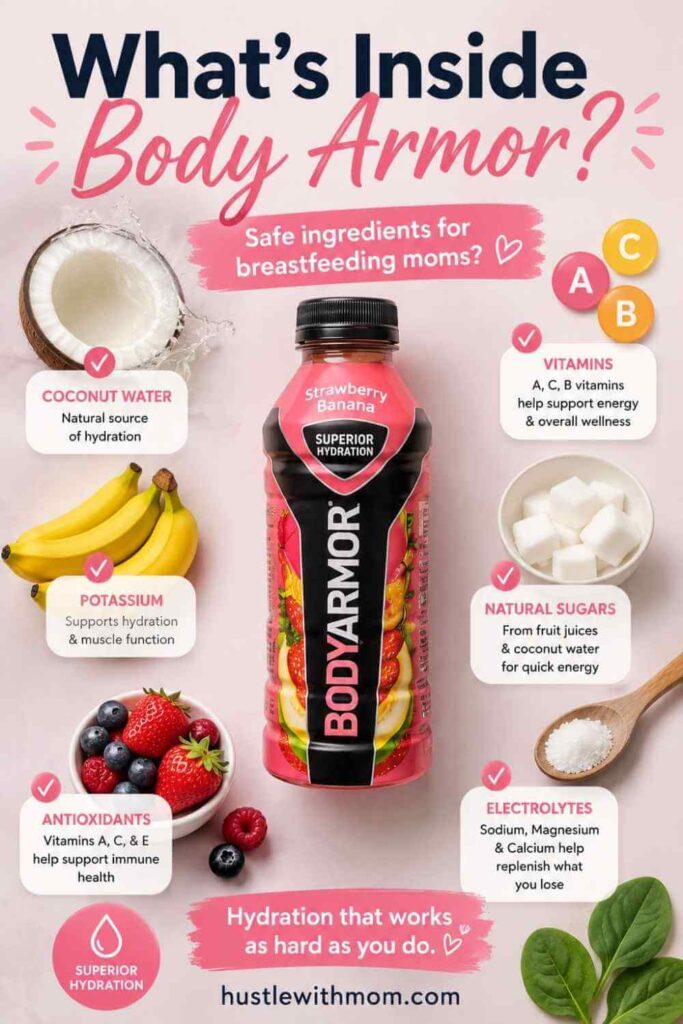
Coconut Water: The Star of the Show
Coconut water is the ingredient that does most of the heavy lifting here. It’s a natural source of electrolytes, specifically potassium, magnesium, and sodium, which help your body hold on to fluids and stay properly hydrated.
When you’re breastfeeding, your body is constantly losing fluids. Even mild dehydration can cause a noticeable dip in milk output. Coconut water helps replenish that. It’s also worth knowing that coconut water is the same “secret ingredient” behind the famous Starbucks Pink Drink that so many nursing moms swear by.
B-Complex Vitamins and Antioxidants
Each bottle of Body Armor contains:
- Vitamin B3 (niacin) supports energy metabolism
- Vitamin B5 (pantothenic acid) helps with hormone production
- Vitamin B6 supports mood and reduces fatigue
- Folic acid (B9) is still important postpartum for cellular repair
- Vitamin B12 energy and neurological function
- Vitamin C and E immune support and antioxidant protection
These aren’t magic lactation boosters, but they do support your overall health as a postpartum body working overtime.
The Sugar Question (This Part Matters)
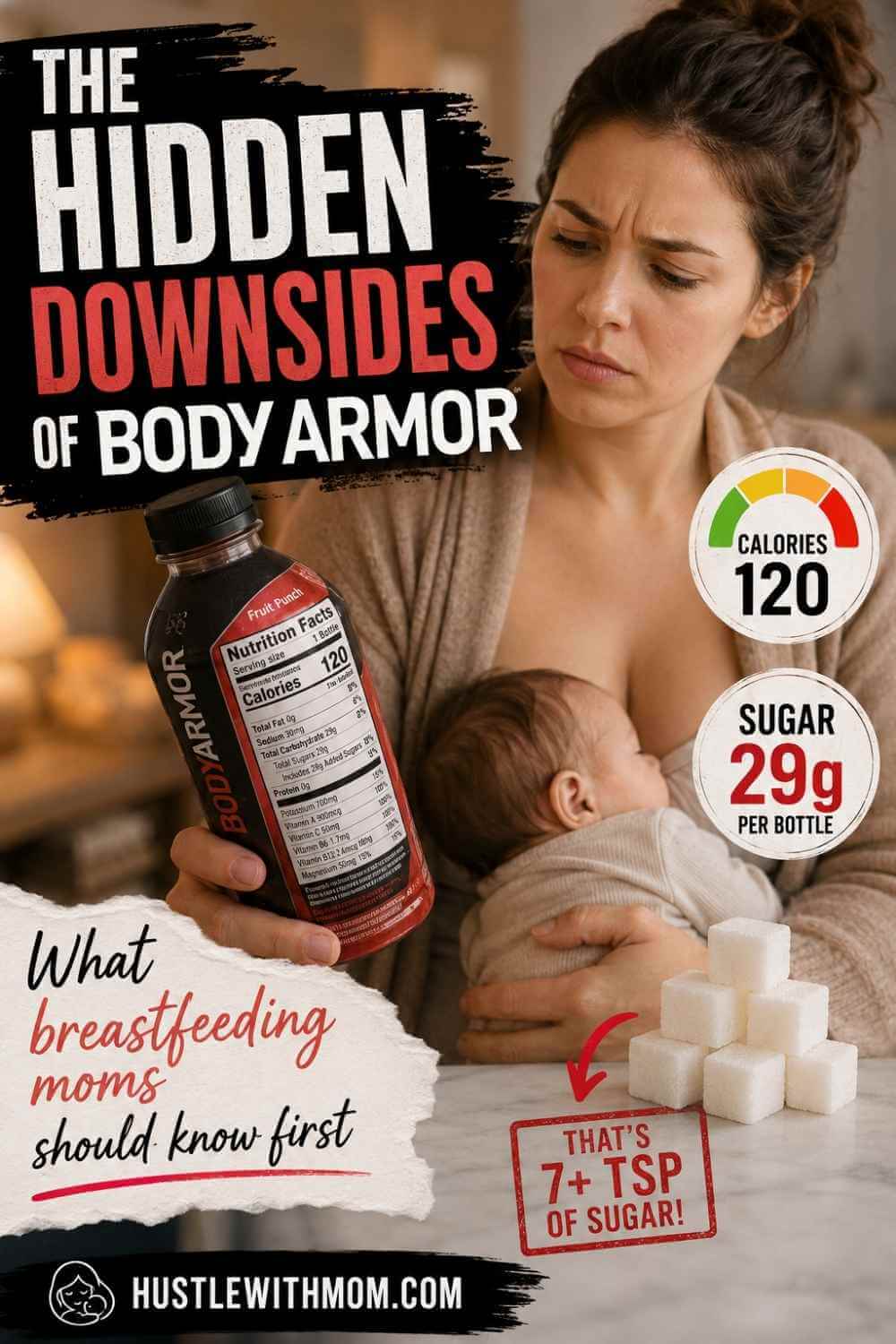
Here’s something most articles skip over: regular Body Armor contains up to 21 grams of sugar per bottle from pure cane sugar.
That’s not terrible in isolation, but if you’re drinking two or three bottles a day, it adds up fast. High sugar intake can affect insulin sensitivity, and some research suggests that poor insulin sensitivity may negatively impact milk supply in certain women, especially those with conditions like PCOS or thyroid issues.
This is a real concern that most competitor articles gloss over. More on the safer options below.
Body Armor Variants: Which One Is Actually Safe for Breastfeeding?

Not all Body Armor drinks are the same. Here’s a clear breakdown so you’re not accidentally drinking the wrong one.
Body Armor Classic Fine in Moderation
The original version. Contains coconut water, real fruit juice, and pure cane sugar. It’s caffeine-free and gluten-free, which makes it a reasonable choice for nursing moms who don’t have blood sugar concerns.
Best for: Moms who need a flavorful hydration boost and tolerate sugar well.
Body Armor Lyte: The Smarter Pick for Most Moms
Body Armor Lyte has fewer calories and uses erythritol and stevia instead of cane sugar. It still contains coconut water and the same vitamin profile, making it a better daily option if you’re watching your sugar intake.
Best for: Moms who want the hydration benefits without the sugar spike. Most lactation consultants and nutrition-aware moms lean toward this version.
Body Armor Edge: Skip This One While Nursing
Body Armor Edge contains caffeine. That alone makes it a no-go for most breastfeeding situations. Caffeine does pass into breast milk, and while small amounts are generally considered okay (under 200–300mg per day per La Leche League), adding a caffeinated sports drink on top of your daily coffee is an easy way to push past that threshold.
Best for: Not recommended during active breastfeeding or pumping unless your healthcare provider clears it.
Does Body Armor Actually Increase Milk Supply? Let’s Be Honest
Here’s the straight answer: no clinical trials or peer-reviewed studies directly link Body Armor to increased human milk production.
That’s not a knock on the drink. It’s just the reality of breastfeeding research; it’s historically underfunded, and no company is rushing to run expensive trials on a sports drink.
What the Science Does Tell Us
Dehydration suppresses milk supply. That’s well-established. When your body doesn’t have enough fluids, it prioritizes vital functions over milk production. Restoring proper fluid balance through electrolyte-rich drinks like Body Armor can help your supply rebound, but only if dehydration was the issue to begin with.
Hydration alone isn’t a galactagogue. A galactagogue is a food, herb, or drug that directly stimulates milk production. Water, coconut water, and Body Armor are not galactagogues. They support the conditions for good supply, but they don’t create supply on their own.
What Moms Actually Report
In an informal poll run by Milkology in a large breastfeeding Facebook group, only 17% of respondents said Body Armor definitely did NOT help their milk supply. The rest either noticed a difference or weren’t sure.
That’s meaningful even if it’s not a clinical trial.
The most common pattern: moms who were mildly dehydrated, juggling feeds around the clock and forgetting to drink enough water, saw a noticeable improvement when they started drinking Body Armor regularly.
How Fast Can You Expect Results?
If Body Armor is going to help you at all, you’ll usually notice a difference within a few hours to 24 hours. This is because you’re correcting a hydration deficit, not stimulating new milk-producing hormones.
If you drink Body Armor for three days straight and see zero change, low hydration probably isn’t your main issue. That’s your cue to look deeper into latch, hormone levels, nursing frequency, or an underlying condition.
How Much Body Armor Should You Drink While Breastfeeding?

Most moms who report positive results drink one bottle per day, usually alongside regular water intake.
A few things to keep in mind:
- Don’t replace water. Body Armor works best as a supplement to your regular fluid intake, not a substitute. You still need plenty of plain water throughout the day.
- One bottle of Body Armor Lyte daily is a reasonable, low-risk amount for most nursing moms.
- Avoid drinking two or more Classic bottles daily if you’re watching your blood sugar, as the sugar adds up quickly.
- Always check with your OB, midwife, or IBCLC if you have any pre-existing conditions.
There’s no official “dose” because again, no formal study has established one. Use common sense and listen to your body.
The Real Downsides of Relying on Body Armor for Lactation
Let’s be balanced here. Body Armor is not a perfect solution, and leaning on it too heavily can create a few problems.
1. It can mask a deeper issue. If your milk supply is low because of an ineffective latch, tongue tie in your baby, a hormonal imbalance, or insufficient breast stimulation, Body Armor will do nothing for that. Drinking it while ignoring those root causes delays real solutions.
2. The sugar adds up. If you’re drinking the Classic version multiple times a day, you could easily consume 40–60 grams of added sugar just from this drink. For postpartum moms already dealing with disrupted sleep and blood sugar swings, this can cause energy crashes and fatigue.
3. It’s expensive over time. At $2–$3 per bottle, a daily habit adds up to $60–$90 a month. There are many cheaper alternatives (including a DIY version below) that offer the same hydration benefits.
4. It’s not a galactagogue. Repeat after me: Body Armor does not contain any proven milk-boosting compounds. No fenugreek, no brewer’s yeast, no oat milk, no blessed thistle. It hydrates you, that’s it.
Body Armor vs. Other Lactation Drinks: Which Actually Wins?
| Drink | Key Benefit | Sugar | Caffeine | Cost |
| Body Armor Classic | Hydration + vitamins | High (21g) | None | ~$2.50/bottle |
| Body Armor Lyte | Hydration + lower sugar | Low | None | ~$2.50/bottle |
| Plain Coconut Water | Natural electrolytes | Moderate (natural) | None | ~$1–$2/bottle |
| Starbucks Pink Drink | Hydration + fun | High | None | ~$6–$7 |
| LMNT Electrolytes | Zero sugar electrolytes | None | None | ~$1.50/pack |
| Gatorade/Powerade | Hydration | High (artificial) | None | ~$1.50/bottle |
The honest verdict: Plain coconut water and a quality electrolyte mix like LMNT give you most of what Body Armor offers, often at a lower cost and with less sugar. The main edge Body Armor has is taste variety and convenience.
Body Armor vs. Starbucks Pink Drink
The Pink Drink (strawberry acai base + coconut milk) became famous in the breastfeeding community around the same time as Body Armor. Both rely on coconut-based hydration as their mechanism. The Pink Drink is more of a treat, high cost, high sugar, but plenty of moms swear by it. Body Armor is the more practical, everyday version.
Body Armor vs. Plain Coconut Water
Plain coconut water is essentially what you’re paying for in Body Armor minus the additives, sugar, and vitamins. If you’re already healthy and eating well, plain coconut water may be all you need. Milkology actually recommends it as the top budget-friendly alternative.
DIY Body Armor Drink for Breastfeeding (Save Money, Cut Sugar)
Want the same benefits at a fraction of the cost? Here are three easy homemade versions:
Recipe 1: The Basic 2-Ingredient Version
- 1 cup plain coconut water
- ½ cup 100% fruit juice (orange, pineapple, or tart cherry)
Mix, chill, and sip throughout the day. That’s it. This mimics the core hydration profile of Body Armor without the additives.
Recipe 2: The Enhanced Lactation Hydration Drink
- 1 cup coconut water
- ½ cup watermelon juice (natural source of electrolytes)
- 1 tablespoon fresh lemon juice
- Pinch of sea salt (natural sodium)
- 1 teaspoon honey (optional, for taste)
Shake well, serve over ice. The sea salt adds sodium to round out the electrolyte profile, and watermelon is naturally hydrating with a mild galactagogue reputation in some traditions.
Recipe 3: The Milk-Boosting Power Version
- 1 cup oat milk (contains beta-glucan, a widely recognized galactagogue)
- ½ cup coconut water
- ½ cup tart cherry juice
- 1 teaspoon brewer’s yeast (a genuine lactation support food)
- Optional: small pinch of fenugreek powder (consult your IBCLC first)
This version goes beyond hydration and actually includes ingredients with some evidence behind them for milk production support.
What Actually Increases Milk Supply (Evidence-Based)
Body Armor can support hydration. But if you’re serious about building or protecting your milk supply, here’s what the evidence actually supports:
1. Nurse or Pump More Frequently
This is the single most effective thing you can do. Milk production runs on a supply-and-demand system. The more milk is removed from your breasts, the more your body makes. Aim for 8–12 nursing or pumping sessions every 24 hours, especially in the early weeks.
2. Try Power Pumping
Power pumping mimics cluster feeding and can significantly boost supply over a few days. Here’s a basic schedule:
- Pump for 20 minutes
- Rest for 10 minutes
- Pump for 10 minutes
- Rest for 10 minutes
- Pump for 10 minutes
Do this once daily for several days. Many moms see results within 48–72 hours.
3. Eat Enough Calories
Breastfeeding burns roughly 300–500 extra calories per day. If you’re undereating, which is easy to do when you’re sleep-deprived and busy, your body may pull back on milk production to conserve energy. Focus on nutrient-dense foods like oats, eggs, salmon, leafy greens, nuts, and whole grains.
4. Prioritize Skin-to-Skin Contact
Skin-to-skin contact with your baby triggers the release of prolactin and oxytocin, the two key hormones behind milk letdown and production. Even short sessions after feeds can make a real difference.
5. Manage Stress
Cortisol (the stress hormone) inhibits oxytocin, which is necessary for milk letdown. This is why anxious, overwhelmed moms sometimes notice their milk “dries up” during stressful weeks. Rest, support, and moments of calm are not luxuries; they’re part of your lactation support plan.
6. Work With an IBCLC
If you’ve tried everything and your supply is still low, please see an IBCLC (International Board Certified Lactation Consultant). Low supply is often caused by fixable issues, such as an ineffective latch, a tongue or lip tie in your baby, hormonal imbalances like thyroid dysfunction, or insufficient glandular tissue.
No sports drink in the world can fix those. But an IBCLC can help you identify and address them. You can find a certified consultant through the ILCA directory.
Frequently Asked Questions
Is Body Armor safe to drink while breastfeeding?
Yes, Body Armor is generally safe for breastfeeding moms with two exceptions. Body Armor Edge contains caffeine and should be consumed cautiously (or avoided) while nursing. The Classic version has significant sugar, so Body Armor Lyte is the smarter daily choice for most moms.
Which Body Armor flavor is best for milk supply?
There’s no flavor that has a proven lactation benefit. Pick whichever Body Armor Lyte flavor you’ll actually enjoy drinking; consistency matters more than flavor choice.
Can I drink Body Armor if I’m exclusively pumping?
Yes. Exclusive pumping is especially dehydrating since you’re stimulating milk removal without the baby’s natural cues. Many exclusively pumping moms find Body Armor or similar electrolyte drinks helpful for staying hydrated during long pumping sessions.
Is coconut water better than Body Armor for breastfeeding?
For pure, no-frills hydration: yes, plain coconut water is a strong alternative. It’s cheaper, lower in sugar (no added sugar), and contains the same key electrolytes. The advantage Body Armor has is taste variety and the added vitamin profile.
What is the best drink to increase breast milk supply?
Water is still number one aim for at least 8–10 cups per day. Beyond that, plain coconut water, Body Armor Lyte, or a quality electrolyte mix are all good options for added hydration support. For true milk production boost, look at oat-based drinks, brewer’s yeast, and fenugreek tea (with IBCLC guidance).
How much Body Armor should a breastfeeding mom drink per day?
One bottle per day alongside regular water is a reasonable starting point. Avoid replacing water entirely with Body Armor, and limit the Classic version if you’re monitoring sugar intake.
Conclusion:
Body Armor can help, but only if dehydration is part of your problem.
If you’re someone who struggles to drink enough plain water, finds water boring, and is mildly dehydrated while nursing, then yes, Body Armor (especially the Lyte version) is a practical, tasty way to stay better hydrated, and better hydration often means better breast milk output.
But it’s not a galactagogue. It doesn’t trigger your body to produce more milk the way frequent nursing, power pumping, or lactation-specific foods can. And it absolutely cannot fix a latch issue, hormone imbalance, or structural problem.
Use it as one part of a broader lactation support strategy, not as your entire plan.
And if your milk supply worries you, don’t just stock up on sports drinks. Talk to your OB, midwife, or a certified IBCLC. That conversation is free (or covered by most insurance), and it could make a real difference.
You’re doing an incredible job. Every drop counts.
Disclaimer: This article is for informational purposes only and does not constitute medical advice. Always consult a qualified healthcare provider or IBCLC for personalized breastfeeding guidance.
Looking for more practical motherhood and postpartum guides? You can explore healthy meal prep ideas for moms here to support better nutrition during busy days. If you need structure in your routine, this meal plan for busy moms can help simplify daily cooking. For stress and recovery support, these stress relief ideas for moms can help you manage postpartum pressure more effectively.