

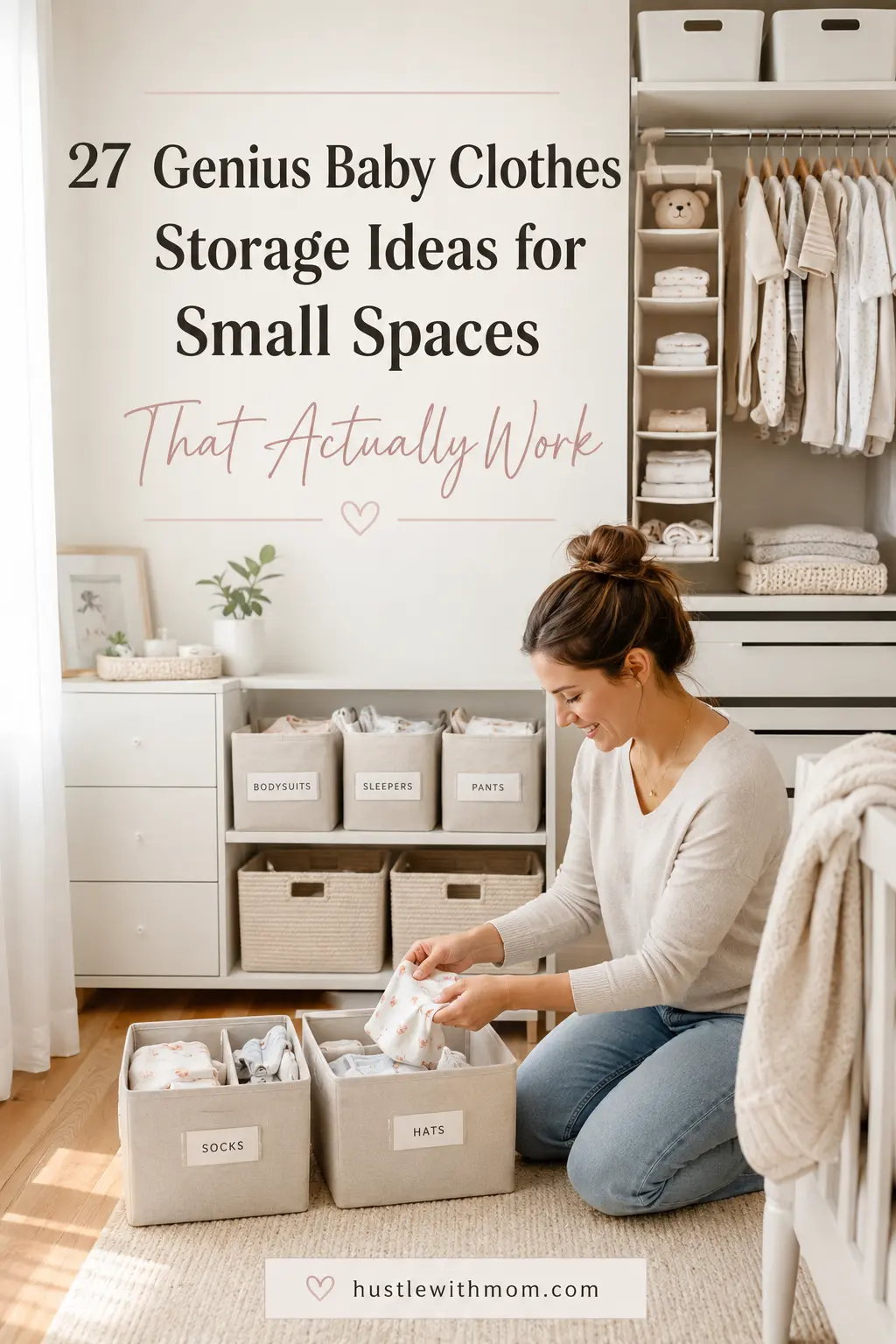
The first time I stood in our tiny apartment nursery holding a laundry basket stuffed with onesies, I genuinely wanted to cry. We had a one-bedroom, a closet the size of a phone booth, and a newborn who somehow owned more clothes than I did. That’s when I went down the rabbit hole of baby clothes storage ideas for small spaces, and honestly, most of what I found online was the same recycled list of “use bins” and “try baskets” with zero real detail.
So this is the guide I wish I had. Everything here I’ve actually tried in a real small apartment, not just pinned on Pinterest and forgotten. Some of it worked beautifully. Some of it was a total flop (I’ll tell you which). Let’s get into it.
Why Baby Clothes Take Over Small Spaces So Fast
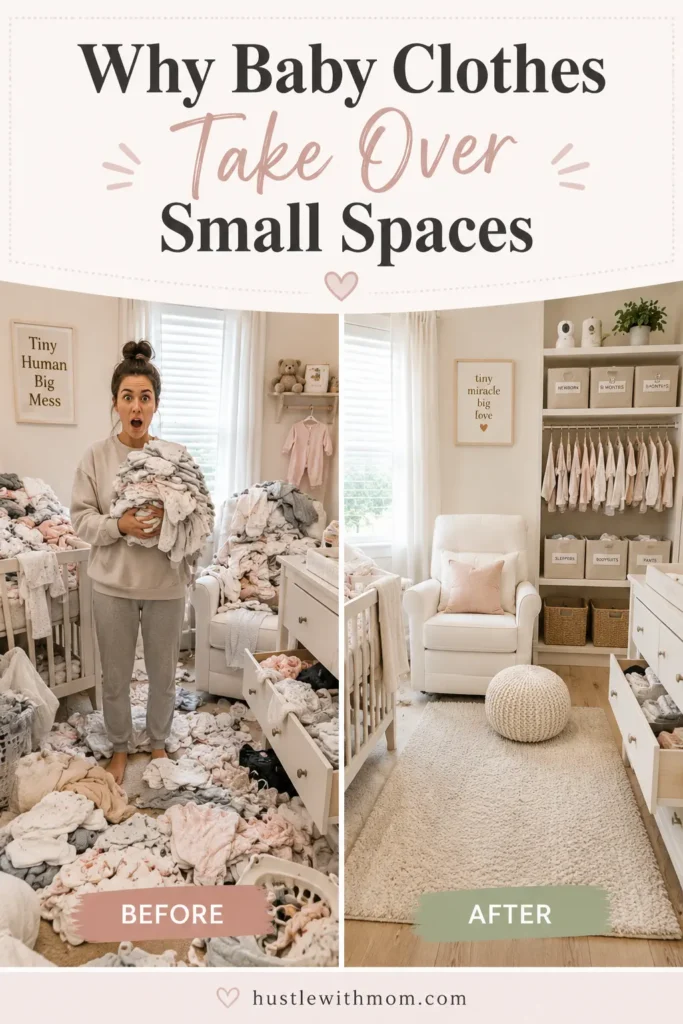
Nobody warns you how quickly baby clothes multiply. Between newborn sizes, 0 to 3 months, gifts from grandma, and hand me downs from friends, you can end up with three or four sizes in rotation at once, even though baby only wears one size at a time.
Add in the fact that babies grow out of clothes every six to eight weeks in the first year, and you’ve got a constant cycle of new clothes coming in and outgrown clothes that need somewhere to go. In a small nursery or shared bedroom, that cycle gets overwhelming fast if you don’t have a system.
Start Here: How Much Baby Clothing Do You Actually Need?
Before you buy a single bin or organizer, do yourself a favor and sort through what you actually have. This step alone solved half my storage problem, before I even added any new furniture.
For a newborn, you realistically only need:
- 8 to 10 sleepers or footed pajamas
- 6 to 8 onesies or bodysuits
- 4 to 5 “going out” outfits
- A handful of socks, hats, and mittens
Anything beyond that is just sitting in a drawer taking up small space storage you don’t have to spare. If you’re drowning in gifted clothes, it’s completely fine to set aside the extras for later sizes or pass them along. Fewer clothes in rotation means less to organize and less daily stress, which honestly ties into the bigger picture of staying sane as a new parent. I talk more about cutting the mental load in my post on mom hacks that actually work, and a lot of those same “less is more” principles apply directly to the nursery.
Baby Clothes Storage Ideas for a Small Closet
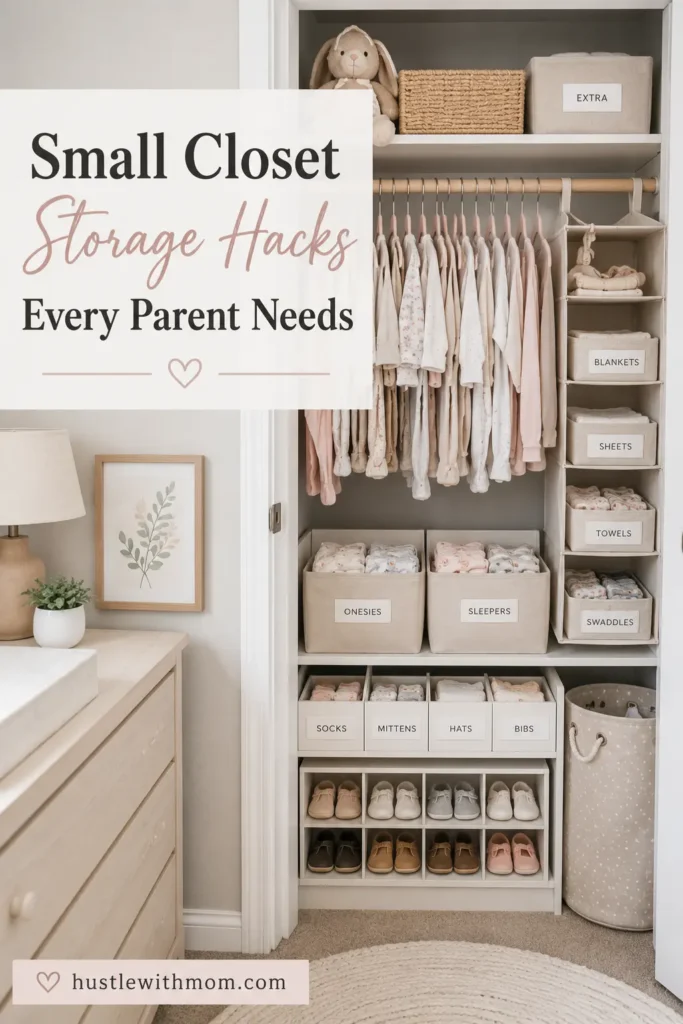
If your nursery closet is on the small side, these are the tips that made the biggest difference for us.
1. Add a second, lower closet rod. Baby clothes are so short that a single full height rod wastes a ton of vertical space. We installed a second rod about knee height below the existing one and instantly doubled our hanging space for around $15.
2. Use a hanging closet organizer. These fabric shelf units hang from the closet rod and give you six to ten “shelves” without taking up any floor space. We dedicated one shelf per clothing type: onesies, sleepers, pants, and so on.
3. Add closet dividers by size. Simple clip on dividers labeled by size (Newborn, 0 to 3 months, 3 to 6 months) keep everything sorted so you’re not digging through a mixed pile every morning.
4. Use an over the door organizer. The back of the closet door is one of the most wasted spots in any small nursery. A clear pocket organizer works great for socks, bibs, hats, and mittens.
Baby Clothes Storage Ideas for a Dresser or Small Drawer Space
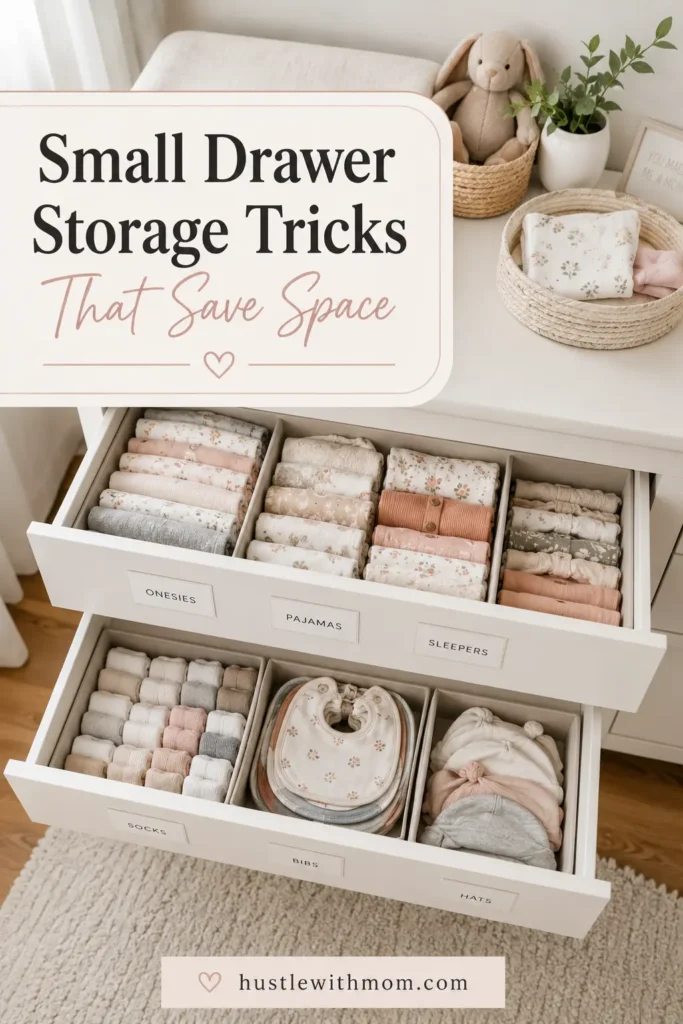
This is where most of my trial and error happened.
5. Try the file folding method. Instead of stacking clothes flat, fold each item and stand it up on its edge, like files in a filing cabinet. This is often called the KonMari method, and it means you can see every single item in the drawer at a glance instead of digging to the bottom.
6. Use the rolling method for tighter drawers. Rolling works especially well for onesies and pants in narrow drawers where standing items up isn’t practical.
7. Add drawer dividers. Cheap fabric or plastic dividers let you fit multiple clothing types in one drawer, which matters a lot when you don’t have a full dresser.
8. Repurpose a nightstand drawer. If your nursery came with a nightstand, use it. Babies don’t need much bedside storage, so that drawer space is basically free real estate for socks and small items.
9. Turn a dresser into a changing station. Skip the bulky changing table entirely. A changing pad on top of a dresser gives you the same function while keeping every drawer free for nursery organization.
No Closet, No Dresser? Here’s What Actually Works
This is the part almost nobody covers, and it’s the exact situation I was in for the first few months. If your baby is sharing your room or you simply don’t have furniture yet, you’re not out of options.
10. Use fabric bins on open shelving. A basic bookshelf or cube shelf with labeled fabric bins can hold an entire wardrobe’s worth of clothes without a single drawer.
11. Add a cube storage unit. These inexpensive units (IKEA’s Kallax is the classic example) double as furniture and clothes storage, and later they convert easily into toy storage.
12. Try a portable wardrobe. A collapsible fabric wardrobe essentially gives you an instant second closet you can tuck into any corner, which was a lifesaver for us during a move.
13. Install a wall mounted pegboard. Pegboards with small hooks and baskets work surprisingly well for hanging a few outfits and holding accessories, and they take up zero floor space.
Under the Bed and Under the Crib Storage Ideas
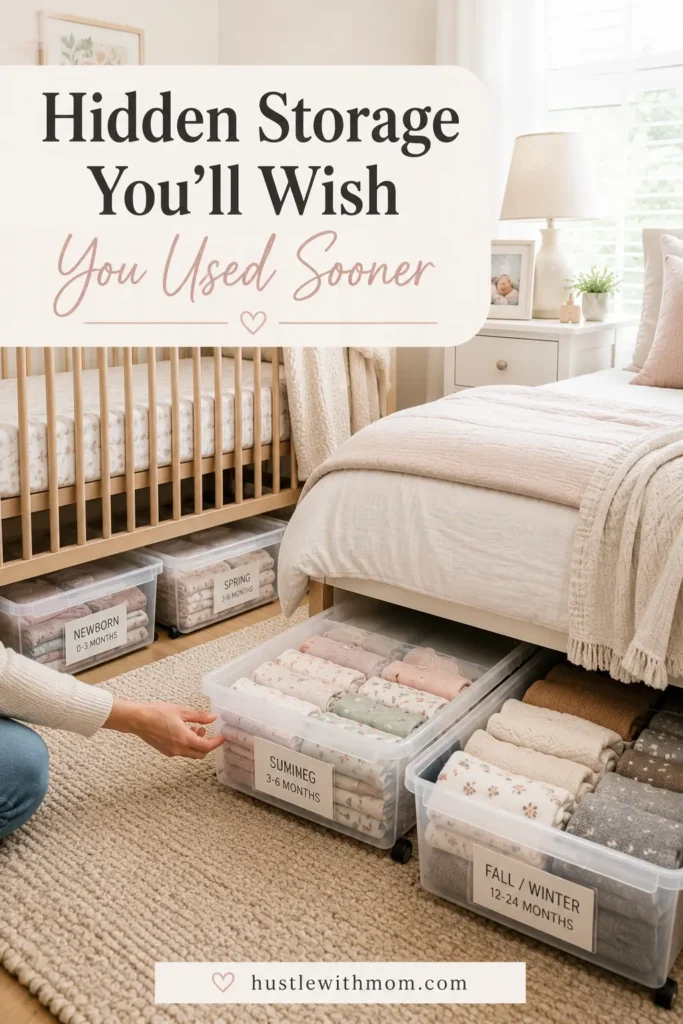
14. Use shallow, flat storage bins under the crib. There’s almost always unused space under a crib, and flat under bed totes slide right in.
15. Use the space under your own bed too. If under crib storage is full, don’t forget your bedroom. This is our go to spot for seasonal clothes and next size up items baby hasn’t grown into yet.
16. Store hand me downs here. Under bed bins are perfect for clothes you’re saving for a future sibling, since they’re out of sight but easy to pull out when needed.
Vertical and Wall Storage Ideas to Free Up Floor Space
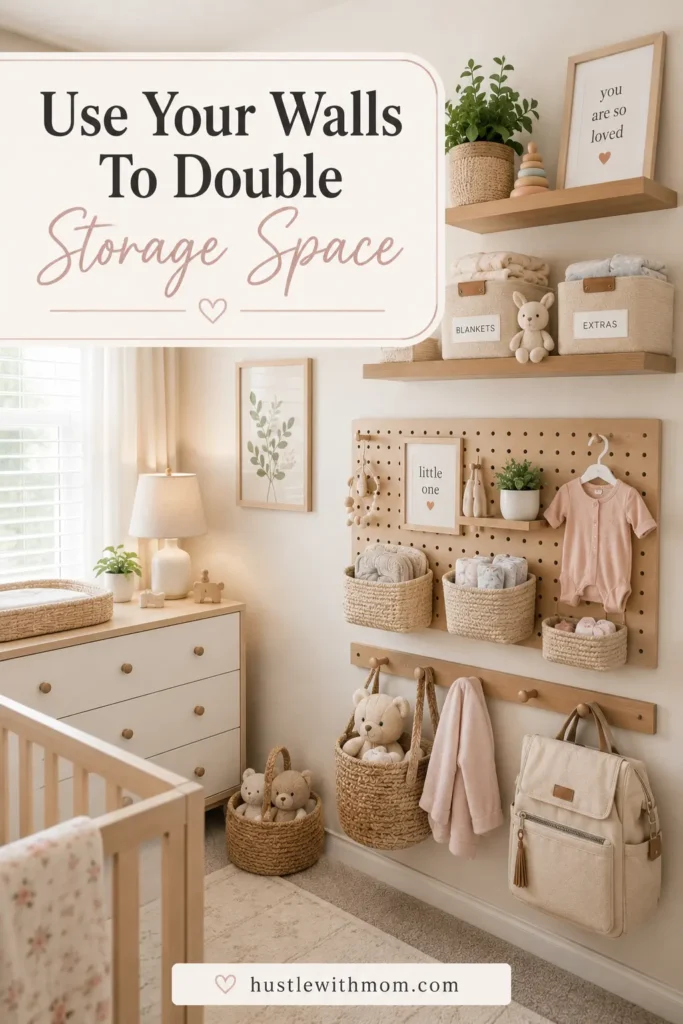
17. Add floating shelves with baskets. Shelves above the changing area hold folded clothes and diapers within reach without cluttering the floor.
18. Use hanger clips to multiply hanging space. Clip several onesies to a single hanger and you can fit triple the clothes on the same rod length.
19. Hang a shelf with an S-hook bar underneath. This gives you fold-and-hang storage in the same vertical footprint.
20. Consider the crib shelving. Just make sure anything installed above the crib is securely mounted and completely out of the baby’s reach, since nursery safety always comes first. If you’re also rethinking what else belongs near the crib, it’s worth reading up on nursery airflow and safety questions like whether babies can safely sleep with a ceiling fan on while you’re setting up the room.
Budget-Friendly Baby Clothes Storage Ideas
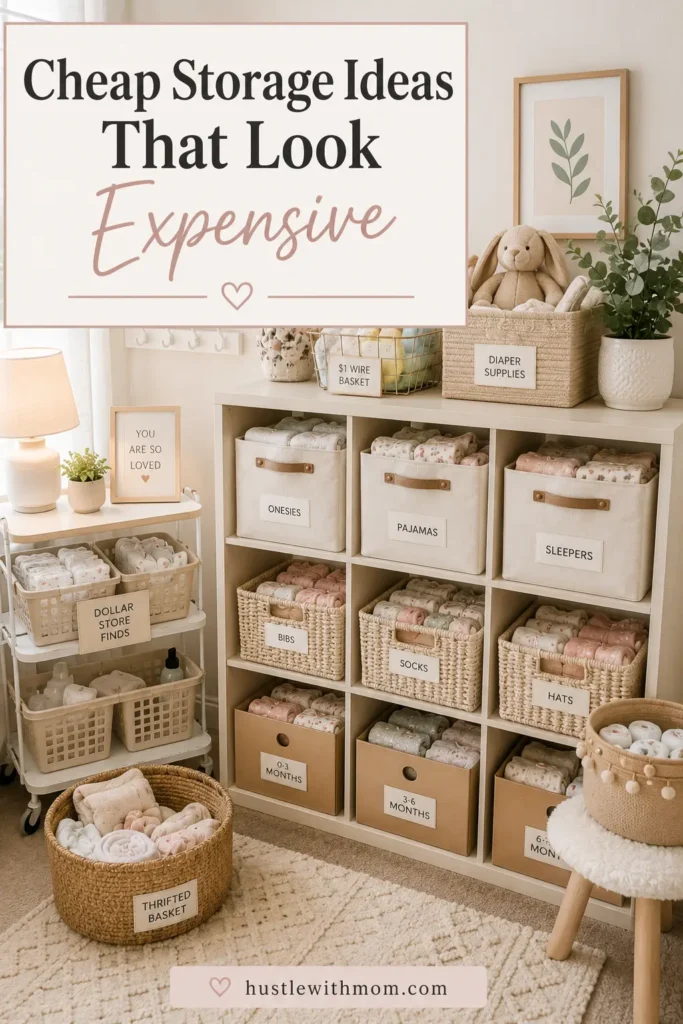
You don’t need to spend a lot to solve a small space problem. Here’s how I’d break it down by budget.
Free or almost free: repurposing an existing nightstand drawer, using shoeboxes as makeshift drawer dividers, hanging clips you already own.
Under $25: basic fabric bins, a hanging closet organizer, drawer dividers, an over-the-door organizer.
Worth the splurge: a cube storage unit that will later become toy storage, or a portable wardrobe if you genuinely have no closet space at all.
How to Organize Baby Clothes by Size and Season
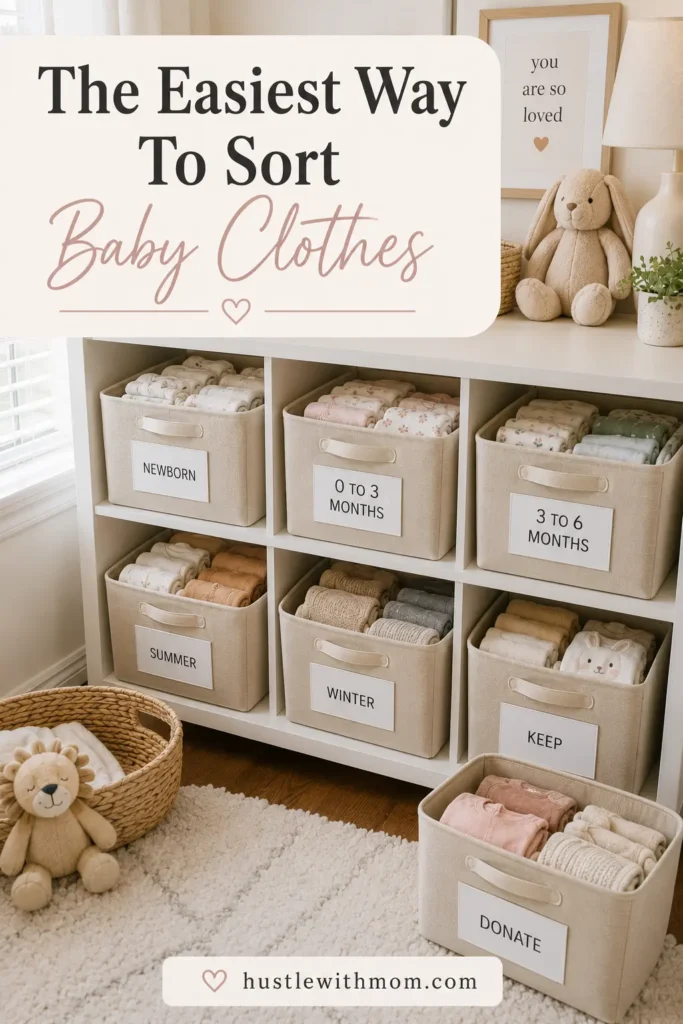
Storage only works if you can actually maintain it, which is the piece most guides skip entirely.
Here’s the simple labeling system that finally worked for us:
- Sort every item by size, not by season, since the baby will grow into the next size before the seasons even change.
- Use a Sharpie and masking tape (or printable labels) on each bin, marked clearly with the size range.
- Keep only the current size within arm’s reach and store the next size up wherever you have spare space, like under the bed.
- The moment a baby outgrows a size, box it up immediately instead of letting it pile up in the current rotation drawer.
This one habit, boxing up outgrown clothes right away instead of “getting to it later,” made a bigger difference in our space than any storage product we bought.
Small Space Baby Clothes Storage Mistakes to Avoid
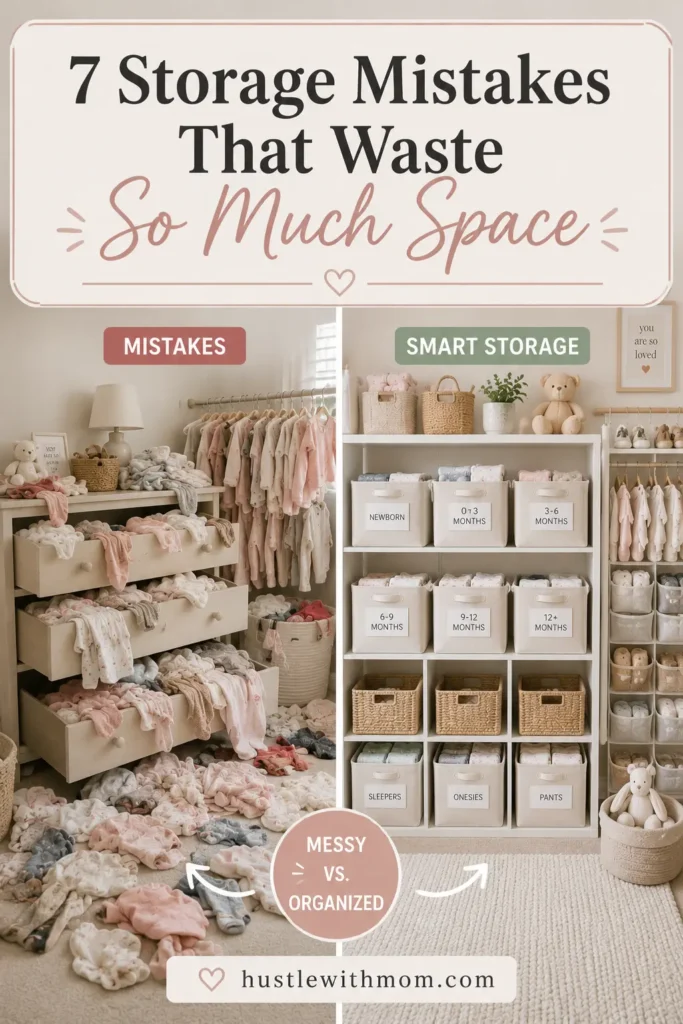
- Buying oversized bins. A giant tote might seem efficient, but it becomes nearly impossible to lift once full and wastes vertical space in a small closet.
- Keeping every gifted outfit. It’s tempting, but holding onto clothes baby will never fit into just clutters your small space storage for no reason.
- Mixing all sizes in one drawer. This is the fastest way to lose track of what actually fits right now.
- Forgetting a changing table takes up floor space you don’t have. A simple pad on a dresser does the exact same job.
If storage chaos is adding to your stress level in general, it might help to pair this system with a broader reset. I found a lot of overlap between decluttering the nursery and just generally feeling less exhausted as a new mom, since fewer things to manage really does mean fewer decisions each day.
FAQ’S
How do I organize baby clothes without a closet?
Lean on furniture alternatives like cube shelving, a portable wardrobe, or open shelves with labeled fabric bins. You don’t need a built in closet to keep things organized.
How many baby clothes do I actually need for a newborn?
Around 15 to 18 total pieces in rotation is plenty for most newborns, including sleepers, onesies, and a few outfits for outings.
What’s the best way to fold baby clothes to save space?
The file folding method (standing clothes upright in a drawer) lets you see everything at once and fits more than traditional stacking.
Where should I store clothes baby has outgrown?
Under bed bins or under crib totes, labeled by size, are ideal since they’re out of the daily rotation but still easy to access when a future sibling or friend needs them.
Final Thoughts
Small space baby clothes storage really comes down to using every inch you have, closet, dresser, walls, and the space under furniture, while keeping only what you actually need in rotation. It’s less about buying the perfect organizer and more about building a simple system you’ll actually keep up with on a tired Tuesday morning.
Start with one or two ideas from this list, see what fits your space, and build from there. You’ll be surprised how much room you actually have once everything has a proper home.