

Many parents quietly stand beside the crib at night wondering, “Can babies sleep with ceiling fan on?” I remember asking myself the same question during a warm summer night. The nursery felt stuffy, but I worried a fan might make the room too cold or even make my baby sick. After speaking with our pediatrician and reading safe sleep recommendations, I learned that using a ceiling fan correctly can actually help create a safer and more comfortable sleep environment.
The key is knowing how to use it properly. A gentle breeze, the right room temperature, and safe sleep practices all work together to help your baby sleep comfortably. In fact, research has found that proper air circulation during sleep may reduce the risk of Sudden Infant Death Syndrome (SIDS), making this a question every new parent should understand.
In this guide, you’ll learn when a ceiling fan is safe, how it benefits your baby, the mistakes many parents make, and exactly how to use one the right way.
If you’re building the perfect sleep routine, you may also find our guide on how long a baby can sleep in a bassinet helpful.
Is It Safe for Babies to Sleep with a Ceiling Fan On?
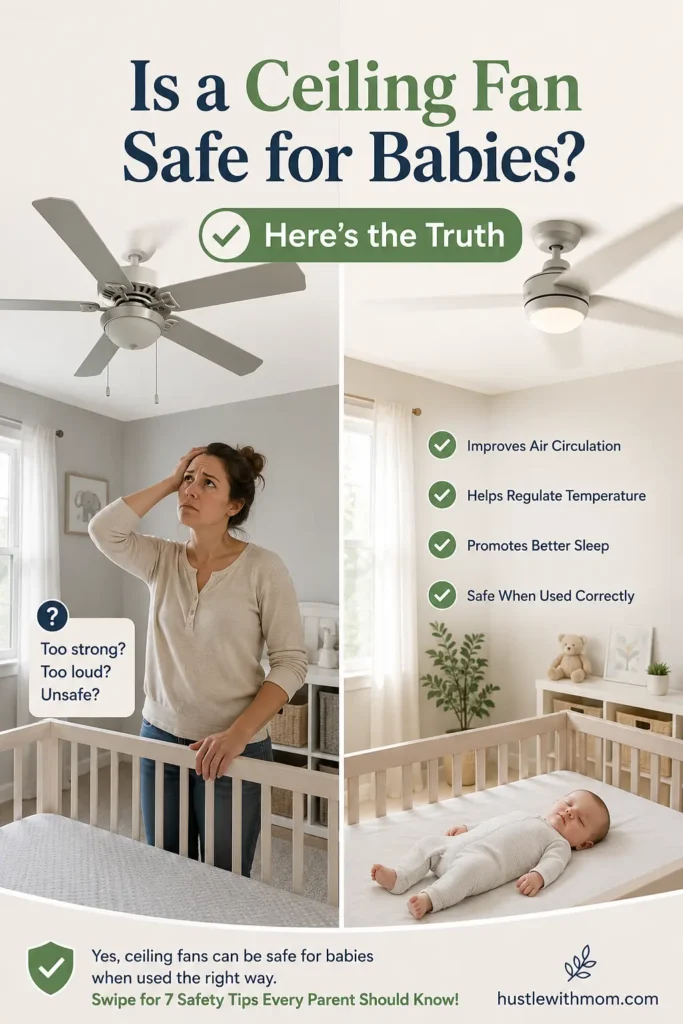
The short answer is yes.
Babies can sleep with a ceiling fan on as long as you use it safely. The fan should provide gentle air circulation instead of blowing directly onto your baby’s crib.
Unlike air conditioners, ceiling fans do not actually cool the room. Instead, they move the air around the nursery. Better air circulation helps prevent hot spots, improves ventilation, and can reduce overheating, which is one of the known risk factors associated with Sudden Infant Death Syndrome (SIDS).
The American Academy of Pediatrics recommends creating a safe sleep environment by:
• Placing babies on their backs for every sleep.
• Using a firm mattress.
• Keeping the crib free from blankets, pillows, bumper pads, and stuffed toys.
• Maintaining a comfortable room temperature.
A ceiling fan should support these safe sleep practices, not replace them.
Why Good Airflow Matters
Think about a bedroom that feels hot and stuffy after the door has been closed for hours. Babies can experience the same discomfort because they cannot regulate their body temperature as efficiently as older children.
Gentle airflow helps by:
• Reducing stagnant air.
• Improving oxygen circulation.
• Preventing excessive heat from building around the crib.
• Creating a more comfortable sleep environment.
The goal isn’t to make your baby feel cold. It’s to keep the room comfortable and well ventilated.
Can a Ceiling Fan Reduce the Risk of SIDS?
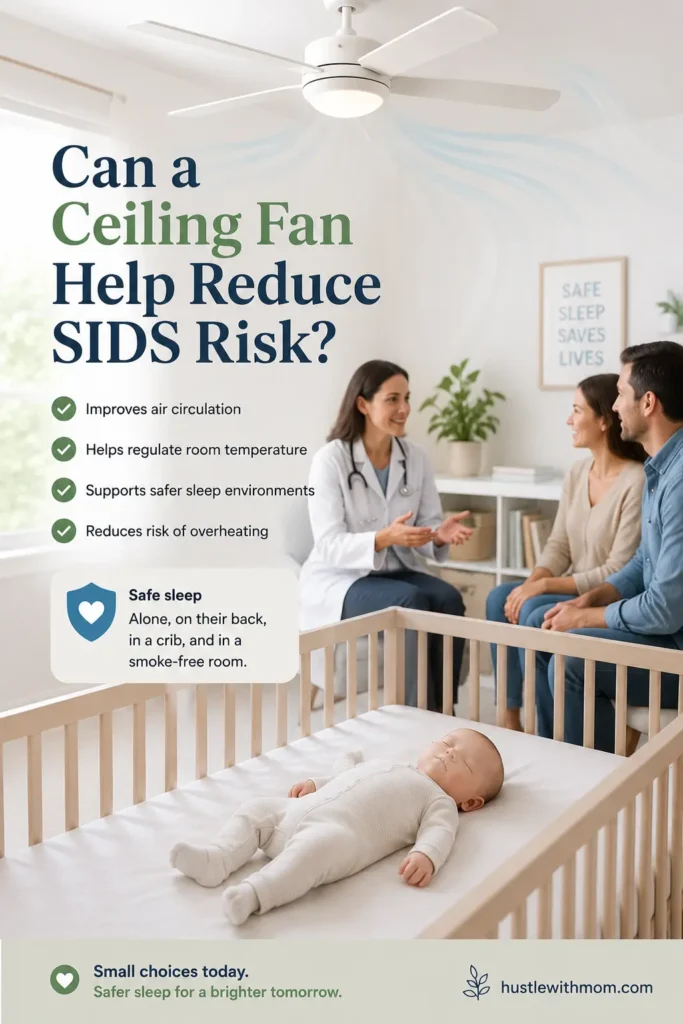
This is one of the biggest reasons parents ask whether babies can sleep with a ceiling fan on.
A widely cited study published in Archives of Pediatrics & Adolescent Medicine found that babies who slept in rooms with a fan running had a significantly lower risk of Sudden Infant Death Syndrome (SIDS) compared with babies who slept without one.
Researchers believe this may happen because moving air helps:
• Reduce carbon dioxide buildup around the baby’s face.
• Improve room ventilation.
• Lower the chance of overheating.
It’s important to understand that a ceiling fan does not prevent SIDS on its own.
Safe sleep always includes:
• Back sleeping.
• A bare crib.
• A firm mattress.
• Appropriate room temperature.
• A smoke free environment.
A ceiling fan is simply one helpful piece of a much bigger safe sleep plan.
Why a Ceiling Fan Can Help Your Baby Sleep Better
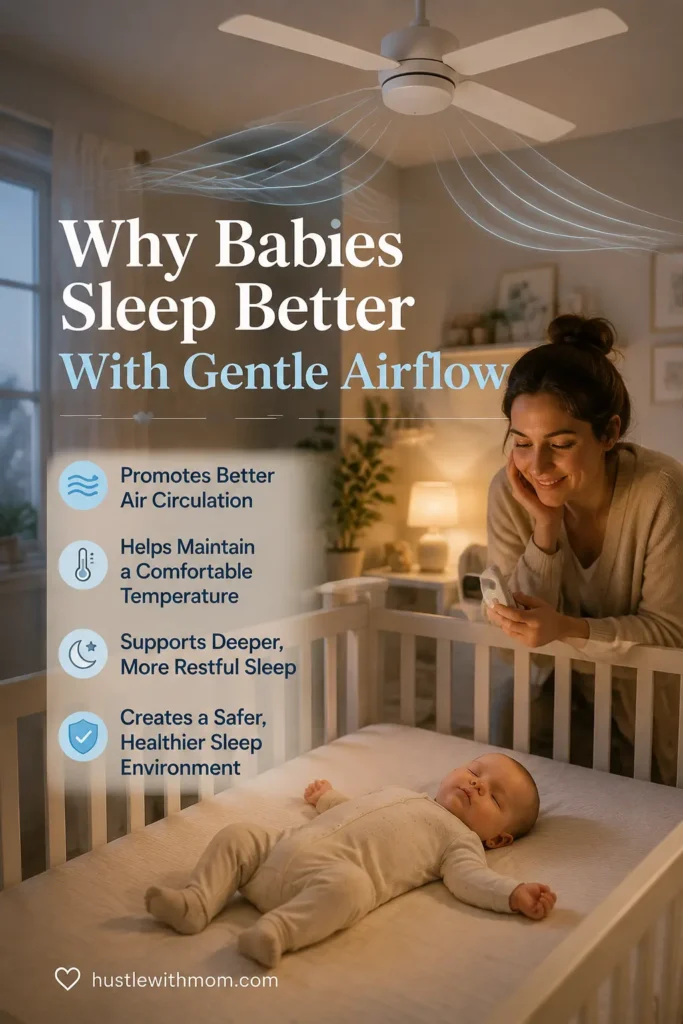
After using a ceiling fan in our nursery, the biggest difference wasn’t that the room felt colder. It simply felt fresher.
Instead of waking because the room became warm during the night, our baby slept more comfortably, especially during warmer months.
Here are the biggest benefits.
1. Better Air Circulation
Good air circulation prevents warm air from becoming trapped around your baby’s sleeping area.
Instead of creating cold drafts, a ceiling fan gently moves air throughout the room, helping maintain a consistent temperature.
This is especially useful in upstairs bedrooms, where heat naturally rises.
2. Helps Prevent Overheating
Overheating is one of the most important sleep safety concerns for infants.
Babies cannot cool themselves as efficiently as adults.
A ceiling fan helps disperse warm air throughout the nursery, reducing the chances of your baby becoming too warm while sleeping.
You should still dress your baby according to the room temperature instead of assuming the fan is doing all the work.
3. Creates Gentle White Noise
Many parents spend money on expensive white noise machines.
A ceiling fan often creates a soft, consistent background sound that naturally masks:
• Barking dogs.
• Traffic.
• Doors closing.
• Household conversations.
Steady background noise can help babies settle more easily and stay asleep longer.
If your little one struggles with frequent wake ups, our guide on why your baby is waking at 5 AM covers other common sleep disruptions and practical ways to fix them.
4. Keeps the Nursery More Comfortable
Have you ever noticed one side of a room feels much warmer than the other?
Ceiling fans help eliminate these uneven temperatures.
Instead of creating hot and cold spots, the fan keeps the nursery feeling more balanced throughout the night.
5. Helps During Warm Summer Nights
Not every home has central air conditioning.
A ceiling fan can make warm nights much more comfortable without dramatically changing indoor humidity.
This can be especially useful during spring and summer when nursery temperatures tend to rise overnight.
6. Keeps the Fan Safely Out of Reach
Unlike portable fans, ceiling fans stay mounted on the ceiling.
That means there are:
• No electrical cords.
• No tipping hazards.
• No blades within a child’s reach.
This makes ceiling fans one of the safest options for improving nursery airflow.
7. May Improve Overall Sleep Quality
When babies aren’t waking because they’re too warm or uncomfortable, they often sleep more peacefully.
A comfortable nursery supports longer stretches of uninterrupted sleep.
Of course, every baby is different. Hunger, growth spurts, teething, and developmental milestones can still affect sleep.
If your baby frequently wakes when their pacifier falls out, you might also enjoy our article on why babies cry when the pacifier falls out and simple ways to help.
Quick Safety Checklist Before Bed
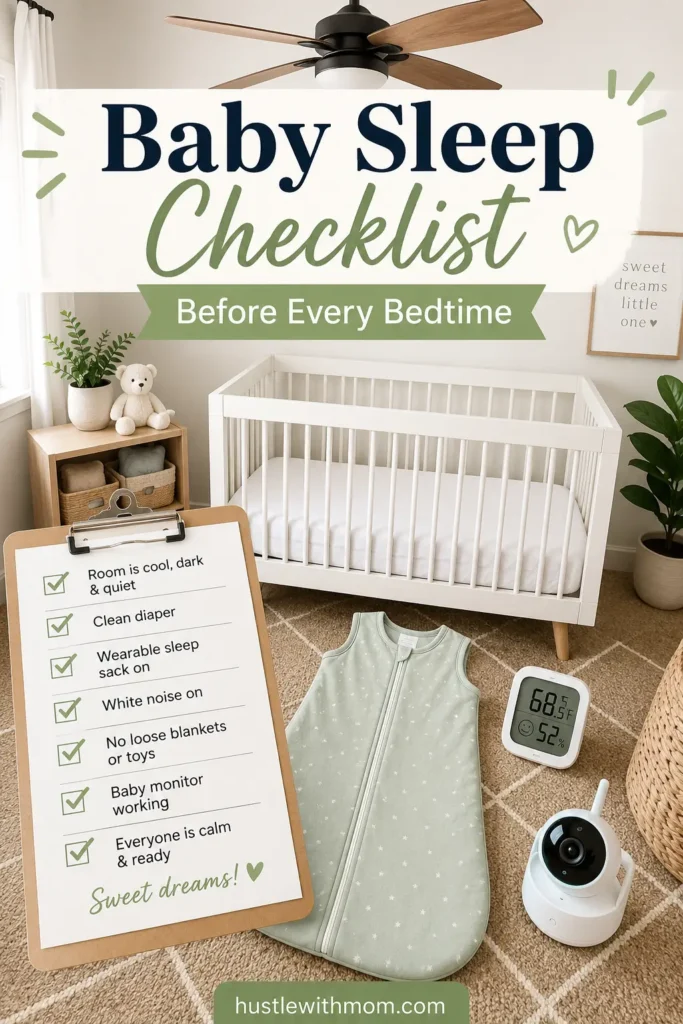
Before switching on your ceiling fan, run through this simple checklist.
✔ Keep the fan on a low or medium speed.
✔ Make sure the airflow does not blow directly onto your baby’s face.
✔ Maintain a nursery temperature between 68°F and 72°F (20°C to 22°C).
✔ Dress your baby in breathable sleepwear.
✔ Use an appropriate sleep sack instead of loose blankets.
✔ Check your baby’s neck or chest for warmth instead of their hands or feet.
✔ Clean fan blades regularly to reduce dust, allergens, and airborne particles.
These small habits can make a noticeable difference in your baby’s comfort and safety while sleeping.
How to Use a Ceiling Fan Safely for Your Baby
Knowing that babies can sleep with a ceiling fan on is only half the answer. The real difference comes from using it correctly. A few small adjustments can keep your nursery comfortable while following safe sleep recommendations.
1. Keep the Airflow Indirect
One of the biggest mistakes parents make is placing the crib directly under the fan.
A gentle breeze is helpful. Strong airflow blowing continuously onto your baby’s face is not.
Instead:
• Position the crib away from the strongest airflow.
• Let the fan circulate air around the room.
• Use a low or medium speed setting.
A good test is to stand where your baby sleeps. If you feel a strong breeze on your face, reduce the fan speed or adjust the crib’s position.
2. Maintain the Right Nursery Temperature
A ceiling fan helps circulate air, but it doesn’t replace monitoring the room temperature.
Most pediatric experts recommend keeping the nursery between 68°F and 72°F (20°C to 22°C).
A small digital room thermometer is inexpensive and takes the guesswork out of bedtime.
Nursery Temperature Guide
| Room Temperature | Recommended Clothing |
| Below 68°F (20°C) | Long sleeve sleepsuit with an appropriate TOG sleep sack |
| 68°F to 72°F (20°C to 22°C) | Cotton sleepsuit and breathable sleep sack |
| Above 72°F (22°C) | Lightweight cotton clothing or a diaper with a lightweight sleep sack if appropriate |
Avoid dressing your baby based only on how you feel. Babies regulate body temperature differently than adults.
3. Choose Breathable Sleepwear
The safest sleep clothing allows your baby’s body heat to escape naturally.
Look for:
• Breathable cotton.
• Bamboo fabric.
• TOG rated sleep sacks.
Avoid:
• Thick fleece unless the room is cold.
• Hats during sleep.
• Loose blankets.
• Heavy comforters.
Loose bedding increases the risk of suffocation and should never be placed inside the crib.
4. Check Your Baby’s Temperature Correctly
Many parents touch their baby’s hands or feet.
That usually leads to unnecessary worry.
It’s completely normal for a baby’s hands and feet to feel cooler than the rest of their body.
Instead, gently feel:
• The back of the neck.
• The upper chest.
Signs your baby is comfortable include:
• Warm but not sweaty skin.
• Dry neck.
• Peaceful sleep.
• Normal breathing.
Signs your baby may be too warm include:
• Sweaty hair.
• Flushed cheeks.
• Damp clothing.
• Restlessness.
If your baby feels overheated, remove one layer of clothing before adjusting the room temperature.
5. Clean Your Ceiling Fan Regularly
This step is easy to overlook.
Dust collects on ceiling fan blades over time. Every time the fan runs, it can circulate dust, allergens, and other airborne particles around the nursery.
Try to wipe the blades every three to four weeks.
If someone in your home has allergies, cleaning them more often is a good idea.
6. Use the Correct Fan Direction
Many people don’t realise most ceiling fans have two rotation settings.
During Summer
Use the counter clockwise setting.
This creates a gentle downward breeze that improves air circulation and keeps the room comfortable.
During Winter
Switch the fan to clockwise at a low speed.
This pushes warm air that collects near the ceiling back into the room without creating a cold draft around your baby.
Ceiling Fan vs Air Conditioner. Which Is Better for Babies?
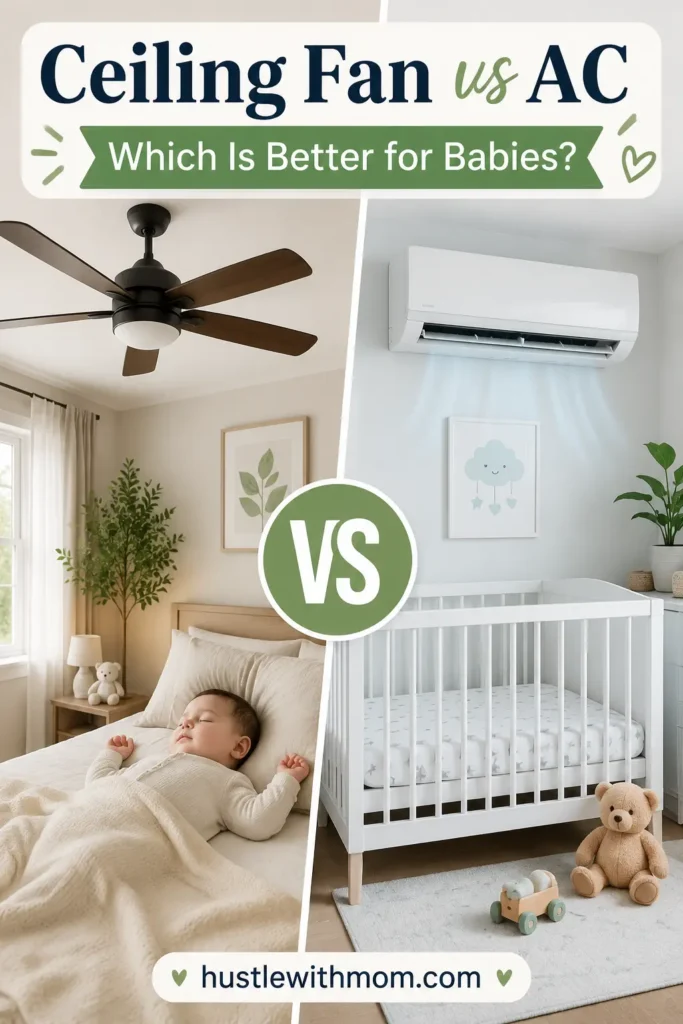
Parents often wonder whether they should use a ceiling fan, an air conditioner, or both.
Here’s a simple comparison.
| Ceiling Fan | Air Conditioner |
| Improves air circulation | Lowers room temperature |
| Uses less electricity | Uses more electricity |
| Doesn’t significantly change humidity | Can dry indoor air |
| Creates gentle white noise | Usually quieter but varies by model |
| Helps distribute air evenly | Can create cold spots |
Many families use both together.
For example:
• Set the air conditioner to maintain the nursery around 70°F (21°C).
• Run the ceiling fan on a low setting to circulate the cool air evenly.
If your baby has dry skin or eczema, consider using a humidifier if your air conditioner makes the room too dry.
Common Mistakes Parents Make
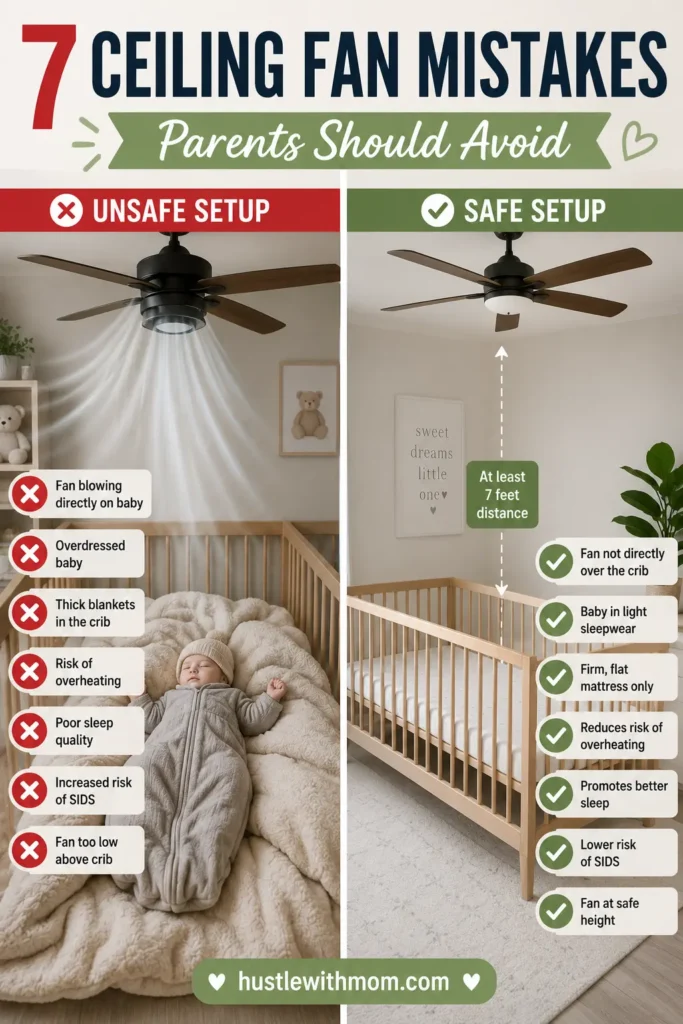
Even experienced parents sometimes make these mistakes.
Pointing the Fan Directly at the Crib
Continuous airflow onto your baby’s face isn’t necessary.
Gentle circulation throughout the room works much better.
Turning the Fan on High Speed
More airflow doesn’t mean safer sleep.
A low or medium setting is usually enough.
Dressing Baby Too Warmly
Parents often add extra layers because the fan is running.
This can actually increase the risk of overheating.
Dress your baby according to the room temperature instead.
Forgetting to Monitor the Room Temperature
A fan doesn’t tell you how warm the nursery actually is.
A room thermometer gives you accurate information every night.
Ignoring Dust Build Up
Dirty fan blades spread dust throughout the room.
Regular cleaning helps maintain better indoor air quality.
Using Loose Blankets
Some parents add blankets because they’re worried the fan will make their baby cold.
Instead, use a properly fitted sleep sack designed for your nursery temperature.
If you’re preparing your baby’s sleep space before birth, our guide to a pregnancy meal prep plan can also help you simplify those busy first weeks after delivery, leaving more time to focus on your baby’s routine.
Myths vs Facts About Babies Sleeping with Ceiling Fans
Parents hear a lot of conflicting advice from friends, relatives, and social media.
Let’s separate fact from fiction.
| Myth | Fact |
| A ceiling fan will make my baby sick. | A ceiling fan simply circulates air. Illnesses are caused by viruses and bacteria, not moving air. |
| Babies should never sleep with a fan on. | Babies can safely sleep with a ceiling fan on when it’s used correctly and safe sleep guidelines are followed. |
| Stronger airflow is better. | Gentle air circulation is all that’s needed. |
| Cold hands mean my baby is cold. | Hands and feet are often naturally cooler. Check the neck or chest instead. |
| A fan replaces safe sleep practices. | A ceiling fan is only one part of a safe sleep environment. Babies should always sleep on their back in a bare crib. |
| A fan can replace an air conditioner. | Ceiling fans improve airflow but don’t lower the actual room temperature like an air conditioner does. |
Can Babies Sleep with a Ceiling Fan On During Every Season?
Yes, but you should adjust how you use it throughout the year.
Spring
Spring temperatures often change from day to night.
Check the nursery before bedtime and adjust clothing if needed.
Summer
Summer is when ceiling fans are most useful.
Run the fan on a low or medium setting and avoid overdressing your baby.
Autumn
As temperatures begin to cool, you may only need the fan on warmer evenings.
Monitor the nursery instead of following the calendar.
Winter
Many parents stop using their ceiling fan completely during winter.
In reality, running it on the reverse setting at a low speed can help distribute warm air more evenly throughout the room.
The goal remains the same in every season.
Keep the nursery comfortable, maintain gentle ventilation, and always prioritise safe sleep practices.
Signs Your Baby Is Comfortable While Sleeping
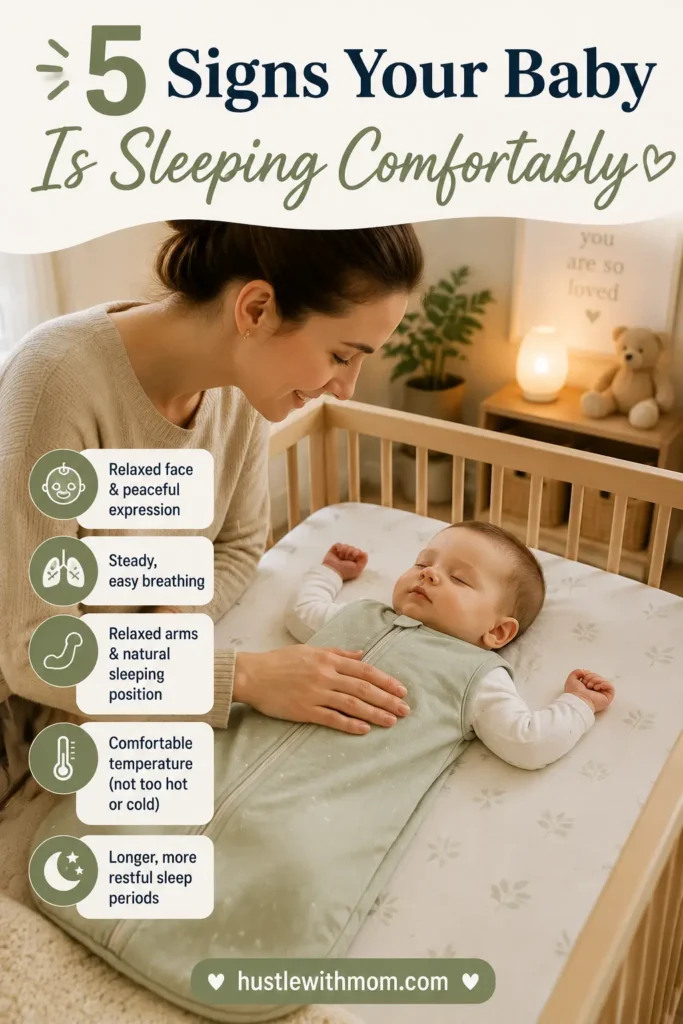
Every baby is different, but there are a few reliable signs that tell you the nursery temperature and airflow are just right.
When I became a parent, I checked my baby’s hands constantly. They often felt cool, and I assumed the room was too cold. Our pediatrician quickly reassured us that cool hands and feet are completely normal. The neck and chest give a much better indication of your baby’s temperature.
Here are signs your baby is sleeping comfortably:
• Their neck and chest feel warm, not hot.
• Their skin is dry, without sweat.
• Their breathing is calm and regular.
• They settle easily after being put down.
• They wake for feeds without seeming overly hot or cold.
• They sleep for age appropriate stretches.
If your baby is restless, remember that temperature isn’t always the cause. Hunger, teething, growth spurts, and sleep associations are often responsible.
If your baby wakes very early each morning, our guide on why your baby is waking at 5 AM explains several common reasons and practical solutions.
Signs Your Baby May Be Too Warm or Too Cold
Signs of Overheating
Keeping your baby from becoming too warm is one of the most important parts of safe sleep.
Watch for these signs:
• Sweaty hair or neck.
• Damp clothing.
• Flushed or red cheeks.
• Rapid breathing.
• Feeling hot on the chest or back.
• Fussiness that improves after removing a clothing layer.
Signs Your Baby May Be Too Cold
While babies are more likely to overheat than become dangerously cold indoors, these signs can indicate they need another light layer:
• Cool chest or neck.
• Shivering in older babies.
• Difficulty settling because they’re uncomfortable.
Avoid piling on blankets. Instead, use an appropriate TOG-rated sleep sack and adjust clothing according to the nursery temperature.
When Should You Avoid Using a Ceiling Fan?
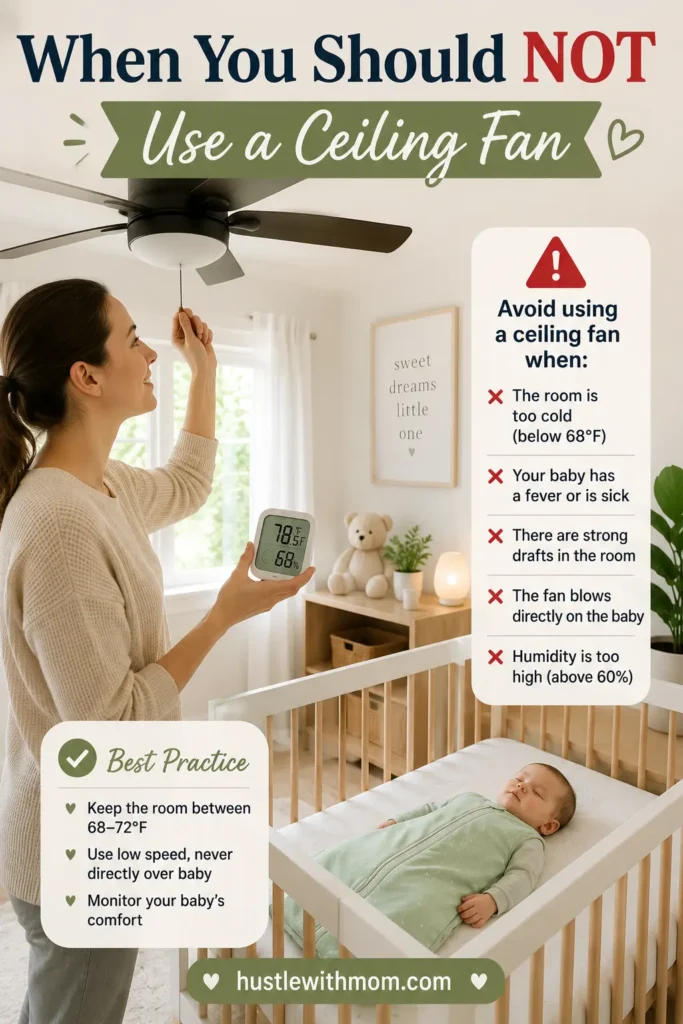
Although babies can sleep with a ceiling fan on safely, there are a few situations where extra caution is needed.
The Fan Blows Directly on the Crib
If the airflow constantly hits your baby’s face, move the crib or reduce the fan speed.
Indirect air circulation is much more comfortable.
The Nursery Is Already Cold
If the room temperature is below the recommended range, you may not need the fan at all.
Check the thermometer before turning it on.
The Fan Is Dirty
Dusty fan blades spread dust, pet dander, and other allergens around the room.
Clean the blades regularly to improve indoor air quality.
The Fan Wobbles or Makes Noise
A loose or damaged ceiling fan can become a safety concern.
If you notice unusual vibrations or sounds, repair or replace it before using it in your baby’s nursery.
Additional Safe Sleep Tips Recommended by Pediatricians
A ceiling fan is only one part of creating a safe sleep environment.
Experts, including the American Academy of Pediatrics (AAP), recommend following these safe sleep habits every night.
Always Place Your Baby on Their Back
Back sleeping remains the safest position for infants until they can roll independently.
Avoid placing babies on their side or stomach for sleep.
Use a Firm Sleep Surface
Choose a safety approved crib, bassinet, or play yard with a firm mattress and fitted sheet.
Soft mattresses increase the risk of sleep related injuries.
If you’re deciding where your newborn should sleep, you may also like our guide on how long babies can safely sleep in a bassinet.
Keep the Crib Empty
The crib should contain only:
• Your baby.
• A fitted sheet.
Avoid:
• Pillows.
• Blankets.
• Stuffed animals.
• Positioners.
• Bumper pads.
Share the Room, Not the Bed
The AAP recommends room sharing for at least the first six months whenever possible.
Room sharing lowers the risk of Sudden Infant Death Syndrome (SIDS) while giving your baby a separate, safe sleep space.
Dress Your Baby Appropriately
A breathable cotton sleepsuit and sleep sack are usually enough.
If you feel comfortable in the room, your baby probably doesn’t need many more layers than you’re wearing.
FAQ’s
Can babies sleep with a ceiling fan on all night?
Yes. Babies can sleep with a ceiling fan on throughout the night if it’s set to a low or medium speed and doesn’t blow directly on the crib. The room should remain between 68°F and 72°F (20°C to 22°C).
Can a ceiling fan make my baby sick?
No. Ceiling fans do not cause colds or viral illnesses. They simply improve air circulation. Illnesses are caused by viruses and bacteria, not moving air.
Is a ceiling fan better than an air conditioner?
They serve different purposes.
A ceiling fan circulates air, while an air conditioner lowers the room temperature. Many parents use both together for the most comfortable nursery.
Should the crib be directly under the ceiling fan?
It’s better to position the crib away from direct airflow.
Gentle circulation throughout the room is ideal.
What fan speed is safest for babies?
Low or medium speed is usually recommended.
The goal is steady airflow, not a strong breeze.
Should I use a blanket if the fan is on?
No.
Loose blankets should never be placed in a baby’s crib.
Instead, dress your baby in breathable clothing and use a properly fitted sleep sack if an extra layer is needed.
Expert Resources
For the latest evidence based recommendations on infant sleep safety, these trusted organisations provide excellent guidance.
• American Academy of Pediatrics (AAP): https://publications.aap.org
• HealthyChildren.org: https://www.healthychildren.org
• National Institutes of Health (NIH): https://www.nih.gov
• Centers for Disease Control and Prevention (CDC): https://www.cdc.gov
These organisations regularly update their guidance based on the latest research.
Final Thoughts
So, can babies sleep with ceiling fan on?
Yes. For most families, the answer is yes when it’s used correctly.
A ceiling fan helps improve air circulation, supports a comfortable nursery temperature, and may reduce the risk of overheating, one of the known risk factors associated with Sudden Infant Death Syndrome (SIDS). It works best alongside proven safe sleep practices such as placing your baby on their back, using a firm mattress, keeping the crib free of loose bedding, and dressing your baby appropriately for the room temperature.
Remember that every nursery is different. A simple room thermometer, breathable sleepwear, and a low-speed ceiling fan are often all you need to create a comfortable sleeping environment.
By combining a comfortable nursery with evidence-based safe sleep habits, you can help your little one enjoy safer, more restful nights while giving yourself greater peace of mind.