


My husband will tell you he panicked the first time I handed him our daughter and walked to the shower. Not because he didn’t want to hold her. Because he genuinely didn’t know what to do with her once she started fussing. He looked at me like I’d handed him a live grenade.
That moment stuck with me, because it’s so common and nobody really talks about it. So much parenting advice is aimed at moms that helping dads bond with baby almost feels like an afterthought, when really, it’s one of the most important things a new family can figure out early. The good news? Bonding isn’t some magic switch that either flips or doesn’t. It’s built, one ordinary moment at a time, and dads can absolutely get there, even if the first few weeks feel awkward.
If you’re a dad standing in the nursery at 2 a.m. wondering if you’re “doing this right,” or a mom trying to help your partner find his footing, this one’s for you.
Why Bonding With Dad Matters So Much (The Real Science)

Let’s get the “why” out of the way first, because understanding the mechanics actually makes the practice easier.
What Oxytocin and “Dad Hormones” Actually Do
When dads spend hands-on time with a newborn (holding, feeding, soothing), their bodies release oxytocin, the same “bonding hormone” moms produce during breastfeeding. Research has also found that involved fathers experience changes in testosterone and vasopressin levels that make them more attuned to their baby’s cues. It’s not just emotional, it’s biological. The more physical, repetitive contact a dad has, the stronger this hormonal feedback loop becomes.
What Research Says About Father-Involved Babies
Studies published through the National Institutes of Health have linked strong paternal bonding to better emotional regulation, language development, and social confidence in kids later on. Babies with securely attached relationships to both parents tend to handle stress better as toddlers. This isn’t about replacing mom’s role. It’s about babies benefiting from two secure attachments instead of one.
How to Start Helping Dads Bond With Baby From Day One

You don’t need a newborn parenting degree. You need consistency and a willingness to show up, even when it feels clumsy.
Skin-to-Skin Contact: The Fastest Way to Bond
This is the single most recommended starting point, and for good reason. Lay baby on your bare chest, skin to skin, for even 10 to 15 minutes a day. It regulates baby’s heart rate and body temperature, and it triggers that oxytocin release for you too. My husband started doing this during his paternity leave, shirt off, baby on his chest, watching a game. It became “their thing” within a week.
Talking, Singing, and “Parentese”
Babies respond to that sing-songy, higher-pitched voice adults naturally use with infants (parentese). Narrate everything. “Okay, we’re putting on your sock now.” It feels silly at first. It works.
Eye Contact and Face-to-Face Time
Get down to baby’s eye level during feeds, diaper changes, or just lying on the floor together. Newborns can only focus about 8 to 12 inches away, so close proximity matters more than most dads realize.
Everyday Bonding Activities for Dads

These are the unglamorous, repetitive tasks that build father-baby bonding faster than any planned “quality time” ever could.
Taking Over Diaper Duty
Claim this one early. It forces daily, hands-on interaction and takes real pressure off mom, especially during those brutal early weeks when everyone is running on fumes. If you’re both navigating the exhaustion of the newborn stage, these tips for exhausted new moms are worth reading together so dad understands what recovery actually looks like.
Babywearing and Carrying
A good baby carrier (we used an Ergobaby) lets dad wear baby during chores, walks, or just puttering around the house. It’s hands-free bonding, and babies tend to settle faster against a warm, moving body.
Bath Time and Massage
Baby massage after bath time, gentle strokes on arms, legs, and back, is a simple ritual that also happens to help with gas and sleep. Bonus: it’s genuinely relaxing for dad too.
Bottle-Feeding or Burping Support
If mom is breastfeeding, dad can still own the burping, or handle a pumped-bottle feed. This gives dad his own dedicated feeding moments instead of standing on the sidelines.
Bedtime Routine Ownership
Let dad run bath, pajamas, and the final rock-to-sleep. Predictable routines build trust, and giving dad this nightly window is one of the most consistent bonding opportunities available. If your baby seems to fight sleep or wake unexpectedly, our post on why your baby is waking at 5 a.m. walks through common culprits, and our note on whether babies can sleep with a ceiling fan on covers a question a lot of new parents quietly wonder about.
Age-by-Age Bonding Guide for Dads

Bonding looks different at three months than it does at nine, so tactics should shift too.
0 to 3 Months: Building Trust Through Routine
At this stage, it’s mostly about presence and predictability. Respond quickly to crying. Hold baby often. Trust builds through repetition, not grand gestures.
3 to 6 Months: Play, Sounds, and Response
Babies start smiling, cooing, and reacting to faces. This is when peekaboo, silly voices, and tickles start paying off. Dad’s playfulness genuinely lights babies up at this stage.
6 to 12 Months: Rough-and-Tumble and Exploration
Once baby is mobile, dads often naturally lean into more physical, energetic play, airplane rides, floor wrestling, chasing games. Research shows this rough-and-tumble play style helps kids build confidence and emotional regulation, and it’s a bonding style that’s genuinely unique to dads.
Bonding During Pregnancy (Before Baby Arrives)

Bonding doesn’t have to wait for delivery day.
Talking and Singing to the Bump
Babies can hear voices from around 18 weeks gestation. Talking, reading, or singing to the belly regularly helps baby recognize dad’s voice at birth, which speeds up early bonding.
Attending Appointments and Prep Together
Going to ultrasounds, helping pick out gear, and getting the nursery ready all count. If you’re looking for a place to start, our baby-on-the-way checklist is a solid way for both partners to prep together instead of mom handling it solo. Pairing that with a list of things to do while pregnant can turn pregnancy prep into shared bonding time rather than a solo task for mom.
When Bonding Feels Hard, What to Do

Sometimes it just doesn’t click right away, and that’s more common than anyone admits.
Paternal Postpartum Depression: It’s Real, and Common
Studies suggest roughly 8 to 10 percent of new dads experience paternal postpartum depression, often overlooked because attention naturally goes to mom’s recovery. Symptoms include irritability, withdrawal, and feeling disconnected from baby. If this sounds familiar, Postpartum Support International has resources specifically for dads, and talking to a doctor early makes a real difference.
Tips for Working Dads With Less Time
Limited time doesn’t mean limited bonding. Ten focused, phone-down minutes during dinner or bedtime often build more connection than a distracted hour. Protecting one daily ritual, like bath time or the morning feed, matters more than total hours logged.
Advice for Adoptive, NICU, or Non-Biological Dads
Bonding through adoption or a NICU stay just takes a different path, not a weaker one. Skin-to-skin contact, consistent voice exposure, and routine caregiving build the same attachment over time, even without the biological head start. Be patient with the timeline.
Quick-Reference Checklist: Daily Bonding Habits for Dads
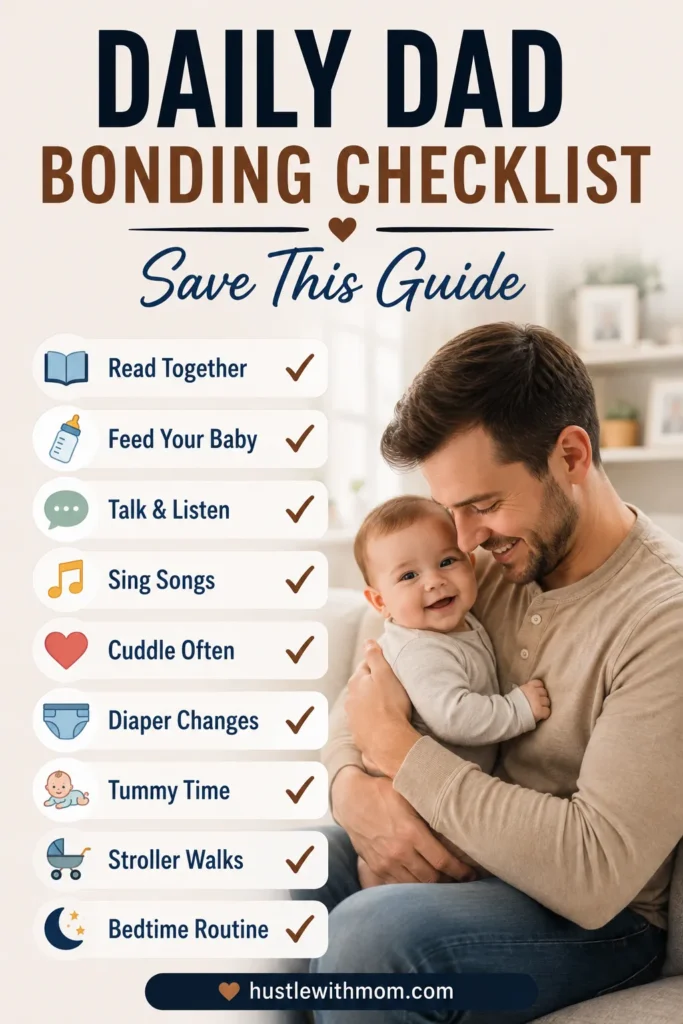
- Do 10 to 15 minutes of skin-to-skin contact
- Handle at least one diaper change
- Take one full feeding or burping shift
- Talk or sing during a routine task
- Own one part of the bedtime routine
- Get down to baby’s eye level at least once
Common Mistakes Dads Make (and How to Avoid Them)
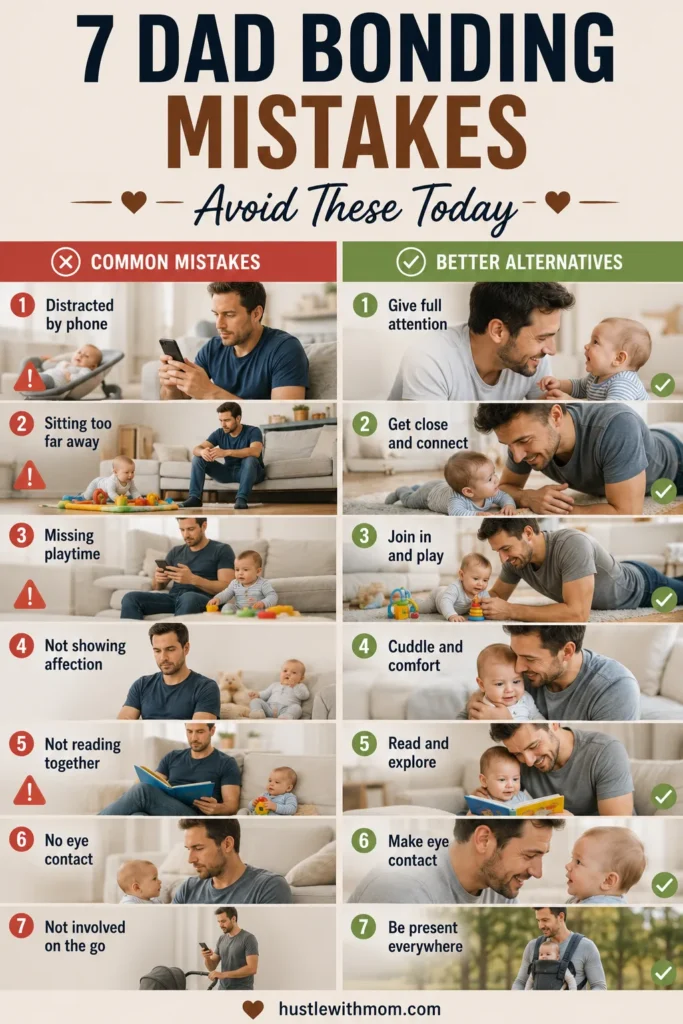
- Waiting to feel “ready” before jumping in. Confidence comes after the reps, not before.
- Comparing yourself to mom’s instincts. She’s had more practice, not more natural ability.
- Saving bonding for weekends only. Daily small moments beat occasional big ones, and they’re also easier on the relationship. If stress is building at home, our piece on common fights couples have after baby explains why this pattern shows up so often and how to head it off.
- Going quiet when overwhelmed instead of asking for help. Talk to your partner, a doctor, or another dad. Isolation makes everything harder.
Final Thoughts
My husband didn’t magically become “a baby guy” overnight. He got there through weeks of clumsy diaper changes, off-key lullabies, and stubbornly showing up even when it felt easier to hand baby back. That’s really the whole secret behind helping dads bond with baby. It’s not about getting it perfect. It’s about showing up consistently until it stops feeling awkward and starts feeling like yours.
If you’re a dad reading this at midnight wondering if you’re behind, you’re not. You’re exactly on time.