


You glance in the mirror at 3 a.m. and barely recognize yourself. Hair clogs the shower drain. Your wrists ache from nursing. Your skin feels stretched thin. No wonder you’re asking about collagen while breastfeeding. Many nursing moms wonder if it’s safe, and honestly, that’s a very smart question.
Most experts say collagen is generally considered safe for lactating mothers. Still, research is limited, and product quality varies a lot. This guide explains how it works, what it may do for postpartum recovery, and how to choose a clean collagen supplement. You’ll also learn dosage, collagen side effects, and when to call your doctor. Let’s start with the basics, so you can feel calm and confident about your choice today.
What Is Collagen and Where Does It Come From?
Collagen is the most common structural protein in your body. It works like scaffolding for your skin, bones, tendons, and ligaments. Even your mammary glands lean on it as they change during lactation. Your body builds it from amino acids such as glycine, proline, and hydroxyproline.
Production slows as you age. Pregnancy and nursing add even more strain. That’s why many nursing moms want extra help with tissue repair. Think of collagen as the rebar inside concrete. It adds strength. Still, you need the concrete too, which means real meals.
Types of Collagen (Type I, II, III)
Your body makes more than 20 types of collagen. Three matter most here. Type I collagen fills your skin, bones, and tendons. Type II lives in cartilage and joints. Type III collagen supports skin and blood vessels. Most powders blend Types I and III. Joint formulas often use Type II.
| Type | Where It Lives | Common Use |
| Type I | Skin, bone, tendons | Skin and bone support |
| Type II | Cartilage, joints | Joint support |
| Type III | Skin, blood vessels, organs | Skin and tissue support |
Hydrolyzed Collagen Peptides Explained
Hydrolyzed collagen is whole collagen cut into tiny pieces. These pieces are called collagen peptides. Smaller pieces mean easier digestion and better bioavailability. Gelatin is a cousin. It has a similar makeup but gels in hot liquid. That’s why most collagen powder labels say “hydrolyzed.” Look for that word first.
Common Sources (bovine, marine, chicken, eggshell)
Most supplements come from animals. Bovine collagen comes from cow hides and bones. Marine collagen comes from fish skin and scales. Porcine collagen comes from pigs. Chicken cartilage supplies Type II. Eggshell membrane is a newer option. Pick your source based on your family’s allergy history and personal diet.
| Source | Main Types | Good to Know |
| Bovine | I and III | Most common and budget friendly |
| Marine | I | Avoid with fish or shellfish allergy |
| Chicken | II | Popular in joint blends |
| Eggshell membrane | I, V, X | Avoid with egg allergy |
Can You Take Collagen While Breastfeeding?
Yes, most people can. Collagen is a food-based protein. Experts at the InfantRisk Center say it’s generally considered safe during breastfeeding. Your body treats it like chicken or eggs. It breaks collagen into amino acids and puts them to work. That’s why collagen is widely seen as safe for nursing parents.
There’s a catch. Most studies test healthy adults in general. They don’t focus on lactation. Supplements also aren’t regulated like medicines. So quality varies widely by brand. Talk with your healthcare provider or a lactation consultant before you begin. They know your history best.
What Research and Experts Say
Experts mostly agree on two points. Collagen itself isn’t harmful. Quality is the real risk. No large trial has tested collagen during lactation. Registered dietitians still call it low risk for most people. The FDA doesn’t approve supplements before sale. So third-party testing matters, especially when you’re sharing nutrients with a baby.
How Digestion Breaks Collagen Down (Does It Pass Into Breast Milk?)
So, does collagen pass into breast milk? Not as whole collagen. Your gut splits it into amino acids. Those join your amino acid pool. Your body then uses that pool to build many proteins, including those in breast milk. Your body decides where each piece goes. Moderate changes in protein intake rarely shift milk’s protein content.
Benefits of Collagen for Postpartum and Nursing Moms

Your fourth trimester asks a lot of your body. Collagen won’t fix everything. Still, taking collagen while breastfeeding may support a few common struggles. Research mostly comes from general adults. Results build slowly. Most studies run at least eight weeks. Want a bigger picture? Read our guide to preparing for the fourth trimester.
Collagen can also add to your daily protein intake. Lactation raises your needs to about 71 grams of protein a day. That’s higher than before pregnancy. Collagen helps, but it isn’t a complete protein. It lacks tryptophan. So pair it with eggs, dairy, meat, or beans. Real meals still lead postpartum recovery and postpartum wellness.
Postpartum Hair Loss
Around three to six months after birth, many moms notice the postpartum shed. Doctors call it telogen effluvium. Falling estrogen triggers it. Collagen can’t stop it. It does supply proline, which your body uses to build keratin. That may support hair regrowth once shedding slows. For more ideas, see these postpartum hair loss remedies.
Skin Elasticity and Stretch Marks
Your dermis stretched a lot during pregnancy. Collagen is a major part of that layer. Studies show that daily doses may improve skin hydration and skin elasticity. Stretch marks may soften over time. They rarely vanish. Treat collagen as one tool. Sunscreen, water, and patience matter just as much.
Joint, Bone, and Connective Tissue Support
Your body makes relaxin during pregnancy. It loosens ligaments for birth. It can linger for months while you nurse. That may leave you with achy knees and lower back pain. Collagen may offer gentle joint support and joint comfort. Lactation also raises calcium demands, so bone health matters too. A postpartum workout program can add strength safely.
Does Collagen Increase Milk Supply?
Probably not. A galactagogue is something that helps increase milk supply. No study shows collagen does that. It also doesn’t appear to harm supply. Many moms hope for a magic scoop. The truth is simpler. Supply follows demand. Frequent, effective milk removal drives it more than any powder.
Collagen can help in a roundabout way. It adds protein intake when you’re tired and skipping meals. Lactation also needs extra calories. Federal guidance suggests roughly 330 to 400 more per day. A well-fed body copes better. That’s the real link between collagen and low milk supply worries. It’s indirect and modest.
What the Evidence Says
Direct evidence doesn’t exist yet. No clinical trial links collagen to higher output. No trial links it to a drop either. Even popular foods like oats and flaxseed have mixed proof as milk boosters. So be wary of big promises. If you want to boost milk production, start with the basics below.
Proven Ways to Support Milk Supply
Nurse or pump often. Drain the breast well. Drink plenty of fluids, since hydration matters. Eat enough food each day. Snack smart with lactation snacks like oatmeal bites. Sip lactation drinks between feeds. Curious about sports drinks? Check this guide on the Body Armor drink and breastfeeding. Still worried? See a lactation consultant.
How to Choose a Safe Collagen Supplement While Breastfeeding
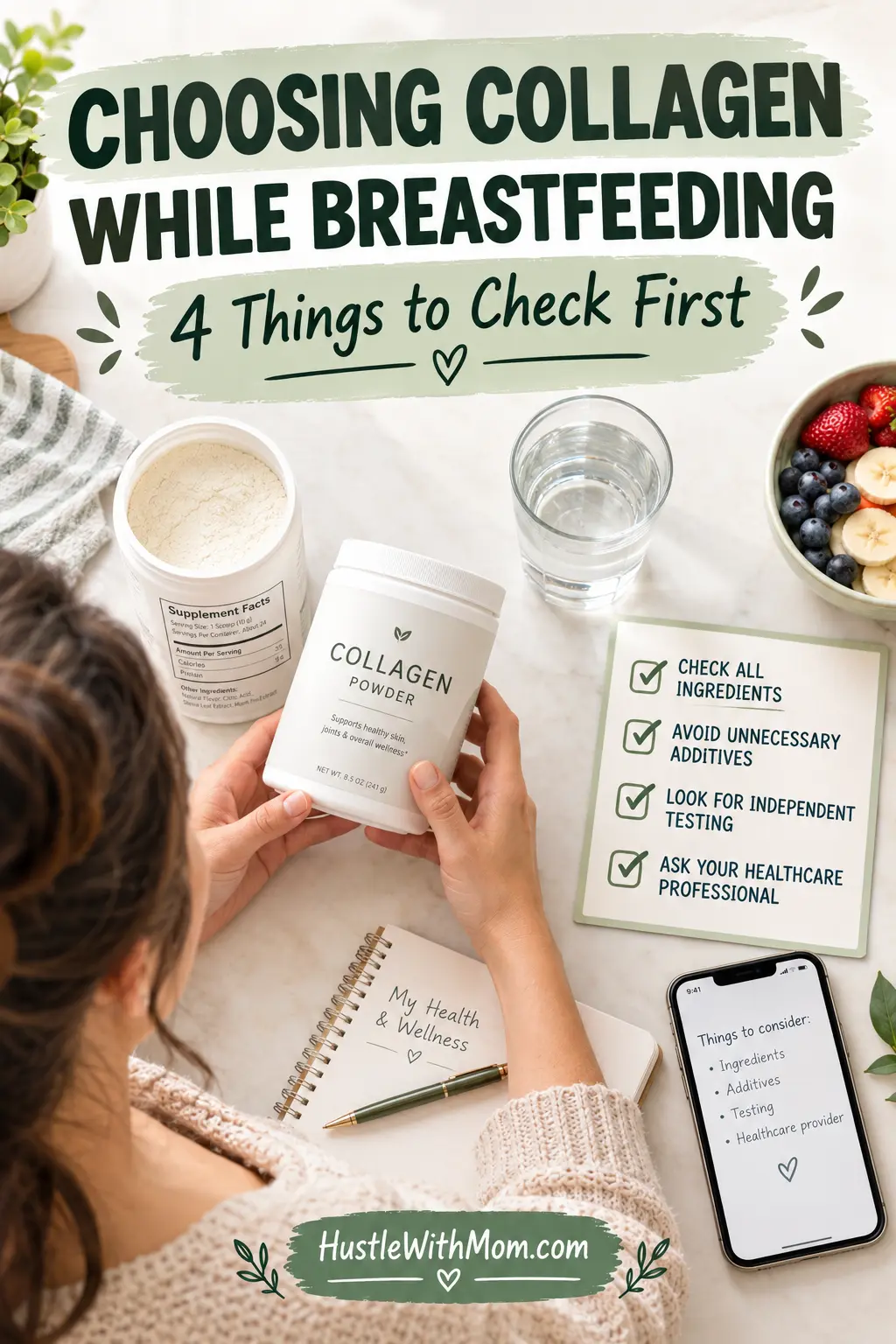
The supplement aisle is a bit like the Wild West. Brands face few pre-sale checks. Labels can overpromise. So shop with care. A good collagen supplement should list a clear source. It should show testing. It should skip fancy extras. Four checks make shopping simple, and the next sections walk through each.
Here’s a quick comparison to guide you. Price doesn’t always signal quality. Seals and short ingredient lists do. If a label feels vague, skip it. You can always ask a brand for its lab report. Honest companies share it. Trust that instinct. You’re feeding another person with your body.
Third-Party Testing
Look for seals from NSF International or USP Verified. These groups check that a product matches its label. They also screen for heavy metals and other contaminants. A seal isn’t a guarantee of safety for your baby. Still, it beats a blind guess. Many brands also post a certificate of analysis online.
Check the Source and Ingredients
Match the source to your family. Skip marine collagen with a fish or shellfish allergy. Skip eggshell products with an egg allergy. Rare cases of bovine protein allergy exist in babies. Ask your pediatrician if that worries you. Choose a short label. Fewer ingredients mean fewer surprises.
Avoid Additives, Artificial Sweeteners, and Herbal Blends
“Beauty blends” often hide extras. You may see caffeine, artificial sweeteners, and herbal blends. Some herbs aren’t recommended during lactation. Extra additives and fillers also muddy the label. Pick unflavored collagen peptides instead. Then add your own flavor with fruit or cocoa.
Look for “Hydrolyzed” on the Label
Check for “hydrolyzed collagen” or “collagen peptides.” Those words signal small, easy-to-digest pieces. Un-hydrolyzed forms can cause bloating in some people. Undenatured Type II products are a different category with different doses. They target joints. For general use, hydrolyzed is the standard pick.
Recommended Dosage and How to Take Collagen
There’s no official daily rule. Most studies use 2.5 to 15 grams of hydrolyzed collagen peptides per day. Lactation-specific numbers don’t exist. So collagen dosage while nursing is a conversation with your doctor. Taking collagen while breastfeeding works best with a low, steady plan. Follow the label too.
Start with a small dose. Try half a scoop for a few days. Watch how you feel. Watch your baby too. Then raise it slowly. Different forms vary. Capsules, gummies, and collagen powder each list their own amounts. Give it time. Most studies track results for at least eight weeks.
How Much Collagen Per Day
Goals change the number. Use the table as a rough guide, not medical advice. More isn’t better. Extra grams just burden your gut. Remember that food adds some collagen too. So all 15 grams don’t need to come from a scoop.
| Goal | Common Daily Range |
| Skin support | 2.5 to 5 grams |
| Joint support | 5 to 10 grams |
| Upper range in studies | Up to 15 grams |
Best Time to Take It
No proven best time exists. Consistency beats timing. Many moms take it with morning coffee. Others prefer evening. Pair it with a Vitamin C source for extra support. If it upsets your tummy, take it with food. Pick a time you’ll actually remember. Habits stick better than perfect schedules.
Easy Ways to Add It (coffee, smoothies, oatmeal, soups)
Unflavored powder dissolves easily. Stir it into coffee or tea. Blend it into a smoothie. Fold it into oatmeal. Whisk it into soup. Dissolve it in a little warm liquid first to avoid clumps. These one-handed tricks suit busy newborn days. Tired of mealtime chaos? Try our meal plan for busy moms.
Natural Food Sources of Collagen (and Collagen-Boosting Nutrients)

Try a food first approach. Your body can build collagen from everyday nutrients. Powder is optional. Plenty of collagen-rich foods can fill your plate. Whole meals also give you fiber, fluids, and extra calories. That matters during lactation. A supplement can’t replace any of it.
Food-based collagen isn’t easy to measure. Amounts vary by cut, cooking time, and recipe. So don’t chase exact grams. Focus on variety instead. Add collagen-boosting nutrients like Vitamin C, zinc, and protein each day. Pair them with steady protein intake. That mix supports both postpartum wellness and your milk output.
Bone Broth and Other Collagen-Rich Foods
Bone broth is the classic choice. Long simmering pulls collagen and minerals from bones. It also adds hydration. Chicken skin, fish with skin, and pork rinds offer smaller amounts. Dessert gelatin counts too. Check sodium on store-bought broth. Choose reputable brands. Some bone products may carry trace heavy metals.
Vitamin C, Zinc, and Protein for Natural Production
Your body needs Vitamin C to make collagen. Oranges, strawberries, and bell peppers all help. Zinc comes from meat, beans, and pumpkin seeds. Egg whites add proline. Eggs, dairy, and poultry also supply a complete protein. That fills the gap collagen leaves behind. Together, these foods give your body what it needs.
Potential Side Effects and Precautions
Most people tolerate it well. Still, collagen side effects can happen. Reports include allergic reactions, mild stomach upset, and contaminants in low-quality products. Taking collagen while breastfeeding adds one more reason to stay alert. Your baby shares what you eat. So watch both of you closely.
Lower your risk with a few habits. Choose tested brands. Add one new product at a time. That way, a reaction is easy to trace. Keep a short note of start dates and doses. A postpartum planner works well for this. Stop if something feels off.
Digestive Discomfort and Bloating
Some moms feel full or gassy at first. That’s digestive discomfort. It often fades. Try a smaller scoop. Split it across the day. Drink more water. A sensitive stomach may need a slower start. Also watch your appetite. Protein fills you up, so don’t let it replace meals.
Allergic Reactions (fish, shellfish, egg)
Marine collagen can trigger fish or shellfish allergies. Eggshell products can affect egg allergies. An allergic reaction may cause hives, itching, or swelling. Trouble breathing needs emergency care right away. Always read the label for allergen warnings. Cross-contact can happen during manufacturing. When in doubt, skip it and ask your doctor.
Heavy Metals and Contaminants
Poor sourcing can bring lead, arsenic, or cadmium into a product. Marine collagen and bone-based powders deserve extra scrutiny. That’s why third-party testing matters so much. In California, Prop 65 warnings can offer a clue too. Choose brands that publish lab results. Skip anything that hides its sourcing.
Interactions With Other Supplements or Medications
Collagen rarely interacts with medicines. The risk comes from the extras. Many products pack in biotin, vitamin C, or herbs. The FDA warns that high-dose biotin can distort certain lab tests. Tell your healthcare provider about every pill and powder. Bring a list. Check your prenatal vitamins for overlap too.
When to Avoid Collagen or Talk to Your Doctor

Some situations call for a chat first. If you have food allergies, ask before you buy. The same goes for kidney problems or a baby with feeding troubles. Taking collagen while breastfeeding should never feel like a gamble. A quick call can save you worry later. Your provider knows your full picture.
You may also see sites that say to avoid collagen entirely. Most of those cite limited research. That’s a caution about missing data, not proof of harm. Weigh both views. Then decide with your doctor. Mixed advice is common in supplement land. Trust sources that explain their reasoning.
Allergies and Medical Conditions
Fish, shellfish, egg, and beef allergies matter most. Kidney disease or a history of kidney stones also deserves a talk. Hydroxyproline can matter in some of these cases. Anyone on a protein-limited diet should ask first. Don’t guess here. A short visit gives you a clear answer.
| Situation | What to Do |
| Fish or shellfish allergy | Skip marine collagen |
| Egg allergy | Skip eggshell products |
| Kidney disease or stones | Ask your doctor first |
| Baby has new symptoms | Stop and call the pediatrician |
Baby Reactions to Watch For
Learn the baby allergy signs. Watch for rash, hives, fussiness, extra gas, vomiting, or blood in the stool. These can show up after any new food in your diet. Stop the product and call your pediatrician. Note the date you started. That detail helps your doctor sort out the cause quickly.
Questions to Ask Your Doctor or Lactation Consultant
Bring a short list to your visit. Is this product safe for me? What fits my goals? Could it interact with my medicines? What should I watch for in my baby? Ask a lactation consultant about low milk supply concerns too. Written questions keep you calm and focused during a busy appointment.
Frequently Asked Questions (FAQs)
Is collagen safe in the first weeks postpartum?
Usually yes once your provider agrees. Early weeks center on healing, rest, and feeding. Food and fluids come first. If you try collagen, keep it simple and go slow.
Can collagen cause a drop in milk supply?
No evidence says it does. Drops usually trace back to missed feeds, stress, dehydration, or low calories. If your supply dips, talk with an IBCLC.
Can I take collagen with prenatal vitamins?
Often yes. Collagen is a protein, not a vitamin. Watch for doubled-up biotin or vitamin C. Ask your provider to review your full list.
Is marine collagen safe while breastfeeding?
Generally yes if neither of you has a fish or shellfish allergy. Choose tested brands to limit heavy metal exposure.
Is collagen better than protein powder for nursing moms?
Not better, just different. Collagen lacks tryptophan. A whey, pea, or soy powder gives a complete protein. Some moms use both.
Conclusion
Collagen while breastfeeding is generally considered safe for most moms. Benefits are modest and build slowly. It may help with postpartum hair loss, skin, and achy knees. It won’t replace meals. It won’t magically increase milk supply. Quality and a gentle start matter far more than any bold label claim.
Build your base first with real food, rest, and fluids. Then add a tested collagen supplement if you like. Check in with your doctor. Watch your baby. Be kind to yourself too. Need more support? Read these honest tips for exhausted new moms. You’ve got this.
This article is for information only. It isn’t medical advice. Always talk with your healthcare provider before starting a new supplement.