


Postpartum rage can catch you off guard. One minute you’re folding tiny clothes. The next minute you’re shouting over a spilled bottle. Then guilt crashes in. If this sounds familiar, you’re not alone and you’re not a bad mom. This intense anger often appears within six weeks of giving birth, though it can show up to one year postpartum.
Causes include rapid hormonal fluctuations, lack of sleep, and daily overwhelm. It isn’t an official diagnosis. Still, the Cleveland Clinic recognizes it as a real sign of postpartum mood disorders. The good news is simple. Therapy, support groups, rest, and early treatment bring much better outcomes. Keep reading to learn the symptoms, causes, treatment options, and coping strategies that help.
What Is Postpartum Rage?
Postpartum rage is a burst of anger that feels far too big for the moment. It shows up after childbirth. You may feel heat in your chest, tight hands, or a pounding head. Guilt often follows within minutes. The Cleveland Clinic explains that anger is the key sign here. With postpartum depression, sadness usually leads. With rage, anger takes the lead. Providers often view it as a symptom of perinatal mood and anxiety disorders.
Many moms hide this anger. They smile at checkups and say they’re fine. Then they cry in the car. That pattern makes help hard to find. Your anger is a signal. It isn’t a flaw in your character. Your body and mind are asking for rest, care, and mental health support. Listening to that signal is a smart first step.
Postpartum Rage vs Normal Irritability
Every new parent gets cranky sometimes. A bad night makes anyone short-tempered. Normal irritability fades after a nap or a snack. Postpartum rage is different. The anger feels too strong for the trigger. It’s hard to stop once it starts. Afterward, you may feel shame, fear, or sadness. The table below shows the key differences.
| Feature | Normal Irritability | Postpartum Rage |
| Trigger | Real, clear problem | Tiny event, like a dropped spoon |
| Strength | Mild to medium | Very strong, even scary |
| Control | You can calm down | Calming down feels almost impossible |
| Recovery | Fades fast | Lingers or returns often |
| Aftermath | Quick relief | Deep guilt and emotional distress |
| Daily life | Little impact | Strains family and bonding |
How Common Is Postpartum Rage?
Nobody knows the exact number. Few studies focus on rage alone. Some sources say up to 1 in 4 new moms may feel it in the first year. Others point to the wider picture of postpartum mood disorders. About 1 in 7 women face depression or anxiety around birth, according to ACOG. Rage often travels with those conditions. Because many moms stay silent, the real number is likely higher than reports show.
Who Is Most at Risk?
Anyone who gives birth can feel this anger. Some moms face a higher risk. A family history of mental illness raises the odds. So does a personal history of depression. A past with bipolar disorder or obsessive-compulsive disorder matters too. A hard labor, a scary birth, or stress about baby’s health can add weight. Life shocks like job loss, divorce, or the death of a loved one also raise risk. A lack of support at home is one of the biggest triggers of all.
When Can Postpartum Rage Occur?
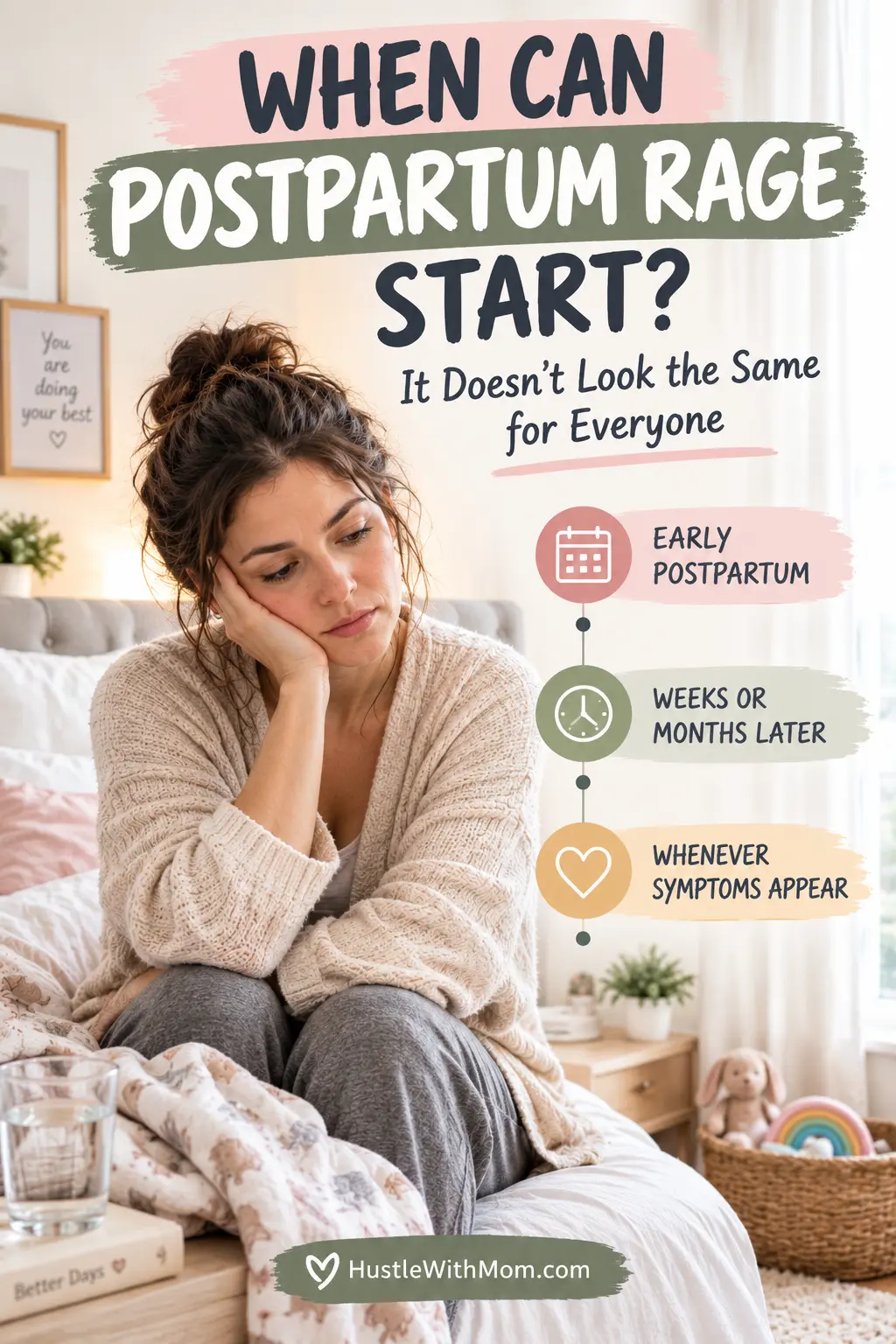
There’s no single start date. Most moms notice the anger within six weeks of giving birth. For others, it builds slowly. It can appear up to one year postpartum. A few moms feel it even later. The timing depends on your body, your sleep, and your daily stress. Don’t compare your story to anyone else’s.
Many women expect sadness after birth. They don’t expect rage. That surprise makes the anger feel even scarier. Please remember that the postpartum period is a huge shift for your body and mind. Anger in this stage is common. It doesn’t mean you’re failing.
Early Postpartum Weeks
The first weeks are a storm. Your body is healing. Your estrogen and progesterone drop fast after delivery. Sleep is broken into tiny pieces. Feeding takes hours. Breastfeeding challenges can add pain and worry. Many moms feel the baby blues during this time. Those feelings usually ease after about two weeks. If your anger stays strong past that point, it’s time to talk with your OB-GYN.
Months After Birth and Postnatal Rage in Later Stages
Some moms feel fine early on. Then postnatal rage shows up around month four, six, or eight. Why? The adrenaline of the early weeks fades. Visitors go home. Your partner returns to work. You may go back to work too. Exhaustion piles up. Infant colic or sleep regressions can wear you down. This slow build often leads to parental burnout. Late rage is real, and it deserves care just as much as early rage.
Symptoms of Postpartum Rage
The main symptom is anger that feels out of control. It can show up in your thoughts, your body, and your actions. Some moms have a few signs. Others have many. The signs also change from week to week. What matters is the pattern. If it happens often and hurts your daily life, take it seriously.
Many symptoms overlap with other mood problems. That’s why a full checkup helps. A provider can tell the difference between simple stress and a deeper issue. You don’t have to figure it out alone. Writing down what you notice makes your next doctor visit much easier.
Emotional Symptoms
Emotional signs often come first. You may feel intense anger that explodes without warning. Frustration builds fast. Mood swings can flip your day upside down. Many moms feel heavy guilt after yelling. Others feel overwhelm, sadness, or fear that they’re losing control. Negative thoughts like “I’m ruining everything” may loop in your head. This mix of emotional instability is exhausting. It doesn’t mean you’re broken.
Physical Symptoms
Anger lives in the body too. Your heart rate rises fast. Your chest may feel tight. Your jaw clenches. Your hands shake. Your face gets hot. Some moms get headaches or an upset stomach. Many can’t sleep even when the baby does. This is your body’s stress alarm. It stays on too long when you’re tired and overloaded. Rest and calm help turn the alarm down.
Behavioral Symptoms
Anger can change how you act. You may snap at family members over tiny things. You might yell, slam doors, or throw objects. Frequent outbursts can leave you ashamed. Some moms pull away from friends. Others avoid their partner. Please know this clearly. If you ever feel the urge to hurt yourself or your baby, seek professional help right away. Call 911 or the National Suicide Prevention Lifeline, now the 988 Suicide & Crisis Lifeline.
Postpartum Rage Self-Check (Quick Checklist)
This quick check isn’t a diagnosis. It helps you see your pattern. Tick each line that fits you most days this week. If you tick three or more, talk with a provider soon.
| Sign | Check |
| I snap at family members over small things | ☐ |
| My anger feels bigger than the problem | ☐ |
| I feel deep guilt after I lose my temper | ☐ |
| My heart rate rises when I get upset | ☐ |
| I can’t calm down once I’m angry | ☐ |
| I feel on edge even when the baby sleeps | ☐ |
| I yell, slam things, or throw things | ☐ |
| I avoid people because I fear my temper | ☐ |
| I have intrusive thoughts that scare me | ☐ |
| My anger has lasted more than two weeks | ☐ |
What Causes Postpartum Rage?
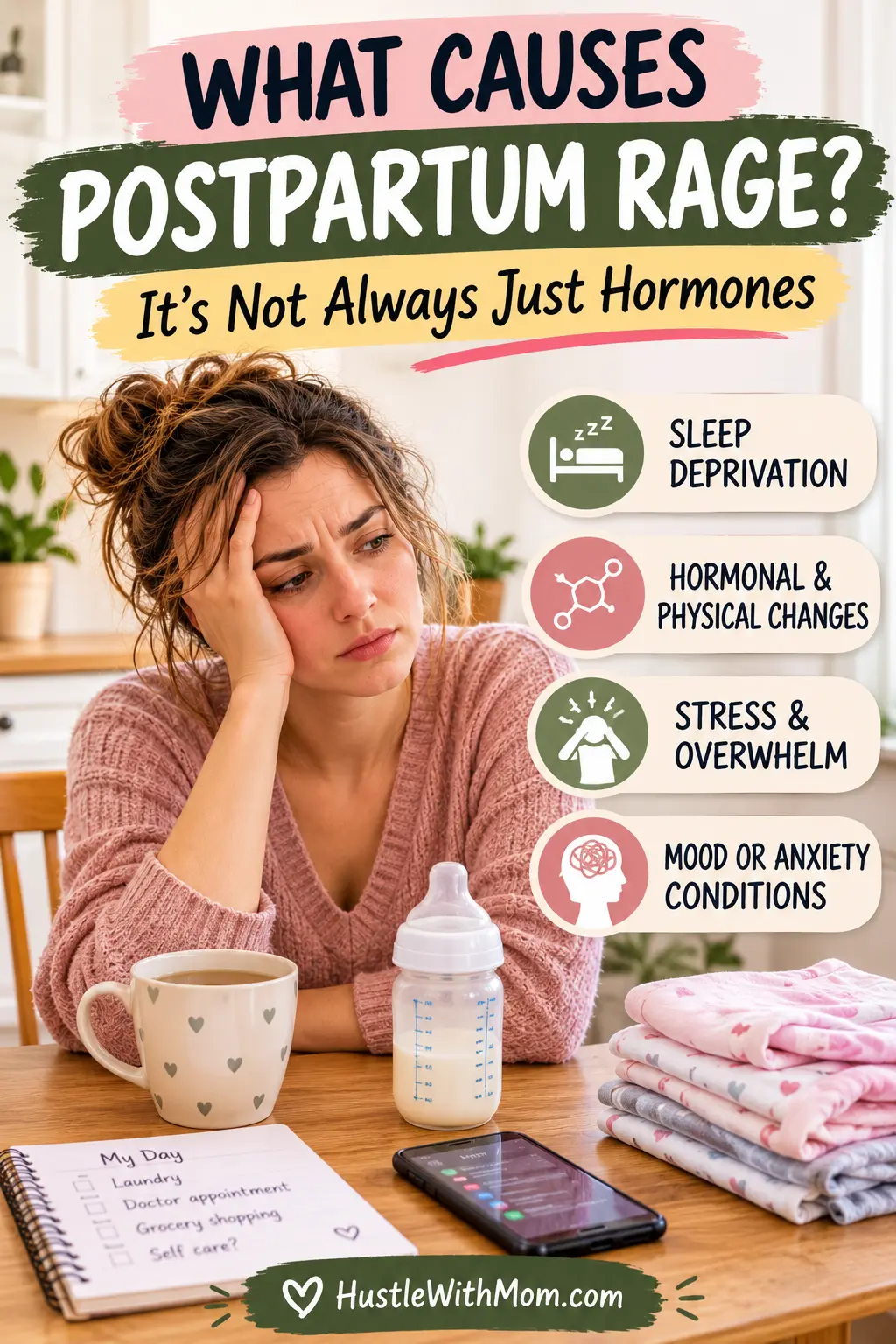
There’s rarely one cause. Biology, sleep, and life stress stack on top of each other. Think of a cup that’s already full. One small drop makes it overflow. For a new mom, that drop might be a crying baby or a messy kitchen. The cup was full long before.
Experts say the sudden jump in daily duties plays a big part. You heal from birth. You feed a baby around the clock. You lose sleep. You may also lack help. The Bump shares expert views that rage can last as long as a mom stays overwhelmed and worn out. That’s why fixing the load matters as much as fixing the mood.
Hormonal Changes After Birth
Right after delivery, estrogen and progesterone fall sharply. This is one of the biggest hormonal changes a human body can face. These hormonal shifts affect your mood, your sleep, and your stress response. A hormonal imbalance can make small problems feel huge. The thyroid can also act up after birth. This is called postpartum thyroiditis. It can cause anger, anxiety, and tiredness. Ask your doctor about a thyroid check if your symptoms feel strong.
Sleep Deprivation and Exhaustion
Sleep deprivation is a powerful trigger. Without rest, your brain struggles to regulate emotions. Think of driving a car on an empty tank. It sputters at the smallest hill. A lack of sleep has the same effect on your patience. Night feeds, infant colic, and sleep regressions drain you further. Our guide to baby sleep regression explains why sleep can suddenly worsen. Protecting your sleep is real medicine.
Emotional and Lifestyle Factors (Stress, Lack of Support, Mental Load)
Life stress adds fuel. A lack of support at home leaves one person doing everything. Money worry, job loss, or divorce can deepen the strain. Mental load is the hidden work of remembering everything. It includes doctor visits, diaper supplies, and feeding times. This unseen work leads straight to parental burnout. When one parent carries it alone, frustration grows fast. Sharing the load is not a luxury. It’s a need.
When Motherhood Doesn’t Feel the Way You Expected
Social media shows glowing moms and calm babies. Real life is messier. Many women grieve their old life and freedom. Some feel lost or trapped. This gap between hope and reality can spark anger. Here’s a short composite case study. Maria loved her daughter deeply. Yet at week five she screamed at her husband over a dirty bottle. Afterward she sobbed for an hour. She believed she was not a bad mom only when her certified therapist explained that anger and love can live together. Our post on working mom guilt explores this same tug of war.
Postpartum Rage vs Other Postpartum Conditions
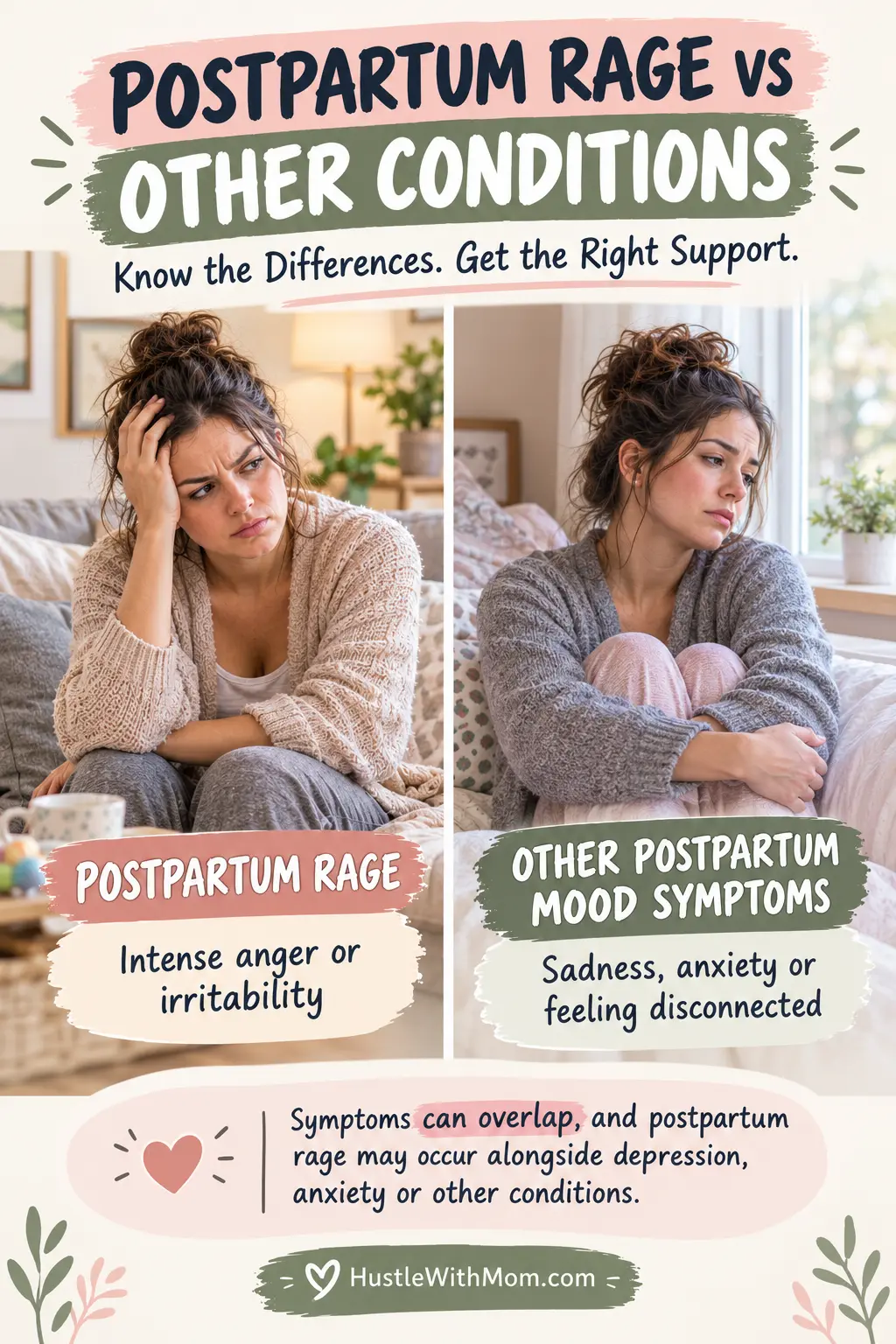
Rage can show up alone. It can also join other postpartum mood disorders. That makes it tricky to name. A quick comparison helps you see where your symptoms fit. Still, only a trained provider can tell for sure.
The table below gives a simple overview. Use it to start a conversation with your doctor. Don’t use it to label yourself. If something feels wrong, trust that feeling and ask for a checkup.
| Condition | Main Feeling | Common Timing | Urgency |
| Postpartum rage | Anger, irritability | Weeks to months after birth | Seek care soon |
| Postpartum depression | Sadness, emptiness | Weeks to a year | Seek care soon |
| Postpartum anxiety | Constant worry, fear | Weeks to a year | Seek care soon |
| Postpartum psychosis | Confusion, hallucinations | Often first two weeks | Emergency |
Is Rage a Sign of Postpartum Depression?
Sometimes, yes. Sometimes, no. The Cleveland Clinic says the two are different but closely linked. You can have postpartum rage without feeling depressed. You can also have postpartum depression without rage. Many moms feel both at once. The Mayo Clinic lists anger and irritability among depression signs. Because the overlap is common, your doctor may screen for postpartum depression whenever you report anger. Some people also use the term postnatal depression.
Postpartum Rage vs Postpartum Anxiety
Anxiety and anger are close cousins. With postpartum anxiety, your mind races with worry. Your nervous system stays on high alert. That alert can easily tip into anger, like the “fight” side of fight or flight. You may have intrusive thoughts about something bad happening to your baby. Those thoughts are scary, but they’re common. Treating the anxiety often lowers the anger too. Both respond well to therapy and care.
Postpartum Rage vs Postpartum Psychosis
Postpartum psychosis is very different. It’s rare, affecting only about 1 to 2 of every 1,000 births. It’s also a medical emergency. Signs include hallucinations, strange beliefs, severe confusion, and paranoia. A mom may barely sleep and act unlike herself. Rage alone isn’t psychosis. Still, if you or a loved one shows these signs, call 911 or go to the nearest ER right away. Do not wait.
Can You Develop Bipolar Disorder After Pregnancy?
Yes, it can happen. Pregnancy and the postpartum period can trigger a first episode of bipolar disorder in people who are prone to it. Watch for a very high mood with little need for sleep. Racing thoughts and risky choices are also warning signs. A family history of mental illness raises the chance. If your anger comes with these signs, tell your OB-GYN quickly. Correct diagnosis leads to safer, more effective care.
How Is Postpartum Rage Diagnosed?
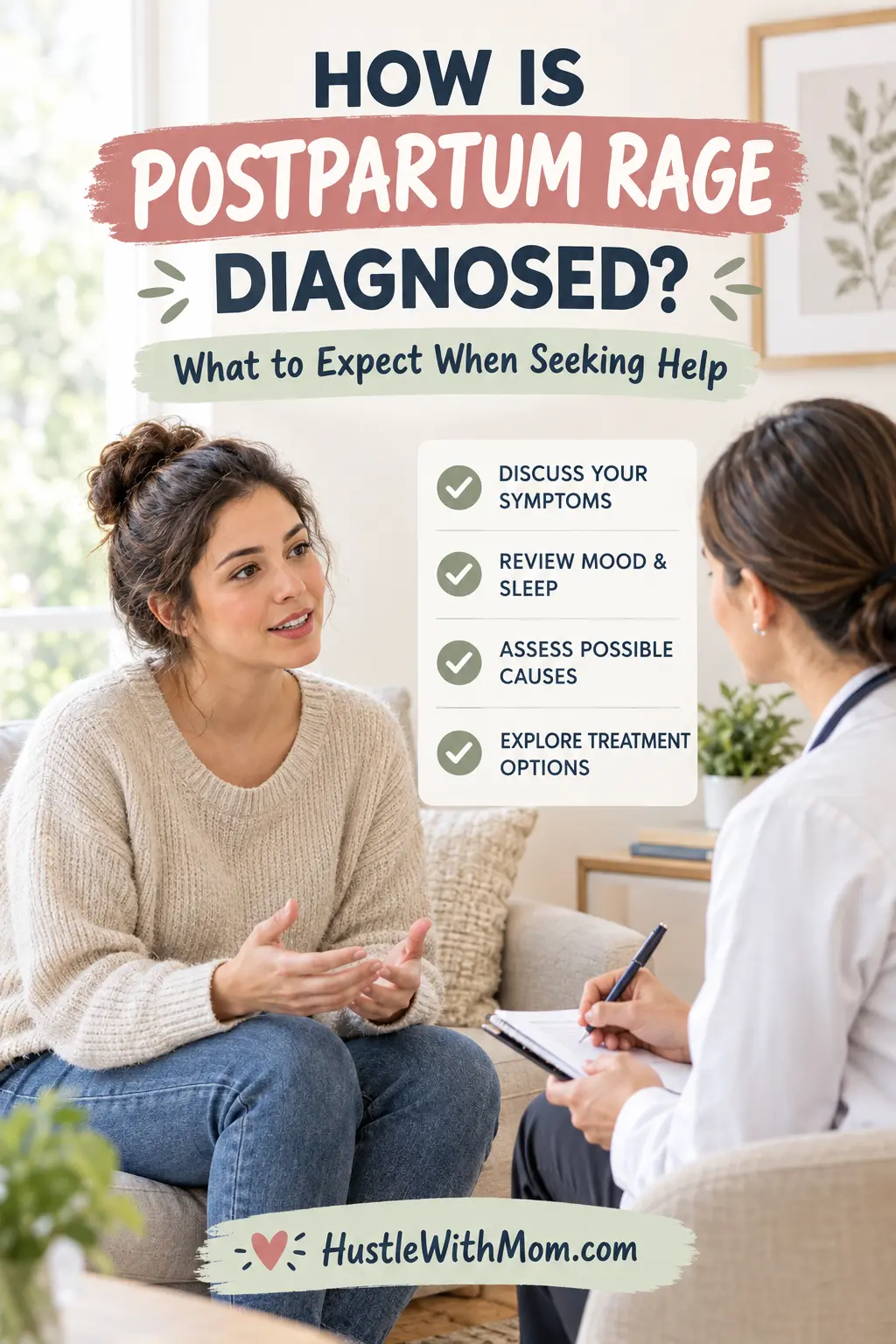
No single test finds postpartum rage. It isn’t an official diagnosis. Instead, providers look at your symptoms, your health history, and your daily life. They also check for related problems like depression, anxiety, or thyroid trouble. The goal is to find the root cause and match it with the right care.
Honesty is the key. Providers can’t help with anger they never hear about. Many moms fear being judged or having their baby taken away. In reality, doctors want to help you heal. Naming your anger out loud is a brave step toward early treatment and better outcomes.
What to Expect at Your Appointment
Your provider will ask about your mood, your sleep, and your safety. They may ask how often you feel angry and what sets it off. They’ll review your health history, including any personal history of depression. They may order blood tests for thyroid levels or low iron. To prepare, write down your outbursts for a week. Bring your partner if that feels helpful. A primary care provider or OB-GYN is a great place to start.
Screening Tools and Tests
Doctors use short forms to screen for postpartum depression and anxiety. None measure rage alone. Still, they flag related problems quickly. Results guide your next steps. Here are the most common tools.
| Tool | What It Checks | Length |
| Edinburgh Postnatal Depression Scale (EPDS) | Depression and anxiety after birth | 10 questions |
| PHQ-9 | Depression symptoms | 9 questions |
| GAD-7 | Anxiety symptoms | 7 questions |
Treatment for Postpartum Rage
Here’s the hopeful part. This condition responds well to care. Most moms improve with the right mix of support. That mix often includes therapy, sometimes medication, and strong community help. Your plan should fit your life, your goals, and your comfort. There’s no single right path.
The earlier you start, the better. Early treatment often leads to better outcomes and a faster return to calm. It also protects your bond with your baby and your relationship with your partner. Reaching out isn’t weakness. It’s a strong, loving choice for your whole family.
Therapy (CBT and Other Approaches)
Cognitive Behavioral Therapy (CBT) is a top choice. It helps you spot negative thoughts and swap them for calmer ones. You also learn to recognize triggers before anger explodes. Interpersonal therapy helps with relationship stress. Simple talk therapy gives you a safe space to share without judgment. A certified therapist who knows perinatal care is ideal. Many offer online visits, so you can heal from home.
Medication Options
Sometimes medication helps, especially when depression or anxiety is present. SSRIs and SNRIs are common antidepressants. They can calm emotional distress and steady your mood. Your provider will weigh your needs, your symptoms, and any breastfeeding plans. Many options are considered safe for nursing moms, but each case differs. Never start or stop medication on your own. Work closely with your doctor for the safest plan.
Support Groups and Community Help
Talking with other moms eases shame fast. Postpartum Support International runs free online support groups, including options for moms who feel anger. Their helpline is 1-800-944-4773, and you can call or text. The National Alliance on Mental Illness also offers peer support groups and guides. Hearing “me too” is powerful. It reminds you that you’re not alone. Local mom groups and faith groups can also help.
How to Cope With Postpartum Rage at Home
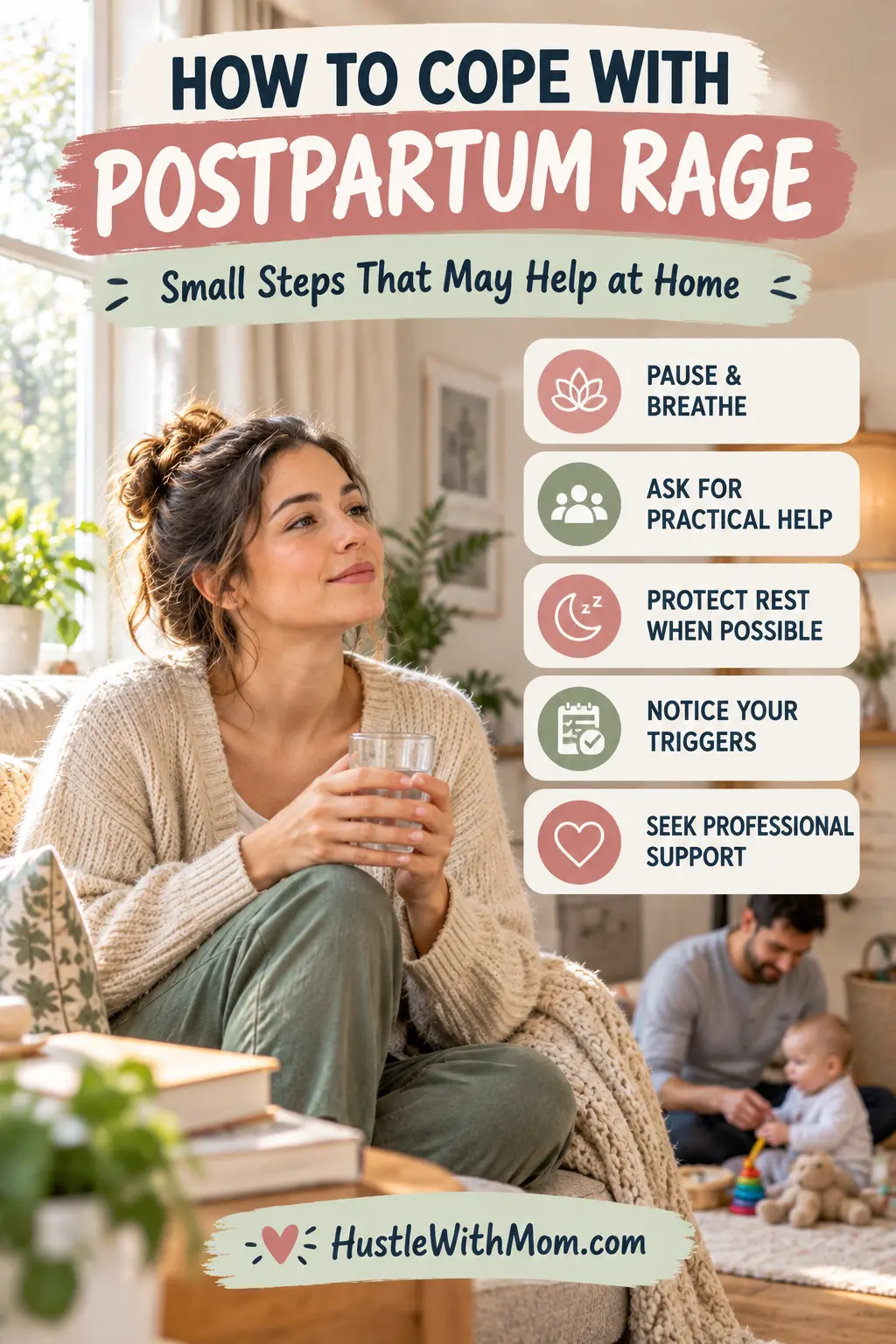
Small daily habits can lower the heat. They won’t replace professional care. They do give you tools in hard moments. Think of them as a first aid kit for your emotions. Keep it ready before the next storm hits.
Start small. Pick one or two ideas and try them this week. Over time, these coping strategies build calm and confidence. Our post on 15 ways to be a calm mom every single day offers even more ideas. Remember to be compassionate with yourself as you practice.
Immediate Calming Techniques During an Outburst
When anger rises, act fast. First, make sure your baby is safe, even if that means setting them down in a crib. Then step away for a minute. The steps below work for many moms.
| Step | What to Do |
| 1. Pause | Put the baby in a safe spot and take one step back |
| 2. Breathe | Inhale for four counts, hold for four, exhale for six |
| 3. Cool down | Splash cool water on your face |
| 4. Name it | Say out loud, “I feel angry and tired” |
| 5. Ground | Spot five things you see and four you hear |
| 6. Reach out | Call or text a trusted person |
Sleep, Nutrition and Self-Care
Rest comes first. Ask your partner to take one night feed so you can sleep a full block. Eat steady meals with protein, since hunger fuels anger. Drink plenty of water. Take a short walk in daylight, even ten minutes. These self-care habits sound simple. Yet they steady your mood in real ways. Our list of 15 honest tips for exhausted new moms gives easy starter ideas.
Asking for Help From Your Partner and Family
Many moms wait for help to be offered. Try asking directly instead. Say, “I need two hours of sleep tonight. Can you take the baby?” Split chores in writing so the mental load is shared. Agree on a “tap out” signal for hard moments. Partners can respond with calm, not blame. If tension is growing, read about common fights couples have after baby. You can also learn how dads can bond with baby.
How to Prevent Postpartum Rage (Reducing Your Risk)
Experts say you can’t fully prevent postpartum rage. Still, you can lower your risk. Make a postpartum plan before birth. Line up meals, chores, and visitors. Pick a certified therapist early if you have a personal history of depression. Protect your sleep from day one. Check in with your mood each week. Our guides on preparing for the fourth trimester and the postpartum planner for mom can help you get ready.
How Long Does Postpartum Rage Last?
There’s no fixed timeline. For many moms, it lasts as long as the overwhelm and exhaustion do. If postpartum depression or postpartum anxiety is also present, rage often continues until those are treated. Some moms feel better in a few weeks. Others need several months. Treatment, rest, and support speed things up.
Progress rarely moves in a straight line. You may have a calm week and then a hard one. That’s normal. What matters is the overall trend. If your outbursts get shorter, rarer, and less intense, you’re healing. Keep going, and celebrate the small wins along the way.
Outlook and Recovery
The outlook is bright with care. Here’s a short composite case study. Jess felt rage at month six after her son was born. She joined a peer support group and began weekly therapy. Her husband took over bedtime twice a week. Within eight weeks, her outbursts dropped from daily to once or twice a week. She said, “I finally feel like me again.” Signs of healing include fewer outbursts, faster calm-down time, and less guilt. A hard week doesn’t erase your progress.
When Should You See a Doctor or Seek Emergency Help?
Call your provider if your anger lasts more than two weeks. Call if it harms your daily life or your bond with your baby. Seek help right away for any danger signs. The table below lists key warning signs and where to turn.
| Warning Sign | What to Do |
| Anger lasting over two weeks | Book a visit with your OB-GYN or doctor |
| Fear you might hurt yourself or your baby | Call or text 988, or call 911 |
| Hallucinations or strange beliefs | Go to the ER or call 911 |
| Days without sleep despite chances to rest | Call your doctor the same day |
| Need to talk to someone now | Call the PSI HelpLine at 1-800-944-4773 |
Real Stories
Stories cut shame in half. When you hear another mom describe your exact feelings, the weight lifts. That’s why real experiences matter so much. The stories below are composites, so they protect privacy while showing common patterns.
Questions also linger in many moms’ minds. You may wonder if you’re a bad mother, if dads feel this too, or if your baby is harmed. Honest answers bring relief. The next sections share both stories and answers in plain language.
Real Mom Experiences (Short Stories)
“I loved my baby so much. But I screamed at my husband over a spoon. Then I cried for an hour. I thought I was a monster.” (Composite story)
Stories like this are very common. A first-time mom named Lena felt rage at six weeks. She thought she was alone. A friend shared that she felt the same. Lena then called her doctor, started talk therapy, and slept in longer blocks. A mom of two named Tasha felt rage at month nine. Her lack of support at home and a toddler’s tantrums pushed her over the edge. A fair chore split and weekly therapy brought her calm back. Both moms learned that asking for help works.
FAQs
How long does postpartum rage last after birth?
There’s no fixed timeline. It often lasts as long as the exhaustion and overwhelm do, from a few weeks to many months. Early treatment and rest usually shorten it.
How do you get rid of postpartum rage?
Combine therapy, support groups, more sleep, and shared chores. Your doctor may also suggest medication if depression or anxiety is involved.
How long can postpartum depression last?
It can last several months, and sometimes up to a year or longer without treatment. With mental health support, most moms feel better much sooner.
What happens 4 months postpartum?
Many babies hit a sleep regression, so lack of sleep can return. Hormones settle, the early adrenaline fades, and some moms notice mood swings or postnatal rage for the first time.
Can my baby feel when I’m angry?
Yes, babies pick up on tone, facial expressions, and stress. Occasional anger won’t harm your bond. Calming down, comforting your baby, and getting help protect it.
What is toxic mom rage?
It isn’t a medical term. People use it for ongoing, harmful anger aimed at children, such as constant yelling or cruelty. It differs from postpartum rage, which is treatable, so seek professional help early.
Conclusion:
Postpartum rage is sudden, strong anger after childbirth. It isn’t an official diagnosis. Still, experts see it as a real sign of postpartum mood disorders. It often appears within six weeks of giving birth and may last up to one year postpartum or more. Rapid hormonal fluctuations, sleep deprivation, exhaustion, and heavy stress all play a part. It can appear alone or alongside postpartum depression or postpartum anxiety. Rage is not the same as psychosis, which is rare and needs emergency care.
You may still wonder what to do next. First, share your feelings with someone you trust. Next, book a visit with your doctor or OB-GYN. Ask them to screen for postpartum depression and anxiety. Then explore therapy, medication if needed, and support groups. At home, use calming steps, protect your sleep, and ask for help. If you ever feel unsafe, call 911 or 988 right away. Most moms improve with care. Be kind to yourself, because healing takes time. You’re not alone, and you’re not a bad mom. Brighter days are ahead.
This article is for education only. It doesn’t replace advice from a doctor or licensed mental health professional.