


My daughter slept through the night for three weeks straight when she was three months old. I told everyone. I bragged to my sister, my mom group, basically anyone who would listen. Then, almost overnight, she was up every ninety minutes again, and I genuinely thought I had broken her sleep somehow.
I hadn’t. What I was dealing with was a baby sleep regression, and once I understood what was actually happening, everything got a little less scary and a lot more manageable.
If you’re in the middle of one right now, exhausted, confused, wondering if you did something wrong, I want to walk you through exactly what helped me, what didn’t, and what I wish someone had told me sooner.
So What Is a Sleep Regression, Really?
Here’s the simple version, no textbook language needed. A sleep regression is a stretch of time, usually two to six weeks, where a baby who was sleeping decently suddenly starts waking more, fighting naps, or refusing to settle at bedtime.
It’s not a diagnosis. No pediatrician is going to write it on a chart. It’s just the word parents use to describe that maddening pattern where good sleep suddenly disappears for a while, then comes back once your baby’s brain catches up with whatever it’s working on.
And that’s really the key thing to understand. A regression almost always means your baby is growing, not regressing at all. The name is a little misleading.
Why Do Sleep Regressions Even Happen?
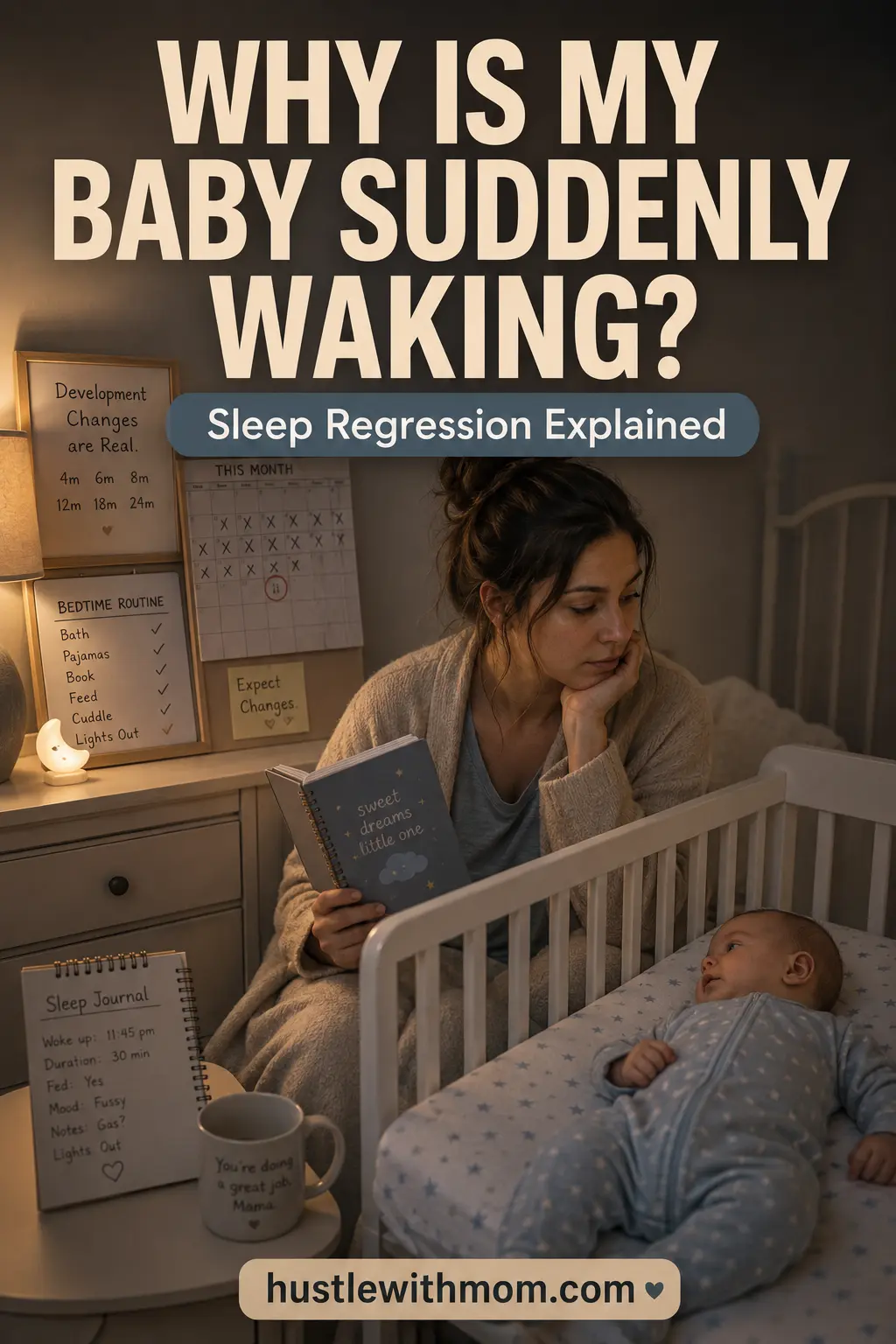
From what I’ve experienced across two kids, and what I’ve read from pediatric sources like the American Academy of Pediatrics, a few things tend to trigger these rough patches:
Developmental leaps. Rolling, crawling, standing, walking, talking. Big new skills eat up brain energy, and babies often practice them in their sleep, which is exactly as fun as it sounds at 4 a.m.
Changes in sleep cycles. Around four months, babies start cycling through light and deep sleep the way adults do. That means more chances to fully wake up between cycles instead of drifting back down on their own.
Separation anxiety. This one hit us hard around eight months. My son would be totally fine playing across the room, but the second I left the nursery, it was full meltdown mode.
Nap transitions. Dropping from three naps to two, or two to one, throws off the whole day’s rhythm for a week or two while everyone adjusts.
Teething or growth spurts. Sometimes it’s not a “true” regression at all, just a sore gum or a hungrier belly disguising itself as one.
Baby Sleep Regression Ages: What to Expect and When
I kept a rough log with both my kids, and honestly, it lined up pretty closely with what most sleep consultants describe. Here’s the general timeline, though every baby is different.
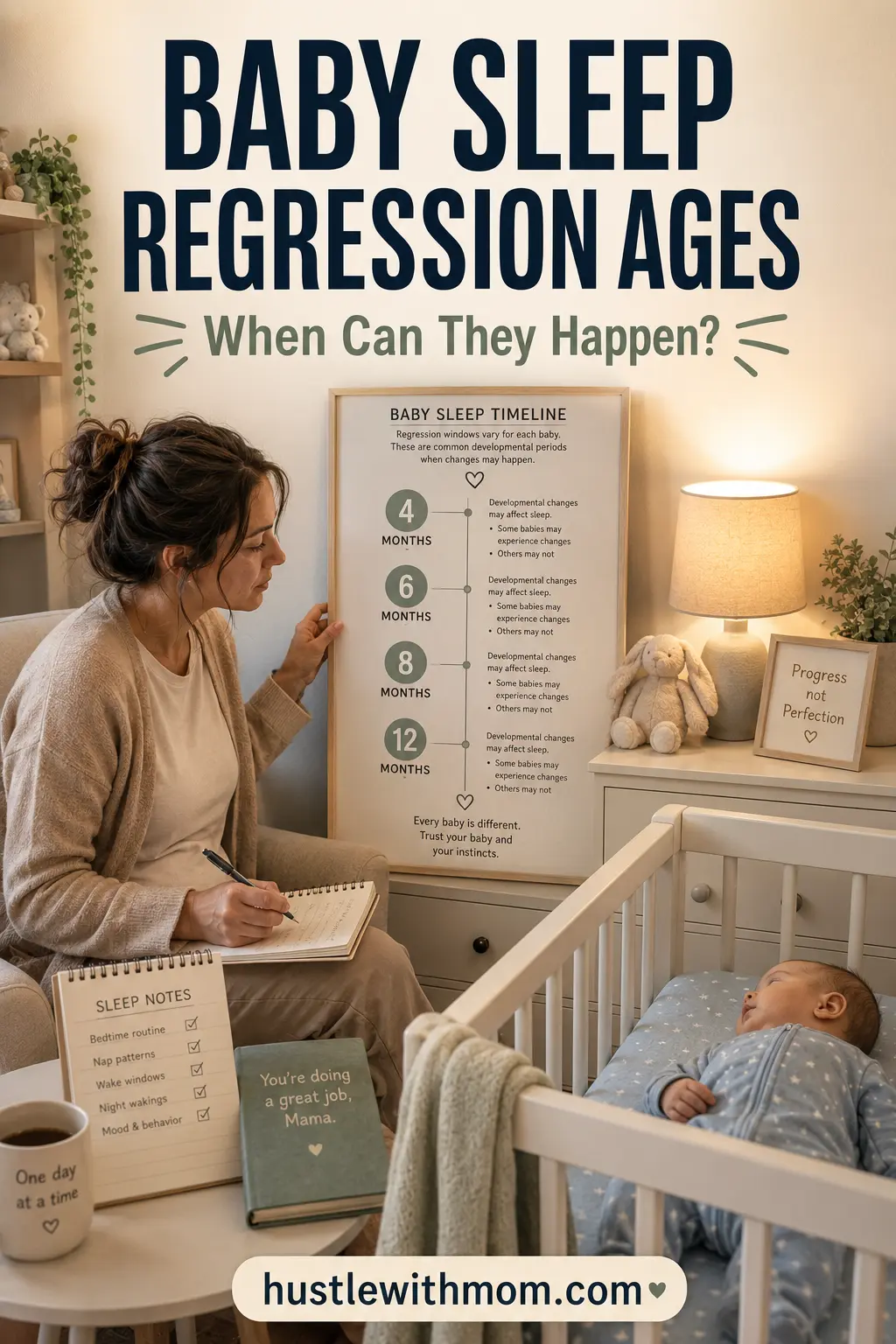
4 months. Widely considered the toughest one, because it’s tied to a real, permanent shift in sleep biology. This is often when families start looking into gentle sleep training, or at least a more consistent bedtime routine. If you’re still working out your baby’s sleep setup around this age, it’s worth reading about how long babies can safely sleep in a bassinet before this regression hits, since a crib transition mid regression is not a fun combo.
6 months. Rolling and sitting practice can cause restlessness. This one tends to be shorter and milder for a lot of babies.
8 to 10 months. Crawling, pulling up, and separation anxiety collide here. This was the roughest stretch for my son. He’d stand up crying in the crib and simply couldn’t figure out how to sit back down.
12 months. New walking skills plus an approaching nap transition. If your one-year-old suddenly starts waking way earlier than usual, this is often why, and it ties closely into what I covered in why your baby is waking at 5 a.m..
18 months. Growing independence, molars, and the tail end of the nap transition. Expect some bedtime pushback and a toddler who suddenly has strong opinions about everything.
2 years. Language is exploding, emotions are big, and nap strikes become common. This is usually more about willpower than biology.
3 years. Potty training, new fears of the dark, and sometimes dropping the nap completely.
Signs You’re Probably in a Sleep Regression
- Waking multiple times a night after previously sleeping well
- Naps shrinking to twenty minutes or disappearing entirely
- More clinginess and fussiness during the day
- Crying or resisting the second you head toward the nursery
- Needing extra help, rocking, feeding, holding, to fall asleep
- Waking noticeably earlier than their usual time
If you’re seeing several of these for a few days straight and nothing else has changed, it’s very likely a regression rather than a random bad week.
What Actually Helped Us Get Through It
Step 1: Rule out the obvious stuff first. Before assuming it’s a regression, check for a fever, a stuffy nose, or swollen gums. I wasted an entire miserable week once assuming it was a regression when my daughter actually had an ear infection.
Step 2: Stick to the routine, even when it feels pointless. This was the hardest advice to follow, because when nothing seems to work, your instinct is to throw the whole schedule out. Don’t. Consistency is exactly what your baby’s brain needs during a chaotic stretch.
Step 3: Adjust the awake window. As babies get older, they can handle more time awake between naps. An outgrown awake window is one of the sneakiest, most overlooked causes of sudden sleep trouble. A fifteen minute schedule tweak fixed more of our sleep issues than any gadget ever did.
Step 4: Watch what sleep props you’re creating. It’s tempting to nurse, rock, or bounce your way through every single wake up during a rough patch, and sometimes that’s exactly the right call for your sanity. Just know that habits built during a two week regression can quietly outlast the regression itself. If your baby relies on a pacifier to fall asleep, it’s worth reading up on why babies cry when the pacifier falls out and how to fix it, because that exact issue got worse for us during regressions.
Step 5: Check the sleep environment. White noise, room temperature, and darkness matter more than people expect. We use a ceiling fan for airflow and white noise together, and if that’s part of your setup too, this breakdown on whether babies can safely sleep with a ceiling fan on is genuinely useful.
Step 6: Take care of yourself, not just the baby. This is the part nobody tells new parents enough. A regression is exhausting for you too. Trade off night wakes with your partner where you can, and don’t be afraid to lean on help. These honest tips for exhausted new moms got me through more than one rough stretch, and pairing that with a few ideas from how to be a calm mom every single day genuinely changed my mood during the worst weeks.
Mistakes I Made (So You Don’t Have To)
I panicked and changed everything at once. New bedtime, new nap schedule, new sleep aid, all in one week. All that did was make it impossible to tell what was actually helping.
I assumed every bad night meant a regression. Sometimes it was just a growth spurt, a big meal, or an off day. Not every hard night deserves a label.
I didn’t ask for help early enough. Splitting nighttime duty with my husband made a bigger difference than I expected, and honestly, helping dads bond with baby during these stretches ended up strengthening their relationship, not just saving my sanity.
I stopped feeding my toddler well because everyone was too tired to cook. If your older baby or toddler is going through a regression, keeping meals simple but nourishing genuinely helps their mood. These breakfast ideas for babies and toddlers saved us on the hardest mornings.
When to Actually Call the Pediatrician
Most regressions are completely normal and don’t need a doctor’s visit. But reach out if you notice:
- A fever or other clear signs of illness
- Ear tugging or pain that seems worse lying down
- Disrupted sleep lasting well beyond six weeks with no developmental explanation
- Poor feeding or noticeable weight changes
You can also check general developmental timing against the CDC’s milestone tracker if you’re unsure whether what you’re seeing lines up with a normal leap.
How Long Does a Sleep Regression Actually Last?
In my experience, and according to most pediatric sleep resources, two to six weeks is the realistic range. Ours usually wrapped up closer to the three week mark once the new skill was mastered or the schedule caught up. If it’s dragging on much longer than that, it’s worth looking at the nap schedule or sleep associations rather than just waiting it out.
Final Thoughts
If you’re deep in a baby sleep regression right now, I promise this part ends. It felt endless with both of my kids, and both times, sleep came back, usually right around the time I’d fully accepted the new normal.
Keep the routine steady, trust that the rough nights are tied to real growth, and don’t be afraid to ask for backup, whether that’s your partner, a grandparent, or just a night off from cooking dinner. You’re not doing anything wrong. Your baby is just growing faster than their sleep can keep up with, and that part isn’t permanent.
2 thoughts on “Baby Sleep Regressions: What Actually Helps (Real Talk From a Mom Who’s Been There)”