


Preparing for childbirth with confidence protects more than your delivery day. It also shapes how you feel in the weeks after. Many new parents skip the mental side of birth and then wonder why they feel overwhelmed, exhausted, or even furious once the baby arrives. Postpartum mom rage is real, and it often grows from sleep loss, hormone shifts, and a birth that felt out of control.
You can read more about it in this guide on postpartum rage symptoms, causes, and treatment. A strong plan for labor and delivery won’t remove every hard moment. It will, however, give you tools, language, and support so you feel steady instead of swept away. This guide walks you through every step: what natural childbirth means, how to write a birth plan, where to give birth, and how to train your body and mind. You’ll also learn the signs of labor, your pain relief choices, a hospital bag checklist, and what postpartum care looks like. By the end, you’ll know what to do, who to call, and where to find local help, so no big question is left hanging.
What Is Natural Childbirth and Why Preparation Matters
Natural childbirth means labor that unfolds without routine medical interventions such as induction, continuous monitoring, or pain medication. Some people use the term for an unmedicated vaginal birth. Others use it for any birth where the body leads and the care team steps in only when needed. Both views are fair. What matters is that you understand your options before contractions start. Birth isn’t a test you pass or fail. A cesarean, an epidural, or an induction can still be a positive birth experience when you feel informed and respected.
Preparing for childbirth with confidence works because knowledge lowers fear of childbirth. When you know what’s coming, your body doesn’t need to stay on high alert. That calm matters more than most people think. Prenatal education gives you facts about each stage of labor. It also teaches you how to speak up for yourself. Parents who take childbirth classes often report less worry and more trust in their care team.
How Birth Preparation Builds Confidence
Confidence grows from self-efficacy, which is the belief that you can handle what’s ahead. Think of it like training for a long hike. You wouldn’t wander up a mountain in flip-flops. You’d practice, pack well, and learn the trail. In the same way, childbirth preparation breaks the fear-tension-pain cycle. Fear tightens your muscles. Tight muscles hurt more. More pain feeds more fear. Skills like slow breathing and relaxation interrupt that loop, and that’s when labor often feels more manageable.
Common Myths About Natural Birth
Three myths trip people up. First, some believe natural birth always means extreme pain. In truth, pain varies a lot, and tools like water and movement can ease it. Second, many think you can’t change your mind. You can, at any point. Third, people assume a plan guarantees an outcome. Birth stays unpredictable, so flexibility is part of being prepared.
Building Your Birth Plan: Setting Clear Labor and Delivery Preferences
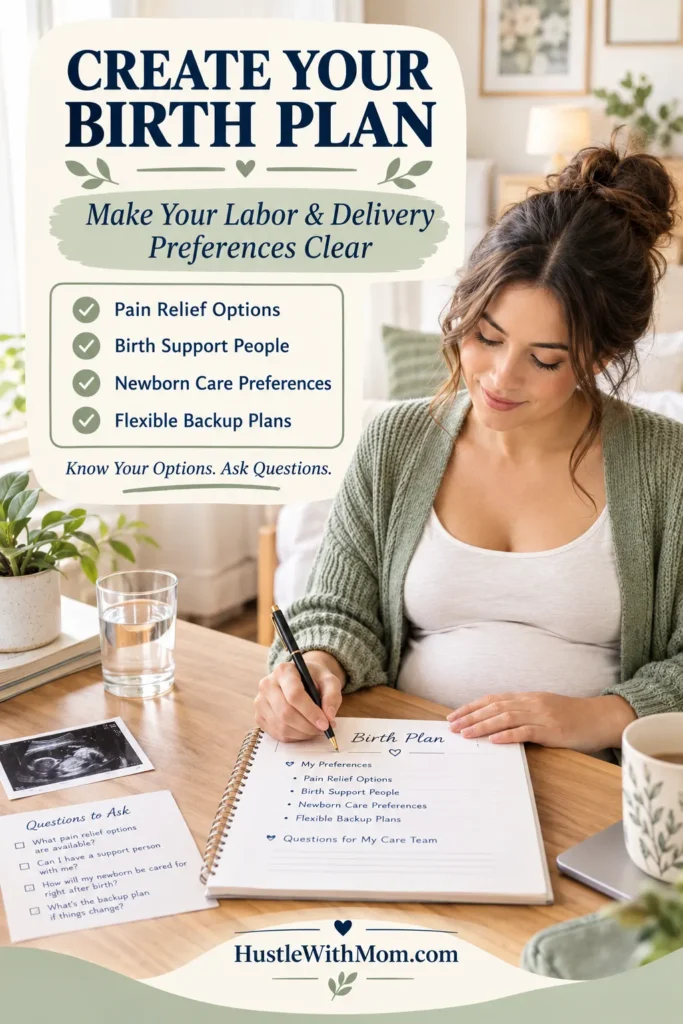
A birth plan is a short, written list of your wishes for labor and delivery. Keep it to one page. Long scripts get skimmed, and busy nurses appreciate clarity. Use plain words and a friendly tone. A good plan protects your body autonomy, which means you decide what happens to your body. It also opens the door to honest talks with your doctor or midwife long before the big day.
Preparing for childbirth with confidence includes sharing that plan early. Bring it to a prenatal visit around 32 to 36 weeks and ask questions. For example, ask how often they induce or perform cesareans. Ask whether you can move freely during labor. Then practice informed consent, which means you hear the benefits, risks, and alternatives before you agree to anything. As ACOG explains on its patient pages, you always have the right to ask questions and say no.
What to Include in Your Birth Plan
Cover the basics that matter most to you. These include preferred labor positions, your stance on pain relief, delayed cord clamping, skin-to-skin contact, newborn procedures, and your feeding plan. Name your birth partner and say what role you want them to play.
Staying Flexible When Plans Change
Babies don’t read plans. If labor shifts, you can lean on a backup version. Write a plan A, B, and C. That way, a change feels like a detour instead of a failure. Informed consent still applies on every path.
| Must-Have | Nice-to-Have |
| Who attends the birth | Dim lights and music |
| Pain relief preferences | Photos or video |
| Skin-to-skin right after birth | Placenta wishes |
| Emergency backup choices | Your own birth playlist |
Choosing Your Birth Setting: Hospital, Birthing Center, or Home Birth

Across the United States, you can choose among three settings. A hospital birth is the most common and offers immediate access to surgery and neonatal care. A birthing center feels like a cozy home and runs on the midwifery model of care. A home birth gives you the most privacy and control. Each option suits different needs, so think about your health, risk level, and comfort.
Ask each provider direct questions. How do they handle transfers if something goes wrong? What are their cesarean rates? Does insurance cover the cost? Many people also want a supportive birth environment, so ask about dim lighting, tubs for water birth, and freedom to walk around. When you feel safe, your body relaxes. That is nervous system regulation at work.
Hospital Birth: Pros and Considerations
Hospitals handle high-risk pregnancies best. You can access an epidural around the clock. The trade-off is that routine policies, like continuous monitoring, may limit movement. Ask early how flexible your hospital is.
Birthing Center: A Calmer, Midwife-Led Option
Birth centers suit low-risk pregnancies. You get longer visits, fewer medical interventions, and plenty of comfort measures such as tubs and birth balls. If complications appear, they transfer you to a nearby hospital.
Home Birth: Who It Suits and Safety Factors
Home birth works for healthy, low-risk parents with a trained midwife and a clear transfer plan. Safety depends on screening, backup, and distance to a hospital. Talk this through carefully with your provider.
| Setting | Care Provider | Pain Relief | Interventions | Best For |
| Hospital | OB-GYN or midwife | Epidural, IV meds | Most available | Higher-risk or medicated births |
| Birthing center | Midwife | Water, massage, nitrous in some | Fewer | Low-risk, natural-minded parents |
| Home | Licensed midwife | Natural options | Minimal | Low-risk, well-supported parents |
Preparing Your Body for Labor: Prenatal Exercise, Nutrition, and Movement
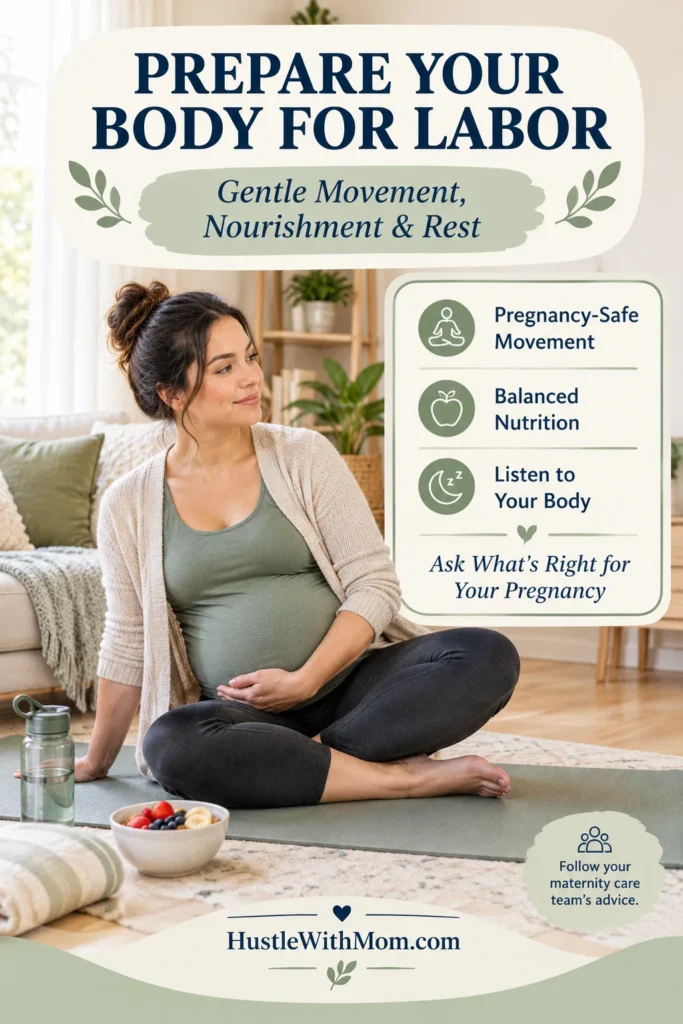
Labor asks a lot from your body, so gentle training helps. Prenatal exercise like walking, swimming, and stretching builds stamina. Prenatal yoga improves flexibility and calms your mind. Always get your provider’s okay first. Even 20 to 30 minutes most days can boost energy and sleep. Good rest also supports your nervous system, which makes third trimester preparation smoother.
Food matters too. Good pregnancy nutrition means plenty of protein, iron, fiber, healthy fats, and water. Small, frequent meals often feel better late in pregnancy. Hydration keeps your energy steady and may ease cramps. For more ideas, see this baby on the way checklist.
Pelvic Floor and Birth Ball Exercises
Pelvic floor exercises teach you to both tighten and release those muscles, and the release part matters most in labor. Sitting on a birth ball and rocking your hips can ease back pressure and encourage a good baby position. Some providers also suggest perineal massage from about 34 weeks. Ask yours first.
Eating and Hydrating for Energy
Think of your body as a phone before a long trip. You want a full charge. Eat balanced meals, sip water all day, and keep easy snacks nearby. Some studies suggest eating dates late in pregnancy may help, but the evidence is mixed, so check with your provider.
Hypnobirthing and Breathing Techniques for a Calmer Labor
Hypnobirthing teaches deep relaxation so your body releases tension instead of fighting it. It works through the relaxation response, a calm state that lowers stress hormones. This mind-body connection is powerful. Many parents who practice hypnobirthing describe labor as intense yet manageable. You don’t need to be “the calm type” to learn it. You just need to practice.
Breathing techniques for labor are simple. Try breathing in slowly through your nose for four counts, then out through your mouth for six. Longer exhales signal safety to your brain. Practice daily for five minutes so it feels automatic when contractions build. Partners can practice too, which makes teamwork easier.
Guided Visualization and Birth Affirmations
Guided visualization means picturing each surge opening your body like a flower. Pair it with positive birth affirmations such as “My body knows what to do.” Repeat them while you walk, shower, or rest. Over time they build real trusting your body energy.
Hypnobirthing vs. Lamaze vs. Bradley Method
Hypnobirthing focuses on deep relaxation. Lamaze teaches patterned breathing and confidence. The Bradley Method stresses partner coaching and nutrition. Any of them can work. Pick the one that feels most like you.
Understanding the Signs of Labor and When to Head to the Hospital or Birth Center
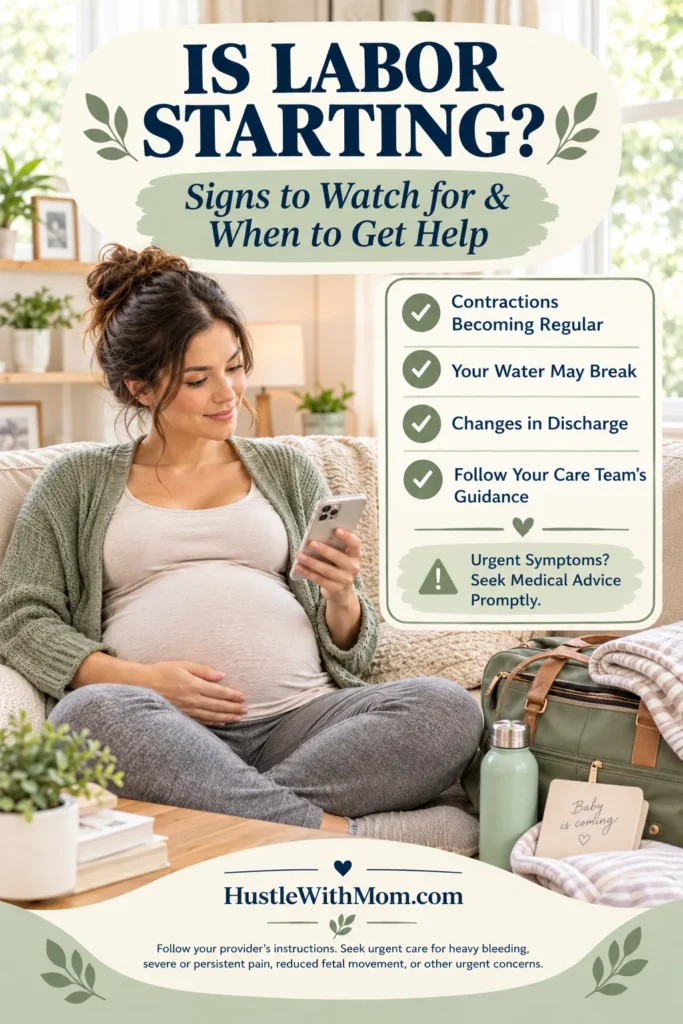
The signs of labor can start days before the main event. You might lose your mucus plug, feel stronger cramps, or notice water breaking. Not every sign means go time. Braxton Hicks contractions come irregularly and ease when you rest or drink water. Real contractions grow longer, stronger, and closer together.
Many providers recommend the 5-1-1 rule. Head in when contractions come every five minutes, last one minute, and keep that pattern for one hour. Still, always follow your own provider’s advice. If your water breaks, note the time and color of the fluid and call right away.
Early Labor vs. Active Labor vs. Transition
Early labor is mild and can last many hours, so rest and eat. Active labor brings stronger, steadier contractions. Transition is the shortest, toughest stretch before pushing.
| Stage | Dilation | Contraction Pattern | What to Do |
| Early labor | 0 to 6 cm | 5 to 30 minutes apart | Rest, eat, hydrate |
| Active labor | 6 to 8 cm | 3 to 5 minutes apart | Head to your birth setting |
| Transition | 8 to 10 cm | 2 to 3 minutes apart | Breathe, lean on your team |
When to Call Your Provider Right Away
Call immediately for heavy bleeding, fever, severe constant pain, or less baby movement. Don’t wait on these.
Pain Management Options: Natural Comfort Measures and Medical Choices
Good pain management in labor starts with knowing your menu. Natural pain relief includes massage, counter-pressure, warm showers, TENS units, and changing labor positions. A quiet room helps too. Comfort measures often work best when your birth partner knows them in advance. For hands-on ideas, read these natural childbirth coping techniques.
Medical choices are equally valid. An epidural blocks pain from the waist down. Nitrous oxide and IV medication take the edge off. No option makes you a better or worse parent. Choose what protects your wellbeing and your maternal agency, meaning your power to decide.
Epidural Pros, Cons, and Timing
An epidural can bring real rest during a long labor. It may slow labor for some people and can cause low blood pressure or itching. Discuss timing with your anesthesiologist.
Mixing Natural and Medical Approaches
You don’t have to choose one lane. Many parents start with breathing and water, then add medication later. That’s smart flexibility, not failure.
How Doula and Midwife Support Improves Birth Outcomes

A birth doula offers emotional and physical coaching, while a midwife gives clinical care. Doula support doesn’t replace medical staff. It fills the gap between them and you. Midwife care often includes longer visits and a holistic view of pregnancy. Together they strengthen your supportive birth environment.
Research on continuous labor support, including reviews from Cochrane, links it with fewer cesareans and higher satisfaction. That’s a strong reason to consider it. Birth outcomes improve when you feel heard. Support also lowers stress, which helps with birth trauma prevention.
How a Doula Supports Your Partner Too
A doula guides your partner on what to say and do. This frees them from guessing. Read how fathers can bond with a newborn for more on partner roles.
Questions to Ask Before You Hire
Ask about training, backup plans, fees, and birth philosophy. Meet at least two candidates. Trust your gut.
Emotional Preparation for Birth: Mindfulness, Mindset, and Self-Confidence
Preparing for childbirth with confidence means caring for your feelings, not just your body. Birth anxiety is common, and old trauma can surface. Naming those worries often shrinks them. Mindfulness for pregnancy helps you notice fear without letting it drive. Five quiet minutes a day can bring real stress reduction.
Here’s a short case study. Maya, a first-time mom, feared losing control. She took a class, practiced hypnobirthing, and wrote a one-page plan. During labor her contractions felt strong, yet she said, “I felt like I was riding a wave instead of drowning.” Her story isn’t a promise. It shows how preparing for childbirth with confidence can change the experience.
Reframing Fear into Trust
Replace “I can’t do this” with “I’m doing it right now.” Your mind believes what you repeat. Small shifts build birth empowerment over weeks.
Talking Through Birth Anxiety with Your Partner
Share worries out loud. Set a code word for hard moments. If fear feels heavy, a counselor can help. These first-time mom tips can save you stress later.
Hospital Bag Checklist and Postpartum Care: What to Pack and What to Expect
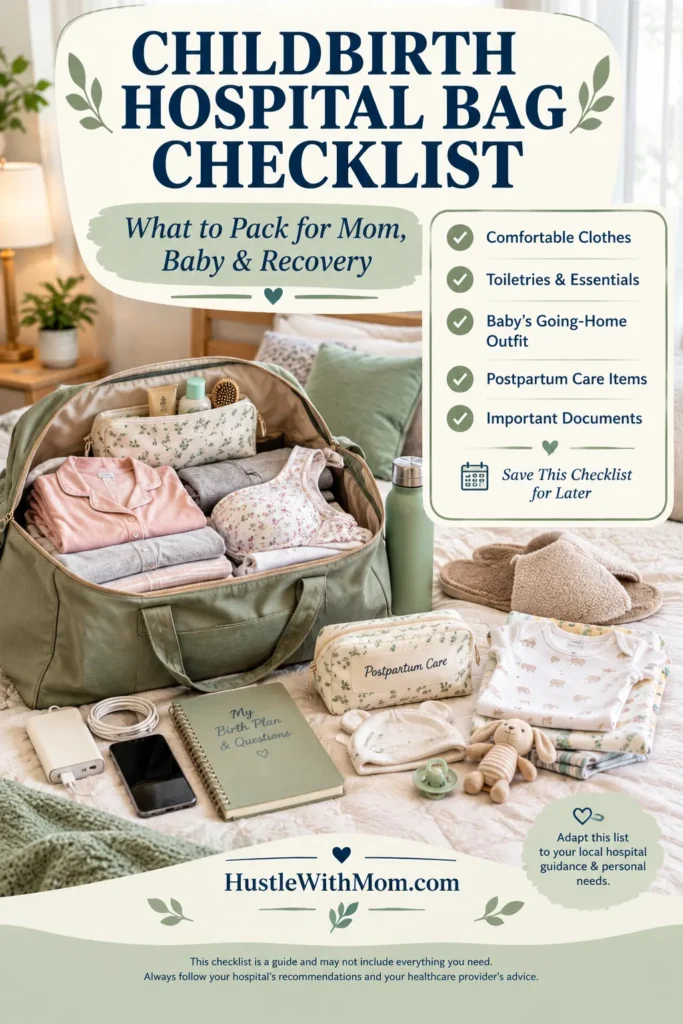
Pack your bag by 36 weeks. A good hospital bag checklist covers documents, comfort items, and baby essentials. Don’t forget your partner’s needs. This hospital bag for dad guide helps.
| Category | Items |
| Documents | ID, insurance card, birth plan |
| For you | Robe, slippers, pads, lip balm |
| For baby | Outfit, blanket, car seat |
| For partner | Snacks, charger, change of clothes |
Your First Six Weeks of Recovery
Postpartum recovery takes time. Expect bleeding, soreness, and mood swings. Skin-to-skin contact helps bonding and feeding. Breastfeeding preparation and newborn care basics make the first days easier, so learn them early. Rest whenever you can. Warning signs like fever, heavy bleeding, or thoughts of harm need a call right away. Strong postpartum care also protects your mood. See preparing for the fourth trimester for more.
Childbirth Education Classes in Brighton, MI
Local prenatal classes offer more than facts. They connect you with other parents in Livingston County and across Southeast Michigan. Preparing for childbirth with confidence feels easier in a group. You practice skills, ask questions, and hear real stories. Look for natural birth classes Michigan families recommend, and check whether you prefer in-person or virtual sessions.
What You’ll Learn in an Empowered Birth Class
Expect lessons on labor stages, hypnobirthing, comfort measures, partner roles, and newborn care. Good classes also cover doula services Brighton MI families can use.
How to Choose the Right Class for Your Due Date
Start in your second trimester or early third. That gives you time to practice and still feel fresh.
Moving Forward with Confidence in Your Birth Journey
Preparing for childbirth with confidence comes down to a handful of choices. Learn what natural childbirth and other paths involve. Write a flexible birth plan. Pick a setting that feels safe. Train your body with prenatal exercise and good nutrition. Practice breathing, guided visualization, and mindfulness for pregnancy. Know the signs of labor, pack your bag, and line up doula support or midwife care. Plan your postpartum care too, because recovery matters as much as delivery.
If questions remain, here are quick answers. How do you prepare for childbirth the first time? Take a class, make a plan, and build your support team. How do you stay calm during labor? Practice breathing and relaxation daily. Do you need a doula? No, but research shows it often helps. When should you go to the hospital? Follow the 5-1-1 rule or your provider’s advice. You’ve got this, so take your next step today and book a class.