

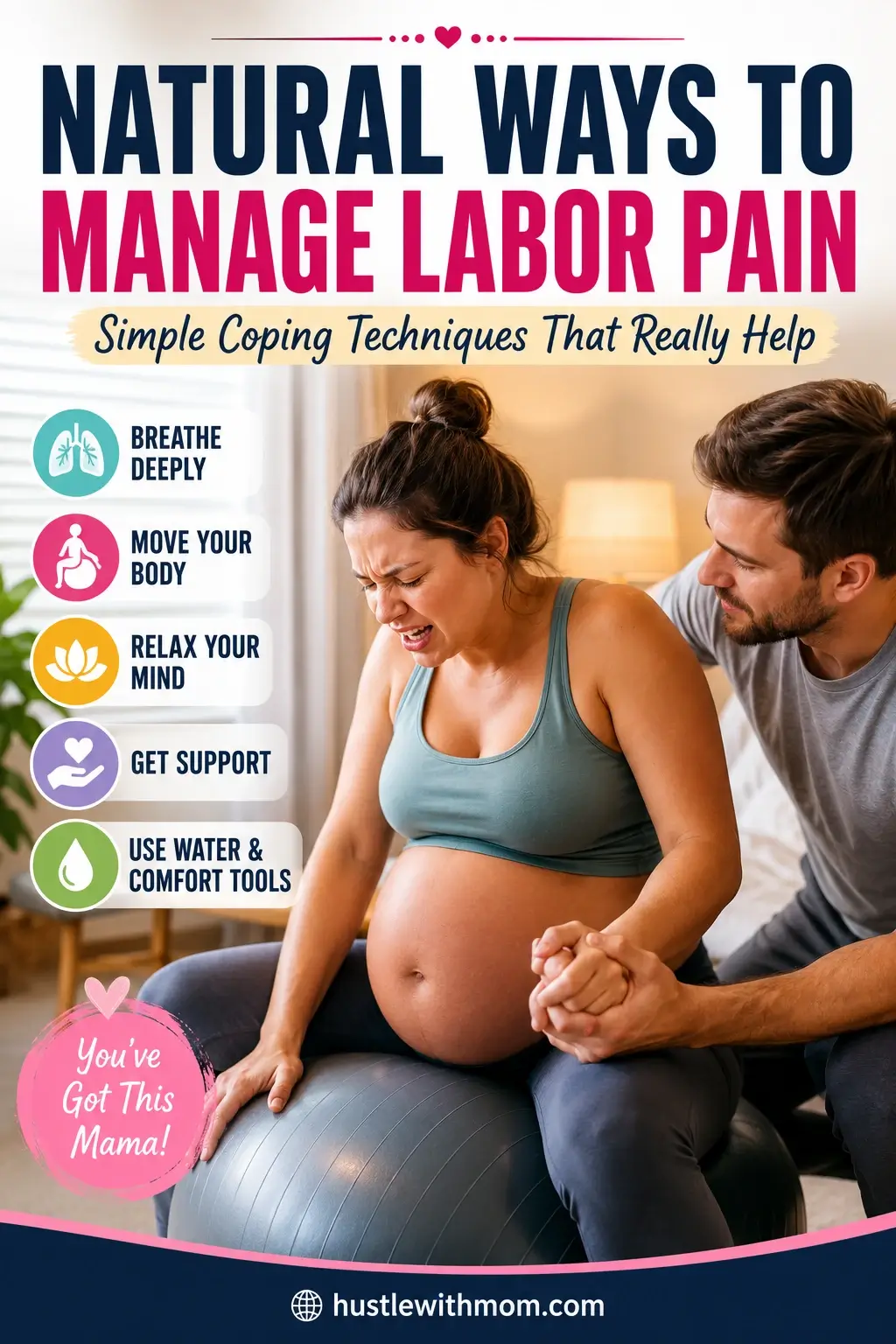
I still remember sitting on my living room floor during my third trimester, staring at a giant exercise ball and feeling a sudden wave of panic. I planned to have a medication-free birth, but as my due date crept closer, reality hit me. How was I actually going to handle the pain without an epidural block? It is easy to say you want an unmedicated birth when you are weeks away from delivery, but it is another thing entirely when the first real uterine contractions hit.
If you are hoping for a natural delivery, you might be feeling that same mix of excitement and deep worry. I want to share what worked for me, what did not, and the exact methods that helped me get through it.
Giving birth naturally is not about being a superhero or pretending pain does not exist. It is about using the right physical setups, relying on your support team, and working with your body instead of fighting against it.
What is Natural Childbirth?

When we talk about a natural birth, we generally mean a vaginal birth that relies on minimal medical adjustments. Instead of using systemic drugs or a spinal block to numb the pain, you let your body go through its natural cycles.
Choosing this path changes how you experience labor. When you do not have an epidural, you can move around freely, try different positions, and feel exactly when it is time to push. Many mothers choose this approach because it lets them stay completely active in the process, and it often means a faster recovery time immediately after delivery.
Working within a midwifery model of care is incredibly helpful here. A midwife views pregnancy and labor as normal, healthy life events rather than medical emergencies. They focus on watching your progress naturally, giving you emotional reassurance, and letting your body do its job unless a real medical need arises.
Change Your Physical Positions for Comfort
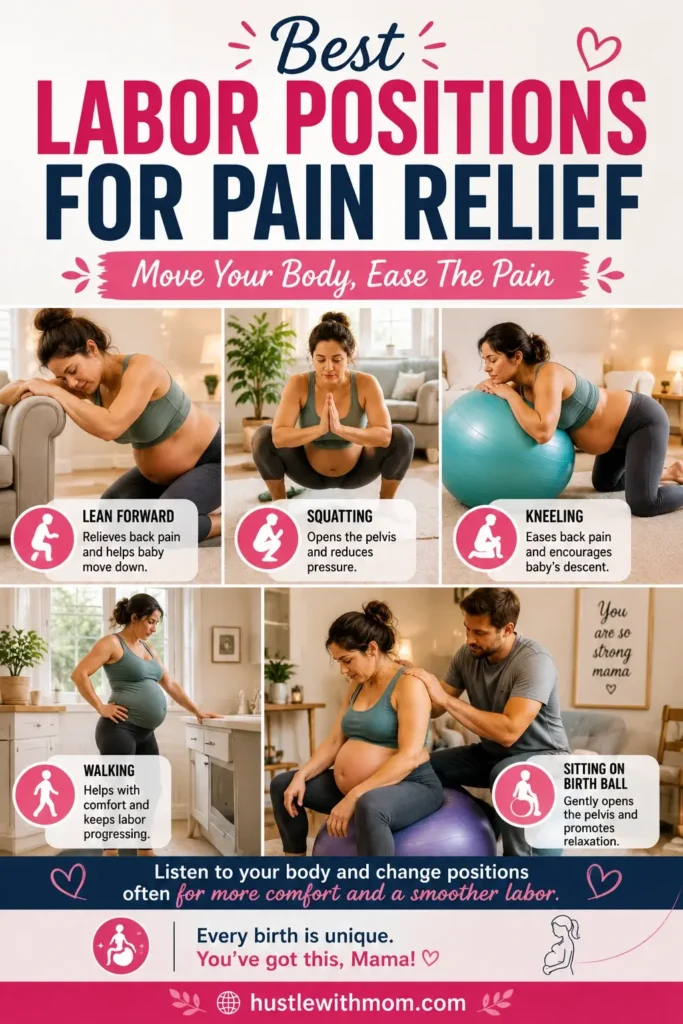
One of the biggest mistakes I made early on was staying in bed. When pain hits, our instinct is often to curl up under the covers. But during labor, staying still can make the pain feel much more intense. Moving around helps your pelvis open and allows gravity to help your baby make their pelvic descent.
Stand and Walk to Help the Baby Move Down
During the early phase labor, staying upright is your best friend. Walking around your room or house keeps your body loose. Every time you stand or walk, gravity pulls the baby downward, putting gentle pressure on your cervix to help it dilate. If walking feels too tiring, you can try leaning against a wall or your partner during a contraction and swaying your hips back and forth.
Sit on a Birth Ball to Open Your Pelvis
A sturdy birthing ball is an absolute must. Sitting on the ball with your knees spread wide opens up your hips and takes the heavy pressure off your lower back. You can bounce gently or move your hips in circles.
Later in labor, if you feel exhausted, you can place the ball on the bed, kneel on the floor, and lean your upper body over the ball. This keeps you in an upright position but lets your arms and shoulders rest completely.
Use the Hands-and-Knees Position to Ease Back Pain
If your baby is in a posterior position (meaning their back is against your back), you will likely experience intense back labor. This feels like a deep, heavy ache in your lower back that does not fully go away between contractions.
Getting down on your hands and knees on a soft mat instantly takes the weight of the baby off your spine. It gives the baby more room to rotate into the proper position for birth.
Relax Your Mind and Muscles

When a heavy contraction hits, the natural human reaction is to tense up, clench your jaw, and hold your breath. But tensing your muscles actually makes the pain worse because it cuts down on the oxygen flow to your uterus. Your uterus has to work twice as hard when the surrounding muscles are tight.
Simple Breathing Patterns that Keep You Calm
You do not need to memorize complicated patterns from a textbook. The goal of paced breathing is simply to stay steady and avoid hyperventilation.
Try diaphragmatic breathing: breathe in deeply through your nose, letting your belly expand, and exhale slowly through your mouth. Make your exhalation longer than your inhalation. Counting helps keep your mind busy. Inhale for a count of four, and exhale for a count of six.
Focused breathing keeps your heart rate down and stops the lactic acid build-up that makes muscles sore.
Use Words and Images to Fight Fear
Your brain plays a huge role in how you feel pain. If you start thinking, “I can’t do this, it hurts too much,” your body releases stress hormones that tighten your muscles.
Instead, try using guided imagery or visualization exercises. During a contraction, close your eyes and picture a wave rising and falling, or imagine your cervix opening like a flower.
Keep simple birth affirmations in your mind or write them on cards where you can see them. Phrases like, “Each contraction brings my baby closer,” or “My body is strong enough for this,” sound simple, but they keep panic away.
How to Stop Tightening Your Muscles
Practice progressive muscle relaxation before labor even starts. Lie down and consciously tense a muscle group, like your shoulders, and then let it go completely.
During labor, ask your partner to look out for signs of tension. If they notice you clenching your fists or wrinkling your forehead, they can gently touch those areas to remind you to release the tightness.
Use Water, Touch, and Tools for Pain Relief
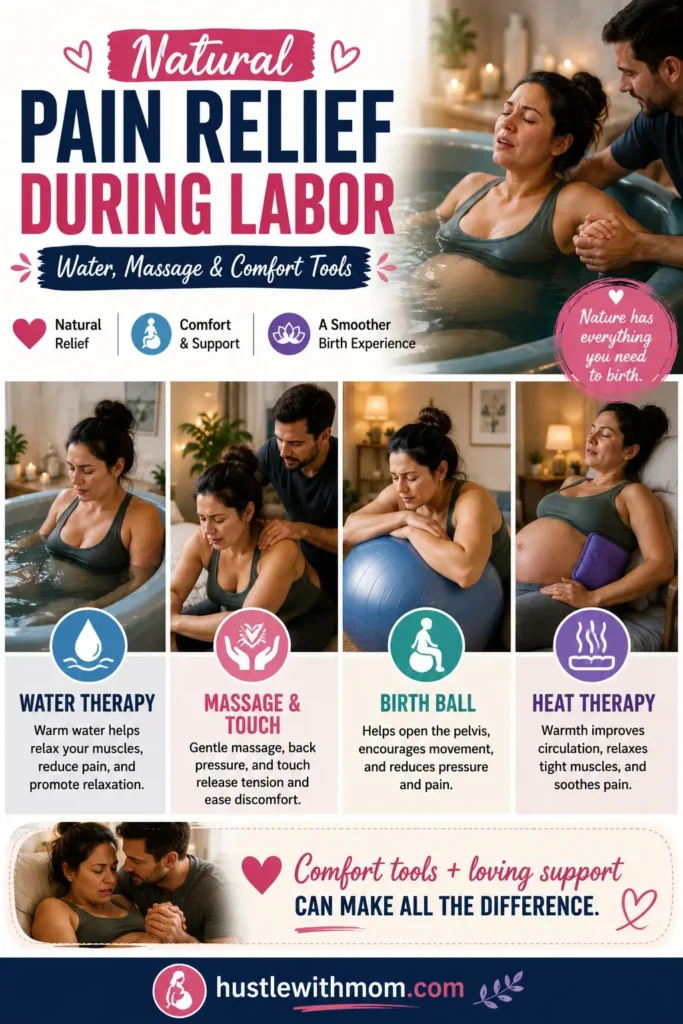
Several non-medical tools can act like a natural epidural by blocking pain signals before they reach your brain.
Use Hydrotherapy Tubs and Showers to Feel Lighter
Water is incredibly powerful for pain relief. Spending time in a waterbirth tub or taking a warm shower can change everything. The buoyancy of the water supports your body weight, relieves pressure on your joints, and helps your entire body relax.
If you do not have a tub, standing in a warm shower and letting the water spray directly onto your lower back or belly provides excellent relief. Just keep in mind that entering the water too early can sometimes slow labor down, so it is often best to wait until you are in active labor.
Ask Your Partner for Firm Massage and Counterpressure
If you are dealing with severe back pain, a light touch will not cut it. You need firm, steady pressure.
Have your partner use the heel of their hand or a tennis ball to press hard against your lower back or hip bones during a contraction. This is called a hip squeeze or counterpressure. The physical pressure helps counteract the internal pressure of the baby moving against your bones.
Between contractions, light effleurage stroking (gentle, rhythmic circular rubbing on your belly or thighs) can help soothe your nervous system.
Try a TENS Machine to Block Pain Signals
A TENS machine (transcutaneous electrical nerve stimulation) is a small, handheld device connected to sticky pads placed on your back. It sends safe, low-voltage electrical currents through your skin.
It does not hurt; it feels like a strong tingling or buzzing sensation. You control the strength with a button. The electrical pulses confuse your nerve pathways, making it harder for labor pain signals to get through to your brain. It also encourages your body to release its own natural pain relievers, called endorphins.
Get Support for an Easier Labor
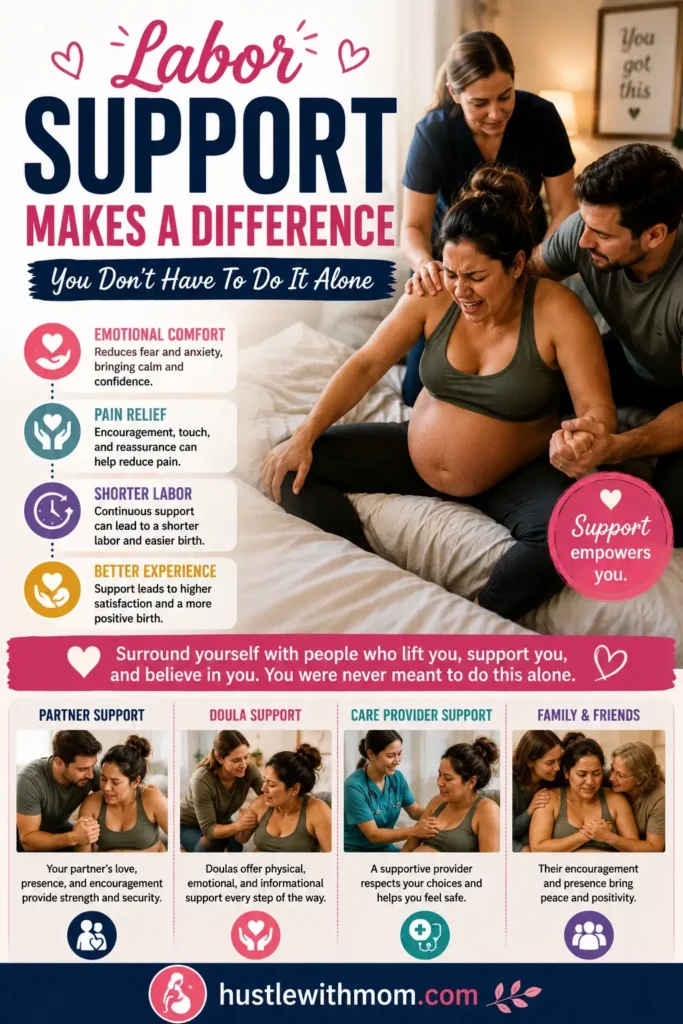
You cannot do this alone, and your environment matters just as much as your physical preparation.
How a Birth Doula Helps You Stay Strong
A doula is a trained labor companion who stays with you through the entire process. While midwives and doctors have to check monitors and fill out charts, a doula focuses entirely on you.
They know exactly when to suggest a new position, when to offer a sip of water, and how to keep you calm when things get intense. Studies consistently show that having continuous support from a doula lowers the chances of needing a medical delivery and increases overall satisfaction with the birth experience.
Set up a Quiet Room with Soft Lights and Music
Hospitals can feel cold and clinical, which can raise your anxiety. You can change the mood by dimming the overhead lights, shutting the door to keep out hallway noise, and putting on a calming birth playlist.
Many women find comfort in bringing a small diffuser with lavender essential oil or other calming scents. Creating a safe, dark, and private space helps your brain release oxytocin, the main hormone responsible for progressing labor.
Ways Your Partner Can Help You During Every Contraction
Your partner does not have to be a passive bystander. They can act as an amazing coach. They can track the timing of your contractions, hand you food pouches or water between blocks of pain, and breathe right along with you to help you stay on track.
Sharing this journey can be intensely emotional, but managing the initial stress together prevents the common fights couples have after baby from creeping into your early parenting days.
Prepare Your Body Before Labor Starts
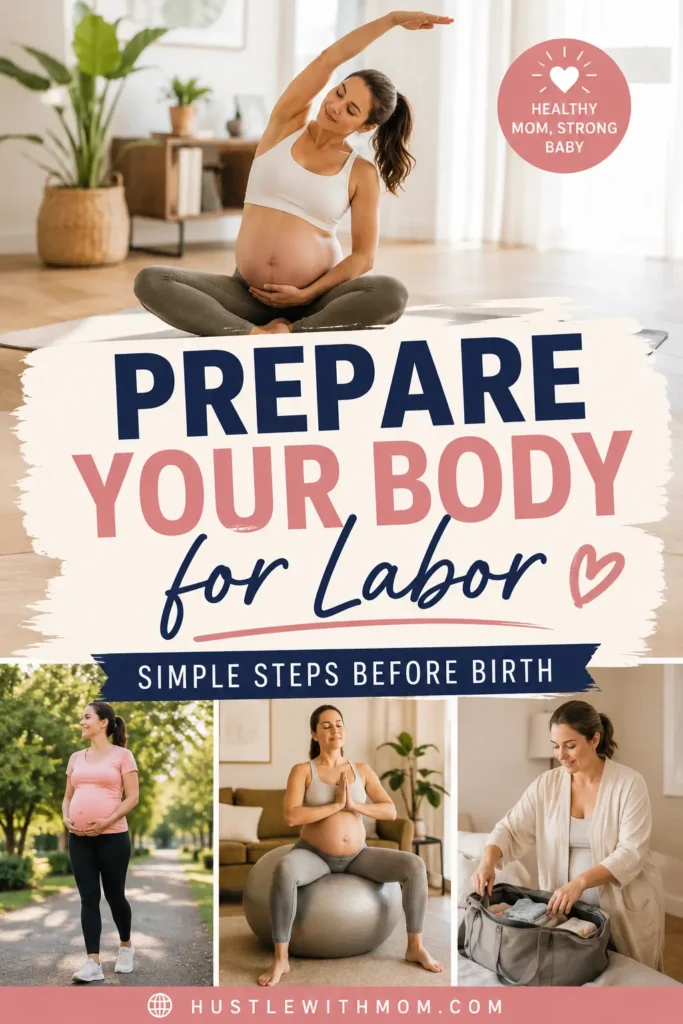
You cannot build endurance on the day of a marathon; you have to train beforehand. The same logic applies to childbirth.
Taking structured classes during your second or third trimester gives you a roadmap. Look into a prenatal education course that aligns with your goals:
- Lamaze: Focuses heavily on breathing patterns, movement, and distraction techniques.
- The Bradley Method: Often called husband-coached childbirth, this method focuses on deep relaxation, nutrition, and heavy partner involvement.
- Hypnobirthing: Teaches self-hypnosis techniques to reframe how your mind perceives pain.
Staying physically active during pregnancy makes a huge difference. Regular pelvic floor exercises, like Kegel exercises, keep your muscles strong and flexible. Gentle stretches like the cat-cow stretch or a tailor stretch (sitting with your feet together and knees out) keep your hips loose.
You can also try perineal massage during the final weeks of pregnancy. Gently stretching the tissues around the birth canal with a natural oil helps the area prepare for delivery, which can minimize tearing and reduce the need for an episiotomy.
Common Mistakes to Avoid
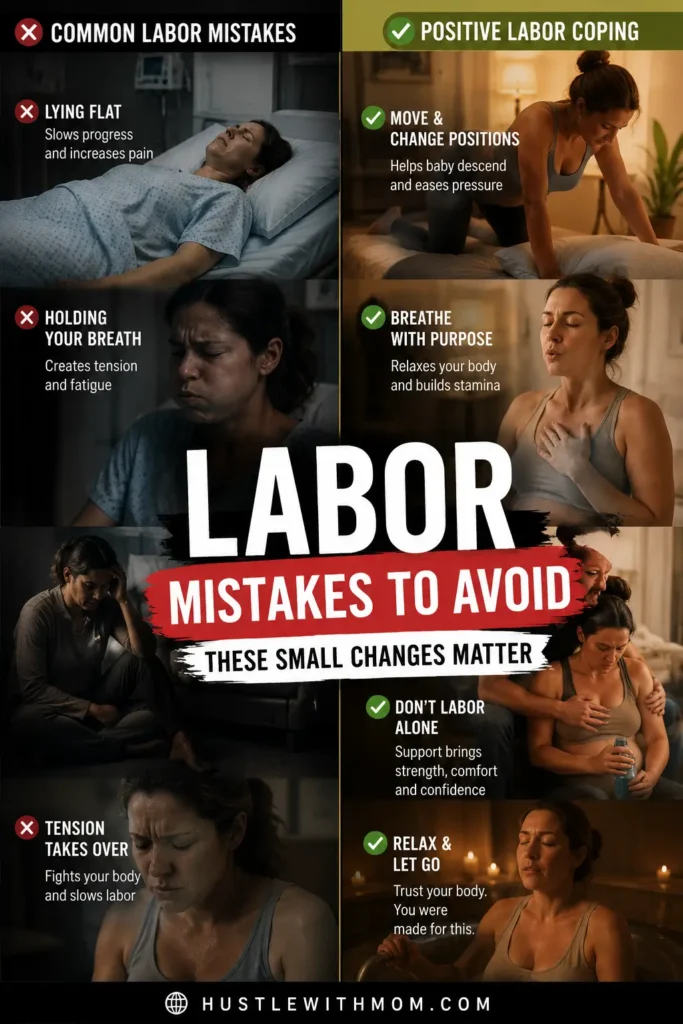
- Fighting the pain: Screaming or tensing up wastes your energy. Try to direct your energy downward into your pelvis rather than letting it exit as high-pitched tension.
- Not eating or drinking early on: Labor requires massive amounts of energy. If you do not eat small, easily digestible snacks during early labor, you will run out of fuel by the time you need to push.
- Staying in one place too long: If a position is not helping after 15 or 20 minutes, change it. Keep moving.
- Being rigid with your plan: It is wonderful to have goals, but sometimes medical situations change. If you end up needing an intervention or a cesarean birth, it is not a failure. The ultimate goal is always a healthy mom and a healthy baby.
Helpful FAQs
How to manage pain during natural birth?
Manage labor pain by staying active and mobile. Use a birthing ball to relieve lower back pressure, use warm water in a shower or tub to relax your muscles, and have your support team apply firm counterpressure to your lower back during contractions. Focus on long, slow exhalations to keep panic away.
What is the 3-3-3 rule after giving birth?
The 3-3-3 rule is a guide for your postpartum recovery phases:
- 3 days: The initial period to rest, bond, and let your milk come in.
- 3 weeks: The time it takes for your uterus to shrink back down and for your primary physical wounds to heal.
- 3 months: The general timeline for your hormones to stabilize and for you and your baby to find a consistent daily routine. It is a great time to start using a structural postpartum planner for mom to keep track of your health and daily schedule.
How to cope with natural birth?
Coping requires mental and physical flexibility. Take a comprehensive childbirth class like Lamaze or The Bradley Method during pregnancy. During labor, rely on a doula for emotional support, change your physical positions frequently, and use tools like a TENS machine or aromatherapy to create a calming environment.
What is the 5-5-1 rule for pregnancy?
The 5-5-1 rule (often referred to as the 5-1-1 rule by many labor units) helps you know when to go to the hospital or birth center. It means your contractions are 5 minutes apart, each contraction lasts for at least 1 minute, and this pattern has been consistent for at least 1 hour.
Can I finger my wife after a C-section?
No, you should avoid any form of vaginal insertion, including fingers, toys, or intercourse, for at least six weeks after birth, regardless of whether it was a vaginal delivery or a C-section. Your cervix needs time to close completely, and the site where the placenta detached inside the uterus is a large open wound that is highly susceptible to infection. Always wait until your healthcare provider gives complete medical clearance at her postpartum checkup.
What are the three golden hours after birth?
The golden hours refer to the critical period immediately following birth. During this time, the baby should be placed skin-to-skin on the mother’s chest. This uninterrupted contact regulates the baby’s body temperature and heart rate, decreases crying, stabilizes blood sugar, and naturally encourages early breastfeeding.
Why does the clitoris feel so good?
The clitoris is the human body’s only organ dedicated entirely to sexual pleasure. It contains thousands of highly sensitive nerve endings. During sexual arousal, blood flow increases to the area, causing it to swell and become exceptionally sensitive to touch, which helps trigger orgasms.
Can a girl still be tight after having a baby?
Yes. The vagina is made of highly elastic muscle tissue designed to stretch significantly during birth and then shrink back down. While it may feel slightly different or softer initially, regular Kegel exercises and pelvic floor physical therapy can effectively rebuild muscle tone and strength over time.
How do I satisfy my husband after giving birth?
Physical intimacy after a baby requires open communication and patience. Since physical healing takes time and exhaustion is common, focus on non-penetrative intimacy, deep physical affection, and emotional connection. When you both feel ready to resume sex, use plenty of lubrication, as hormonal shifts can cause temporary dryness. If you are struggling with severe exhaustion, sharing these challenges and finding ways to rest can help you stay connected, and checking out practical tips for exhausted new moms can help you regain the energy needed to nurture your relationship.
Final Thoughts
Preparing for a natural delivery can feel overwhelming, but your body has an incredible, built-in ability to handle the process. Trust your instincts, build a supportive team, and stay flexible during the big day. Every contraction brings you one step closer to holding your little one in your arms. Stay strong; you can absolutely do this.