

You catch your reflection three days after birth and your belly still looks round and soft. You wonder if something went wrong. You wonder if your body forgot the plan. Nothing went wrong with your body. Your body is doing exactly what bodies do after nine months of stretching.
This guide walks you through your postpartum belly week by week in plain English. You will learn what is normal at three days, two weeks, six weeks, and one year. You will learn the signs of diastasis recti. You will also learn how C-section recovery differs from vaginal recovery. You will learn the red flags that mean you should call your doctor. Only honest timelines, clear signs, and practical help.
Why Your Belly Still Looks Pregnant After Birth
Your belly did not grow overnight. It will not shrink overnight either. Nine months of stretching changed your uterus, your muscles, your skin, and the fluid in your tissues. Your uterus grew from the size of a pear to the size of a watermelon. Your abdominal muscles stretched wide to make room. Your skin expanded to cover it all.
Think of your belly like a balloon that stayed full for nine months. The air leaves the balloon fast. The rubber stays stretched for a while. Your uterus shrinks first and it shrinks fast. Fluid shifts, swelling, gas, and constipation add extra roundness in the early weeks. The fourth trimester is a real season of healing, not a race back to your old jeans.
The First Days: What Changes Fastest
The first three days bring the fastest change you will ever see. Your uterus starts to contract the moment the placenta leaves your body. Those contractions squeeze blood vessels shut and protect you from heavy bleeding. Nurses may press on your belly to check that your uterus feels firm. That pressure feels strange to most new moms. You may also notice strong cramps called afterpains, especially when you breastfeed.
Bleeding, swelling, and sore muscles all peak in these first days. Your belly stays round because your uterus is still large and your tissues hold extra fluid. Constipation and hemorrhoids can make everything feel worse. Gentle movement helps more than bed rest. A short postpartum essentials checklist by the door saves you midnight trips to the store. Rest when your baby rests and let others bring you food and water.
One to Two Weeks: The Biggest Visible Shift
Week one brings the biggest visible change of the whole year. Your uterus drops about one centimeter a day as it shrinks back toward your pelvis. By the end of the first week, it weighs about half of what it weighed right after birth. That is a fast change for any body. Your belly still looks pregnant at this stage. The shape starts to soften and settle.
By two weeks, your uterus weighs around ten ounces and sits low in your pelvis. Your belly looks smaller, though it still feels soft to the touch. Breastfeeding can help this stage along because nursing releases oxytocin. Oxytocin makes the uterus contract hard. Those contractions often feel like strong period cramps. The cramps hurt quite a lot sometimes. They mean your body is doing its job.
Three to Four Weeks: Slow and Steady
Weeks three and four feel slower than week one. That slow pace is completely normal. Your uterus keeps shrinking every day. The daily changes get harder to spot. Your belly looks smaller than it did at one week. Your muscles still feel stretched and weak when you stand up. Your skin may feel loose around your middle. This is the stage where patience matters most.
Your bleeding should be getting lighter by now, changing from red to pink to yellow-white. Short walks feel easier than they did last week. Your body is healing on the inside even when the outside looks the same.
Six Weeks: The Milestone Visit
Six weeks is the milestone your doctor watches for. It is a big milestone for recovery. By now your uterus is usually back to its pre-pregnancy size. Much of the extra fluid has left your body and swelling has gone down. Your belly looks smaller by now. It may still feel soft and squishy. That softness is normal, because your core muscles still need time to rebuild.
Your postpartum checkup usually happens around this time, within six to twelve weeks after birth. Your doctor checks your belly, your uterus, your mood, and your healing. This visit is the right time to ask about exercise, birth control, and anything that worries you. If something still feels off, say so out loud.
| Time | Uterus | What your belly may look like |
|---|---|---|
| 1 week | About half its birth weight | Smaller, still prominent |
| 2 weeks | Back in the pelvis soon, about 10 ounces | Flatter, still soft |
| 3 to 4 weeks | Keeps shrinking, no longer easy to feel | Less full, muscles still weak |
| 6 weeks | Close to pre-pregnancy size | Smaller, still soft, tone returning |
| 6 months | Fully shrunk long ago | Stronger, flatter for many moms |
| 1 year | Pre-pregnancy size | Tone keeps improving, some looseness may stay |
Six Weeks to Six Months: Muscle and Skin Catch Up
After six weeks, the uterus has finished its job. Your muscles take center stage now. Your abdominal muscles start to regain tone week by week. Around three months, postpartum hair loss joins the party for many moms. Shedding hair feels alarming at first. It is a normal hormone shift.
This is the stretch where small habits add up. Daily walks, deep breathing, and gentle core work rebuild strength bit by bit. Good food matters a lot too. Eat enough to heal and to feed your baby if you nurse. Your belly may look flatter by six months. It may also look the same. That is normal too for many moms.
Six to Twelve Months: The Long Tail of Recovery
By six months, most moms feel much more like themselves with a stronger core. Your belly feels less squishy too. Your clothes fit closer to your old size. You may have found a new size that suits you. Some moms see their belly flatten a lot in this stretch.
By one year, muscle tone and skin keep improving for many women. Stretch marks fade to pale silver lines, though they rarely vanish completely. Some looseness may stay for good. That is a normal part of how skin works after pregnancy.
Diastasis Recti: The Gap Down the Middle
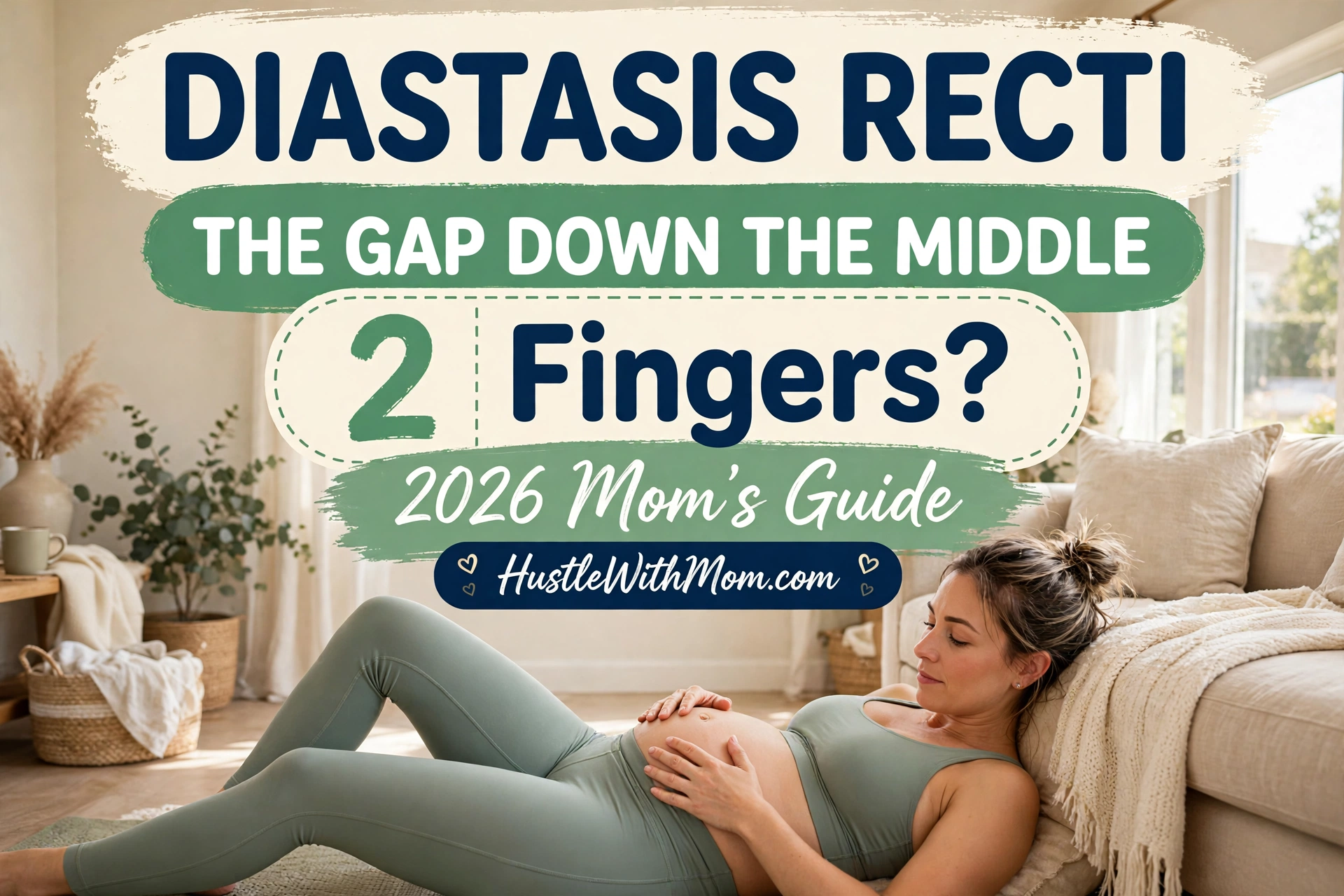
Diastasis recti means the two columns of your abdominal muscles have separated along the middle seam. About six in ten women have it after childbirth, according to Cleveland Clinic. The muscles do not tear at all. The tissue between them thins and stretches, like a seam pulled wide. You may notice a bulge above or below your belly button.
You can check for a gap at home with a simple finger test. Lie on your back with your knees bent and your feet flat on the floor. Lift your head and shoulders slightly, like the start of a small crunch. Press your fingers along the middle of your belly, above and below your belly button. If two or more fingers fit into the gap, tell your doctor. A physical therapist can build a safe plan.
C-Section vs Vaginal Recovery: What Feels Different
The uterus shrinks on a similar timeline after both kinds of birth. The difference sits in the abdominal wall. A vaginal birth leaves your belly free of incisions, though your pelvic floor and perineum need their own healing. A C-section is major abdominal surgery. The first weeks feel different because of it.
After a C-section, rest is medicine for the first couple of weeks. Mayo Clinic advises against lifting anything heavier than ten to fifteen pounds. Keep the incision clean and dry. Watch for redness, swelling, or leaking fluid. Call your provider if you see those signs or if you get a fever. Most moms return to regular activities in four to eight weeks.
Safe Core Work: When and How to Start

Your core is more than your abs. It needs a gentle restart after birth. The deep core includes your diaphragm, your pelvic floor, and the transversus abdominis muscle. Deep breathing and good posture wake these muscles up before any crunch ever could. Walking is the best first exercise for most new moms. Start with short strolls around home.
Wait for your doctor’s green light before you start core exercises, usually at your postpartum visit. Skip crunches, sit-ups, and planks in the early months, because they can make a muscle gap worse. Heel slides and pelvic floor squeezes are safer first steps. A gentle postpartum workout program built for new moms keeps the pace honest. Stop any move that causes coning in your belly.
What Is Not a Reason to Panic
A soft belly at six weeks is not a reason to panic. Loose skin is not a reason to panic. Stretch marks are not a reason to panic. Bloating, gas, and a full bladder can change your shape through the day. Your body is not broken because it looks different.
A small gap between your abdominal muscles is common. It often narrows on its own. A C-section scar that feels numb is common too. Feeling slowly returns for many moms. Weight that leaves slowly is normal, because crash diets slow healing and hurt milk supply. Some weeks look better than others. That is fine and completely normal.
Red Flags: When to Call Your Doctor

Most recoveries move slowly in the right direction. A recovery that moves backward needs a call. Call your provider right away if bleeding soaks a pad every hour. Call if bleeding gets heavy again after it had eased. Call if you pass clots the size of a golf ball. Call if you have a fever of 100.4 degrees Fahrenheit or higher. Call if discharge smells foul or looks green.
Call 911 or go to the emergency room for heavy bleeding with dizziness, fainting, or a racing heart. Go now for chest pain, trouble breathing, or severe belly pain that keeps getting worse. The CDC lists these as urgent maternal warning signs. They can appear up to a year after birth. Trust your gut and call anyway, even if you cannot name it.
Frequently Asked Questions
These are the questions new moms ask most about their postpartum belly. The short answers sit right below. Each one links back to the detail above. If your question is not here, ask your doctor at your next visit. You know your body best. You deserve clear answers from your doctor.
Read the timeline first if you are short on time. It covers the big picture in one glance. Then come back to the questions that match your week. Recovery is personal for every mom. Your answers may differ from your friend’s answers.
Will my postpartum belly ever go back to normal?
For many moms, the belly gets close to its old shape over six to twelve months. Your uterus returns to its old size by about six weeks. Your muscles and skin need more time. Some changes may stay for good. Stretch marks fade but rarely vanish. A little looseness may stay too. That is normal for new moms. It does not mean you failed.
How long does it take for the uterus to shrink after birth?
The uterus shrinks fastest in the first days. It drops back into the pelvis by about ten to fourteen days. It reaches close to its pre-pregnancy size by about six weeks. Breastfeeding can help, because nursing releases oxytocin and oxytocin makes the uterus contract. Pumping can trigger the same cramps. The timeline can run longer after twins, a C-section, or a long labor.
Is it normal to still look pregnant at 2 weeks postpartum?
Yes, it is completely normal at this stage. At two weeks, your uterus has shrunk a lot. Swelling, stretched muscles, loose skin, gas, and constipation still shape your belly. Your reflection is a poor measure of how your uterus is doing. Go by your symptoms and the overall trend, not by one look in the mirror.
When can I start exercising my core after birth?
Start with walking and deep breathing as soon as your provider says it is safe, often in the first days. Wait for your doctor’s green light before core exercises, usually at your postpartum visit around six weeks. Skip crunches, sit-ups, and planks in the early months. Heel slides and pelvic floor work are safer first steps. A physical therapist can guide you.
Does breastfeeding help my postpartum belly go down?
Yes, it can help quite a lot. Nursing releases oxytocin into your body. Oxytocin makes the uterus contract hard. Those contractions often feel like strong cramps in the first days. Pumping can trigger the same effect. Breastfeeding does not guarantee a set timeline. Your uterus still shrinks if you do not breastfeed. It simply adds extra hormonal support.
Conclusion:
Your postpartum belly follows a slow, honest timeline. The uterus shrinks fast in the first days and settles by six weeks. Your muscles and skin catch up over months. A gap in the middle, loose skin, and stretch marks are all common parts of the story. You need time, rest, food, and a doctor who listens.
Watch the trend, not the mirror. If bleeding, pain, or fever move in the wrong direction, call your provider right away. If your belly still worries you at your six week visit, ask for a diastasis recti check. Give yourself the same patience you give your baby. You grew a whole person inside you. Healing simply takes time, like all good recoveries do.
This article is for general information only and is not a substitute for professional medical advice. Always consult your doctor, midwife, or lactation consultant for personal health decisions. Recovery times apply to healthy, full term births at home. Complicated births, twins, or medical conditions may need stricter rules from your care team.
Sources: Pampers, Your Postpartum Belly Guide; The Bump, How and When Your Postpartum Belly Changes After Birth; Mamazing, How Fast Does the Uterus Shrink After Birth? Timeline; Cleveland Clinic, Diastasis Recti (Abdominal Separation): Causes and Treatment; Mayo Clinic, C-Section Recovery: What to Expect; MedlinePlus, Going Home After a C-Section; CDC, Urgent Maternal Warning Signs (Hear Her)