

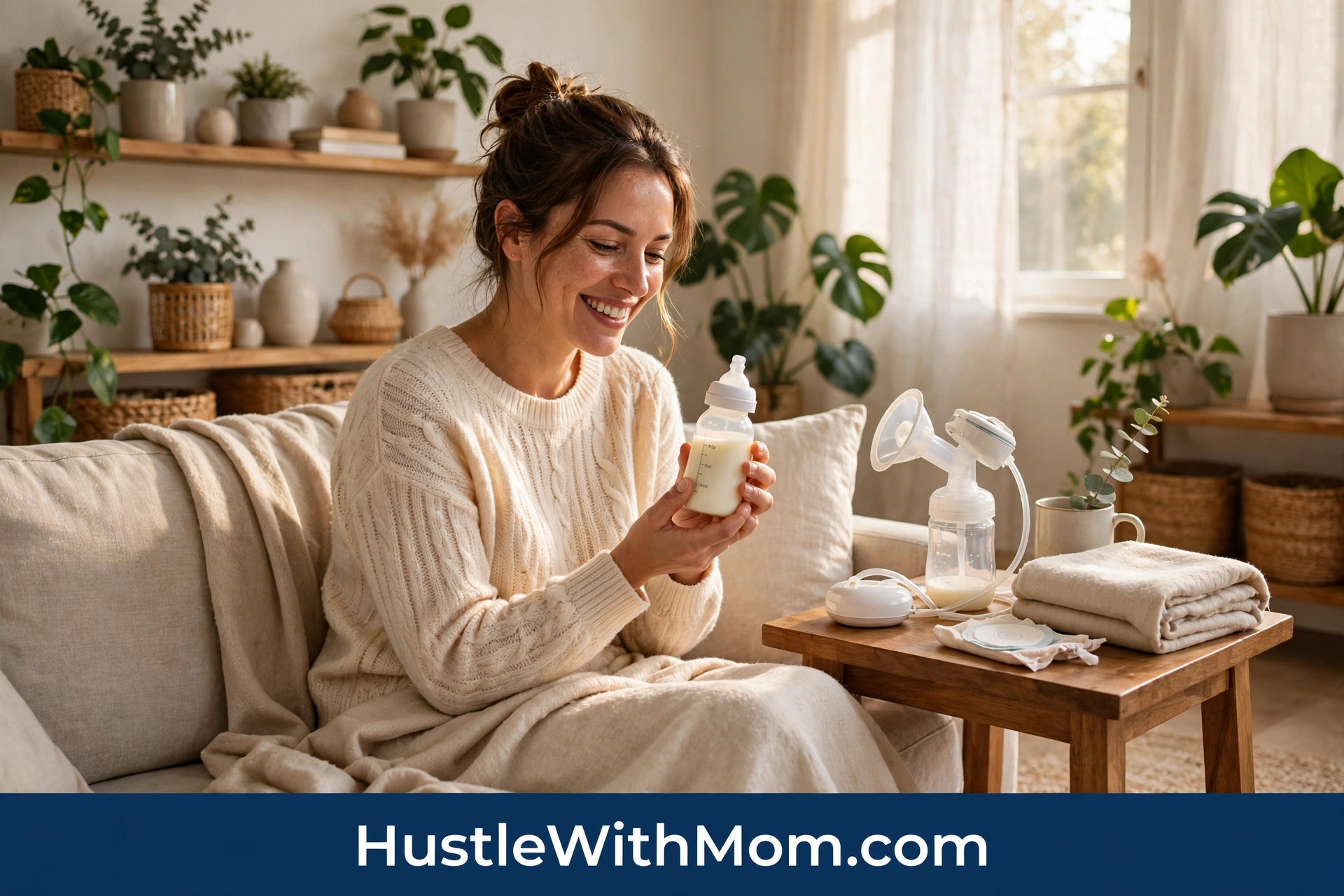
Fresh milk feels precious after a long pump session at 2 a.m. You want every drop to stay safe for your baby. You also want a simple plan you can remember when you feel tired.
This guide gives you that plan in plain English. You will learn the key times, the best containers, and the easy habits that protect your milk. You will also learn what to do at work, at daycare, and on the road.
The Rule of 4s: Your Easy Starting Point
Think of the number four as your friend in the early weeks. Fresh breast milk lasts up to four hours at room temperature. It lasts up to four days in the fridge. Those two fours cover most days at home with a new baby.
The freezer gives you more time. The number still helps you. Use frozen milk within about six months for best quality. The CDC says up to twelve months is acceptable in a cold freezer. When you feel unsure, choose the shorter time and move on.
How Long Does Breast Milk Last? The Full Chart
Keep this chart on your fridge until the times feel automatic. It covers fresh milk, thawed milk, and milk left after a feed. The times below come from the CDC for healthy, full term babies at home.
| Milk type | Where you keep it | How long it lasts |
|---|---|---|
| Freshly pumped | Room temperature, 77F or colder | Up to 4 hours |
| Freshly pumped | Insulated cooler with ice packs | Up to 24 hours |
| Freshly pumped | Fridge, 40F or colder | Up to 4 days |
| Freshly pumped | Freezer, 0F or colder | About 6 months best, up to 12 months acceptable |
| Thawed in fridge | Fridge, 40F or colder | Within 24 hours from fully thawed |
| Thawed then warmed | Room temperature | Within 2 hours |
| Leftover after a feed | Bottle your baby drank from | Within 2 hours, then discard |
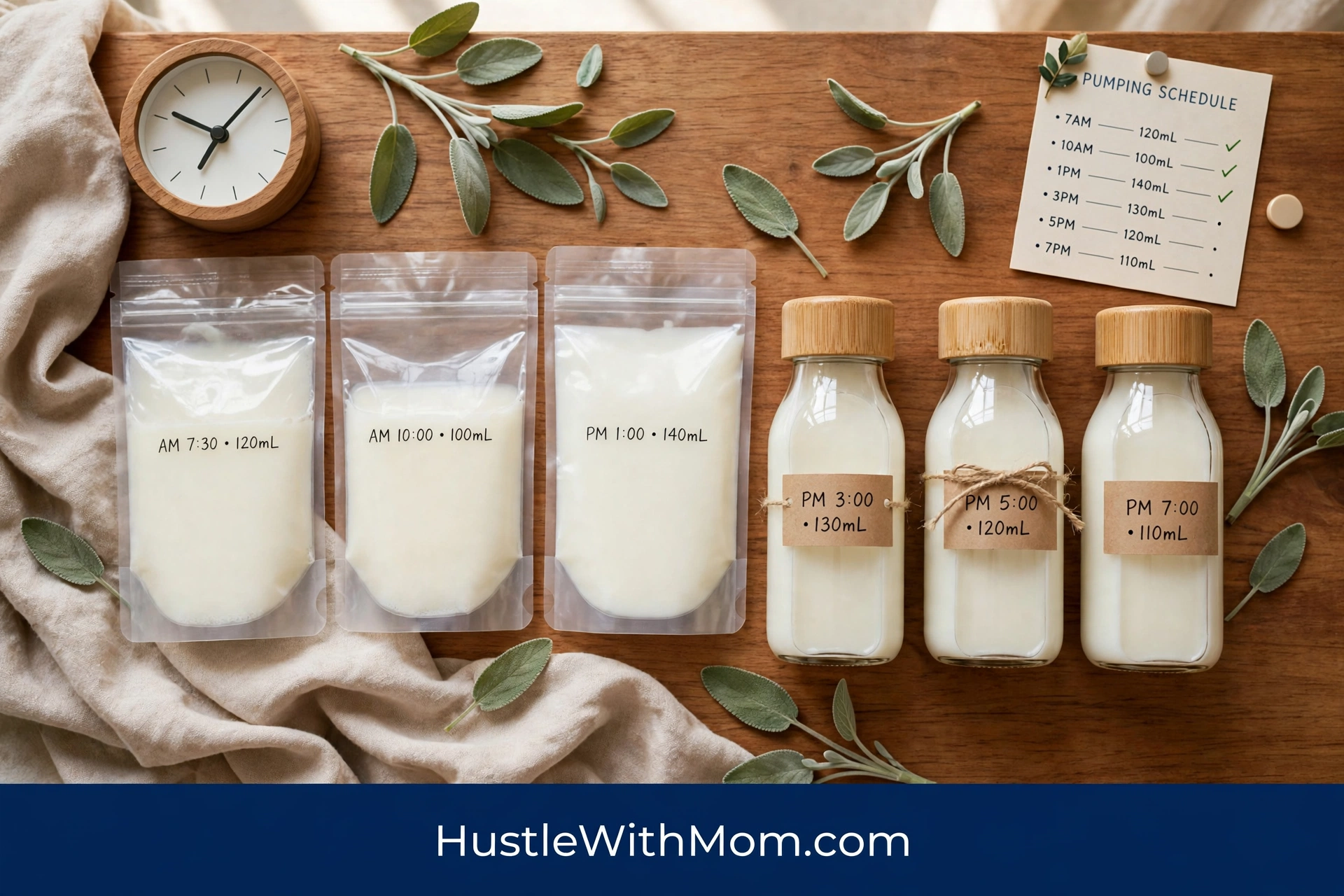
Use the chart as a starting point, not a test. Your fridge, your room, and your pump routine all change the picture a little. Clean hands, clean parts, and cold storage give you the safest result every time.
Room Temperature: What to Know
Fresh milk can sit out for up to four hours in a cool room. The room must stay at 77F or colder for that time to apply. Keep the bottle covered and away from sun, heat, and a hot stove.
Warm rooms shorten the safe window fast. Trust your nose and your clock. If the room feels hot to you, chill the milk sooner. In a room above 77F, aim for one to two hours at most. A cooler with ice packs buys you up to 24 hours on a trip.
Fridge Storage: Keep It Cold and Simple
Your fridge is the workhorse for short term storage in the first months. Place milk at the back of a shelf where the cold stays steady. Skip the door because the temperature swings each time you open it.
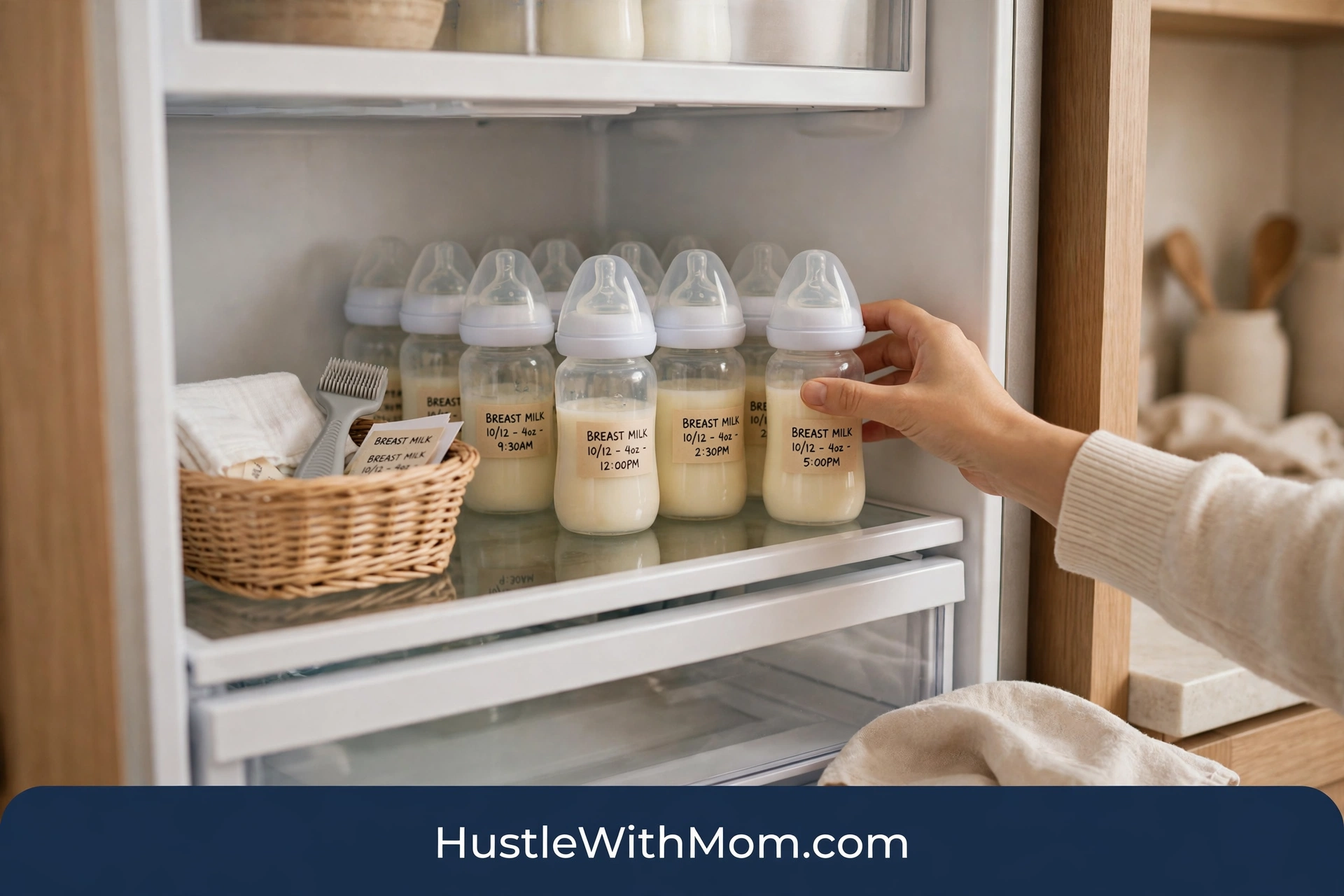
Use refrigerated milk within four days. Freeze it sooner if you will not use it. Label each bottle or bag with the date you pumped it. Use the oldest milk first. Keep a small note on the shelf if that helps.
Freezer Storage: Build Your Stash Without Waste
Freeze milk in small portions of two to four ounces per bag. Small portions thaw fast and waste less milk when your baby takes a small feed. Leave about one inch of space at the top because milk expands as it freezes.
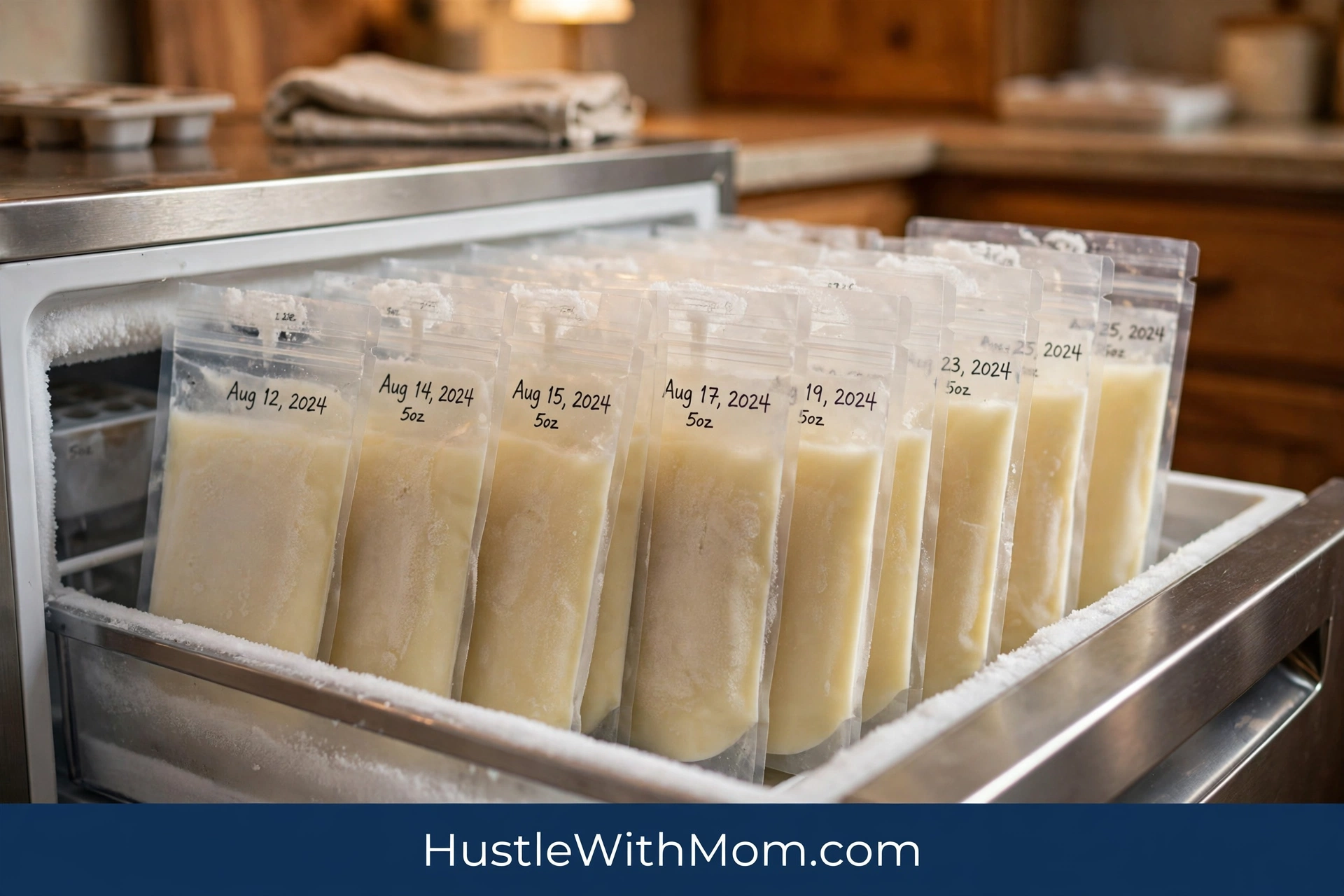
Lay bags flat until they freeze, then stack them like books. Flat bags save space, thaw faster, and let you see dates at a glance. Store bags at the back of the freezer. Use the oldest bag first each time.
How to Store Breast Milk the Right Way
Use breast milk storage bags or clean food grade containers with tight lids. Glass and hard plastic both work well when the lid seals tight. Never use disposable bottle liners or thin plastic bags not made for milk.
Wash your hands well before you pump or touch milk parts. Label every container with the date. Add your baby name for daycare. Cool fresh milk in the fridge before you add it to cold milk already in storage.
How to Thaw Breast Milk Safely
Thaw the oldest milk first. Remember first in, first out. Place the sealed bag in the fridge overnight for the slowest and safest thaw. You can also hold it under lukewarm running water when you need it faster.
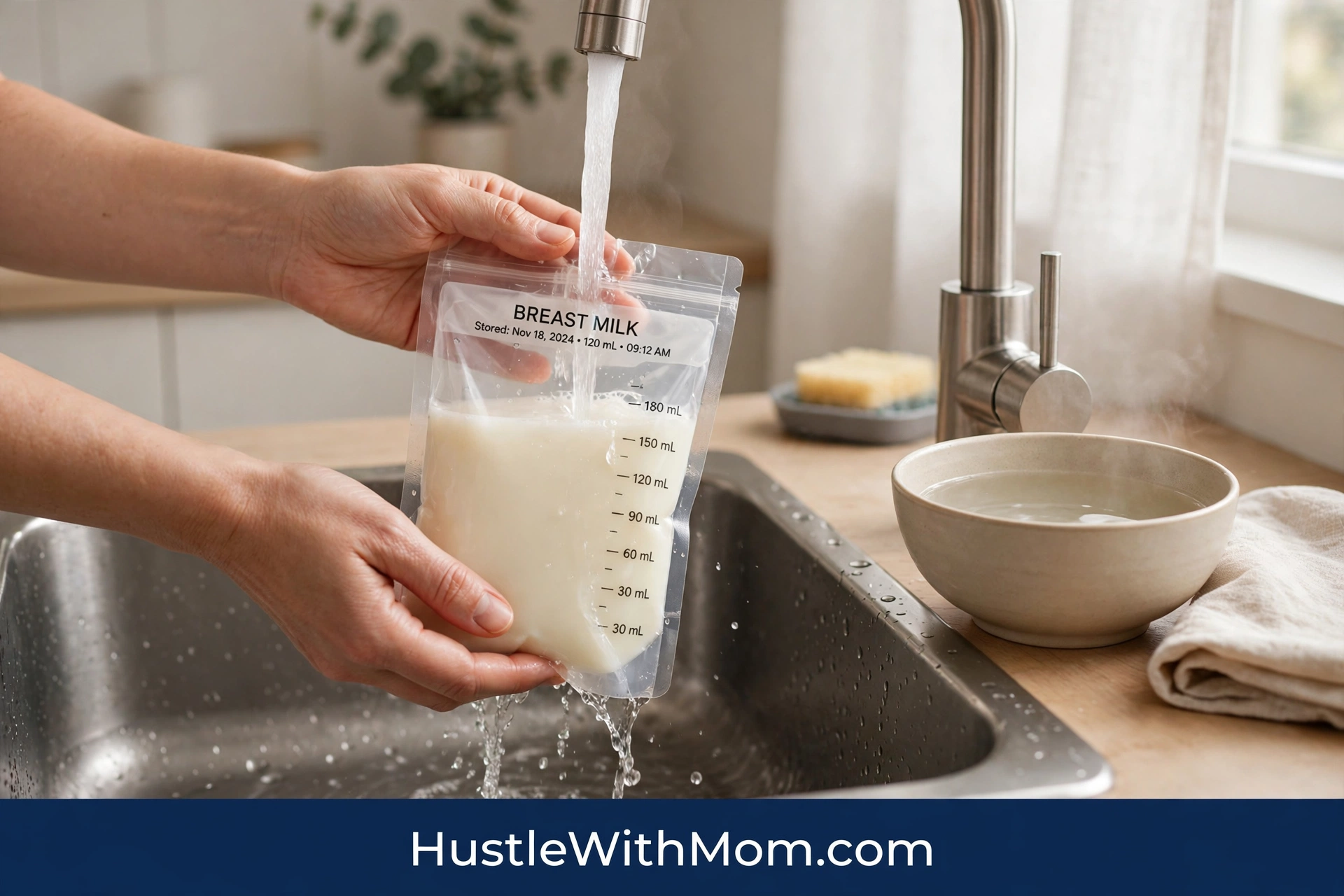
Never thaw milk in a microwave. Never thaw it at room temperature. A microwave heats unevenly and can burn your baby mouth with hot spots. Once milk thaws fully in the fridge, use it within 24 hours and never refreeze it.
How to Warm Breast Milk Without Ruining It
Your baby does not need warm milk to drink it safely. Many babies drink milk cold or at room temperature with no fuss at all. Warming is a comfort choice, not a safety step. Skip it when you feel rushed.
To warm milk, keep the container sealed and place it in warm water. Hold it under warm running water for a few minutes if that feels easier. Test a few drops on your wrist. Swirl gently to mix the fat that rose to the top.
7 Mistakes New Moms Make With Stored Milk
Small habits make a big difference when you store milk each day. These seven mistakes show up again and again in new mom groups. Each one is easy to fix.
- You store milk in the fridge door where the temperature swings a lot.
- You pour warm fresh milk straight onto cold milk in the fridge.
- You freeze huge bags and thaw more milk than your baby drinks.
- You thaw milk in the microwave or in hot water on the stove.
- You refreeze milk after it thawed, and hope the clock resets.
- You skip the label and guess the date three days later.
- You keep leftover milk from a feed and try to save it.
Fix one habit at a time. Do not beat yourself up over past bottles. A simple label, a flat bag, and a cool back shelf will save you time and tears.
Breast Milk Storage for Work, Daycare and Travel
Work days need a cooler, ice packs, and a clear routine you can repeat. Pump every three to four hours when you can. Chill milk right after each session. Keep spare bags, labels, and a clean bottle in your work bag for busy days.
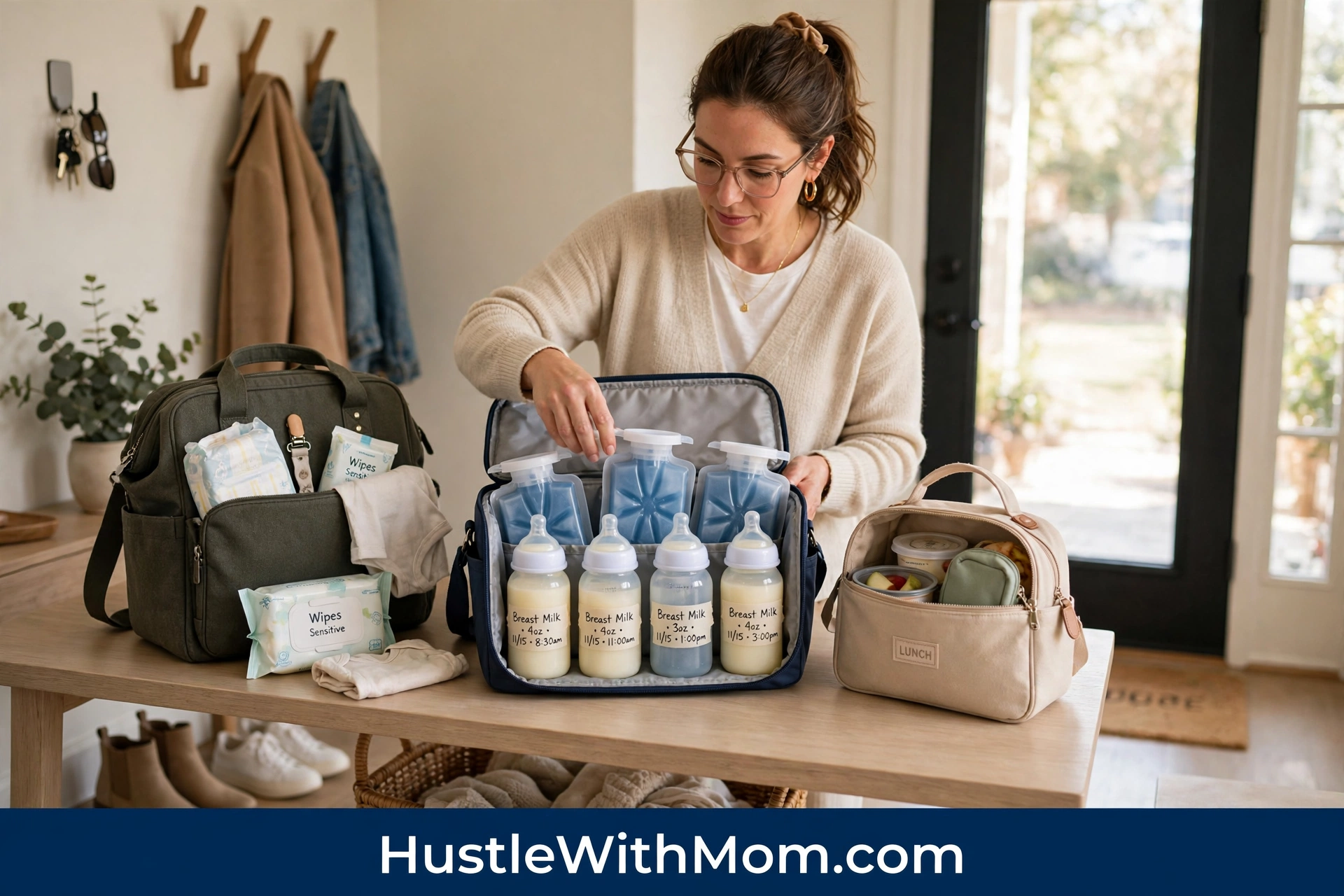
For daycare, label each bottle with your baby name and the date you pumped. Ask your provider about their own rules for storage and labels before your first drop off. For travel, pack milk in a cooler with frozen ice packs and use it within 24 hours.
What If Milk Smells Funny or Looks Odd?
Stored milk often separates as it sits. That change looks strange at first. The fat rises to the top like cream in a bottle. A gentle swirl mixes it back in. Separation alone does not mean the milk has gone bad.
Thawed milk can smell soapy or metallic because of lipase, a natural enzyme in milk. The CDC and La Leche League note that this milk is still safe when stored correctly. If your baby refuses it, talk with a lactation consultant about scalding milk before you freeze it.
When to Throw It Out and When to Ask for Help
When in doubt, throw it out. Trust that simple rule on hard days. Discard milk left after a feed two hours after your baby finishes it. Discard milk that sat too long, smells sour, or spent time in a warm room.
Ask for help when your baby seems unwell after a feed or when you feel unsure. Call your pediatrician for illness, fever, or feeding worries that feel urgent. Talk with an IBCLC lactation consultant for pumping, supply, and storage questions that need a personal answer.
How to Build a Freezer Stash for Work
Start your stash slowly in the first weeks after your milk settles. Pump once a day after a morning feed, when many moms feel fullest. Freeze that extra milk in two to four ounce bags. Label each bag with the date.
Aim for a small buffer first, not a huge freezer full of milk. Twenty to thirty ounces gives you room for a work day, a sick day, and a late meeting. Rotate your stash each week. Use the oldest bag on a low stress day at home.
What to Do When the Power Goes Out
A power cut feels scary when your freezer holds weeks of milk. Keep the freezer door shut. Do not open it to check the milk. A full freezer stays cold for about 48 hours. A half full freezer stays cold for about 24 hours.
Use a cooler with ice packs if the outage lasts longer than a day. Move milk to the cooler, keep it shut, and check the ice often. Discard milk that thaws fully and stays warm. Call your pediatrician if you feel unsure about a bag.
How to Tell If Stored Milk Is Still Good
Use your eyes, your nose, and your clock before you feed a bottle. Fresh milk smells mild and sweet. Thawed milk may smell a little soapy from lipase. Sour milk, clumpy milk, or milk past its time belongs in the sink, not in a bottle.
Check the label first, then check the time since you pumped it. If the milk sat in a warm room, in a hot car, or in a cooler with melted ice, play it safe. A single bottle is never worth a sick baby, and you can always pump a fresh one.
Frequently Asked Questions
Can I combine breast milk from different pumping sessions?
Yes, you can combine milk from different sessions with one key step first. Cool fresh milk in the fridge before you add it to milk that is already cold. Never pour warm milk straight onto cold or frozen milk because it can warm the older milk.
Can I refreeze breast milk after it thaws?
No, you should never refreeze breast milk once it has thawed fully. Thawing lets bacteria start to grow. Refreezing does not reset that clock. Use thawed milk within 24 hours in the fridge or within two hours once warmed.
Can my baby drink cold breast milk?
Yes, a healthy baby can drink breast milk straight from the fridge. Many babies accept cold milk with no trouble at all. Warming is optional. Warm the bottle in warm water if your baby prefers it that way.
How much milk should I freeze in each bag?
Freeze two to four ounces in each bag, or about one feed for your baby. Small bags thaw fast, waste less milk, and let you mix and match amounts. Label each bag with the date and the amount inside it.
Does frozen breast milk lose nutrients?
Frozen milk stays safe and nourishing when you store it correctly and use it in time. Some live cells drop during freezing. The milk still gives your baby strong nutrition. Fresh milk has the most live factors. Use fresh milk first when you can.
The Bottom Line
Breast milk storage gets easier once you learn the Rule of 4s. Four hours on the counter, four days in the fridge, and about six months in the freezer cover most days. Label each bag, use the oldest first, and keep milk at the back where it stays cold.
You do not need a perfect system to feed your baby well. You need a simple routine, clean parts, and a clock you trust. Start with one small habit today. Let the rest fall into place.
This article is for general information only and is not a substitute for professional medical advice. Always consult your pediatrician, midwife, or lactation consultant for personal health decisions. Storage times apply to healthy, full term babies at home. Premature or hospitalized babies may need stricter rules from their care team.
Sources: CDC, Breast Milk Storage and Preparation; AAP HealthyChildren.org, Storing and Preparing Expressed Breast Milk; La Leche League International, Storing Human Milk
1 thought on “Breast Milk Storage Guidelines: How Long It Lasts for New Moms”