
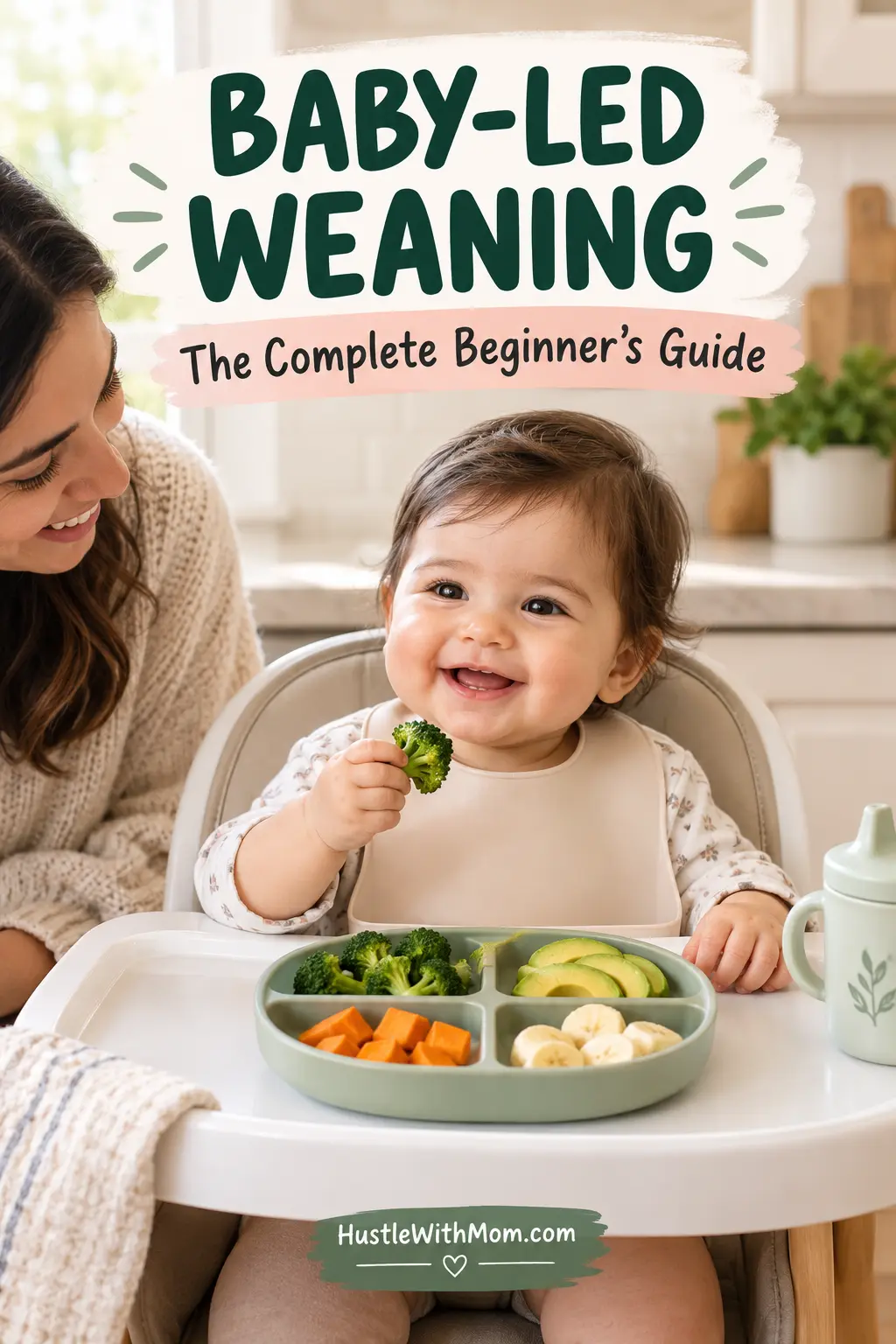
The first time I put a steamed broccoli floret in front of my six-month-old and just… let her go at it, I nearly grabbed a spoon out of pure instinct. Every fiber of me wanted to mash it up, load a spoon, and do it “the normal way.” But we’d decided to try baby led weaning, and that meant sitting on my hands, literally, while she squished broccoli into her hair instead of her mouth.
If you’re standing at that same crossroads right now, wondering whether to hand your baby real food or stick with purees, you’re not alone. Baby led weaning has become one of the most talked about approaches to starting solids, and for good reason. It’s messy, it’s a little nerve wracking the first few times, and it also happens to be backed by more research than most people realize.
This guide walks through everything I wish someone had explained to me before we started: when to begin, how to keep mealtime safe, which foods actually work, and the mistakes that trip up almost every first timer.
What Is Baby Led Weaning?
Baby led weaning, often shortened to BLW, is a way of introducing solid food that skips the spoon and the purees altogether. Instead of feeding your baby, you place soft, safely sized pieces of food in front of them and let them self-feed from the very first bite.
The idea was popularized by Gill Rapley, a former UK health visitor, and her co-author Tracey Murkett in their book on the subject. Rapley noticed that babies who were allowed to feed themselves seemed just as capable, and sometimes more enthusiastic about food, than babies who were spoon fed purees.
Baby Led Weaning vs Traditional Spoon Feeding
Traditional weaning moves through stages: smooth purees first, then thicker textures, then finally finger foods around 9 to 12 months. Baby led weaning flips that order. Your baby starts with soft finger foods from day one and builds chewing skills and oral motor development through actual practice, not a gradual ramp up.
Neither method is “wrong.” Plenty of families land somewhere in the middle, offering purees on a preloaded spoon alongside finger foods, which honestly is what worked best for us once the initial excitement wore off.
When to Start Baby Led Weaning
Age alone doesn’t tell you if your baby is ready. What matters more is developmental readiness, and there are a few clear signs to look for before you begin.
Your baby is likely ready for starting solids when they can:
- Sit upright with minimal support and good head control
- Bring objects (including their own hands) to their mouth
- Show real interest in food, like leaning in or opening their mouth when you eat
- Have lost some of the automatic tongue thrust reflex that pushes solid objects back out
Most babies hit these milestones around 6 months, which lines up with what the American Academy of Pediatrics recommends. Starting earlier than 4 months isn’t advised, and honestly, most babies just aren’t physically ready before 6 months anyway.
How to Start Baby Led Weaning, Step by Step
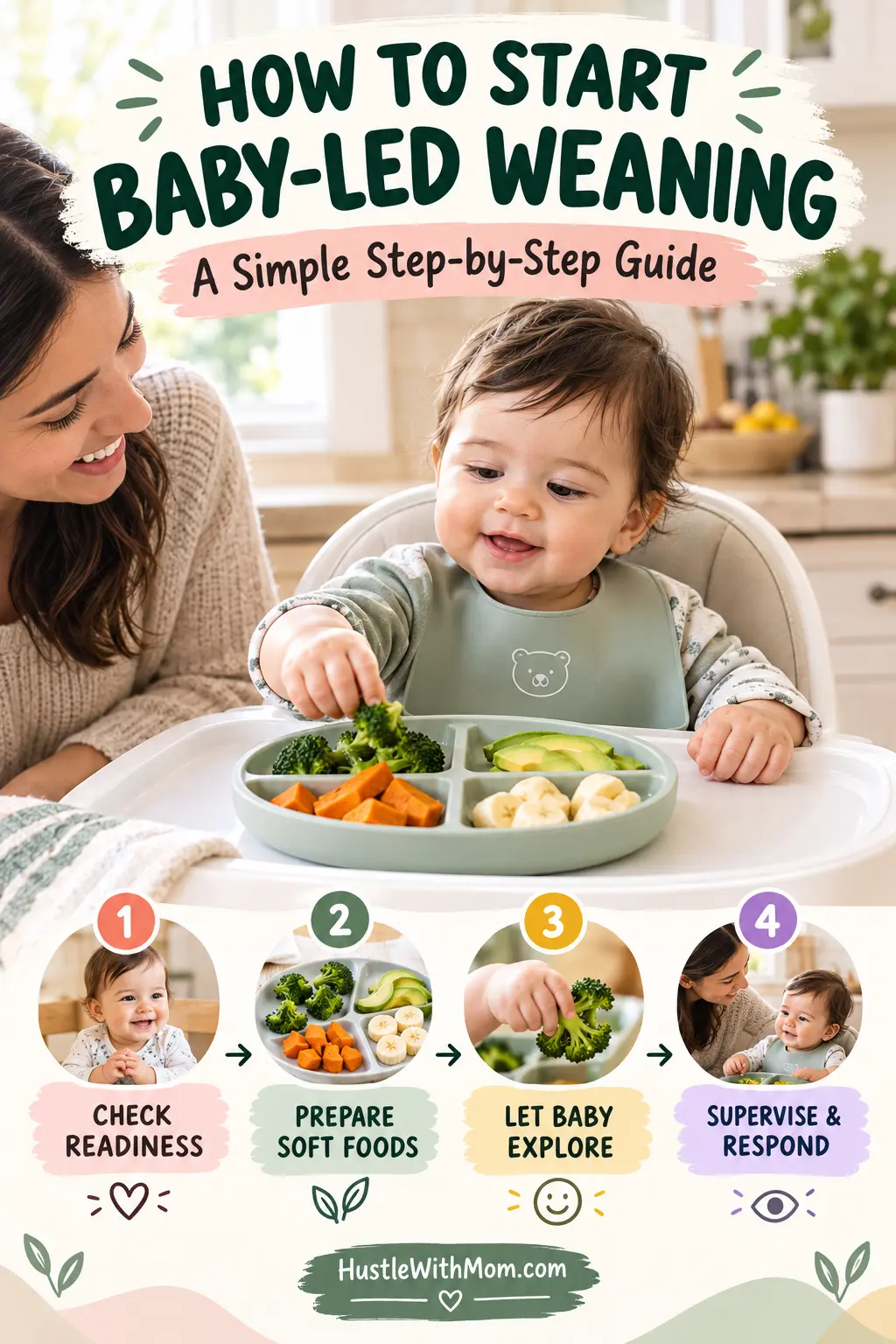
Once you’ve got the green light, the actual process is simpler than it looks on Pinterest.
Step 1: Set up a stable high chair. Your baby needs a proper seat with foot support, not a reclined bouncer. Balance matters for safe chewing.
Step 2: Offer one or two foods at a time. Don’t overwhelm the tray. Start with a single food cut into a manageable strip about the size of an adult finger.
Step 3: Let your baby explore before they eat. Expect licking, squishing, throwing, and staring contests with a piece of avocado. That’s normal, not failure.
Step 4: Eat together. Babies learn a huge amount from watching you chew and enjoy food. Sit down and share the meal instead of just supervising from across the kitchen.
Step 5: Stay close, every single time. Never leave a baby alone with food, even for a few seconds.
The first two or three weeks are mostly about exploration, not nutrition. Don’t panic if barely anything makes it past those tiny gums. Breast milk or formula is still doing the heavy lifting nutritionally at this stage.
Is Baby Led Weaning Safe? Gagging vs Choking
This is the question every parent actually loses sleep over, and it deserves a straight answer: yes, baby led weaning is safe when food is prepared correctly, according to multiple studies including one published in Pediatrics that found no increased choking risk compared to spoon feeding.
But you do need to understand the difference between gagging and choking, because they look scary but are not the same thing.
Gagging is loud. Your baby’s face scrunches up, they cough, maybe their eyes water, and food often comes back out. It’s uncomfortable to watch, but it’s actually a protective reflex doing exactly what it’s supposed to do, and it sits much further forward in the mouth for babies than it does for adults.
Choking is silent, or nearly silent. No sound, difficulty breathing, bluish lips. This is the emergency.
How to Reduce Choking Risk
- Cook vegetables until they’re soft enough to mash between two fingers
- Cut round foods like grapes and cherry tomatoes into quarters, lengthwise
- Avoid whole nuts, popcorn, hard candy, and chunks of peanut butter straight from the jar
- Never leave your baby unattended, even for “just a second”
It’s worth taking an infant CPR class before you start. I did one through a local hospital, and even though I never needed it, having that knowledge sitting in the back of my mind made every single meal feel less terrifying.
Benefits of Baby Led Weaning
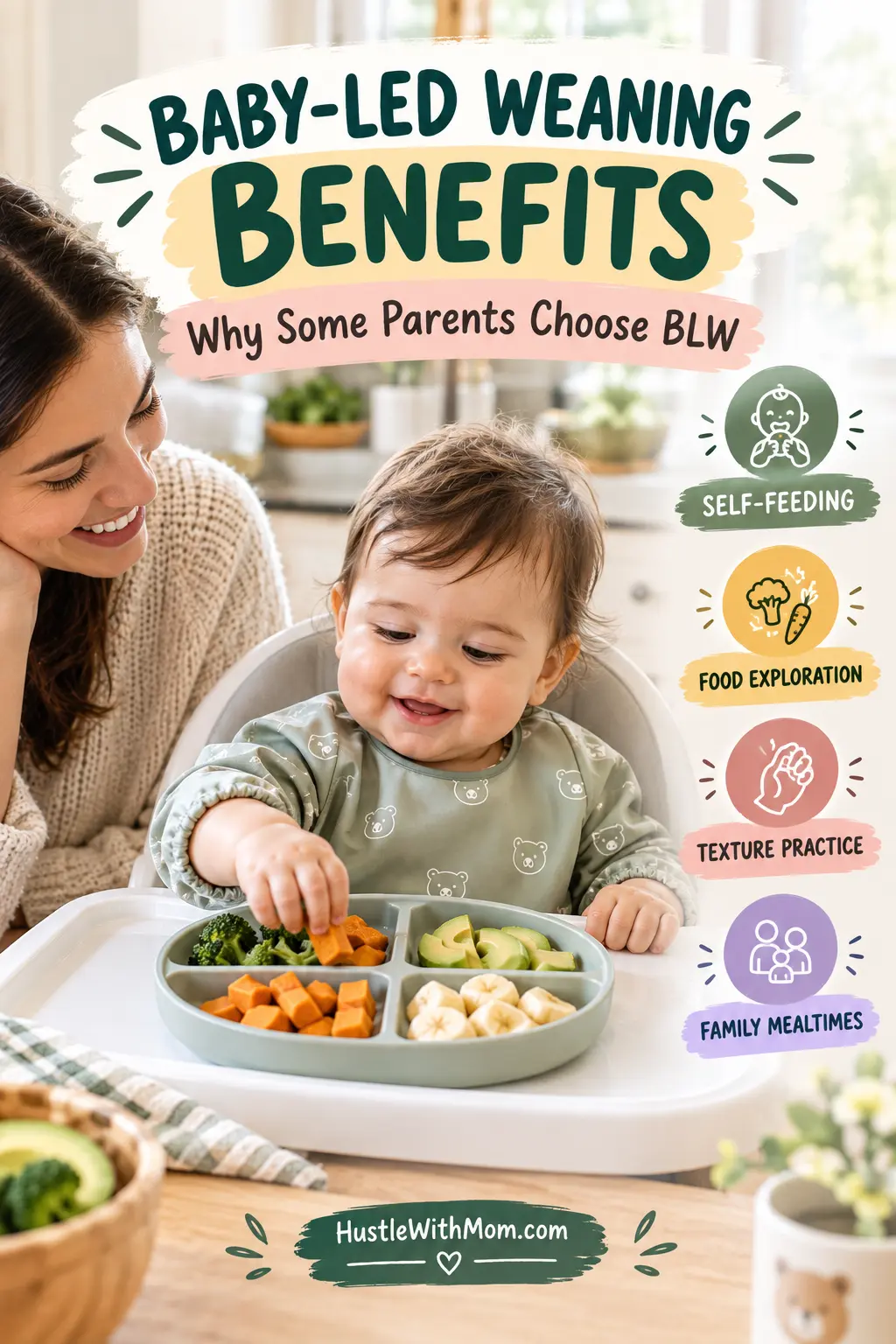
Beyond the mess, there’s real substance behind why families choose this approach.
Fine motor skills and hand eye coordination get a genuine workout every time your baby grabs, adjusts, and aims food toward their mouth. Spoon fed babies simply don’t get that same repeated practice.
Appetite self regulation tends to develop naturally, since baby decides how much to eat rather than a caregiver deciding when the “last bite” happens. Some research, including a study in JAMA Pediatrics, suggests this may be linked to healthier eating patterns later on, though researchers are careful to note more evidence is still needed.
Reduced picky eating often shows up down the line, since babies are exposed to a wider range of textures and flavors early instead of months of bland purees. If you’re already dealing with a toddler who throws every vegetable on the floor, our post on getting picky toddlers to eat vegetables has some tactics that pair well with a baby led weaning foundation.
Shared family mealtimes become easier too, since your baby is basically eating a softer version of whatever’s on your plate instead of a separate meal.
Best First Foods for Baby Led Weaning
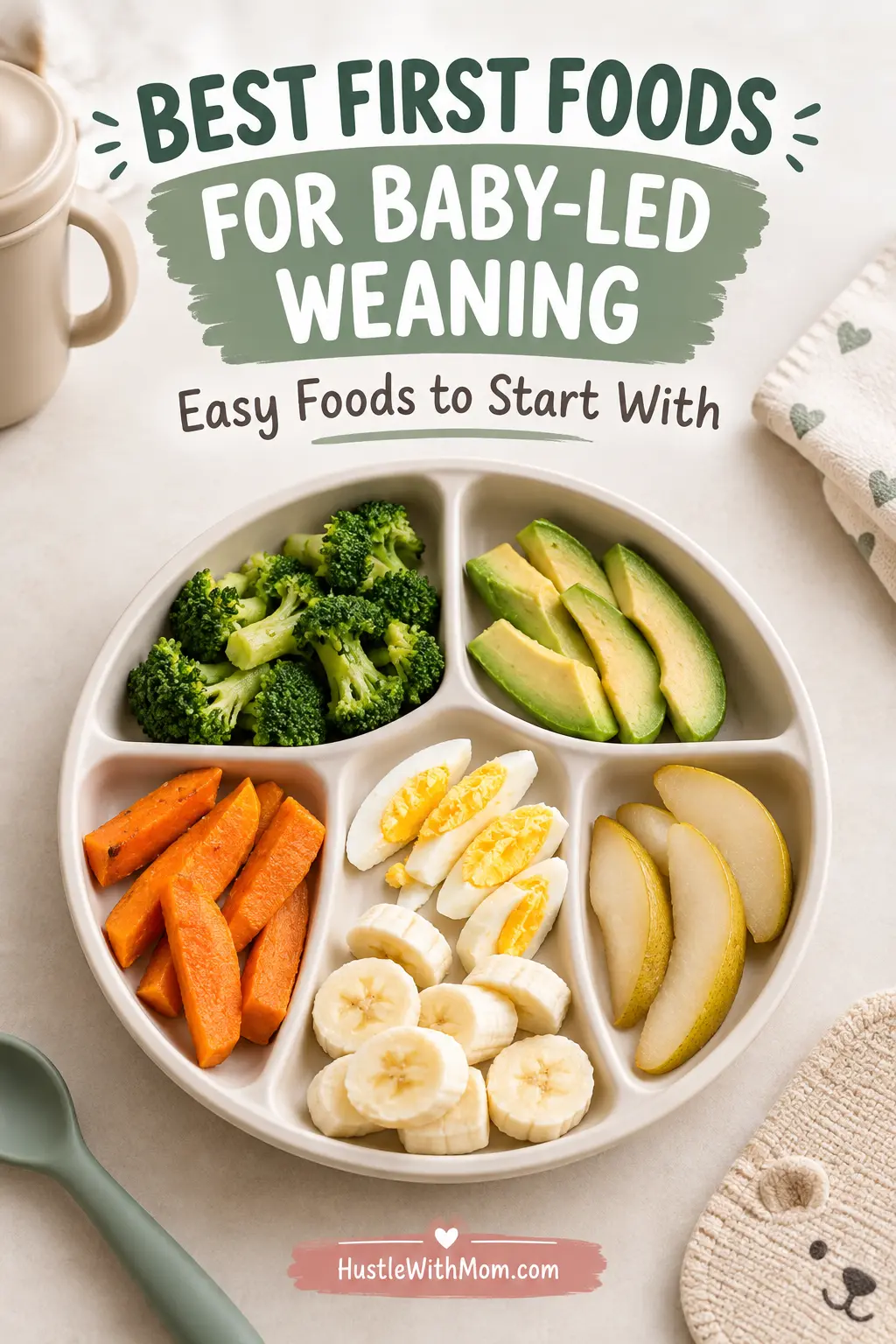
Not every food belongs on that first high chair tray. Here’s a rough breakdown by age that worked well for us and lines up with what most pediatric feeding specialists recommend.
6 to 7 months:
Soft steamed broccoli, avocado spears, banana halves, roasted sweet potato strips, ripe mango slices.
8 to 9 months:
Quartered blueberries, shredded chicken, whole grain pasta, scrambled eggs, well cooked beans.
10 to 12 months:
Bite sized pieces of soft fruit, small meatballs, deconstructed tacos, toast fingers with nut butter spread thin.
Introducing Allergens Safely
Common allergens like peanut, egg, and dairy should actually be introduced early and often, not delayed the way older advice suggested. Offer a tiny amount first, wait, and watch for any reaction before increasing the portion.
Iron Rich Foods to Prioritize
Babies’ iron stores start dropping around 6 months, so iron rich foods like pureed or well cooked meat, lentils, and iron fortified cereal deserve a regular spot on the tray, even within a baby led approach.
If mornings feel like a scramble to figure out what to actually serve, our roundup of breakfast ideas for babies and toddlers has some easy, repeatable options.
Baby Led Weaning Schedule and Meal Frequency
Early on, one meal a day is plenty. Around 7 to 8 months, most babies move to two meals, and by their first birthday you’re generally looking at three meals plus a snack or two.
Breast milk or formula stays the primary source of nutrition for most of the first year, so don’t stress if solid food intake seems tiny compared to how much ends up on the floor.
Common Baby Led Weaning Mistakes to Avoid
A few things trip up nearly every family starting out:
Cutting food too small too soon. Tiny pieces are actually harder for babies to grab and control than bigger strips, and small round pieces raise choking risk.
Adding salt or sugar out of habit. Baby’s kidneys can’t process sodium the way ours can, so season food for baby before adding salt to your own portion.
Panicking at the first gag. It happens constantly and it’s supposed to. Reacting with alarm can actually make your baby anxious about eating.
Comparing intake to other babies. Every baby eats at their own pace, and consumption is genuinely low for the first month or two.
Skipping foods because of mess. Yogurt, rice, and oatmeal are messy but valuable for building scooping and hand control skills. Worth the extra wipe down.
Baby Led Weaning vs Purees: Which Is Right for You?
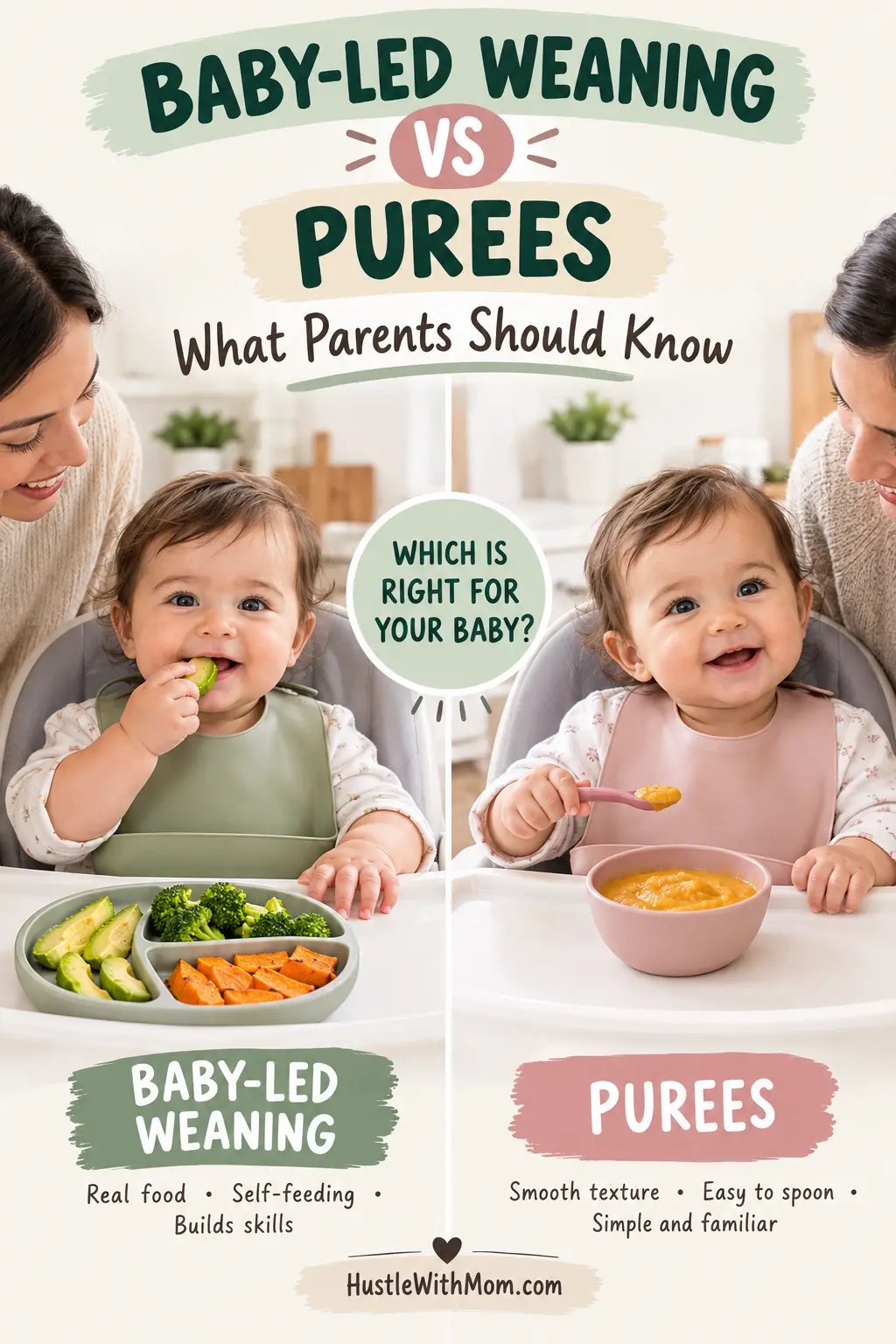
Honestly, this doesn’t need to be all or nothing. Plenty of families offer purees on a preloaded spoon that baby controls themselves, mixed with finger foods throughout the week. That still counts as baby led, since the key ingredient isn’t the food format, it’s letting your baby drive the pace and the amount.
Choose based on what fits your household, your baby’s temperament, and how much mess you can tolerate on a given Tuesday.
Frequently Asked Questions
Can you do baby led weaning without teeth?
Yes. Babies use their gums to mash soft foods long before teeth appear, and gum strength is often underestimated.
Can you combine purees and finger foods?
Absolutely, and many pediatric feeding specialists actually recommend this hybrid approach for families who want extra reassurance early on.
What if my baby isn’t eating much solid food?
Completely normal in the first month. Keep offering food at regular times without pressure, and breast milk or formula will continue meeting nutritional needs.
How do I cut food safely for baby led weaning?
Aim for pieces about the length of an adult finger that stick out past baby’s fist when they grip it, soft enough to mash between two fingers.
Is baby led weaning linked to lower obesity risk?
Some studies suggest a possible connection through better appetite regulation, though researchers agree more long term data is needed before drawing firm conclusions.
Final Thoughts
Baby led weaning isn’t about being a perfect parent who never worries. It’s about handing your baby the tools to explore food at their own pace, gags and mess and all. The learning curve is real, both for baby and for you, but watching a baby move from squishing food to actually feeding themselves confidently is genuinely one of those small parenting wins that sneaks up on you.
Start slow, keep food soft and appropriately sized, stay close during every meal, and trust that the mess is temporary even when it doesn’t feel that way at 6pm with sweet potato in your baby’s ear.