

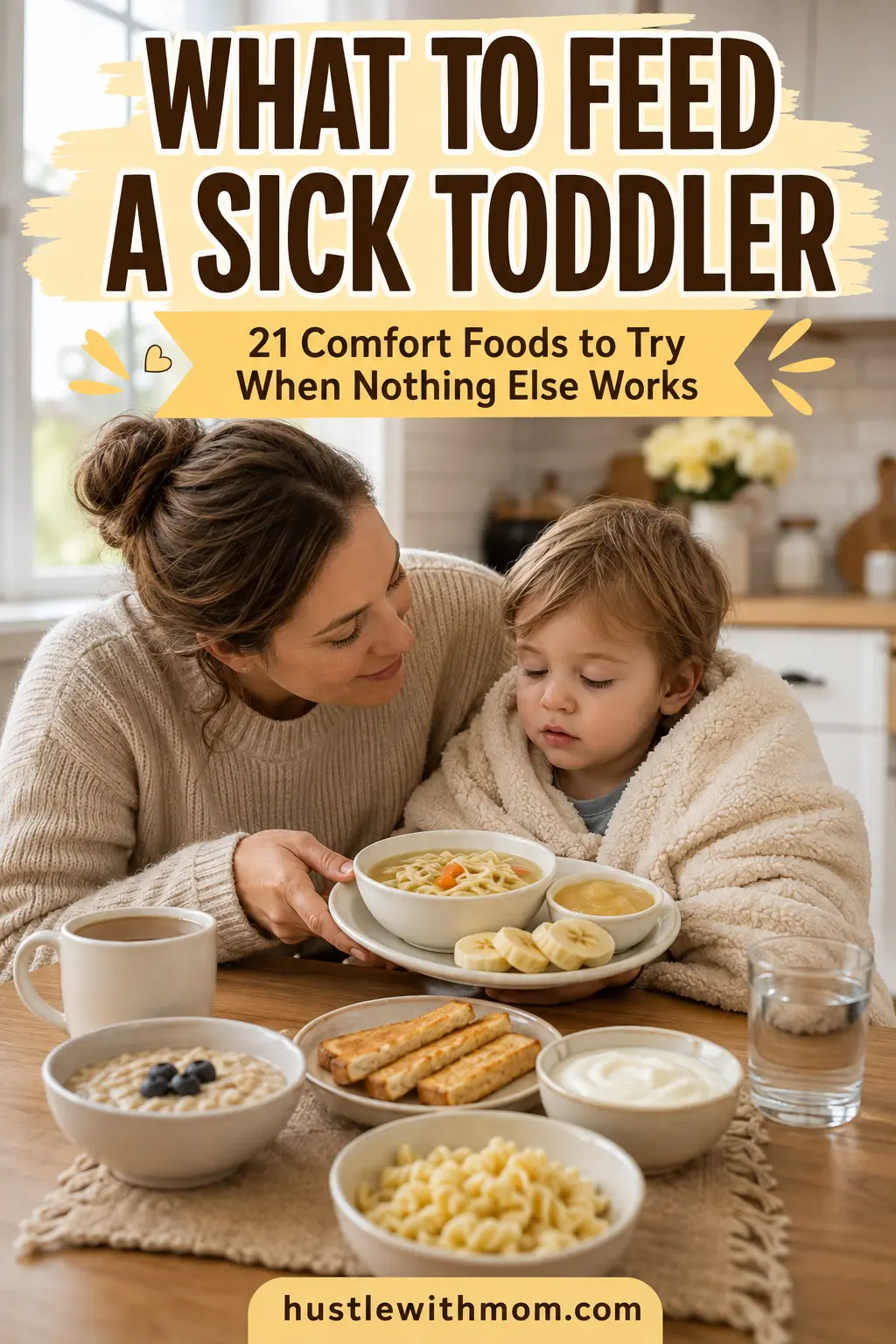
It’s 2 a.m., your toddler is burning up, and they just pushed away the only three foods they’ve eaten all week. If you’re googling what to feed a sick toddler right now while a warm little body is asleep on your chest, I’ve been exactly where you are.
My daughter went through a stretch last winter where she caught one bug after another, daycare will do that to you, and every single time, feeding her felt like a guessing game. Some days she’d only touch a popsicle. Other days a bowl of plain noodles was a miracle. I spent way too many nights scrolling for answers that were either too vague (“just offer soup!”) or way too clinical to actually use in the moment.
So this is the guide I wish I’d had. It’s everything I’ve learned from trial, error, a very patient pediatrician, and a few too many loads of laundry.
Quick Answer: What to Feed a Sick Toddler
The short version: focus on hydration first, then offer bland, easy-to-digest comfort foods like broth, bananas, toast, yogurt, and diluted juice. Let your toddler’s appetite guide the pace, don’t force solids, and adjust what you offer based on their specific symptoms (fever, cold, sore throat, or stomach bug).
Now let’s get into the details, because the “why” behind this matters just as much as the “what.”
Why Your Toddler Stops Eating When They’re Sick
The first time my son refused three meals in a row, I panicked. Turns out that’s completely normal.
When a toddler’s body is fighting off an infection, it redirects energy away from digestion and toward the immune system. That’s why appetite loss during illness isn’t a red flag on its own, it’s actually your child’s body doing exactly what it’s supposed to do.
The mistake I made early on was trying to make my kids eat. Bribing, pleading, the whole thing. It never worked, and it just added stress to an already rough day. Once I stopped pushing food and started following their lead, sick days got a lot less stressful for both of us.
Hydration Comes First (Seriously, Before Anything Else)

If you only remember one thing from this article, let it be this: fluids matter more than food when your toddler is sick.
Dehydration is the real risk during illness, especially with fever, vomiting, or diarrhea, because your child is losing fluids faster than usual. According to the American Academy of Pediatrics, some key signs of dehydration to watch for include:
- Dry or sticky mouth and lips
- Fewer wet diapers or trips to the bathroom (fewer than 6 in a day is a warning sign)
- No tears when crying
- Unusual sleepiness or low energy
- Sunken eyes
If you notice several of these together, or your toddler refuses fluids for an extended stretch, call your pediatrician right away. This isn’t something to wait out.
For everyday hydration during a mild illness, small sips work better than big gulps. Try:
- Water
- Diluted fruit juice (half juice, half water)
- Ice pops or homemade popsicles
- Broth or clear soup
- An oral rehydration solution (ORS), like Pedialyte, if your child is vomiting or has diarrhea
Offer fluids in small amounts every 15 to 20 minutes rather than one big cup at once. It’s gentler on an upset stomach and far less overwhelming for a cranky toddler.
What to Feed a Sick Toddler by Symptom
Not every illness calls for the same foods. Here’s how I break it down depending on what’s actually going on.
Foods for a Fever
Fevers burn extra energy, so light, easy-to-digest foods work best. Think mashed potatoes, warm soup, applesauce, and juicy fruit like watermelon or oranges (both of which help with hydration too).
Foods for a Cold or Congestion
Warm foods can be genuinely soothing here. Chicken soup isn’t just an old wives’ tale, the warm broth helps loosen mucus and keeps kids hydrated at the same time. Scrambled eggs, oatmeal, and yogurt are also easy options when a stuffy nose kills their appetite.
Foods for a Sore Throat
Cold and smooth textures feel best against an irritated throat. Try yogurt, applesauce, smoothies, popsicles, and pudding. Skip anything crunchy, acidic, or spicy for a few days.
Foods for a Stomach Bug (Vomiting or Diarrhea)
This is where the classic BRAT diet (bananas, rice, applesauce, toast) comes in handy, though pediatricians now say it’s fine to expand beyond just those four foods once your toddler can keep liquids down. Bland starches like crackers, plain pasta, and dry cereal are gentle on a recovering stomach.
| Symptom | Offer | Avoid |
| Fever | Soup, mashed potatoes, juicy fruit | Heavy, greasy meals |
| Cold/Congestion | Warm broth, oatmeal, scrambled eggs | Dry, crunchy foods |
| Sore Throat | Yogurt, smoothies, popsicles | Citrus, spicy, crunchy foods |
| Stomach Bug | Toast, rice, bananas, crackers | Dairy (short-term), fried food, juice in excess |
21 Best Foods for a Sick Toddler
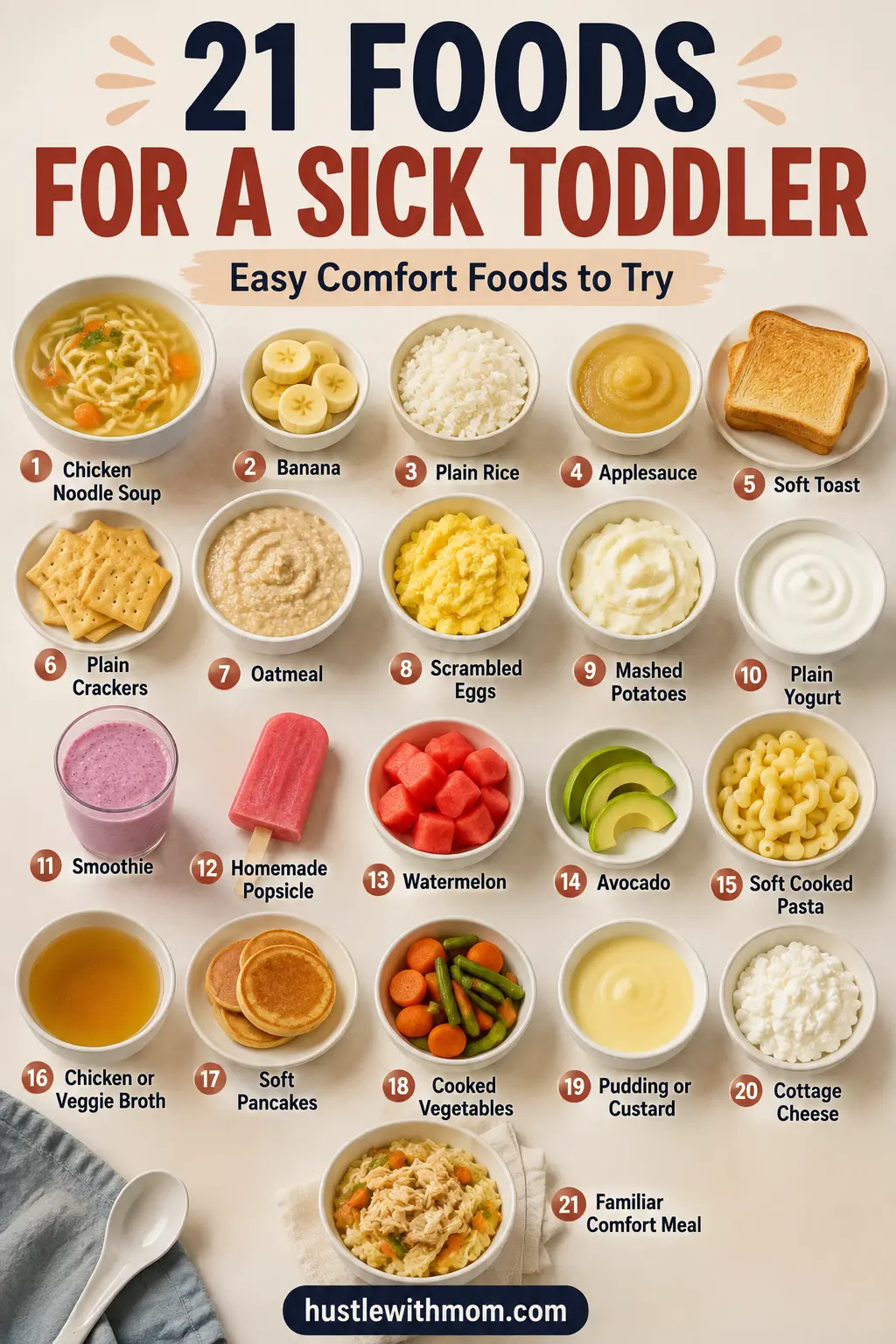
Here’s my go-to list, built from actual trial and error in my own kitchen:
- Chicken noodle soup
- Bananas
- Plain white rice
- Applesauce
- Dry toast
- Plain crackers
- Oatmeal
- Scrambled eggs
- Mashed potatoes
- Yogurt (unsweetened if possible)
- Smoothies
- Homemade popsicles
- Watermelon
- Avocado
- Cooked, soft pasta
- Broth (chicken or vegetable)
- Pancakes
- Soft-cooked vegetables
- Pudding or custard
- Cottage cheese
- Their favorite comfort meal (yes, even mac and cheese counts on a rough day)
If you’re stuck for ideas beyond sick days too, I’ve got a whole list of breakfast ideas for babies and toddlers that double as gentle, easy-to-digest options when appetites are low.
Foods and Drinks to Avoid When Your Toddler Is Sick
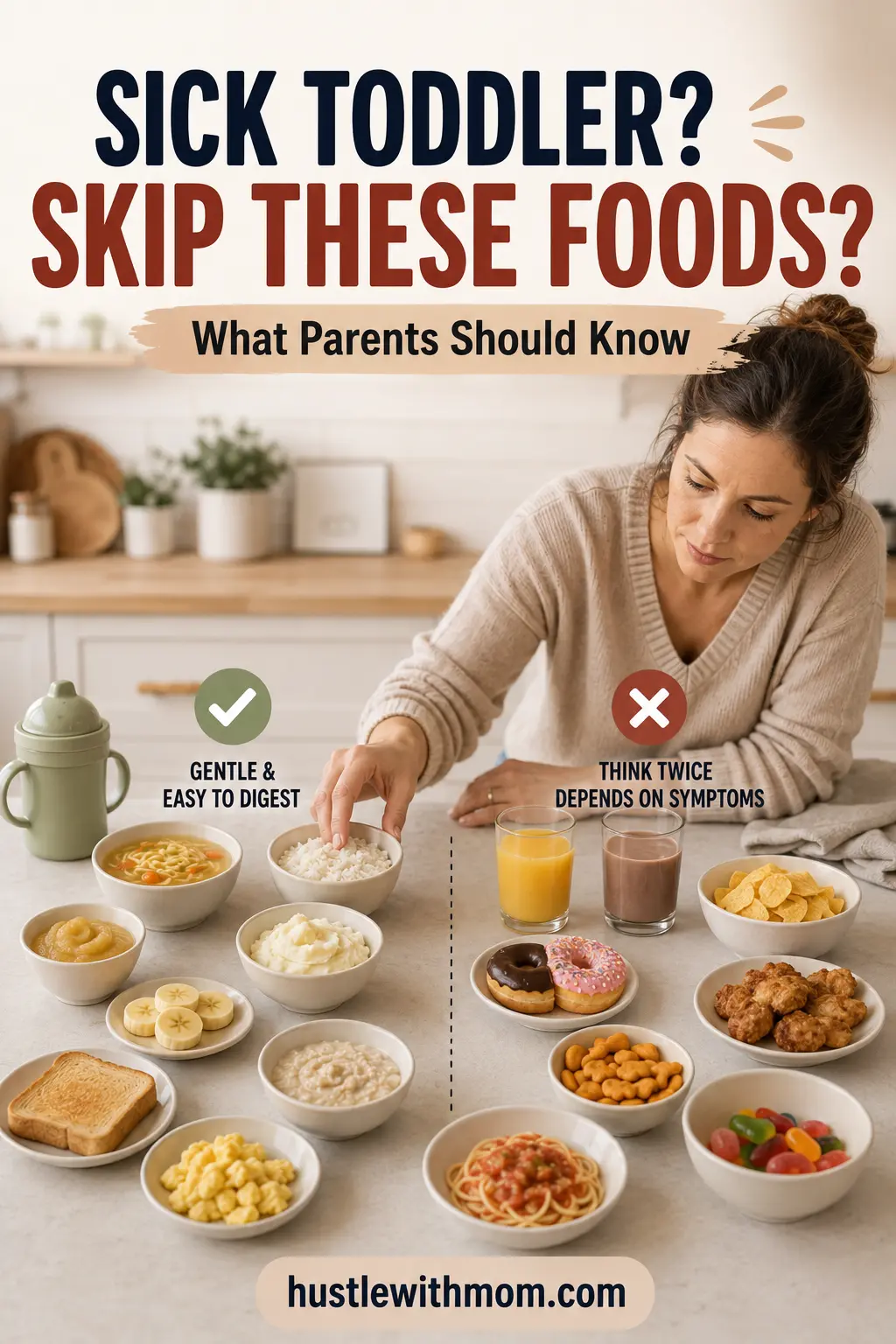
Just as important as what to serve is knowing what to skip for a few days:
- High-fat or fried foods, they’re harder to digest and can worsen nausea
- Sugary drinks and full-strength juice, these can actually make diarrhea worse
- Dairy in large amounts during a stomach bug (short-term lactose sensitivity is common after GI illness)
- Spicy or acidic foods, especially with a sore throat
- Choking hazards like grapes, hard raw veggies, or nuts, especially if your toddler is lethargic and not chewing carefully
Common Feeding Myths, Debunked
I fell for a couple of these myself before I did the research.
“Starve a fever, feed a cold.” This old saying doesn’t hold up. Your child’s body needs energy to fight off illness no matter what kind it is. The better advice is: offer food either way, just follow your toddler’s appetite and don’t force it.
“Dairy makes mucus worse.” There’s actually limited evidence behind this one. Milk can make saliva feel thicker in the mouth, which some people mistake for more mucus production, but it doesn’t appear to actually worsen congestion for most kids.
“Vitamin C cures colds.” Vitamin C won’t prevent or cure a cold, though it may modestly shorten how long symptoms stick around. A normal diet with fruits like strawberries, oranges, and kiwi is enough, you don’t need supplements unless your pediatrician recommends them.
Easy Recipes for a Sick Toddler
These are the four recipes I actually keep in rotation during sick season.
Simple Chicken Soup Simmer shredded chicken, soft-cooked carrots, and small pasta shapes in low-sodium broth until everything is tender. Cool before serving.
Homemade Electrolyte Popsicles Mix diluted juice or coconut water with a splash of ORS, pour into popsicle molds, and freeze overnight.
Banana Oat Smoothie Blend one banana, a cup of milk or yogurt, a handful of oats, and a spoon of peanut butter for a filling, easy-to-drink meal.
Soft Scrambled Eggs with Toast Fingers Scramble eggs low and slow until soft, then serve with buttered toast cut into strips for easy dipping.
If you’re already juggling a sick kid and dinner for the rest of the family, this is a good moment to lean on batch cooking. My meal plan for busy moms has saved me more than once during a rough week like this.
Age-by-Age Feeding Tips
1 to 2 years: Stick to soft, mashed, or well-cooked textures. Avoid anything that requires a lot of chewing, especially if they’re extra tired or floppy from illness.
2 to 3 years: Most regular toddler foods are fine, just cut them smaller than usual and skip anything hard or sticky while they’re under the weather.
3 to 5 years: They can typically handle their normal diet, but appetite and interest in food may still dip for several days after they start feeling better.
Getting Your Toddler to Take Medicine
If feeding is hard, medicine time can be even harder. A few things that have actually worked for me:
- Mix liquid medicine into a small amount of applesauce or pudding (check with your pharmacist first)
- Offer a “chaser,” like a sip of juice or a favorite snack, right after
- Use a numbered oral syringe instead of a spoon for more control
- Stay calm and matter-of-fact, toddlers pick up on stress fast
When to Call the Doctor (Red Flags to Watch For)

Most toddler illnesses run their course at home, but call your pediatrician if you notice:
- Signs of dehydration that don’t improve with fluids
- A fever lasting more than a few days, or a fever your pediatrician says to call about
- Persistent vomiting or inability to keep any fluids down
- Unusual lethargy or difficulty waking up
- A rash, stiff neck, or trouble breathing
Trust your instincts here. You know your toddler better than any article ever will.
FAQs About Feeding a Sick Toddler
What should I feed my toddler with a stomach virus? Start with small sips of fluids, then move to bland foods like toast, crackers, rice, or bananas once they’re tolerating liquids well.
Is it okay if my sick toddler doesn’t eat for a day? Yes, as long as they’re staying hydrated. A day or two of low food intake is normal during illness and isn’t a cause for concern on its own.
Can I give my toddler juice when they’re sick? In small, diluted amounts, yes. Skip full-strength juice during a stomach bug since the sugar can make diarrhea worse.
What foods help a toddler with a sore throat? Cold, smooth foods like yogurt, smoothies, applesauce, and popsicles tend to feel best going down.
Final Thoughts
Sick days with a toddler are exhausting, there’s no way around it. But learning what to feed a sick toddler doesn’t have to be complicated. Keep the fluids coming, offer gentle food without pressure, and trust that their appetite will bounce back once they’re feeling better.
And on the days when nothing goes according to plan and dinner ends up being crackers and a popsicle eaten on the couch, that’s okay too. You’re still doing a good job. If you need a reset after a rough stretch like this, these tips for staying calm as a mom are worth bookmarking for next time.
This article is for informational purposes only and isn’t a substitute for medical advice. Always check with your child’s pediatrician about specific symptoms or concerns.