
Six weeks after my second delivery, I laced up my old running shoes, did one jumping jack, and immediately regretted it. My body felt like a stranger’s. That’s the moment I realized I didn’t need a “get your body back” bootcamp, I needed an actual postpartum workout program built around recovery, not punishment.
If you’re searching for the best postpartum workout program, chances are you’ve already tried a random YouTube video or a pre-baby routine that left you sore, discouraged, or worse, in pain. This guide walks through what a real postpartum fitness plan should look like, based on what actually worked (and what backfired) for me and the moms I’ve talked to along the way.
What Is a Postpartum Workout Program?
A postpartum workout program is not the same as your regular gym routine. It’s a structured, gradual approach to movement designed around a body that just grew and delivered a human being.
Your postpartum recovery comes first. Everything else, strength, tone, endurance, gets rebuilt slowly on top of that foundation.
A good postpartum exercise program focuses on:
- Reconnecting with your core and pelvic floor
- Gentle low-impact exercise before anything high intensity
- Rebuilding strength without rushing
- Listening to pain signals instead of pushing through them
This is different from bouncing back. It’s closer to bouncing forward, into a stronger version of your body that respects what it just went through.
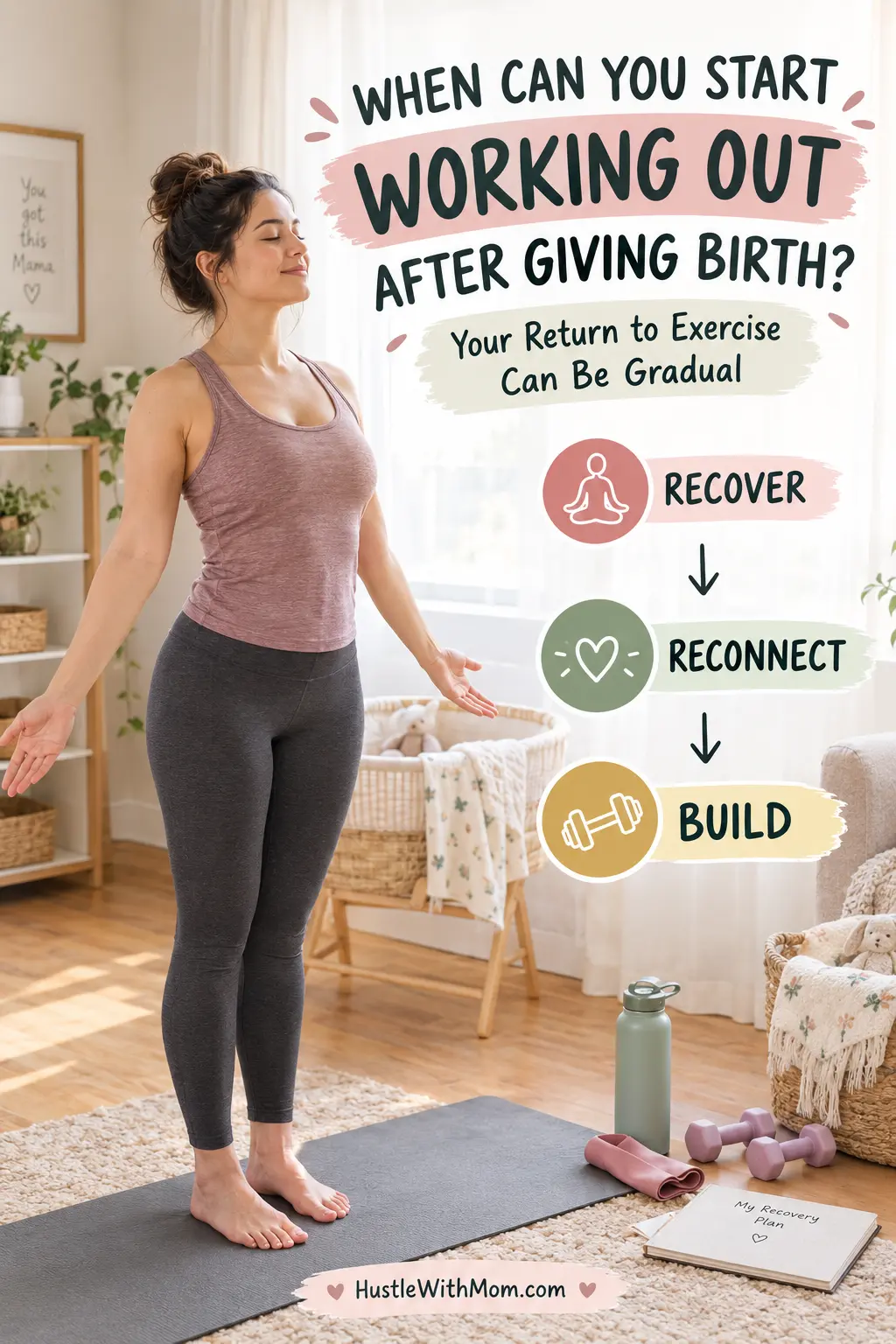
When Can You Start Working Out After Giving Birth?
This is the question I get asked the most, and honestly, there’s no single answer.
Recovery timelines vary a lot depending on whether you had a vaginal birth or a C-section, whether there were complications, and how your body simply feels day to day.
According to the American College of Obstetricians and Gynecologists (ACOG), most people can begin gentle movement within days of delivery, but should wait for medical clearance, usually around the six-week mark, before resuming more structured exercise. After a C-section, that window is often closer to eight weeks because of incision healing.
Here’s what I’d actually suggest:
- Get cleared by your provider first. Don’t skip your postpartum checkup, even if you feel fine.
- Start with breathing and gentle movement, not workouts, in the first couple of weeks.
- Add walking once you feel ready, starting with short 10 to 15 minute strolls.
- Increase intensity gradually, based on how your body responds, not a calendar.
There’s no universal timeline here. Your neighbor bouncing back at four weeks doesn’t mean you should too.
What Should the Best Postpartum Workout Program Include?
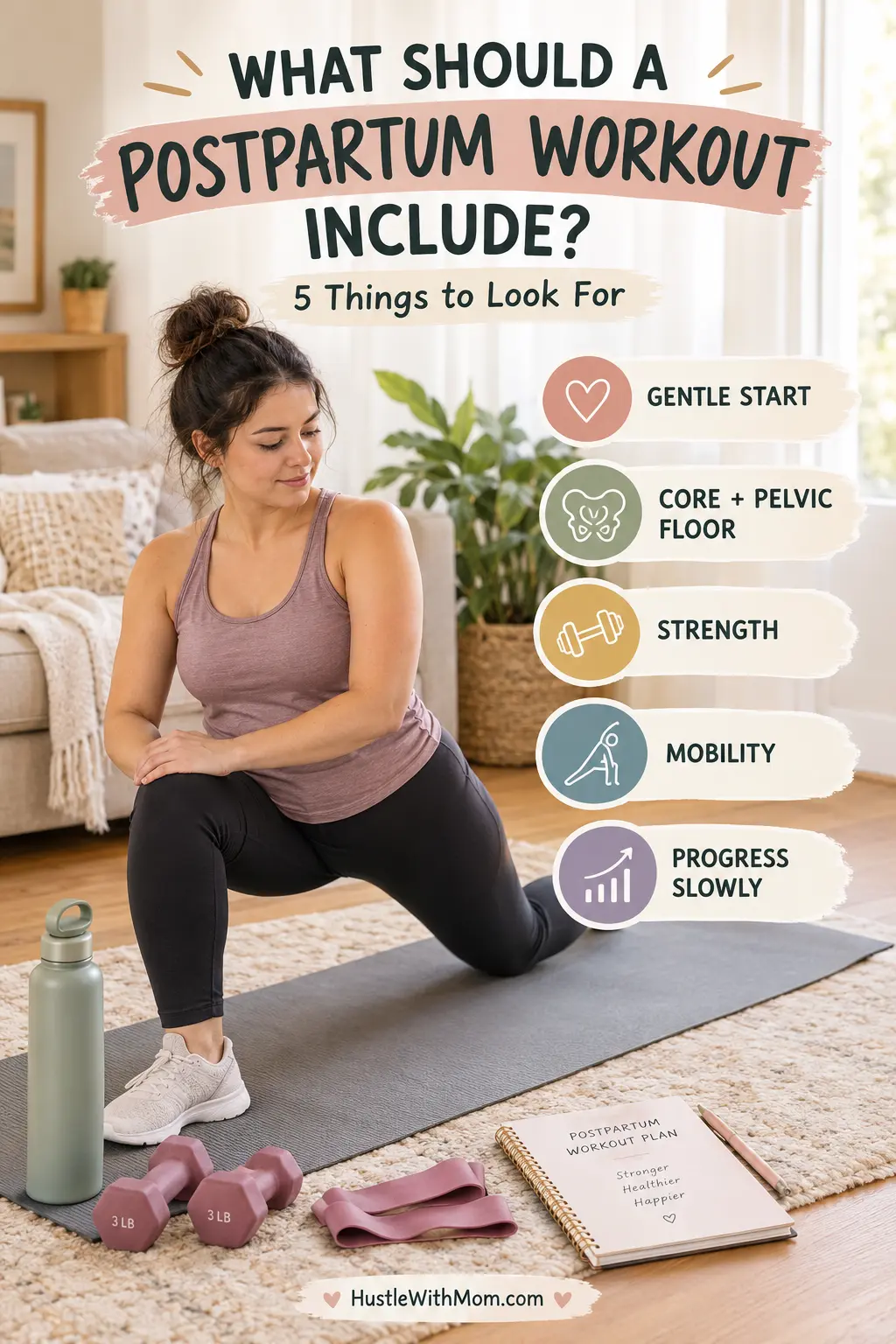
After trial and error (mostly error), here’s what I’ve found actually belongs in a solid postpartum fitness program.
Walking and Low-Impact Cardio
Walking sounds almost too simple to matter, but it was genuinely the thing that helped me feel human again. It’s gentle on healing joints, doesn’t strain your core, and can be done with the stroller.
Start slow. A 10-minute walk around the block counts. Build up duration before you build up pace.
Pelvic Floor Exercises
Nobody warns you enough about this one. Pelvic floor exercises like Kegels help rebuild the muscles that support your bladder and pelvic organs, which take a real hit during pregnancy and delivery.
ACOG specifically recommends starting these gently in the very first days postpartum, well before more active movement begins.
If you’re dealing with leaking when you sneeze or laugh (so common, so rarely talked about), this is where you start, not with ab workouts.
Core Recovery
Your postpartum core workout should not start with crunches. In fact, crunches too early can make diastasis recti, the separation of your abdominal muscles, worse instead of better.
Instead, begin with:
- Diaphragmatic breathing
- Gentle transverse abdominis activation (think: pulling your belly button gently toward your spine while exhaling)
- Pelvic tilts
Only once these deep core muscles reconnect should you progress toward more traditional core work.
Strength Training
Postpartum strength training doesn’t mean heavy barbells right away. Bodyweight squats, glute bridges, and resistance bands are enough to start rebuilding strength without overwhelming a recovering body.
I started with a single $10 resistance band from Target and did more with it in those early months than I ever expected.
Mobility and Stretching
Carrying a baby all day (and all night) tightens your hips, shoulders, and back in ways you don’t notice until you stretch and suddenly feel a decade older. A few minutes of mobility exercises daily makes a noticeable difference in how you move and feel.
Best Postpartum Exercises for Beginners
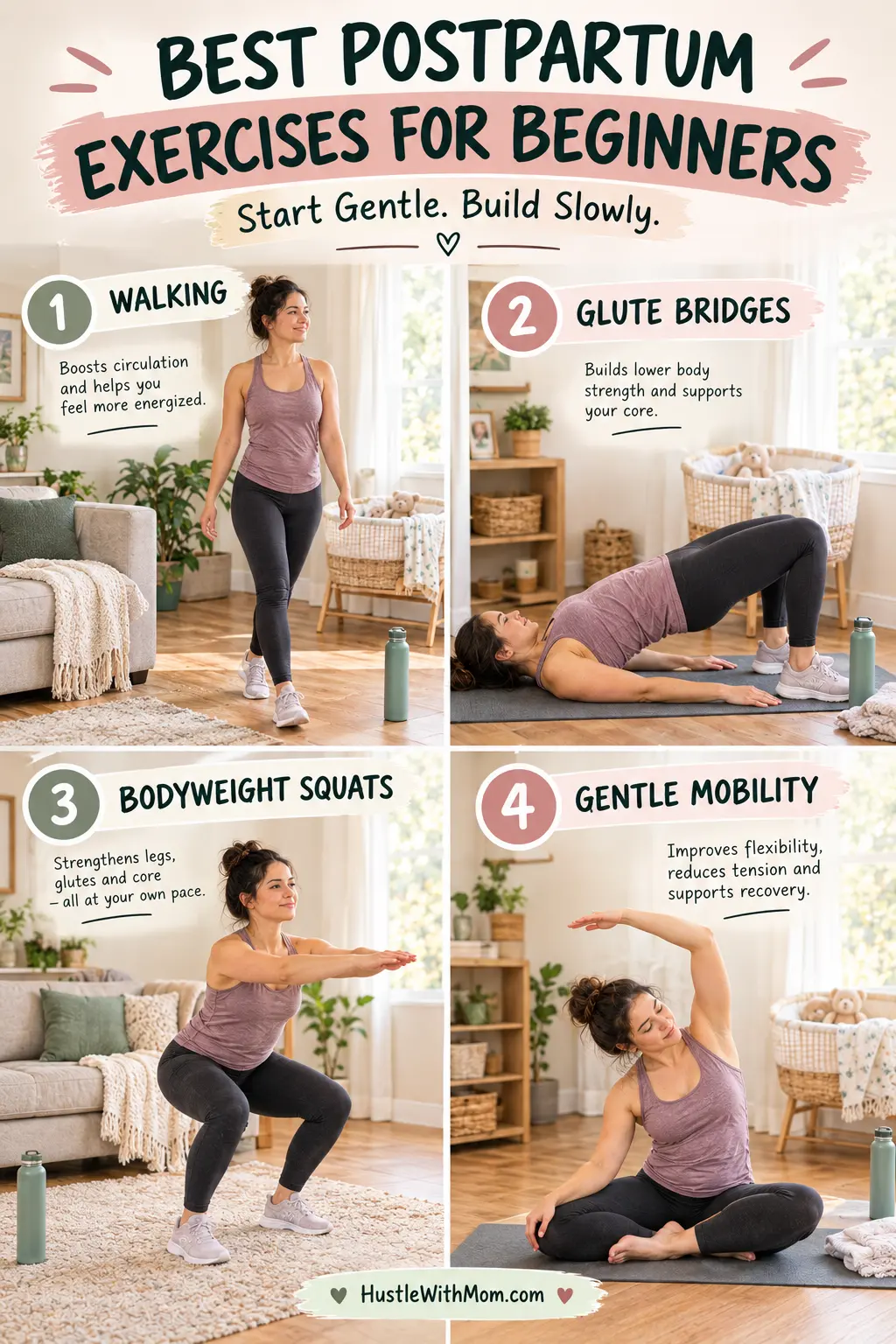
If you’re just getting started, here’s a simple, beginner-friendly list. For each one, stop immediately if you feel pain, pulling, or pressure.
- Walking – Start with 10 minutes, build gradually
- Diaphragmatic breathing – Lie down, breathe into your belly, exhale slowly
- Pelvic floor contractions (Kegels) – Squeeze and release gently, several times a day
- Pelvic tilts – Flatten your lower back against the floor while lying down
- Glute bridges – Lift your hips while lying on your back, squeezing your glutes
- Wall push-ups – A gentler entry point into upper body strength
- Bodyweight squats – Once cleared, focus on form over speed
If anything feels off, especially bulging at your midline, pain, or heavy bleeding, stop and check in with your provider or a pelvic floor physical therapist.
Simple 4-Week Postpartum Workout Program
This isn’t a one-size-fits-all prescription, more of a framework to adjust based on how your body responds.
| Week | Main Focus |
| Week 1 | Gentle movement, breathing, rest |
| Week 2 | Short walks, pelvic floor activation |
| Week 3 | Light strength moves, mobility work |
| Week 4 | Gradual full-body training, longer walks |
Some women need to stay on Week 1 for a month. Others move faster. Both are completely normal.
Best Postpartum Workout at Home
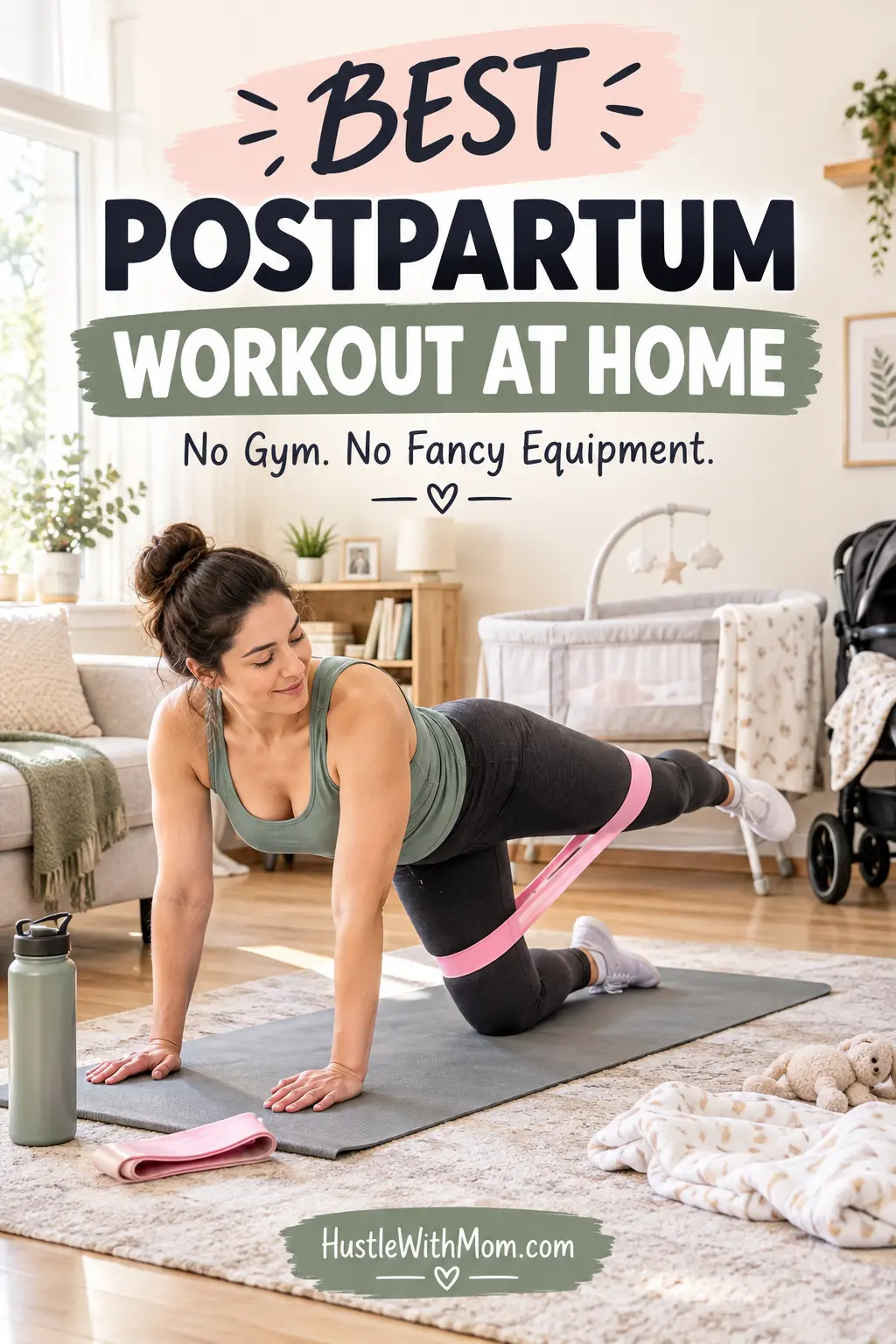
Between feedings, naps that never last long enough, and a body that’s still healing, getting to a gym isn’t realistic for most new moms. That’s exactly why a postpartum workout at home works so well.
Here’s what made it doable for me:
- No-equipment moves like squats, bridges, and wall push-ups
- A cheap resistance band for added intensity
- Short workouts, 10 to 15 minutes, done during naptime or while baby plays on a mat nearby
- Walking with the stroller as your daily cardio
If you’re also dealing with the general chaos of the early weeks, our guide on preparing for the fourth trimester covers a lot of the groundwork that makes fitting in exercise realistic in the first place.
Can a Postpartum Workout Help With Weight Loss?
Yes, but not the way Instagram makes it look.
Postpartum weight loss workout routines work best when paired with proper nutrition and realistic expectations. Your body just spent nine months growing a baby, it’s not going to reverse that in six weeks.
Focus on:
- Consistency over intensity
- Strength training to maintain lean muscle
- Walking and low-impact cardio
- Nutrition that fuels recovery (especially important if you’re breastfeeding)
If you want a practical starting point for the food side of things, our meal plan for busy moms pairs well with any postpartum fitness routine, since recovery and weight management both depend heavily on what’s on your plate.
And if the stubborn belly area is your main frustration, this piece on getting rid of mom belly goes deeper into that specific concern.
Postpartum Core Workouts and Diastasis Recti
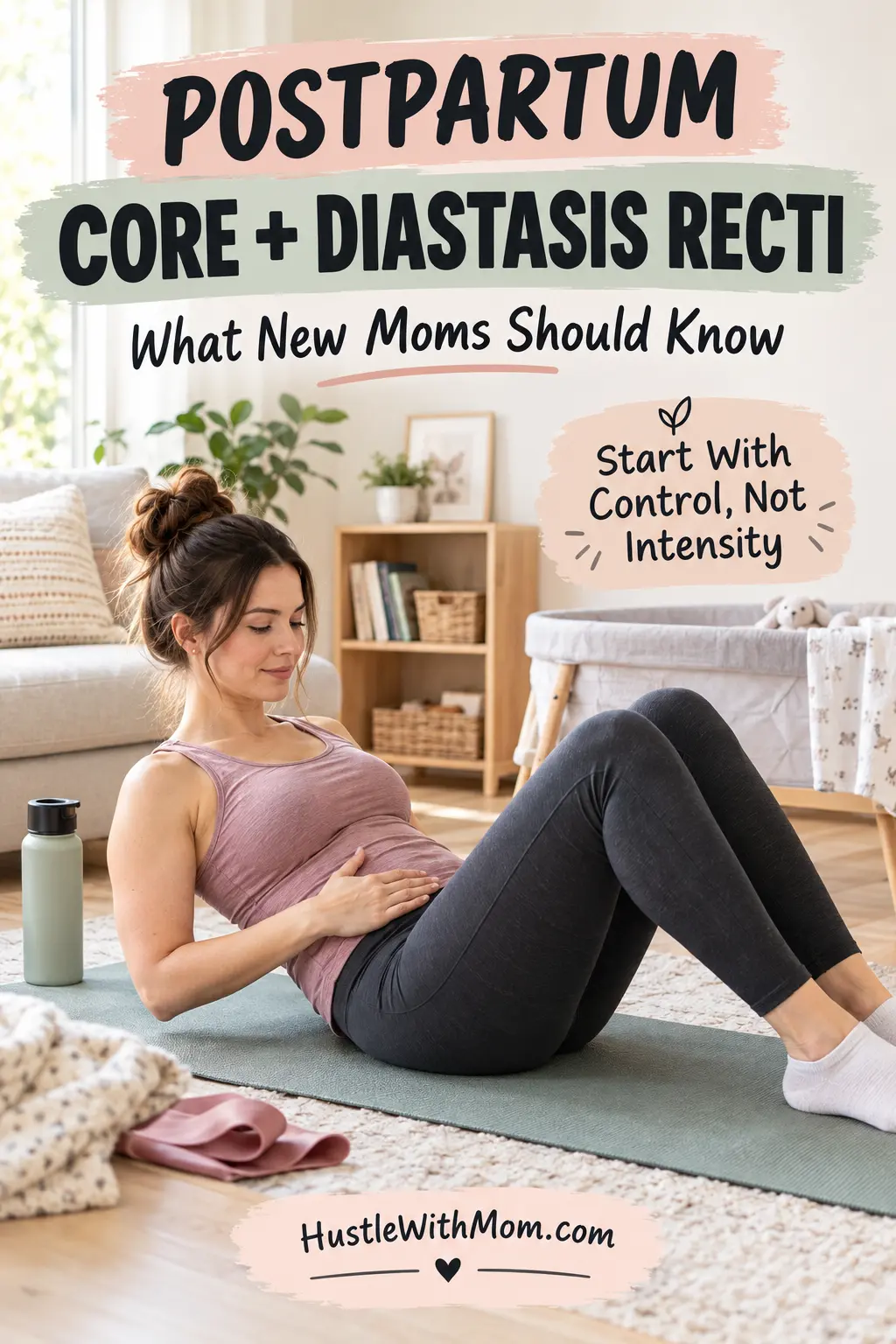
Diastasis recti affects a huge number of postpartum bodies, and most people have never heard the term until they’re dealing with it.
It’s the separation of your abdominal muscles along the midline, and it’s why some traditional ab exercises (planks, crunches, sit-ups) can actually make things worse if done too soon.
Signs to watch for:
- A visible bulge or “pooch” around your belly button
- Doming when you engage your abs
- Lower back pain
- A feeling of weakness in your core
If you notice these, a pelvic floor physical therapist can assess the gap and guide diastasis recti exercises that are safe for your specific situation.
Does Your Workout Need to Change After a C-Section?
Yes, in almost every case.
A C-section is major abdominal surgery, and your postpartum recovery timeline reflects that. Most providers recommend waiting closer to eight weeks before resuming structured exercise, with extra caution around core work near the incision site.
If you’re also managing recovery-related discomfort like SI joint pain during pregnancy that lingers postpartum, or general leg swelling after pregnancy, give yourself permission to move even slower than the general guidelines suggest.
How to Choose the Best Postpartum Workout Program
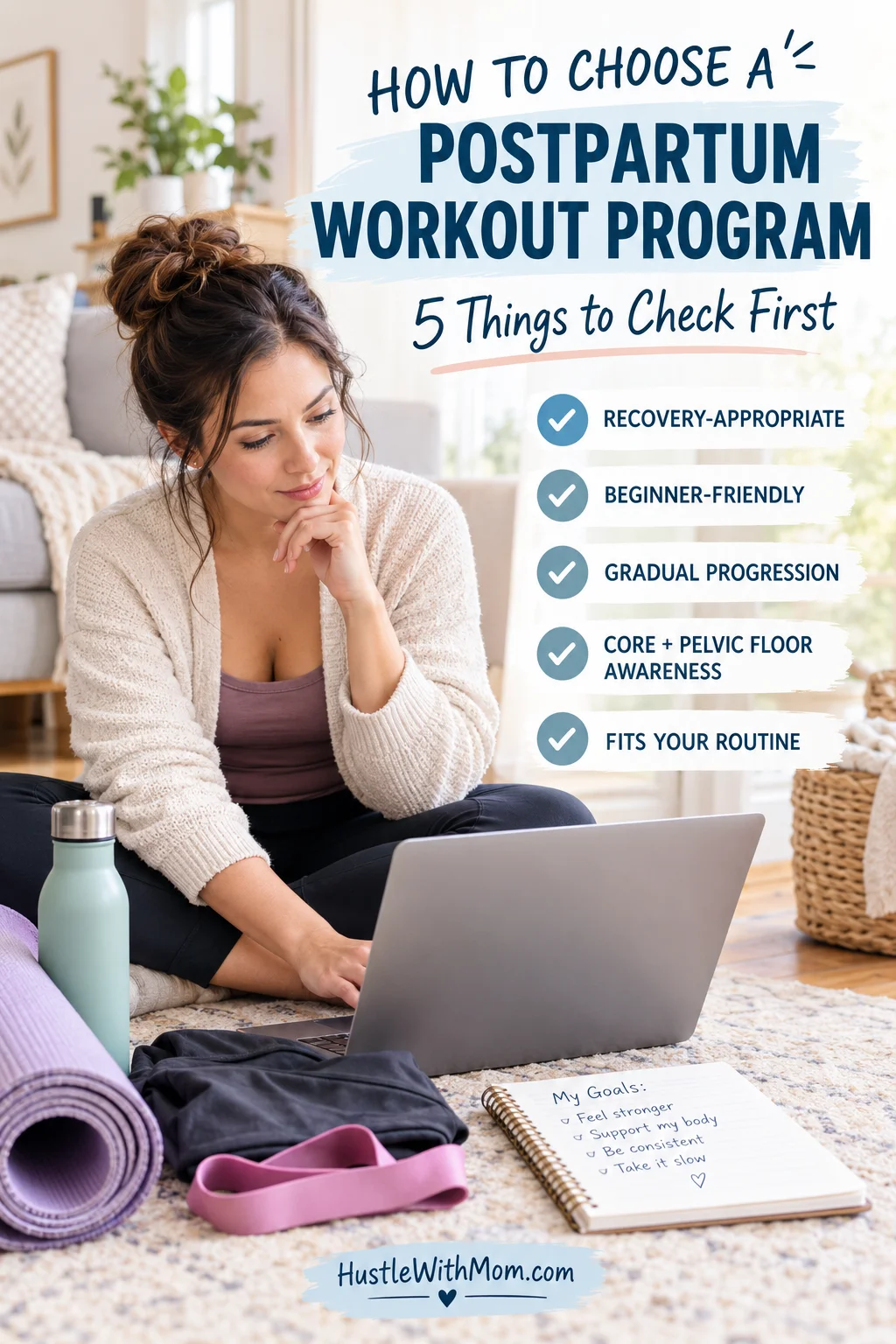
With so many programs online promising fast results, here’s what to actually look for:
- Built around your specific recovery stage, not a generic timeline
- Beginner-friendly with clear modifications
- Includes pelvic floor and core recovery work, not just cardio
- Has built-in rest days
- Doesn’t promote extreme weight loss or restriction
- Created or reviewed by qualified professionals (physical therapists, certified postpartum trainers)
- Accounts for C-section recovery and other individual factors
If a program promises a “flat stomach in two weeks,” that’s your sign to close the tab.
Common Postpartum Workout Mistakes
I’ve made most of these myself:
- Doing too much too soon because I felt guilty for “not bouncing back”
- Ignoring pain instead of treating it as useful information
- Obsessing over weight loss instead of function and strength
- Skipping pelvic floor work entirely because nobody explained why it mattered
- Jumping into high-impact exercise before clearance
- Comparing my recovery to other moms, which never helped anyone
Recovery isn’t a competition, and it’s genuinely different for every single person.
When Should You Stop a Postpartum Workout?
Stop immediately and contact your provider if you experience:
- Sharp or worsening pain
- Unusual or heavy bleeding
- Dizziness or shortness of breath
- Increased pelvic pressure or leaking
- Visible doming or bulging along your abdomen
These aren’t signs to “push through.” They’re your body asking for a slower pace.
FAQ’s
What is the best postpartum workout program for beginners?
A program that starts with breathing, pelvic floor activation, and short walks before progressing to light strength training and core work.
How soon can I start working out after giving birth?
Most people can begin gentle movement within days, but should get medical clearance, typically around six to eight weeks, before structured exercise.
What exercises are best after pregnancy?
Walking, pelvic floor exercises, gentle core activation, glute bridges, and bodyweight strength moves are all solid starting points.
Can I work out at home after having a baby?
Yes. A resistance band, bodyweight moves, and short 10 to 15 minute sessions can build an effective postpartum workout at home.
What is the best postpartum workout for weight loss?
A combination of walking, strength training, and proper nutrition, done consistently rather than intensely.
Can I exercise with diastasis recti?
Yes, but avoid traditional crunches and planks until you’ve been assessed, and focus on gentle core reconnection exercises instead.
What exercises strengthen the pelvic floor after childbirth?
Kegels and gentle pelvic floor contractions, done consistently and correctly, are the foundation.
Can I exercise after a C-section?
Yes, but wait for clearance (often around eight weeks) and be extra cautious around your incision and core work.
How many days a week should I work out postpartum?
Start with three to four gentle sessions per week and adjust based on energy and recovery.
How long should a postpartum workout be?
Ten to twenty minutes is plenty in the early weeks. Duration can increase gradually as your body allows.
Conclusion:
Finding your footing again after having a baby takes time, and honestly, some days the “workout” is just carrying the car seat up the stairs without wincing. That counts too. The best postpartum workout program is simply the one that meets your body where it actually is, not where an app or influencer says it should be.
And if the mental load of postpartum life is weighing on you as much as the physical side, our post on honest tips for exhausted new moms might be worth reading next.