

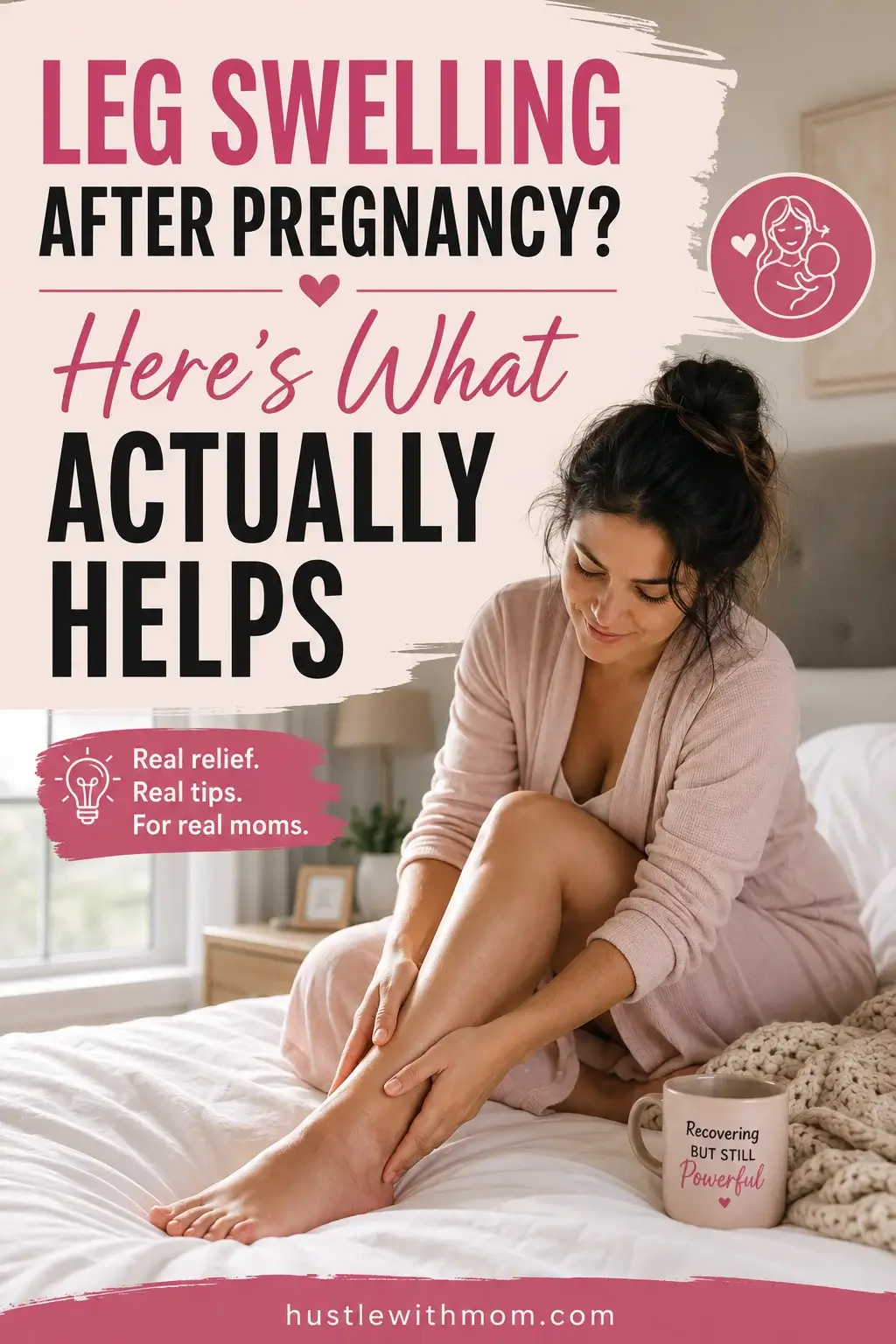
Introduction:
Three weeks after bringing my daughter home, I sat on the edge of my bed at 2 a.m., staring at my feet like they belonged to someone else. My ankles had basically disappeared. My calves looked stuffed. And nobody, not my OB, not my mom, not a single “what to expect postpartum” article had told me this could get worse after delivery.
I thought swelling was a pregnancy thing. A “your body is carrying extra weight and fluid” thing. I thought the moment they handed me my baby, I’d slowly deflate back to normal.
That’s not how this works. And if you’re reading this from a couch with your legs up on two pillows, wondering what’s going on let me walk you through everything I wish I’d known.
Why Does Leg Swelling Happen After Pregnancy?
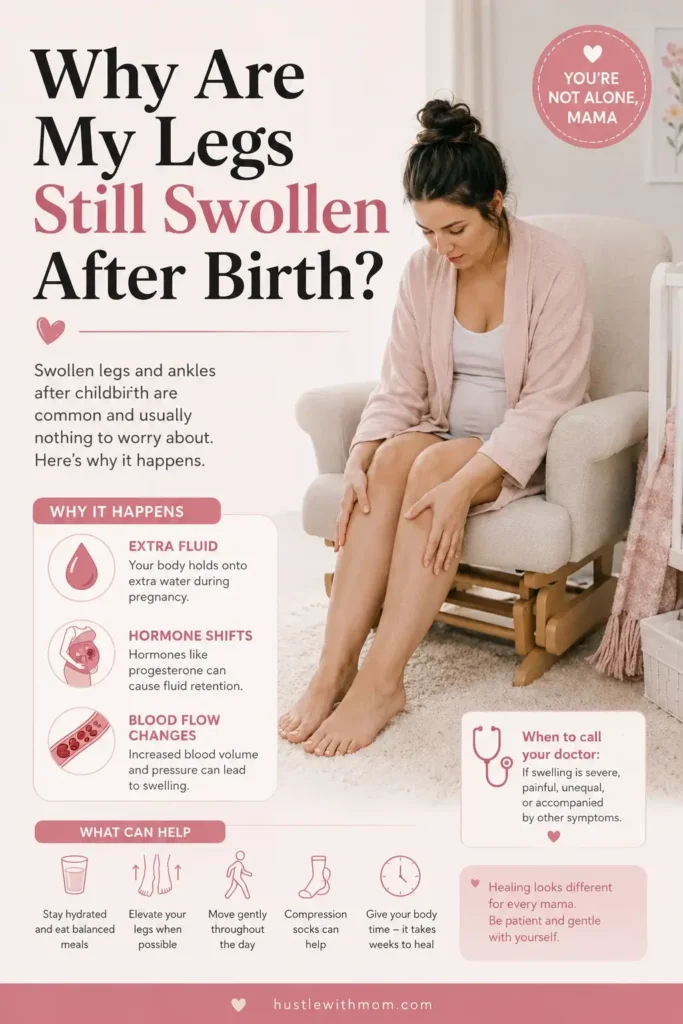
Here’s the thing: your body spent nine months stockpiling fluid. We’re talking about an extra 50% increase in blood volume. Extra fluid in your tissues. All of it is necessary to grow and support human life.
Then the baby arrives and your body doesn’t just drain overnight like a bathtub.
After delivery, especially after a vaginal birth, your body gets flooded with even more fluid from IV lines during labor, pain medications, and the simple trauma of delivering a baby. All of that has to go somewhere before your kidneys can filter it out and you urinate it away.
For most people, the swelling peaks around day 3 to 5 postpartum. It can actually look worse than anything you experienced during pregnancy. And if you had a C-section, the swelling can linger even longer because your body is simultaneously healing a surgical wound.
Gravity also does its thing. Fluid pools downward into your legs, ankles, and feet. If you’re spending a lot of time in bed (as you should be), you’ll notice the puffiness is particularly bad first thing in the morning, or after long stretches of sitting.
If you’re curious about how fluid retention and body changes build throughout pregnancy, our guide on second trimester fatigue covers a lot of the same circulatory changes that set the stage for postpartum swelling. And if you dealt with bloating in early pregnancy, your body’s tendency to hold excess fluid during pregnancy is likely nothing new it just hits differently once the baby is out and you expected to feel “normal” again.
The Difference Between Normal Swelling and “Call Your Doctor Now”
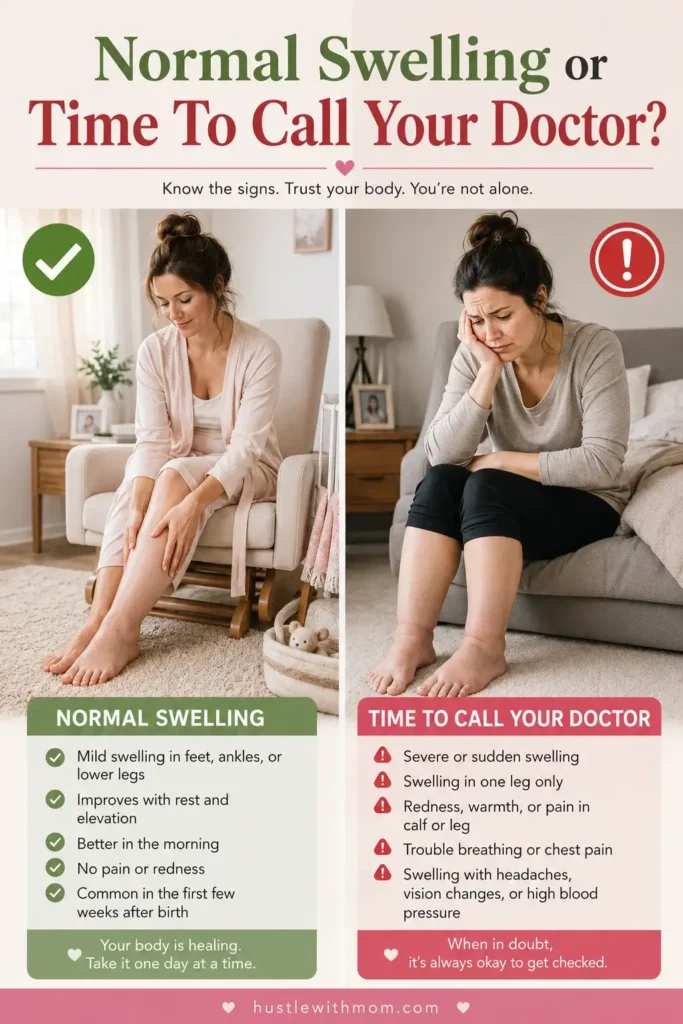
This is the part that really matters, and I want to be crystal clear here: not all postpartum swelling is normal.
There’s a condition called postpartum preeclampsia that can develop up to six weeks after giving birth. It involves dangerously high blood pressure, and swelling, especially sudden, severe swelling, can be one of the warning signs.
Here’s what pushed me to call my midwife at 10 p.m.:
- My swelling came back suddenly after it had started improving
- One leg was noticeably more swollen than the other
- I had a headache that wouldn’t go away
She told me to come in immediately. Everything turned out okay for me, but swelling in just one leg can also signal a deep vein thrombosis (DVT) , a blood clot which is a genuine medical emergency postpartum. Your clotting factors are elevated for weeks after delivery, which is why new mothers are at higher risk.
Call your doctor or go to urgent care if you notice:
- Swelling in only one leg (not both)
- Redness, warmth, or tenderness in your calf or thigh
- Sudden severe swelling that came on fast
- Swelling accompanied by a headache, vision changes, or pain in your upper right abdomen
- Shortness of breath or chest pain
Don’t Google these symptoms at 3 a.m. and talk yourself out of calling. Just call.
What Actually Helped Me (Step-by-Step)
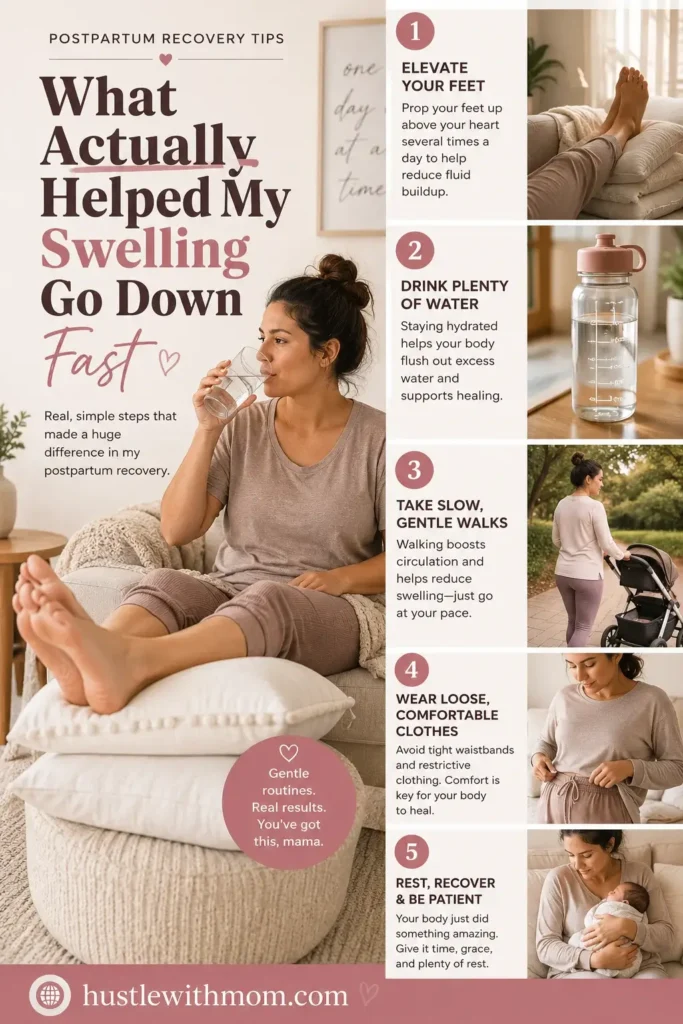
After my scare was ruled out and I had the all-clear, I started figuring out what actually moved the needle on the swelling. Here’s the order in which I tried things and what worked.
Step 1: Elevation, But Done Right
Everyone says “elevate your feet.” But I was propping them up on a single pillow and wondering why nothing changed. The key is getting your feet above your heart level. I started using a wedge pillow. I grabbed the Boppy Pregnancy Wedge, which I already had and stacked it with a regular pillow. That angle made a visible difference within a day.
Lying on your left side also helps, since it takes pressure off the vena cava (the large vein that returns blood to your heart from your lower body).
Step 2: Compression Socks The Ugly Ones That Actually Work
I resisted these for weeks because I associated them with elderly relatives and airplane cabins. Then a postpartum doula friend of mine basically forced a pair on me, and I became a convert.
I used Comrad compression socks (they make ones that don’t look like medical equipment) and also tried the Sockwell brand. Compression level matters: you want 15–20 mmHg for general postpartum swelling. If your doctor recommends them for DVT prevention, they may suggest 20–30 mmHg and give you a prescription pair.
Put them on before you get out of bed in the morning. Once you’ve been upright for even 20 minutes, the fluid has already pooled, and the socks are fighting an uphill battle.
Step 3: Move a Little (No, Really)
This sounds counterintuitive when you’ve just had a baby and you’re exhausted. But even short, gentle walks around your house help your calf muscles act as pumps, pushing fluid back up toward your heart.
I’m not talking about a 30-minute walk. I mean getting up every hour or so and walking to the kitchen and back. Doing gentle ankle circles while sitting. Pointing and flexing your feet while you nurse or bottle-feed.
Your calf muscles are your body’s natural compression system. Even minimal movement activates them.
Interestingly, the same pregnancy-related nerve and joint changes that cause SI joint pain during pregnancy can make gentle movement feel difficult in the early postpartum weeks. If that’s your situation, even seated foot exercises count don’t push through pain just to reduce swelling.
Similarly, if leg cramps during pregnancy were a regular issue for you, your legs have already been through a lot. Be gentle with yourself. Movement is the goal, not intensity.
Step 4: Hydration (Yes, Drinking More Water Helps)
The instinct is to drink less water so your body holds less fluid. It’s completely backwards. When you’re dehydrated, your body hoards water in your tissues. When you’re well-hydrated, your kidneys can actually do their job and flush fluid out through urine.
I kept a large HydroJug next to wherever I was sitting and committed to finishing it. If you’re breastfeeding, you need even more fluids. Your body is using water to make milk on top of everything else.
Step 5: Watch Your Salt But Don’t Eliminate It
Heavily processed foods, fast food, and salty snacks will make swelling worse. I made the rookie mistake of eating hospital crackers and canned soup constantly the first week because cooking felt impossible.
I’m not saying you need to meal-prep healthy salads when you have a newborn. But if someone is bringing you food, gently redirect them toward fresh fruit, homemade meals, or anything that isn’t coming out of a can with 900mg of sodium per serving.
If you’re the type who likes to plan ahead, our pregnancy meal prep guide has ideas that translate really well to the early postpartum period too batch cooking and low-sodium options that don’t require you to be standing at the stove for an hour.
Common Mistakes New Moms Make (I Made Most of These)
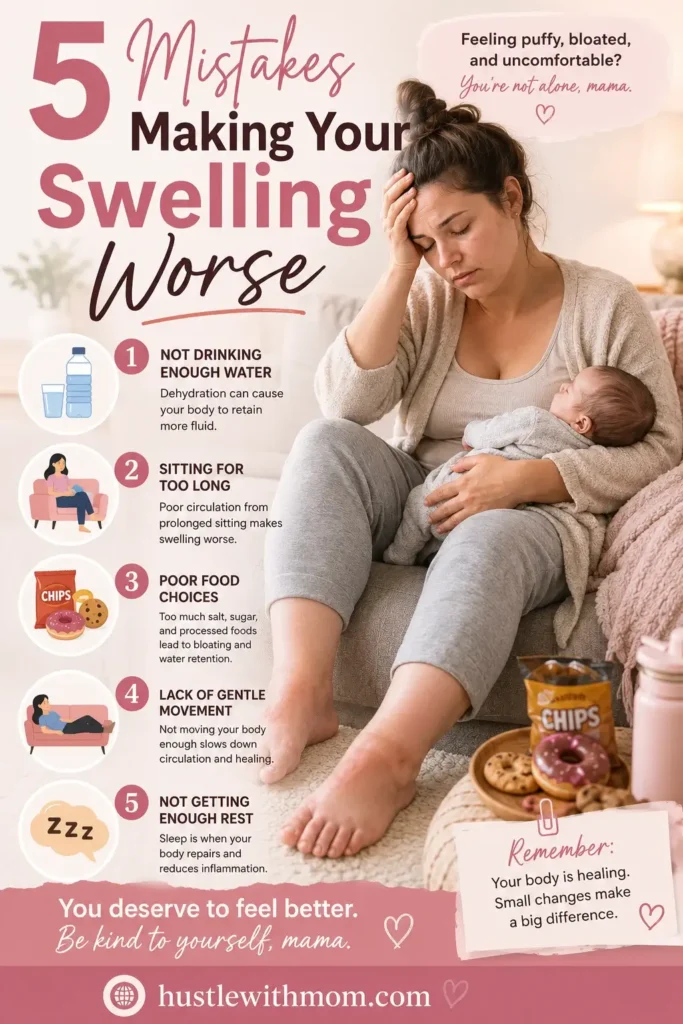
Staying in bed all day. Rest is important, but being completely sedentary makes swelling dramatically worse. Even five minutes of movement helps.
Sitting with your legs hanging down. I spent so many hours sitting in a chair with my feet on the floor while nursing. That position is a disaster for postpartum swelling. Put a footstool under your feet, even a stack of books works.
Assuming it’ll just go away. For most people, normal postpartum swelling resolves within 1–2 weeks. If yours hasn’t improved at all by the two-week mark, bring it up with your provider at your follow-up appointment. Don’t just wait.
Wearing tight clothing or shoes. I tried to squeeze into my regular shoes on a day I felt okay, and I literally couldn’t get them off by evening. Flip flops and slip-on shoes are your best friends for the first few weeks.
Not mentioning it to your doctor. Swelling often gets brushed off as a normal pregnancy thing. Be specific with your provider: when did it start, is it in both legs equally, has it gotten better or worse. Specifics matter.
How Long Does Postpartum Leg Swelling Last?
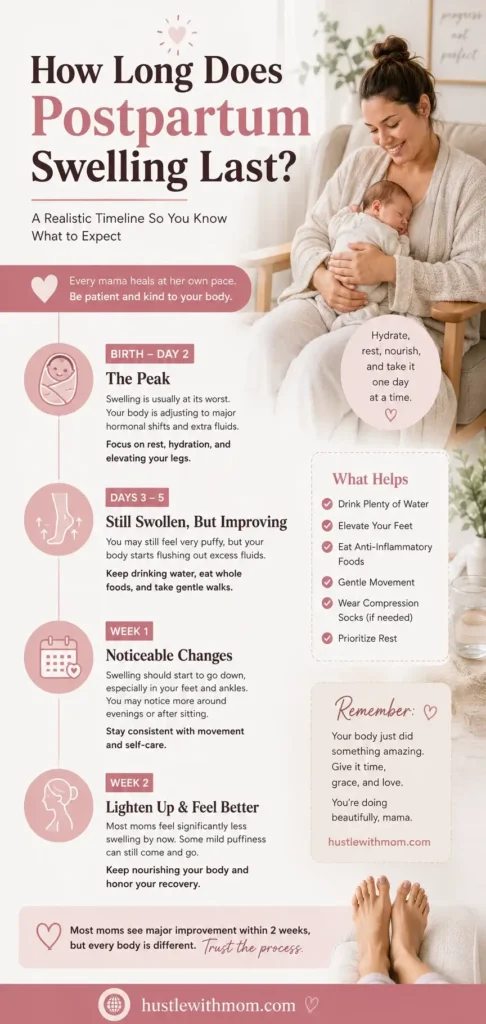
For most new moms with typical postpartum edema, you’re looking at one to two weeks before things noticeably improve. Your body will shed the excess fluid mostly through sweating (you might notice night sweats that’s normal) and increased urination, especially in the first week.
Some women see swelling linger longer, particularly if:
- They had a long labor or significant fluid during delivery
- They’re spending more time sedentary due to surgical recovery
- They’re dealing with heat (summer babies are tough)
- There are underlying circulation issues
By six weeks postpartum, most people are back to their pre-pregnancy baseline. If you’re not, bring it up at your six-week checkup don’t let it slide.
A Note on Mental Health and Body Image
Nobody talks about how disorienting it is to feel like a stranger in your own body after giving birth. I cried looking at my swollen feet. I felt frustrated, embarrassed, and honestly a little scared.
If you’re feeling that way too, that’s real, and it’s valid. Postpartum body changes are hard, even when they’re completely normal and temporary. Give yourself grace. The swelling is not permanent. Your body did something incredible, and it’s in the process of recovering.
That said if you’re feeling overwhelmed by physical symptoms AND struggling emotionally in the early postpartum weeks, please reach out to your provider. Postpartum anxiety and depression are common and treatable. You don’t have to just white-knuckle your way through the fourth trimester.
And while you’re in recovery mode, don’t forget that taking care of yourself is taking care of your baby. Some of the best new mom life hacks are really just permission slips to slow down, ask for help, and do less which is exactly what your healing body needs right now.
If you want to do something genuinely restorative for yourself once the worst of the swelling has passed, thoughtful self-care gifts for women, like a good foot soak kit, compression sock sets, or a body pillow, can make a real difference in those early weeks. (Hint: if someone asks what to bring when they visit, this is the list to send them.)
The Quick Reference: What to Do About Postpartum Leg Swelling
When you need something actionable fast, here’s the short version:
- Elevate your legs above heart level for 20–30 minutes several times a day
- Wear compression socks. Put them on before getting out of bed
- Drink plenty of water throughout the day
- Move a little, every hour or so, walks, ankle circles, flex and point
- Eat less processed, salty food when possible
- Keep your feet up even when sitting. Don’t let them dangle
- Watch for warning signs and call your doctor immediately if something feels off
Postpartum swelling caught me off guard in a way I didn’t expect. But understanding why it happens, knowing the warning signs that need immediate attention, and having a few practical things actually to do about it made a huge difference both physically and mentally.
Your feet will fit in your shoes again. I promise.
1 thought on “Leg Swelling After Pregnancy: Causes & Relief Tips”