

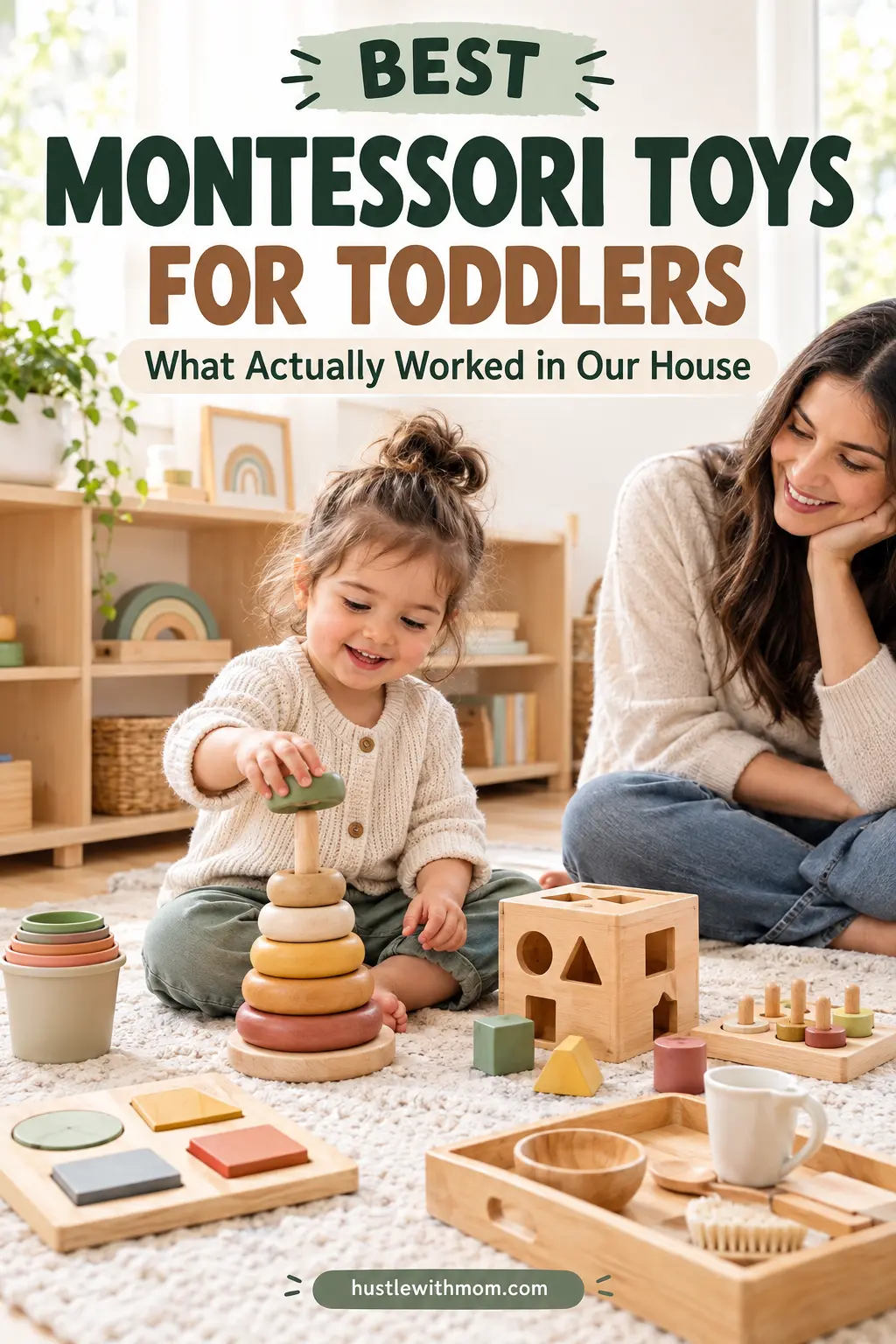
My son’s first birthday came with a mountain of toys that lit up, played music, and talked back at us in three different languages. Within a week, half of them were sitting untouched in a corner while he was busy stacking measuring cups from my kitchen drawer.
That’s when I started looking into Montessori toys for toddlers, and honestly, it changed how I think about play completely. I’m not a Montessori teacher. I’m just a mom who got tired of stepping on flashing plastic gadgets and started paying attention to what my toddler actually wanted to do with his hands.
If you’re searching for the best Montessori toys for toddlers, you’re probably in the same boat I was. You want toys that don’t just entertain, but actually help your child grow, focus, and feel capable on their own. So let me walk you through what worked in our house, what flopped, and how to avoid the mistakes I made along the way.
What Makes a Toy “Montessori” Anyway
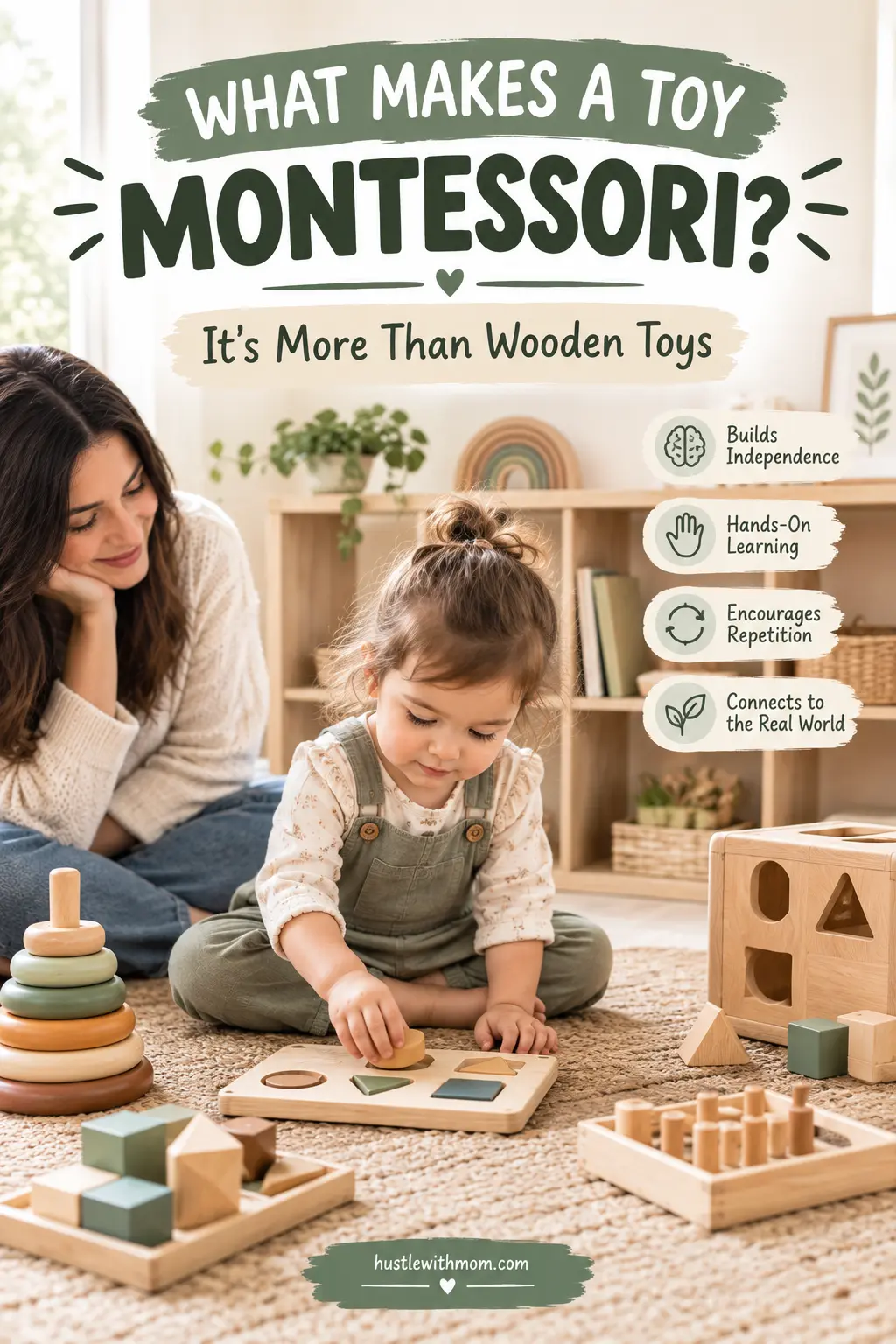
Before I bought a single item, I wanted to understand the actual philosophy behind it. The Montessori method, developed by Dr. Maria Montessori over a century ago, is built around the idea of child-led learning. Instead of a toy doing something for the child, the child does something with the toy.
That’s the biggest shift for most parents, myself included. A good Montessori toy is usually:
- Made from natural materials like wood, cotton, or metal
- Focused on one clear skill instead of ten flashy features
- Open-ended, meaning there’s no single “right” way to play with it
- Free of batteries, screens, and pre-programmed noises
You can read more about the educational reasoning behind this from the American Montessori Society, which is a solid resource if you want to go deeper into the philosophy itself.
Once I understood this, I stopped buying based on packaging and started buying based on what skill it would actually build.
The Toys That Actually Worked in Our House
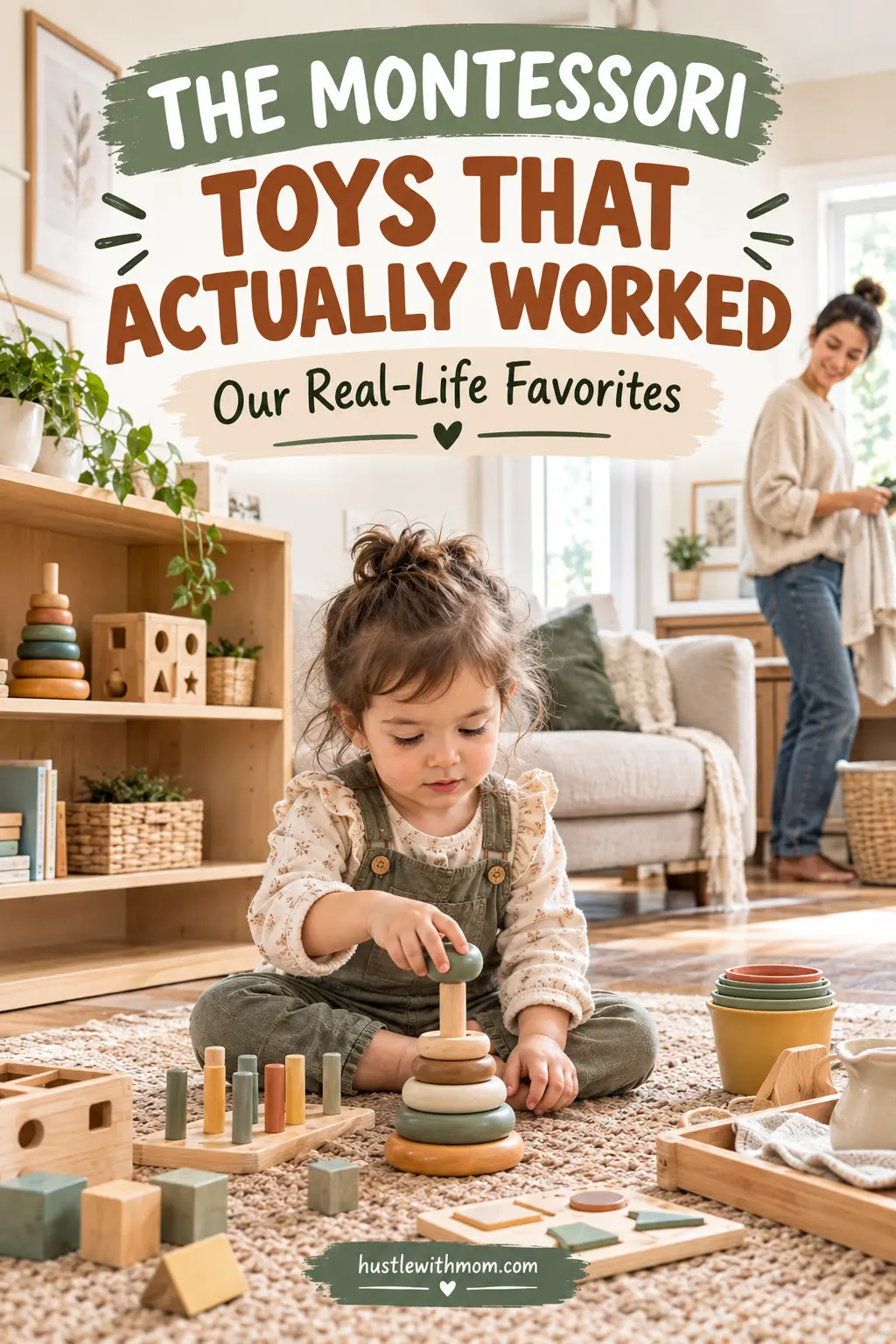
Wooden Stacking Rings
This was our starting point around 13 months. My son struggled with it at first, and I almost gave up thinking it was too advanced. Within two weeks, though, he had it down, and it became his go to activity every single morning.
Stacking toys build hand-eye coordination, size sequencing, and a surprising amount of patience for a toddler. It’s a slow burn skill, not an instant win, so don’t panic if your child fumbles with it the first several tries.
Shape Sorters
I bought a cheap plastic one first, and it barely held his attention for two minutes. The wooden version with just four shapes was a completely different story. He would sit there working through it repeatedly, which taught me something important: simpler often means longer attention span, not shorter.
Shape sorters are great for early problem solving skills and shape recognition, and they scale up nicely as your toddler gets better at matching.
Busy Boards
If you have a toddler obsessed with light switches, door locks, and zippers like mine was, a busy board is basically a survival tool disguised as a toy. Ours had latches, buckles, and a shoelace tie, and it kept him occupied during car rides better than any tablet ever could.
Busy boards are fantastic for fine motor skills development and also sneak in some early self-dressing practice, which saved me a lot of frustration later when he started wanting to put his own shoes on.
Practical Life Activities
This one surprised me the most. Giving my toddler a small broom and letting him “help” sweep did more for his sense of independence than any toy I bought. Montessori calls these practical life skills, and they’re honestly some of the most underrated tools for building confidence in toddlers.
We even started involving him in simple kitchen tasks, and if you’re looking for age-appropriate food ideas to pair with this kind of hands-on involvement, I wrote about some easy breakfast ideas for babies and toddlers that work well for letting little hands help out safely.
Sensory Play Materials
Not every Montessori-aligned activity has to come from a store. Homemade sensory play materials worked just as well for us, sometimes better. If you want a simple recipe to try at home, I have a full guide on homemade playdough without cream of tartar that became a weekly activity in our house.
Mistakes I Made So You Don’t Have To
I want to be honest here because I think most Montessori content online makes it sound too perfect.
Mistake one, buying too many toys at once. I dumped an entire toy shelf full of new items in one weekend, and it completely overwhelmed my son. He didn’t know what to focus on and ended up dumping everything on the floor instead of actually engaging with anything.
Mistake two, assuming expensive means better. Some of our favorite toys were under fifteen dollars. A basic wooden peg puzzle outperformed a fifty dollar sensory kit that ended up in a donation bin three weeks later.
Mistake three, expecting instant mastery. Toddlers need repetition. My son failed at the same puzzle for almost a month before something clicked. That’s not a sign the toy is wrong, it’s actually the whole point of child-led learning, letting them work through frustration at their own pace.
How to Actually Set This Up at Home
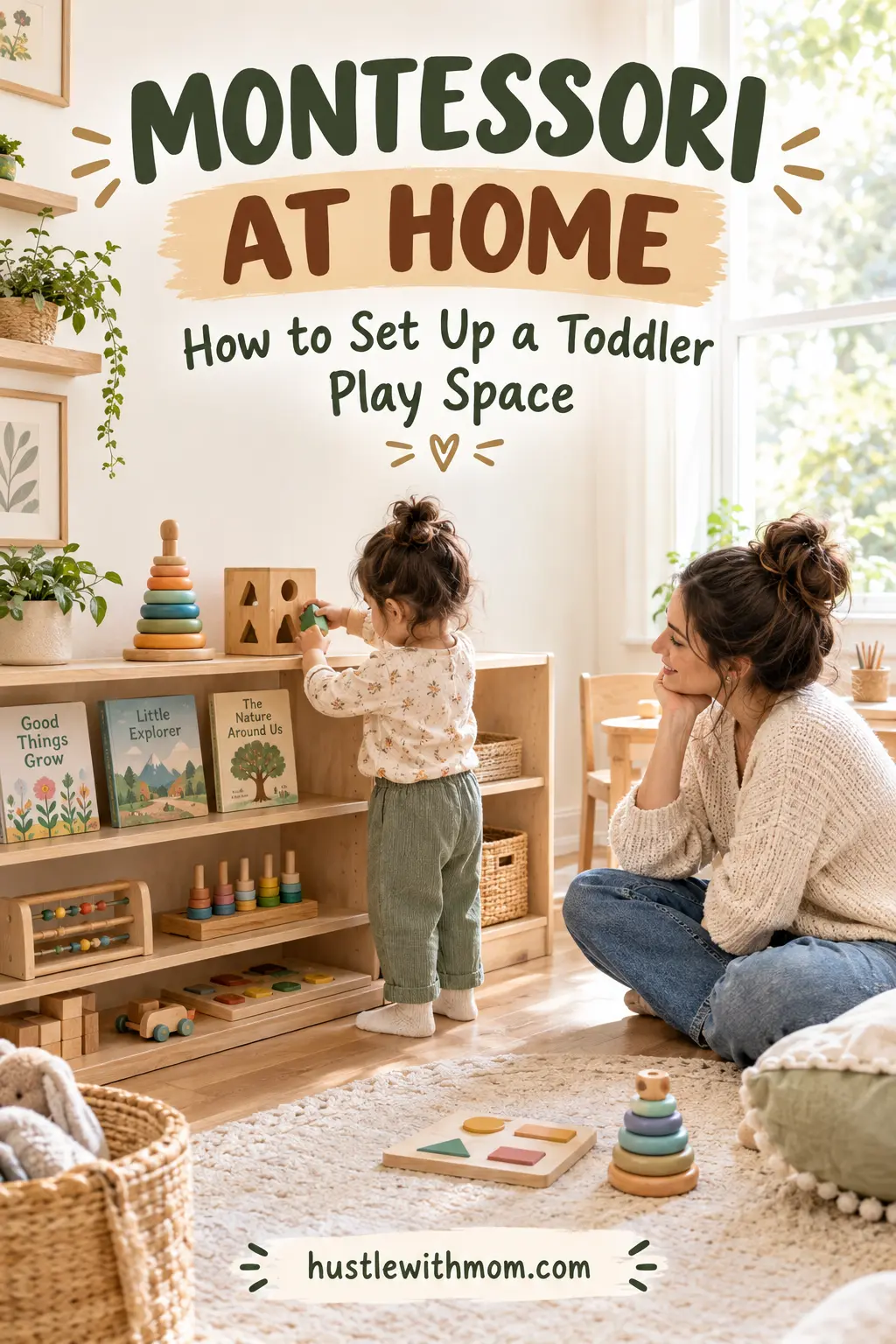
If you want to try this approach without overhauling your entire living room, here’s the simple system that worked for us.
- Pick five to seven toys to start with, nothing more
- Rotate them every couple of weeks instead of buying new ones constantly
- Place them on a low, open shelf so your toddler can choose independently
- Observe what they naturally gravitate toward before buying more
- Add one new skill-based toy at a time, not five
This rotation method reduces clutter, and it also keeps your toddler more engaged because the toys feel “new” again each time they come back into rotation.
For general developmental milestones to keep in mind while choosing age-appropriate toys, the CDC’s developmental milestones guide is a genuinely useful reference to check against.
A Quick Word on Patience
None of this works if you’re stressed out trying to force the “perfect” Montessori setup. Toddlers pick up on frustration fast, and honestly, staying calm through the messy parts of parenting matters just as much as which toy is on the shelf. If patience is something you’re actively working on too, I shared some practical tricks in 15 ways to be a calm mom every single day that helped me a lot during this phase.
It also connects a bit to parenting style overall. If you’re curious how this approach fits alongside broader discipline philosophies, I compared a few common ones in gentle parenting vs permissive parenting, which pairs well with the child-led mindset behind Montessori play.
And if you want to go deeper into the theory side of things, my roundup of best parenting books for nurturing parents includes a couple of titles that explain the Montessori approach in a lot more depth than I can cover here.
Final Thoughts
Choosing the best Montessori toys for toddlers isn’t really about buying the fanciest wooden set you can find online. It’s about paying attention to what your toddler is actually drawn to, keeping things simple, and letting them fail and try again without rushing in to fix it for them.
Start small, watch closely, and trust that the quiet, “boring” toys are usually doing more for your child than the loud ones ever will. That was the biggest lesson our living room taught me, one stacking ring at a time.