


It’s 3 a.m. You hold your baby and wonder, “Is my baby ready, or am I?” Every new parent asks it. So, when to start daycare? Most families begin between 6 weeks and 12 months. The best date depends on your baby’s routine, comfort with other caregivers, and your leave and budget. This guide covers seven readiness signs, an age-by-age guide, waitlist timing, and costs. By the end, you’ll know when should my child start daycare in your own family.
When Can Babies Start Daycare? (Age Range Explained)
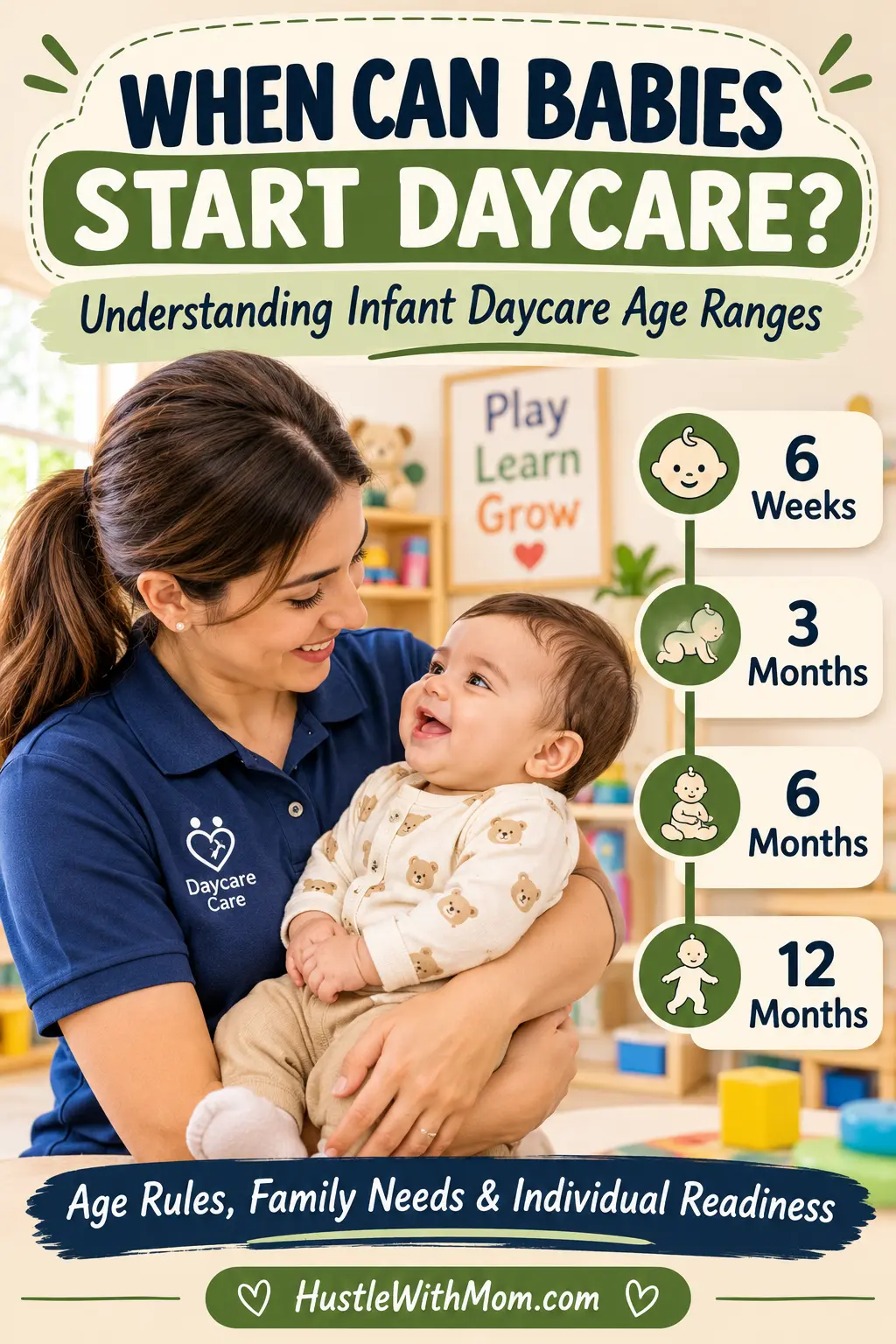
Most babies can start daycare between 6 weeks and 12 months. That’s the short answer. Age alone doesn’t settle it, though. A calm 4-month-old may adjust faster than a fussy 9-month-old. Think of age as a starting line and not a finish line.
Real life also steers the choice. Your parental leave may end. Your work schedule may change. Grandparents may live far away. The table below shows common patterns.
| Age | Typical situation | Common care option |
| 6 weeks / 3 months | Leave ends and return-to-work begins | Infant daycare or nanny |
| 6-12 months | The most common start | Center-based care or family home daycare |
| 12-24 months | Toddler move and more part-time options | Center or preschool |
Minimum age for infant daycare (6 weeks vs. 12 weeks)
The minimum age for daycare differs by program. Most licensed centers accept babies at 6 weeks. Some set a minimum age policy of 8 to 12 weeks. FMLA gives eligible workers 12 weeks of unpaid leave. New Jersey also offers Family Leave Insurance. Check current rules at the NJ Department of Children and Families and HealthyChildren.org. Many doctors suggest waiting until 3 months for immune-system development. A pediatrician recommendation will help you choose. If you’re still in those early weeks, our guide to preparing for the fourth trimester can help you plan.
Why there is no “perfect” age: every baby develops at their own pace
Babies bloom like flowers. Some open in spring. Others wait for summer. Developmental timing varies for every child. One baby rolls early, while another crawls on a different schedule, so signs your baby is ready to crawl can show up at very different ages. So the best age to start daycare is the age when your baby shows steady signs of readiness. Watch your baby more than the calendar. Trust what you see at home.
7 Signs Your Baby Is Ready for Daycare
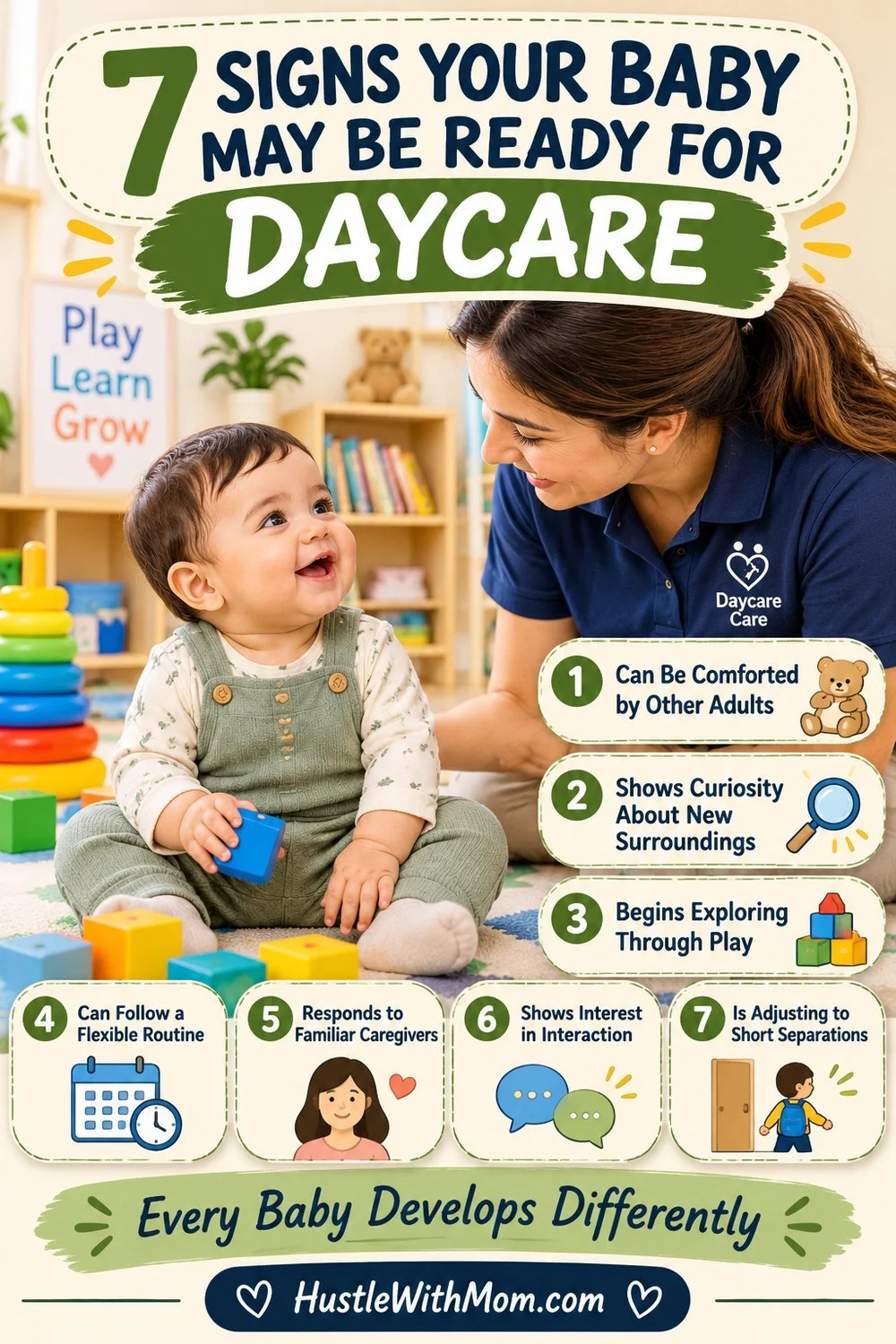
Picture a mom named Maya. She expected tears. Instead, her baby giggled at a stranger in the checkout line. That small moment told her plenty. Readiness shows up as a pattern. One sign alone isn’t a green light.
You don’t need all seven. Three or four steady signs plus a good provider make a solid start. Use these signs your baby is ready for daycare as a simple checklist. Share any worry with your pediatrician.
1. Your baby has steady head and neck control
Steady head and neck control usually arrives around 4 to 6 months. It matters for safe feeding and tummy time. It also helps when several caregivers hold your baby. If you’re unsure, ask your pediatrician. A baby with good control feels safer in group infant care.
2. Feeding and sleep have settled into a predictable routine
A predictable rhythm helps caregivers read your baby’s cues. Aim for steady feeds and naps. Breastfed babies should accept a bottle. Safe sleep matters too. Babies sleep on their backs in an empty crib, as AAP guidance explains. If naps still swing wildly, read about baby sleep regression before you set a start date. A calm routine makes the first week smoother.
3. Your baby is curious about other babies and new faces
Does your baby stare at new faces? Does your baby smile at other babies? That’s early social development in action. Curious babies often enjoy the buzz of a classroom. Watch for it at the park or the grocery store.
4. Your baby can be comforted by caregivers other than you
Try a simple test. Let a grandparent or sitter soothe your baby. If calm returns within a few minutes, that’s a great sign. It points to easier drop-off days. It also shows your baby can build stable relationships with new people.
5. Your baby engages with toys, sounds, and play
Look for reaching, grasping, and babbling. Notice if your baby turns toward songs. These skills feed language development. Group play builds on them. Teachers can then add songs, books, and gentle games to the day. At home, simple Montessori toys for toddlers can keep that play going.
6. Your baby handles short separations calmly
Practice helps. Leave your baby with a trusted adult for one or two hours. Some fussing at goodbye is normal. Quick recovery is the key sign. A baby who settles soon can handle a gradual start.
7. You feel ready too: logistics, budget, and confidence
Your readiness counts too. Think about your commute and your pumping plan. Review your budget. Ask yourself if you trust the provider. A confident parent makes drop-off easier for everyone. Guilt-free is the goal, and if guilt creeps in, you’re not alone. Here’s how to handle working mom guilt.
Signs Your Baby May Need a Little More Time
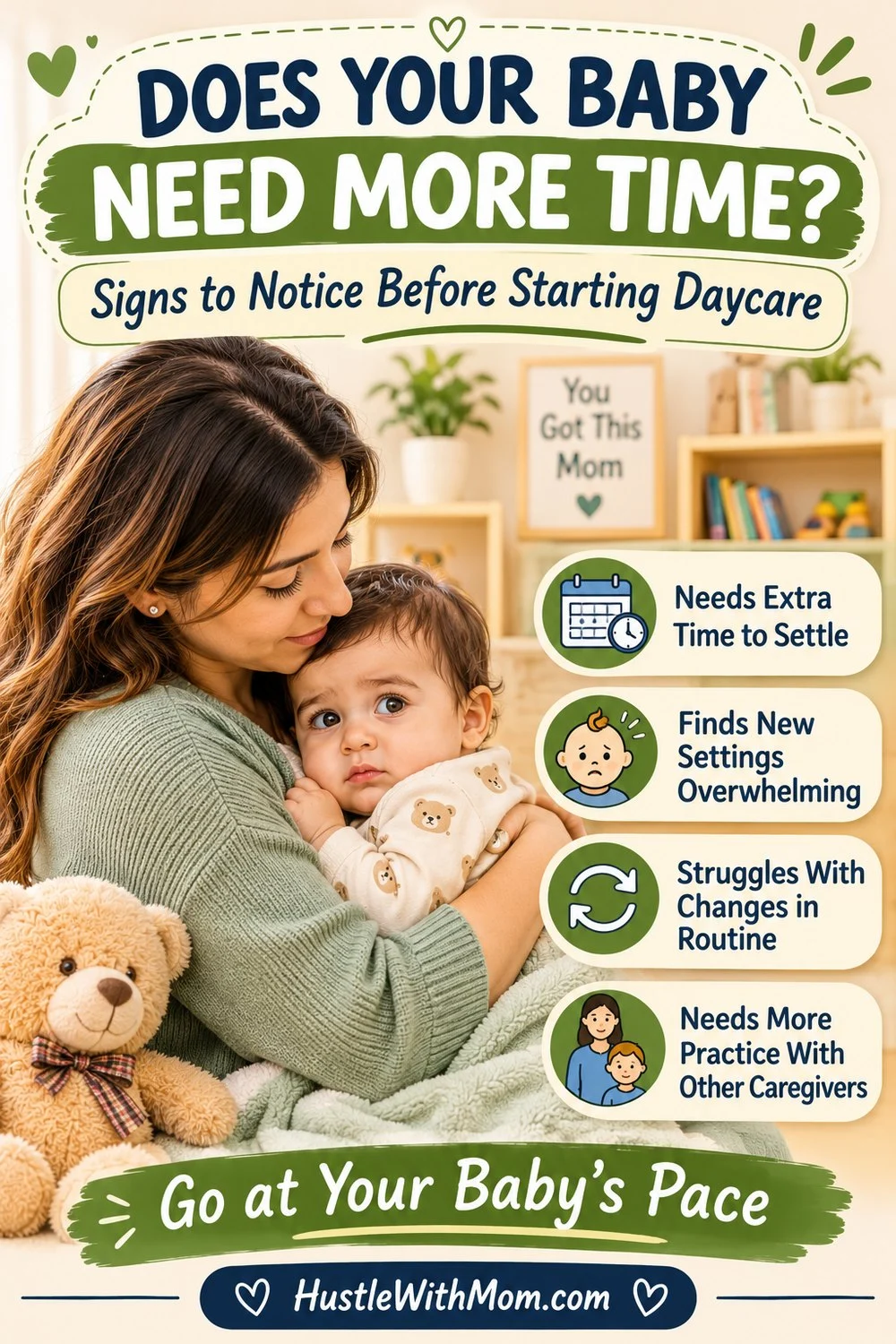
Waiting isn’t failing. It’s a choice. Some babies need a few extra weeks before group care.
These signs often pass. Recheck in two to four weeks. Your pediatrician recommendation can guide the timing.
Intense separation or stranger anxiety
Separation anxiety peaks for many babies between 8 and 18 months. It doesn’t mean daycare is wrong. It does call for a slow transition. Start with short visits. Let your baby meet teachers while you stay close.
Unpredictable sleep and feeding schedules
Chaotic naps and feeds make group care harder. Build consistency for two weeks before day one. Set regular wake times. Offer feeds at steady intervals. If your baby keeps waking at 5 AM, fix that pattern first. Share that rhythm with the teachers so they can follow it.
Recent illness or major life changes
Moves, new siblings, and recent illness can unsettle a baby. Babies also often catch more colds in their first months of group care, as the CDC notes. Time the start around vaccines when you can. Ask your doctor before you set the date.
Best Age to Start Daycare: Age-by-Age Guide
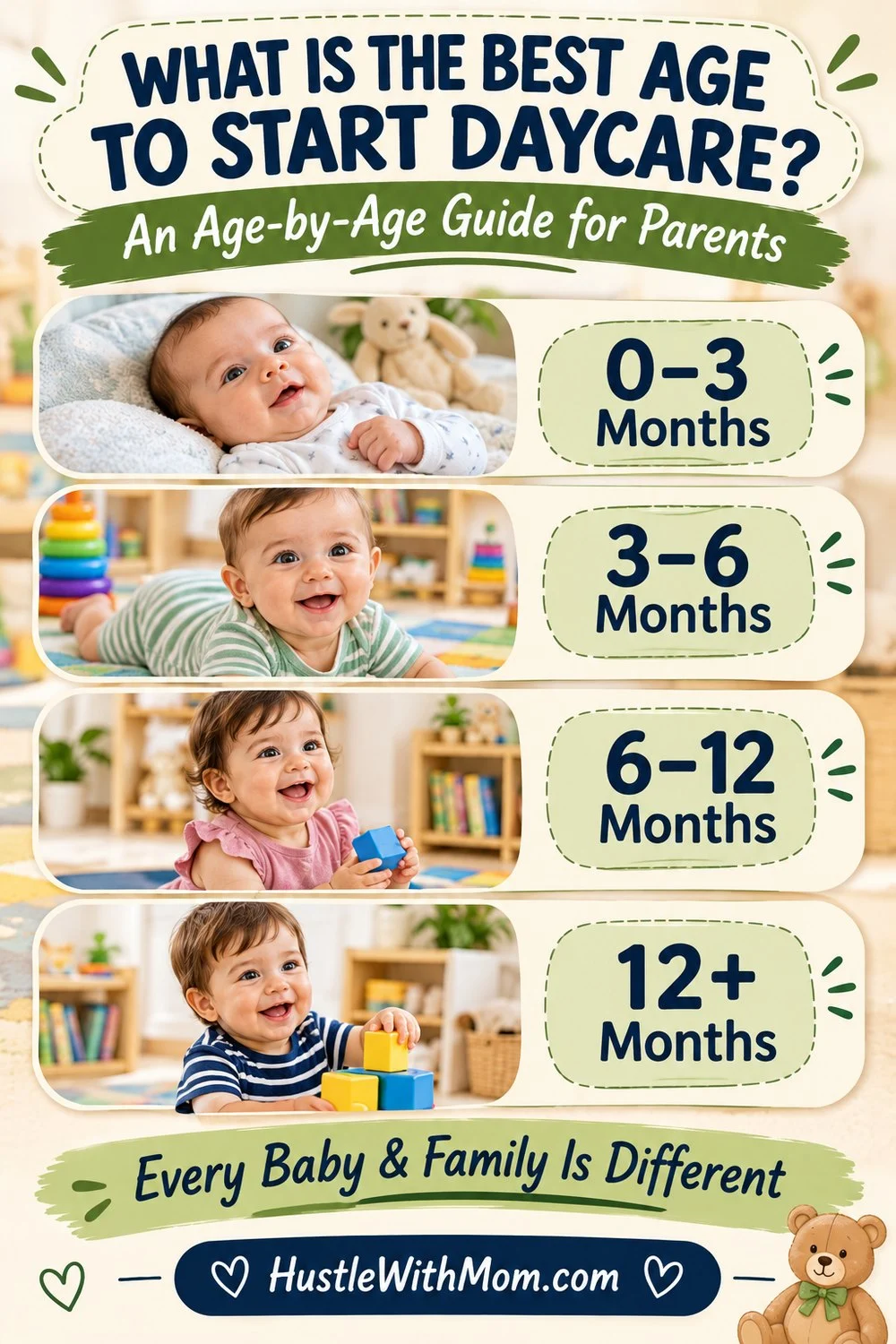
For most US families, the common window runs from 3 to 12 months. Each stage has trade-offs. Younger babies need more hands-on care. Older babies need more play and structure.
This age-by-age guide shows what to expect. Find your baby’s age in the table. Then read the matching section.
| Age | Main benefit | Main challenge |
| 0-6 months | Close, gentle care | Few center spots |
| 6-12 months | Routines are settling | High demand and short notice |
| 12-24 months | Lower cost and more options | Peak separation anxiety |
| 2-3 years | Structured play | Potty rules |
| 3-5 years | School readiness | Hours may not match work |
0-6 months: the newborn period
The newborn period is the least flexible time for center care. Most centers don’t take babies under 6 weeks. Your options include leave, a nanny, or family home daycare. Home providers often accept younger babies. Ask your doctor about immune-system development before you choose.
6-12 months: the decision point for most families
This window is the decision point for most families. Demand peaks and spots are few. Centers often set a notice period for enrollment of 4 to 8 weeks. An offer may give you only two to four weeks to answer. The infant-to-toddler transition often comes at 12 to 15 months. Ask how your center handles it.
12-24 months: the toddler transition
Care gets easier now. The staff-to-child ratio relaxes from about 1:3 or 1:4 to 1:4 to 1:6. That often brings a tuition drop of $150 to $400 a month. A part-time schedule or 3-day schedule is easier to find. Language development also leaps. Expect peak separation anxiety too. Mealtimes can get tricky as well, so keep these breakfast ideas for babies and toddlers handy for busy mornings.
2-3 years: pre-preschool
The 2-year-old room brings a structured curriculum and parallel and early cooperative play. Kids start to follow routines. Many centers set a potty training requirement for the next room. Plan for it around 2.5 to 3 years. Ask about teachers’ early childhood education credentials.
3-5 years: preschool and pre-K
Choices widen at this age. A half-day vs. full-day program decision shapes your cost and schedule. Head Start serves income-eligible families. Montessori / play-based schools add style options. Some states offer universal Pre-K and public Pre-K for 4-year-olds. New Jersey funds free preschool in certain districts. Check the hours, since school-day pre-K may end before your workday does.
Types of Daycare for Infants

No single type wins. The best type is the best fit. Think about cost, group size, and flexibility.
Backup care matters too. Ask what happens when a teacher or nanny is sick. The answer tells you a lot.
Center-based daycare
Center-based care offers licensed providers, steady routines, and long hours. Trained caregivers cover for each other. Groups are larger. The infant room may feel busy. Still, you get backup when a teacher is out.
Home-based (in-home) daycare
Family home daycare and in-home daycare mean small groups in a homelike space. Hours can be flexible. Verify state licensing or registration. Ask who covers when the provider is sick. Quality varies, so tour with care.
Nanny or nanny share
A nanny gives one-on-one care at home. Schedules bend easily. The cost is higher. A nanny share splits pay between two families. Both families must agree on rules, sick days, and pay.
When to Start Searching for Infant Daycare

Here’s the surprise. The search often starts before your baby arrives. In busy metros, an infant waitlist can run 12 to 18 months. Add daycare tours to your baby on the way checklist early.
Tours, applications, and deposits follow. A waitlist deposit can be refundable or non-refundable. Deposits often range from $25 to $500. Many parents join two to four lists. Think of the extras as insurance.
| Market type | Typical lead time for infants |
| Big metros (DC, San Francisco, Boston, NYC) | 12-18 months |
| Mid-size metros | 3-6 months |
| Suburban or rural areas | 2-4 months |
The waitlist reality in Hoboken, Jersey City, and nearby cities
Waitlist length by city varies a lot. Dense areas near NYC fill fast. Hoboken and Jersey City families often need long lead time. Call three to five local centers. Ask for current numbers. Do the same in nearby towns. A first trimester / second trimester sign-up gives you the best shot at a confirmed infant slot.
A simple enrollment timeline (when to tour, apply, and confirm your start date)
Follow this simple plan. In the second trimester, research and tour. In the third trimester, apply and pay deposits. From birth to 8 weeks, seek confirmed enrollment and finish paperwork. Two weeks before the start date, attend orientation. Keep your return-to-work date in view the whole time. A postpartum planner for moms can help you track every date.
What to Look for When Choosing Infant Daycare
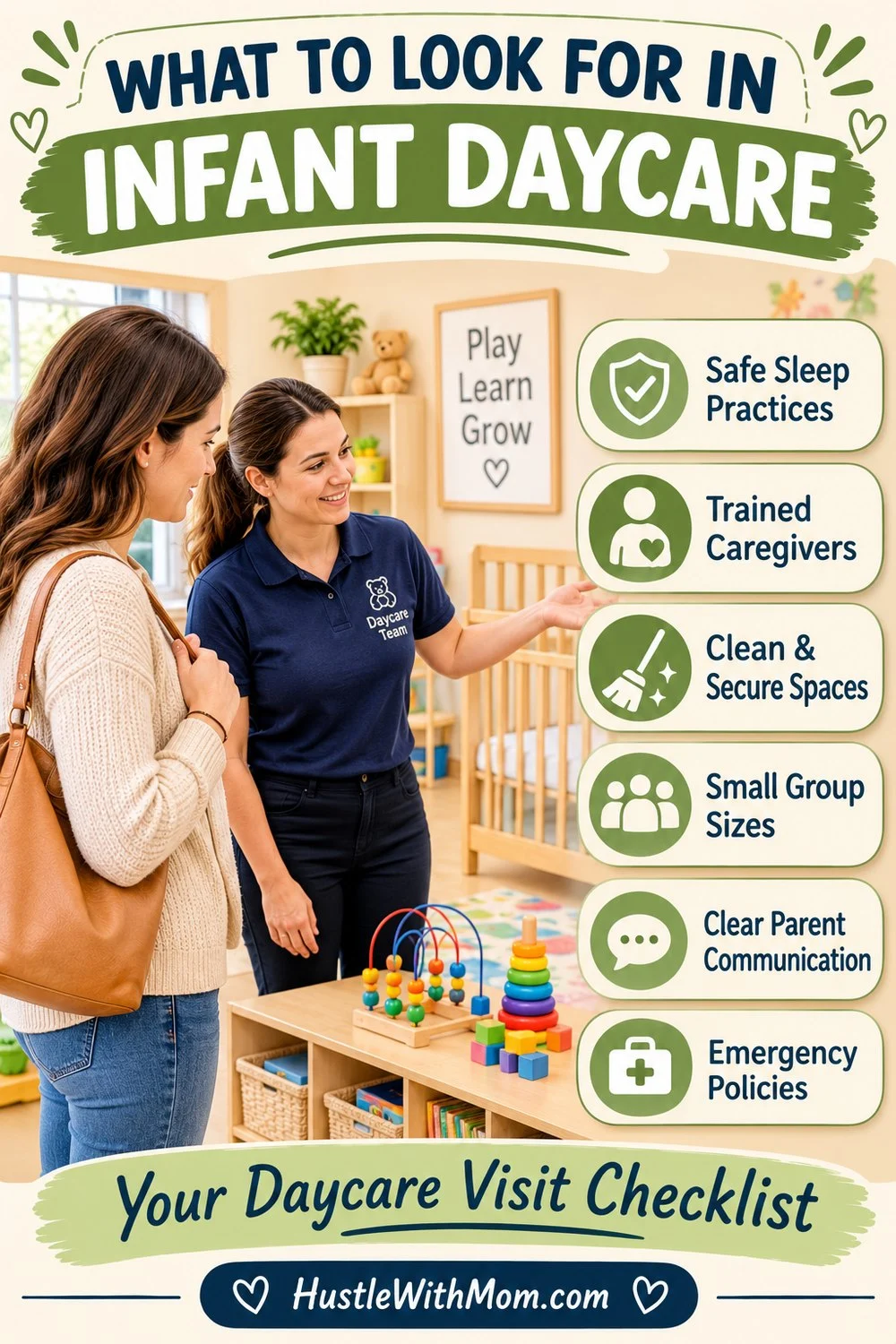
Trust your senses on a tour. Is the room calm? Do teachers smile? Are the floors clean? Those first impressions matter.
Four checks separate quality care vs. poor-quality care. Child Care Aware also offers tour tips at childcareaware.org. Bring a notebook and take notes.
Staff ratios and caregiver qualifications
Ask about the staff-to-child ratio in the infant room. Check New Jersey’s current rule in the state licensing manual. Ask about CPR training and early childhood education credentials. Ask how long teachers stay. Low turnover protects stable relationships. The NJ DCF site has licensing details.
Safety, licensing, and cleanliness
Confirm the license first. Look for back-to-sleep rules and empty cribs. Check for secure entry. Watch handwashing and diaper-area cleaning. Clean, safe spaces keep babies healthy. Curious how long a bassinet stays safe at home? See how long a baby can sleep in a bassinet.
Daily routine, feeding, and sleep practices
Good programs follow your baby’s own schedule. Ask how staff handle breast milk and formula. Look for tummy time and play every day. Even for infants, a structured curriculum should stay gentle and responsive.
Communication with parents
Ask for daily reports and photo updates. Look for an open-door policy. Ask how staff share concerns. Good communication builds trust fast.
How to Choose a Daycare in Hoboken, NJ Parents Can Trust
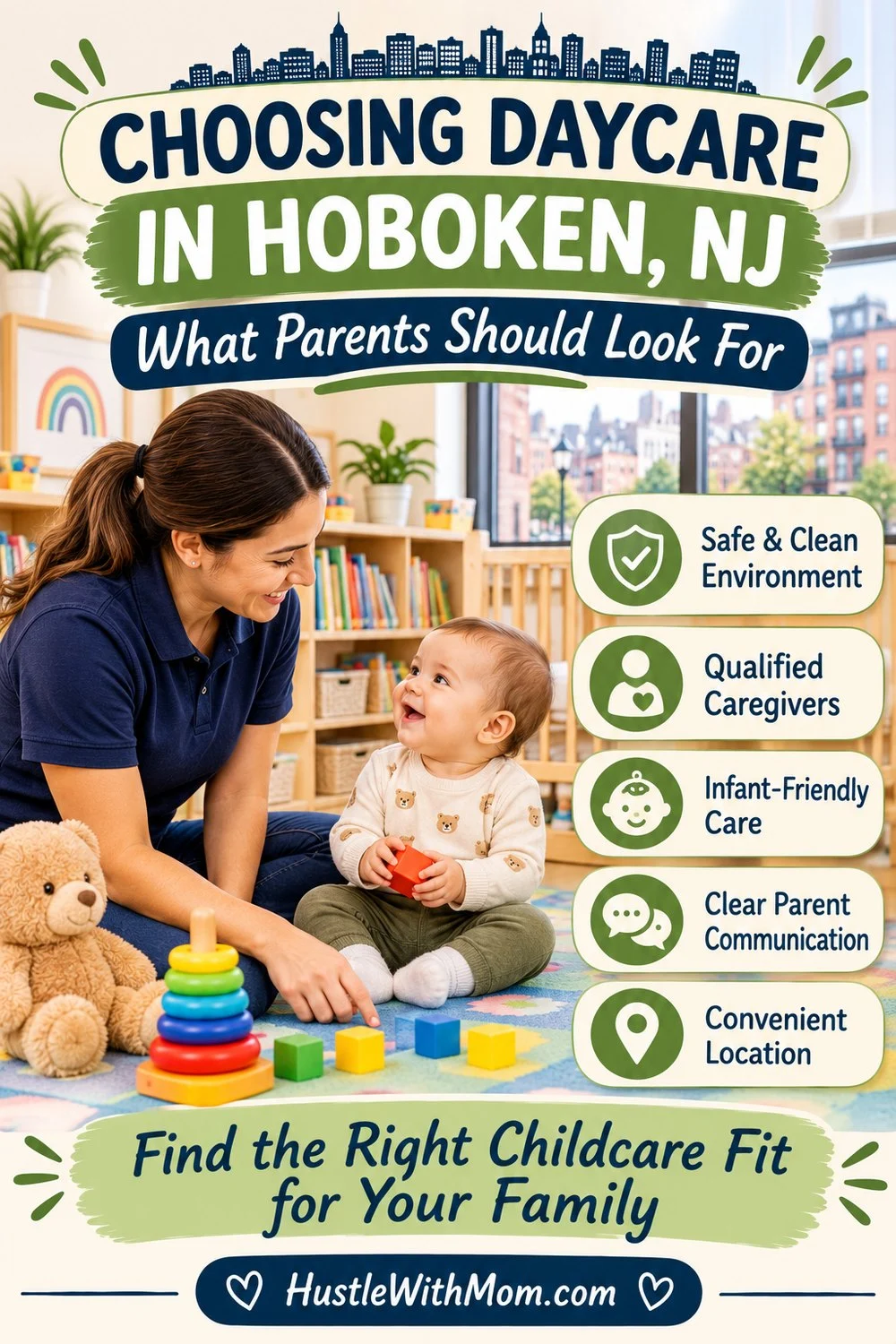
Hoboken parents juggle tight spaces and short drop-off windows. Many commute by PATH or ferry. Hours must match that rhythm. A great center on paper can still fail your morning routine.
Start with a license lookup on the state site. Then tour two or three licensed centers for infant daycare in Hoboken. Ask about the sick-child policy. Ask about hours and late fees. Compare the answers side by side.
Why Families Near Hudson and Monroe Choose Step by Step Daycare Hoboken

Families near Hudson and Monroe want care close to home. Step by Step Daycare Hoboken serves that area. Parents look for caring teachers, a steady daily rhythm, and clear communication. Those three things build trust.
Seeing is believing. Book a tour and watch the infant room in action. Ask every question on your list. Contact Step by Step Daycare Hoboken today to reserve your visit.
How Start Age Affects Your Total Childcare Cost
The cheapest start isn’t always the cheapest overall. Total childcare spend tells only half the story. Income preserved matters just as much. Staying home longer can cost more than tuition saves. If you do stay home, these stay-at-home mom jobs can offset some of the lost pay.
Unpaid leave costs real money. Some research points to a career gap penalty of 3% to 7% per year out of work. Over time, that hits lifetime earnings. The break-even point arrives when care eats roughly 70% of the lower earner’s net pay. The table shows rough estimates only.
| Start age | Rough five-year childcare spend | Income note |
| 6 weeks | 72,000-110,000 | Full pay from week 7 |
| 3 months | 68,000-105,000 | Matches FMLA timing |
| 6 months | 62,000-96,000 | Extra unpaid leave |
| 12 months | 48,000-80,000 | Larger income loss |
Average daycare cost by age group
Cost by age group shows a clear pattern. Infants cost the most because of tight ratios. The infant rate vs. toddler rate gap is large. Moving up brings a tuition drop. Preschool often costs less. Full-day licensed center care for ages 3 to 5 often runs $750 to $1,200 a month nationally. See Child Care Aware and the US Department of Labor for data.
Daycare costs in New Jersey compared with other states
New Jersey prices often run above the national average. Neighbors like New York, Pennsylvania, and Connecticut also run high. Check your own state’s price data. Ask about subsidies. A dependent care FSA can cut your tax bill. Compare each childcare cost line by line.
How to Make the Daycare Transition Easier

The first week is practice for everyone. Expect a few wobbles. They’re normal. Busy weeks feel lighter with these honest tips for exhausted new moms.
Prepare, ease in, and stay steady. A slow transition works best. Small steps beat big leaps.
Before the first day
Visit once or twice before day one. Run the morning routine at home. Label every bottle and blanket. Write down your baby’s cues for the teachers.
During the first week
Use a gradual start (2-hour visits, half-days, full days). Stretch it over one to two weeks. Plan a calm evening each day. Keep your own schedule light. Staying steady yourself helps, so try these ways to be a calm mom every single day.
Handling separation anxiety at drop-off
Keep goodbyes short and warm. A quick, confident exit beats a long one. Leave a comfort item if the rules allow. Most babies settle within minutes. Ask teachers to text an update. Separation anxiety fades with practice.
Conclusion
You now know when to start daycare and how to spot readiness. Most families start between 6 weeks and 12 months. Seven signs help you decide. Start your search early. Waitlists can run for months.
The right time fits your baby and your family. Trust your gut and your pediatrician. Then take the next step. Book a tour at Step by Step Daycare Hoboken and see the infant room for yourself.