

The first time my stepdaughter looked straight through me and walked upstairs without a word, I sat down on the kitchen floor and cried. I remember thinking, “did I make a mistake marrying into this family?” If you’re googling how to tell if your stepchild hates you at eleven o’clock at night the way I once did, I want you to know two things right away: you’re not crazy for noticing what you’re noticing, and you’re probably not as hated as you think.
There’s a real difference between a kid who’s overwhelmed by a new family structure and a kid who’s genuinely rejecting you long term. Learning to tell those two apart is what finally gave me some peace, and it’s what I want to walk you through here, real signs, real scripts, and the mistakes I made along the way so you don’t have to repeat them.
Is It Normal for a Stepchild to Act Like They Hate You?
Yes, way more often than anyone warns you about before the wedding.
Kids in blended families often carry what’s called a loyalty bind, this idea that liking you somehow betrays their other biological parent. It’s not rational, but grief rarely is, especially for a child. It’s a lot like the emotional whiplash I wrote about in distancing yourself from your stepchildren, where sometimes pulling back a little is actually part of building something sustainable, not giving up.
So before you spiral, know this: coldness in month three of blending a family is not the same thing as permanent hatred. Context matters more than the moment.
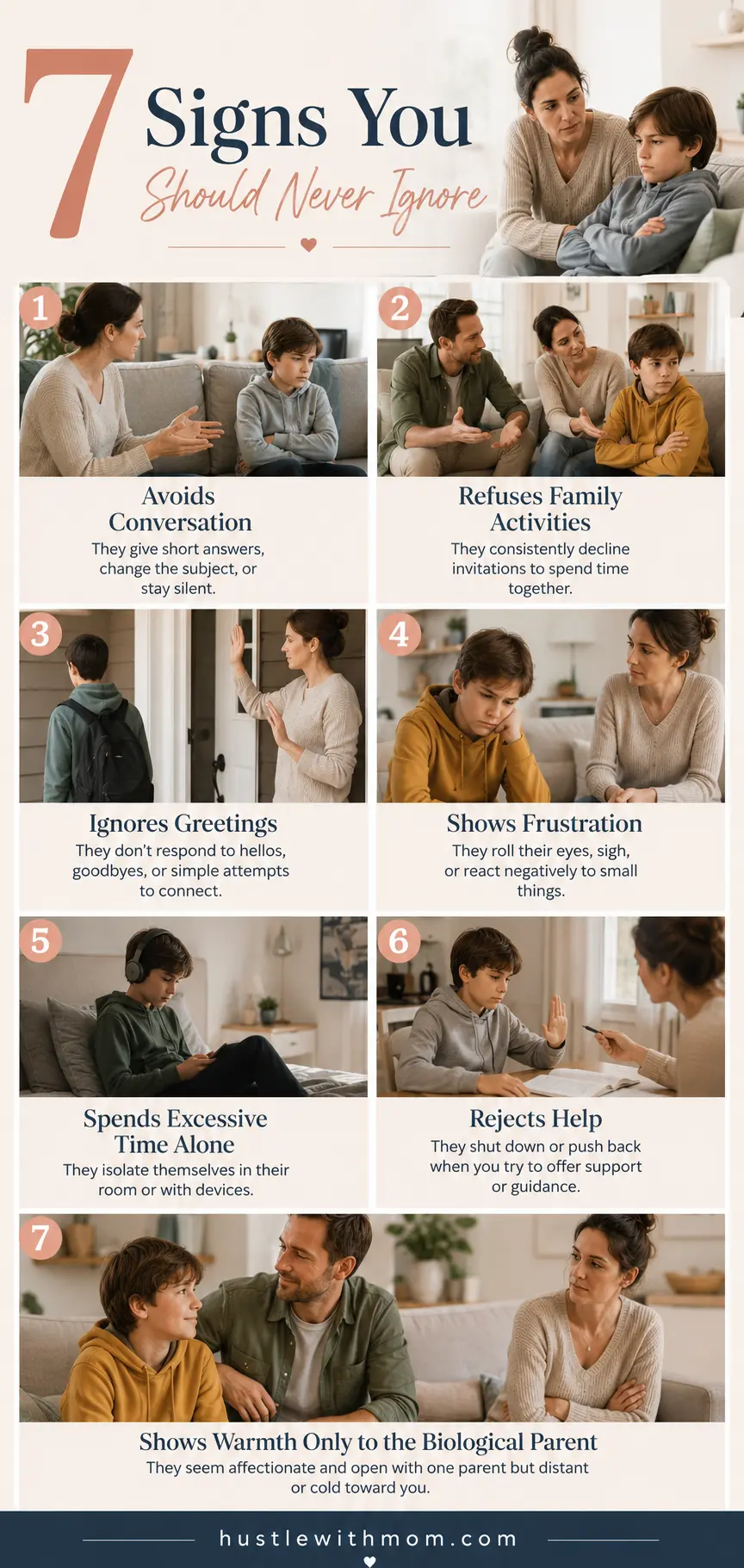
How to Tell If Your Stepchild Hates You: 7 Signs to Watch For
These are patterns I lived through myself, plus what I’ve heard repeatedly from other stepparents. A bad day is normal. Several of these showing up consistently is what’s actually worth paying attention to.
1. They Avoid Being Alone With You
If they suddenly need to be in another room the second their parent steps out, that’s not a coincidence. It’s one of the clearest behavioral signs of discomfort.
2. They Give One Word Answers or Full Silent Treatment
“Fine.” “Nothing.” “I don’t know.” If conversations feel like pulling teeth specifically with you, and not with anyone else in the house, that’s a pattern.
3. They Compare You Negatively to Their Other Parent
“My real mom would let me.” This isn’t just attitude. It’s often a test of loyalty, and an attempt to push you out of any parenting role.
4. They Test or Break Household Rules Specifically With You
A kid who follows every rule for their biological parent but breaks them the second you’re enforcing it is usually testing your authority, and honestly, testing whether you’re staying.
5. They Refuse Affection or Physical Closeness
Flinching from a hug, sitting as far from you as possible in the car. This one hurt me the most personally, but it’s incredibly common early on.
6. They Say “I Hate You” or “You’re Not My Parent”
Painful to hear, but this is often about boundary testing, not literal hatred. Kids reach for the sentence that will land hardest when they’re upset.
7. They’re Warm With Everyone Except You
If they’re relaxed with teachers, friends, even your own parents, but go flat and guarded around you specifically, that pattern deserves attention.
Signs It’s Not Hate, It’s Something Else
Here’s what I wish someone had told me sooner. Most of what looks like hatred is actually grief, fear of replacement, or a completely normal developmental stage.
A seven year old acting out is often terrified you’re replacing their other parent. A teenager going quiet is often just being a teenager, they do that to biological parents too. According to the Child Mind Institute’s guide for blended families, children frequently direct frustration about the separation toward the stepparent specifically, simply because it feels safer than aiming it at their own parent.
That single reframe took a lot of the sting out of my hardest weeks.
What to Say and Do When You Notice These Signs

Talk to Your Partner First
Before addressing anything with your stepchild, get aligned with your spouse. Disciplining or confronting a stepchild without your partner’s backing tends to backfire fast, and if co-parenting tension is already part of the picture, tools like the ones I covered in free co-parenting apps can help keep everyone on the same page about schedules and expectations.
Give Them Space Without Withdrawing Yourself
This balance took me the longest to learn. You don’t chase, but you also don’t disappear. Show up consistently, invite them into small things like picking the takeout order, and don’t take the no personally.
Use Phrases That Actually Open Communication
Instead of “why do you hate me,” which put my stepdaughter instantly on the defensive, I switched to:
- “I noticed things feel tense between us. I’m not trying to replace anyone.”
- “You don’t have to call me mom. I just want to be someone you trust.”
- “It’s okay if this takes time. I’m not going anywhere.”
That last line, repeated consistently for months, is genuinely what shifted things in our house.
Don’t Try to Replace Their Biological Parent
My biggest early mistake was trying too hard, too fast, to be a “second mom.” It backfired. Stepping into a supportive adult role instead of a replacement parent role made the relationship feel safer for her, similar to the approach I outline in gentle parenting vs permissive parenting, where warmth and structure work better together than either alone.
When to Worry, and When to Get Outside Support

Most tension eases with time, patience, and consistency. But ongoing hostility that isn’t improving after a year, signs of self harm, or complete refusal to engage with the family is worth bringing to a family therapist who specializes in blended families. There’s no shame in this. Families who bring in outside support early tend to adjust faster than those who white knuckle it alone.
If the tension is tangled up with a difficult co-parent dynamic on top of everything else, it might help to read co-parenting with a narcissist, since sometimes what looks like a stepchild issue is actually fallout from adult conflict the child is absorbing.
Common Mistakes to Avoid
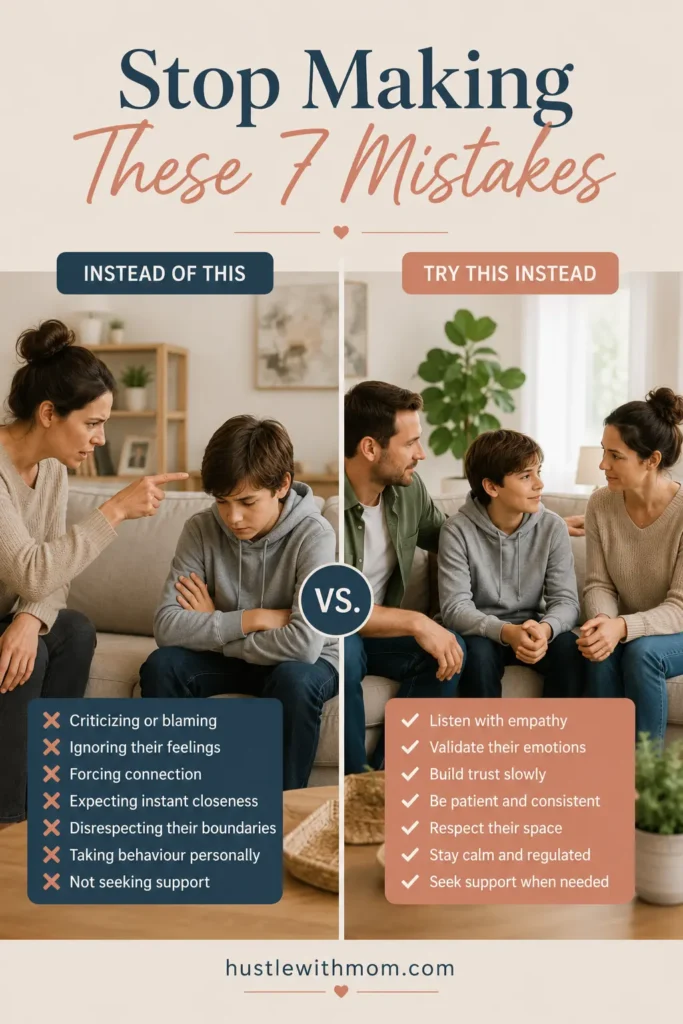
- Forcing affection or a “mom/dad” title too early
- Disciplining without your partner’s clear backing
- Taking rejection personally instead of seeing it as an adjustment stage
- Competing with the biological parent instead of building your own lane
- Giving up on communication after one rough conversation
And if you’re also navigating a moment where someone outside the family caused your child pain on top of the stepfamily adjustment, my post on when someone hurts your child walks through how to handle that without losing your cool in front of the kids.
Final Thoughts
If you’re running through this list wondering how to tell if your stepchild hates you, take a breath. Most of what looks like hate is a kid processing a family that changed without asking their permission first. It says very little about your worth as a person or a partner.
My stepdaughter and I are close now, years later. It didn’t happen because I forced it. It happened because I kept showing up, kept my expectations realistic, and let her set the pace. Do the same, and there’s a really good chance you’ll get there too.