


I remember standing in my kitchen at 9 p.m., dishes piled up from a dinner I’d cooked that nobody thanked me for, listening to my stepdaughter laugh on the phone with her mom in the next room, and thinking: I don’t want to do this anymore.
Not “I don’t love her.” Not “I want out of this marriage.” Just… I was done being the invisible person who cooked, cleaned, drove to practice, and got treated like hired help in my own house.
If you’re a stepparent reading this, you probably know that feeling. And you probably also know the guilt that shows up right behind it the little voice that says good stepmoms don’t feel this way.
They do. I did. And distancing yourself from your stepchildren turned out to be the thing that actually saved my relationship with them, not the thing that ended it.
Distancing Isn’t the Same as Giving Up
Here’s the confusion nobody clears up for you: “distancing,” “disengaging,” and “checking out” get thrown around like they mean the same thing. They don’t.
- Distancing / disengaging means stepping back from tasks and responsibilities that aren’t yours to carry, while staying warm and present.
- Checking out means going cold, silent, or resentful which actually damages the relationship.
- Estrangement or no contact is a much bigger, usually permanent decision, and it’s not what most stepparents actually need.
When I first heard the word “disengage” in a stepmom Facebook group, I pictured myself icing my stepkids out. What it actually meant, once I tried it, was way less dramatic: I stopped nagging about homework, stopped being the one who enforced bedtime, and let my husband carry the parenting weight that was always supposed to be his. I still said good morning. I still made her favorite pasta. I just stopped acting like her third parent.
Signs You Might Need Some Distance

You don’t need a crisis to justify this. A few signs I’ve seen in myself and heard from other stepparents:
- You feel resentment building even over small things (leaving dishes, ignoring you, not saying thank you)
- You’re doing more disciplining than your spouse is
- You dread school pickups, holidays, or “their weekend”
- You feel like a stranger or worse, staff in your own home
- You’re constantly anxious about saying or doing the wrong thing
If two or three of these sound familiar, that’s not a character flaw. That’s compassion fatigue, and it’s incredibly common in blended families.
Quick Self-Check: What Do You Actually Need?
Before you pull back, it helps to figure out what kind of problem this is. Ask yourself:
- Is this about the kids, or is this actually about my spouse not backing me up? → If it’s the second one, this might be a marriage conversation first, not a step-kid problem. (I’ve written about this exact pattern in common fights couples have after baby the dynamic is surprisingly similar with blended families.)
- Am I burned out from doing too much, or genuinely hurt by how I’m being treated?
- Would a smaller boundary fix this, or do I need a full step back for a while?
Most of the time, the answer isn’t “disappear from their life.” It’s “stop overfunctioning.”
How I Actually Did It (Step by Step)
1. I got honest with myself first
I made an actual list tasks, moments, conversations that drained me versus the ones I genuinely enjoyed. Turns out I loved cooking for the kids but hated being the homework enforcer. That distinction mattered a lot.
2. I talked to my husband before I changed anything
This is the step people skip, and it’s the one that matters most. I sat him down and said something like:
“I love your kids, but I can’t keep being the default parent when you’re around. I need you to take the lead on discipline and homework. I’ll still show up for them, just differently.”
No ultimatums, no blaming. Just a clear ask. If your spouse gets defensive, that’s actually useful information it tells you whether this is a stepkid issue or a marriage issue.
3. I pulled back from tasks, not from warmth
I stopped being the homework police. I stopped chasing them for chores. I let my husband handle the discipline conversations. But I kept doing the things that felt genuinely like me cooking, small talk, driving to practice when I had time anyway.
4. I gave it time and reassessed
Disengaging isn’t a one-and-done decision. Every few months I checked in with myself: does this still feel right, or has something shifted?
What This Looks Like by Age
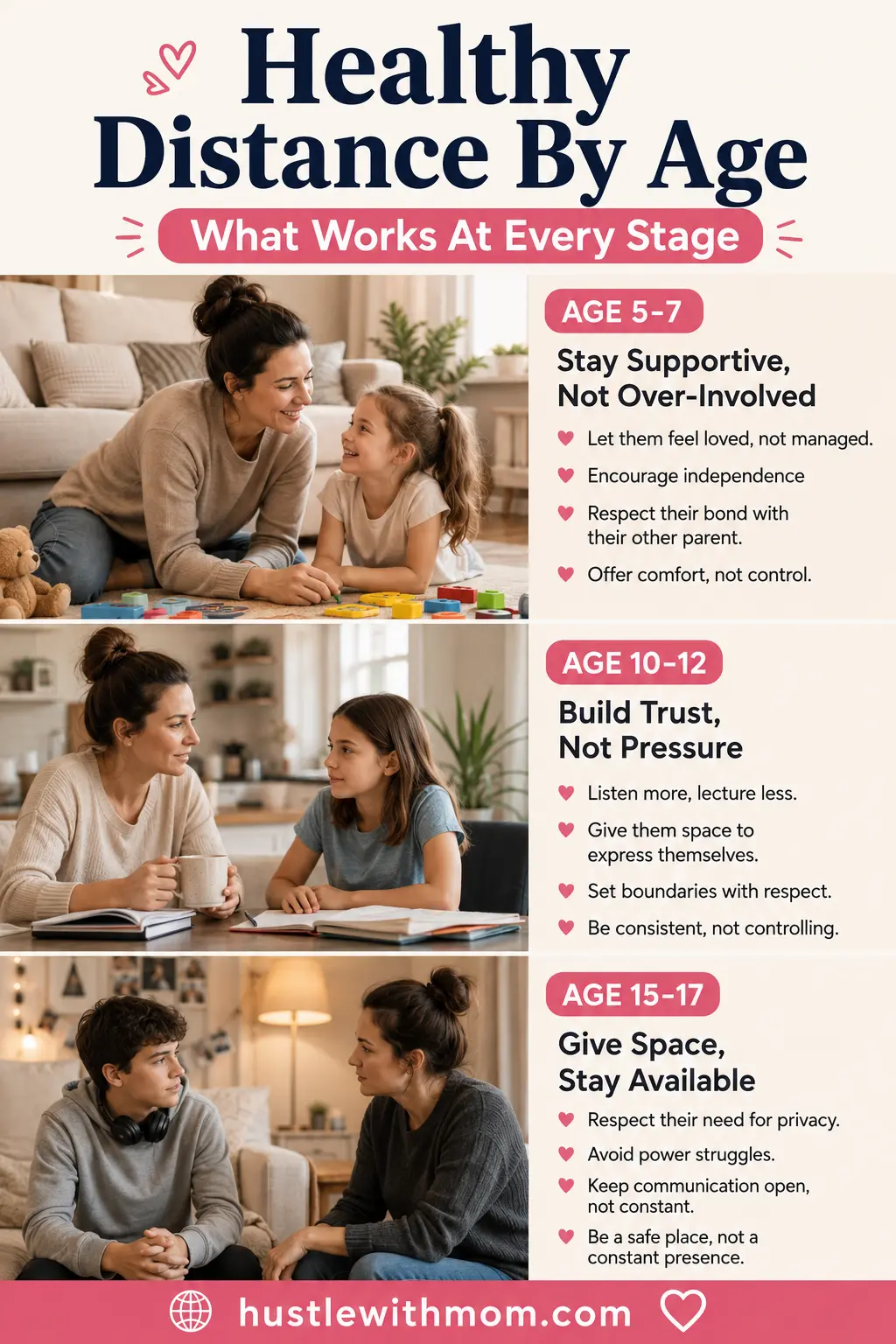
Young kids distancing mostly means letting the biological parent take the lead on discipline while you stay present for the fun, easy stuff.
Teenagers this is often about respecting their need for privacy and independence, not forcing closeness they’re not ready for. If you’re also navigating gentle parenting vs permissive parenting questions with your own kids at the same time, you already know teens need a different playbook than toddlers.
Adult stepchildren genuinely its own animal. The friction isn’t bedtime anymore, it’s politics, life choices, grandkids, holidays. Distance here often looks like lowering expectations for closeness rather than pulling back from actual tasks.
Scripts That Actually Helped Me
To my spouse: “I’m not trying to punish anyone. I just can’t be the enforcer anymore I need that to be your job.”
To my stepdaughter (she was 14): “I’m not going anywhere. I just want us to hang out because we want to, not because I’m nagging you about chores.”
What I avoided saying: anything that sounded like “your kids” as an accusation, or comparing them to my own child. That kind of language just puts everyone on the defensive.
The Downsides Nobody Warns You About

I tried a harder version of disengaging once barely speaking, skipping events and it backfired. My stepdaughter got confused and hurt, my husband felt caught in the middle, and honestly, I felt worse, not better. Going cold doesn’t solve resentment; it just buries it.
A licensed therapist would probably tell you the same thing: stepfamily dynamics research from experts like Dr. Patricia Papernow consistently shows that full withdrawal tends to create more conflict, not less kids notice inconsistency between parents fast, and it unsettles them. Full disengagement should be rare and temporary, not your default setting.
If your resentment is really about your spouse’s parenting choices or lack of support, it might be worth exploring whether there’s a bigger pattern at play. I’ve seen this come up a lot when I wrote about narcissistic husband signs, where one partner checks out of parenting entirely and leaves the other holding everything.
Common Mistakes I See (and Made Myself)
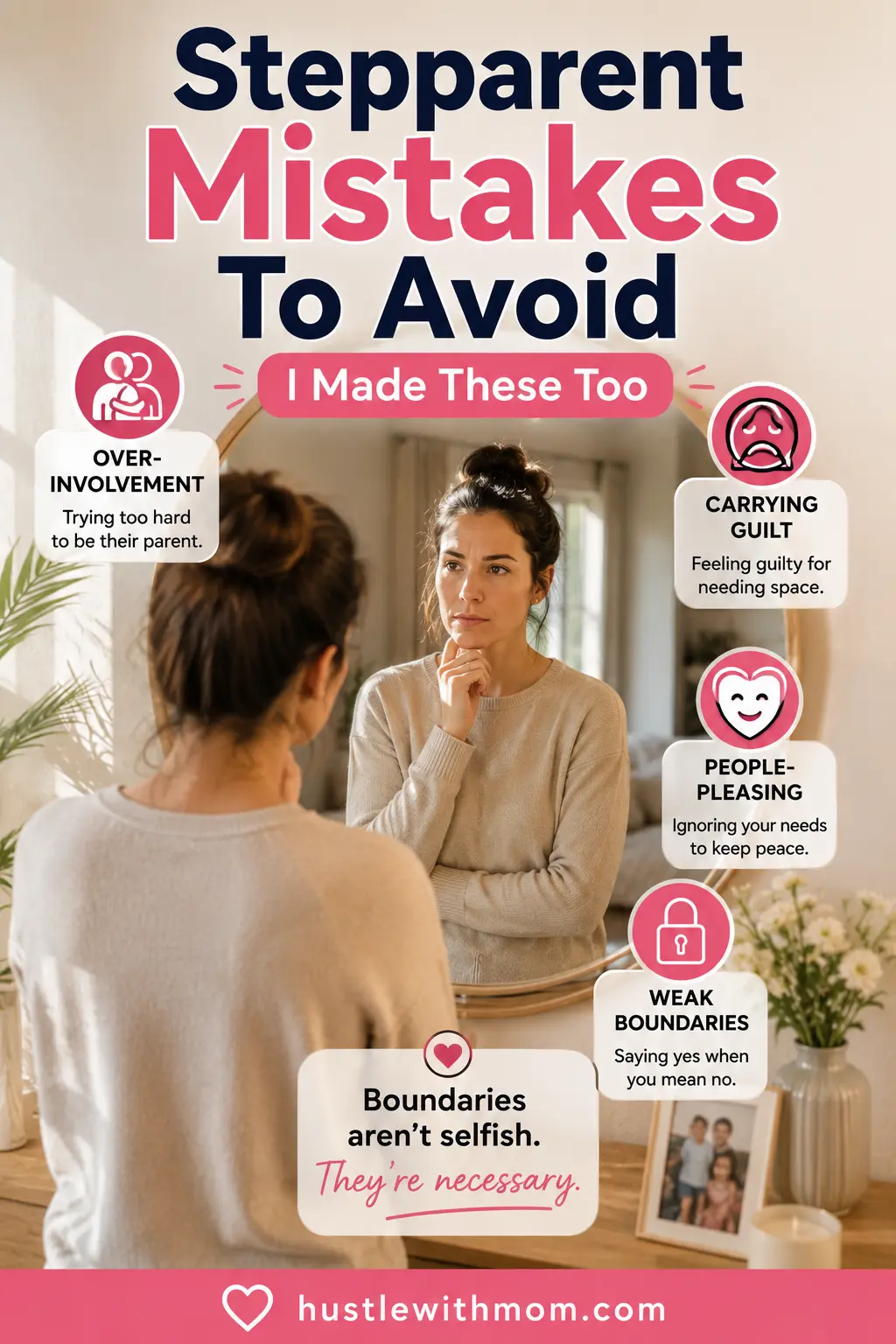
- Trying to be a second mom instead of just being yourself. Nobody asked you to replace anyone.
- Disengaging without telling your spouse. They just think you stopped caring.
- Making it permanent instead of checking in and adjusting.
- Skipping the self-care piece. You can’t pour from an empty cup therapy, journaling, or even just consistent alone time made a bigger difference for me than any parenting strategy.
- Not using outside support. A family communication or co-parenting app can genuinely take pressure off logistics arguments so you’re not the one nagging about schedules.
What Happens After
A year into pulling back the way I described, things actually got easier. Not because we became best friends overnight, but because the resentment drained out of the house. My stepdaughter and I talk more now than we did when I was trying so hard to parent her. Distance, done right, made room for an actual relationship instead of a forced one.
FAQ
Is it normal to want distance from your stepchildren? Yes. It’s one of the most common feelings stepparents report, especially in the first few years of a blended family.
What’s the difference between disengaging and giving up? Disengaging means stepping back from tasks that aren’t yours while staying kind and present. Giving up means emotional withdrawal, which tends to hurt everyone involved.
Can you rebuild closeness after distancing yourself? Often, yes many stepparents find the relationship improves once resentment and overfunctioning are removed from the equation.
Should I talk to a therapist about this? If the guilt or resentment feels heavy, a therapist who understands blended family dynamics can help you sort out what’s a boundary issue versus a marriage issue.
I’m not going to pretend this is a clean, easy process it’s messy, and it takes longer than you want it to. But if you’re standing in your own kitchen right now feeling like I did, know that stepping back a little doesn’t make you a bad stepparent. Sometimes it’s exactly what makes you a better one.