


I still remember the exact spot I was standing in when my daughter came home from a birthday party with a red mark on her arm and tears in her eyes. My stomach dropped before she even said a word. If you’re reading this, you probably know that feeling too, the one where your brain goes from zero to a hundred in about two seconds flat.
When someone hurts your child, every protective instinct you have kicks in at once. You want to fix it, yell at somebody, and hug your kid all in the same breath. I’ve been there more times than I’d like to admit, with my own kids and with my stepkids too, and blending those roles isn’t always simple, which is something I get into more in distancing yourself from your stepchildren. And over the years I’ve learned that the way you react in those first few minutes shapes how your child processes the whole thing.
This isn’t a clinical guide written by someone who’s only read about child safety in a textbook. This is what actually works when you’re standing in a parking lot with your heart pounding, trying to figure out what to say next.
The First 60 Seconds: What to Do the Moment You Find Out

Check your child first, not your anger
Before you say anything to anyone else, get down to your child’s level. Physically. Look at their face, check for any real injury, and ask them directly if they’re okay. Your child needs to see your eyes on them, not on the person who hurt them.
I know it’s tempting to spin around and confront whoever did it. I’ve done that. It backfires, because your kid ends up watching you lose it instead of feeling like you’re steady ground for them.
Regulate yourself before you respond
This is the hardest part, honestly. I use a trick that sounds too simple to work: I press my tongue to the roof of my mouth and count to five before I say a single word. It buys just enough time for the adrenaline to settle so I don’t say something I’ll regret.
If staying calm under pressure is something you struggle with in general, not just in crisis moments, it’s worth building daily habits around it. I wrote a whole piece on this, 15 ways to be a calm mom every single day, because honestly, the moms who handle these blowups the best are usually the ones who’ve practiced staying grounded long before the emergency happens. The American Academy of Pediatrics also has solid, doctor-reviewed guidance on managing your own stress response around kids, if you want a more clinical perspective alongside the mom-to-mom version.
What to actually say in that first minute
Keep it short. “I saw that. Are you okay?” or “That wasn’t okay, and I’m right here” works better than a flood of questions. Kids shut down when they’re bombarded, especially right after something upsetting happened.
Is It a Conflict, Bullying, or Abuse? A Quick Way to Tell the Difference
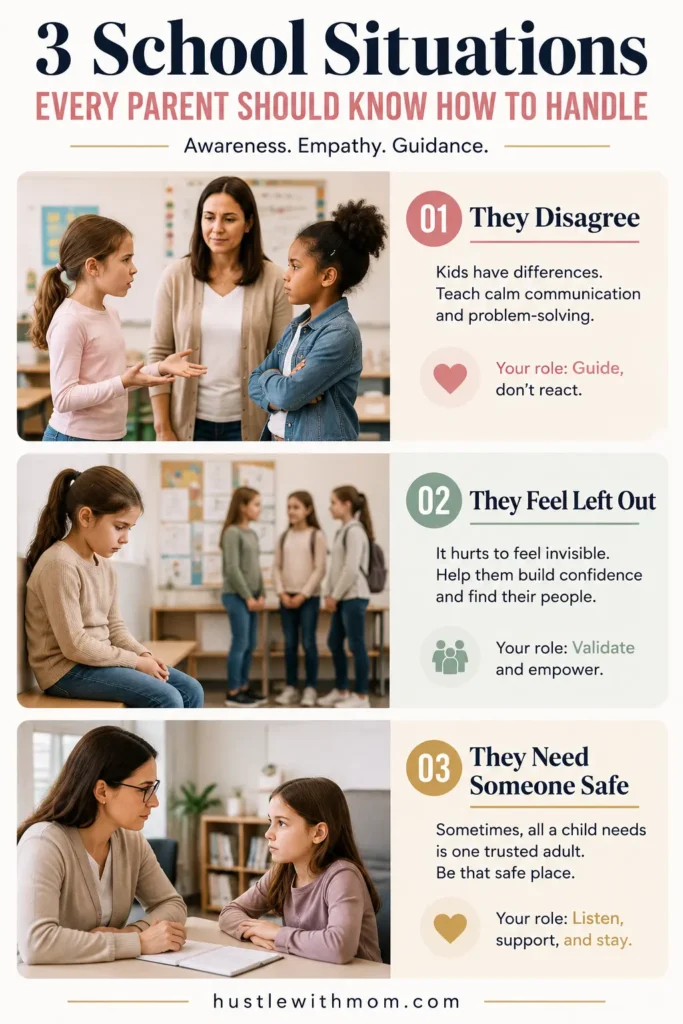
Not every incident is the same, and treating a one-time shove the same way you’d treat repeated cruelty does your child a disservice either way.
Normal conflict looks like two kids disagreeing over a toy or a game, usually resolved within minutes, and neither kid dreads seeing the other one again.
Bullying is when it’s repeated, targeted, and your child starts showing signs of dread, like not wanting to go to school or avoiding a specific person or place.
Abuse is when there’s intentional harm, a pattern of fear, secrecy, or physical injury that goes beyond typical kid roughhousing, especially involving an adult or a much older child. This is where things get serious fast, and sadly, cases like the heartbreaking Gabriel Fernandez tragic case show exactly why we can’t afford to dismiss red flags as “just discipline” or “boys being boys.”
If you’re unsure which category you’re dealing with, trust your gut. Parents almost always sense when something is off, even before they can name it.
When Someone Hurts Your Child: By Who Did the Hurting

If another child or playmate hurts your child
Most of the time this is developmentally normal. Young kids don’t have the impulse control adults do. Check for injuries, let both kids calm down, and if it seems like a one-off, help them repair the friendship rather than ending it over one bad afternoon.
If a sibling hurts your child
This one hits different because it’s happening under your own roof. Sibling aggression is often rooted in jealousy or feeling like they’re getting less attention. If your household discipline style feels inconsistent or overly harsh in response to sibling fights, it might help to compare approaches, like in my breakdown of gentle parenting vs permissive parenting, since the line between the two gets blurry fast when tempers flare.
If you’re navigating all of this solo, without a partner to tag in when you need a minute, the emotional load is heavier, and I’ve shared what’s helped me in proven solo parenting tips.
If a co-parent or ex-partner is involved
Sometimes the person hurting your child isn’t a random adult, it’s someone closer to home, like an ex who uses the kids as leverage or has narcissistic tendencies that show up in how they treat your child. If that sounds familiar, my article on co-parenting with a narcissist goes deep into protecting your kid while still navigating shared custody, and narcissistic husband signs can help you recognize patterns before they escalate further.
If an adult, teacher, or coach hurts your child
This is where documentation becomes your best friend. Write down dates, exact quotes from your child, and any visible marks or behavior changes. Depending on your state, the legal definitions of discipline versus abuse vary quite a bit, so if you’re in Indiana, my guide on Indiana parenting guidelines explained breaks down what actually counts as reportable versus what falls into a gray area.
If it happens online
Cyberbullying is its own beast because it follows your kid home, into their bedroom, onto their phone at 11pm. Screenshot everything immediately before it can be deleted, report it on the platform, and loop in the school if another student is involved. The federal site StopBullying.gov has a solid, step-by-step breakdown of how to report cyberbullying on specific platforms if you need the official process.
How to Talk to Your Child After They’ve Been Hurt
Words that validate without alarming
Say things like “That must have felt scary” or “You didn’t do anything wrong.” Avoid dramatic reactions that make your child think the situation is bigger or more dangerous than they already feel it is. If you want a whole framework of calm, respectful scripts for moments like this, my breakdown of love and logic parenting has been one of the most useful things I’ve applied at home.
What not to say
Skip phrases like “you poor thing” or “I can’t believe they did that to you,” delivered with a gasp. It sounds supportive, but it can actually plant the idea that they’re a victim who needs rescuing, rather than someone capable of moving through this.
Helping them feel safe again
Routine helps here more than big conversations do. Keep bedtime, meals, and normal activities consistent. Kids find security in predictability, not in extra attention that signals “something is very wrong now.”
Talking to the Other Parent, Teacher, or School

Approach the other parent calmly and factually, not with accusations right out of the gate. Something like “Hey, the kids had a rough moment today, can we talk through what happened?” tends to get further than showing up furious.
If it escalates to needing the school involved, request a meeting with documentation in hand. Keep a paper trail of every email and conversation. If custody or co-parenting communication is part of the picture, using a structured app instead of texting back and forth can save you a ton of stress, and I’ve listed several worth trying in my roundup of free co-parenting apps.
If you feel completely out of your depth handling the back and forth with another adult, a session or two with a professional isn’t a failure on your part. My piece on parenting strategies coaching covers what that actually looks like and when it’s worth the cost.
When to Involve Professionals or Authorities
If your child starts having nightmares, regressing (bedwetting, clinginess, sudden fear of places they used to love), or talks about the incident obsessively weeks later, a child therapist can help them process it in ways you and I simply aren’t trained to do. The Child Mind Institute has an excellent, parent-friendly breakdown of trauma signs to watch for by age group if you want a second opinion before booking anyone.
On the legal side, questions like whether physical discipline crosses into something reportable come up more than people admit. If you’ve ever wondered about the boundaries around this, I wrote about it directly in can my mom go to jail for hitting me, which walks through how these situations are typically evaluated. This is general information, not legal advice, so when in doubt, a family law attorney, or the Childhelp National Child Abuse Hotline, can give you specifics and immediate support for your situation.
Helping Your Child Heal Long-Term

Healing isn’t a straight line. Some kids bounce back in days, others carry it quietly for months. Watch for delayed reactions rather than assuming “no news is good news” just because they stopped talking about it.
Unresolved childhood hurt doesn’t just disappear either. It can show up later as trust issues or patterns that follow kids into adulthood, which is part of why I’ve written about things like mommy issues and how early experiences shape adult relationships. If you’re raising a son who’s been through something hard, mommy issues in men is worth a read too, since boys often process and mask this kind of hurt differently than girls do. Catching it early with your own child now can prevent a lot of that down the road.
Rebuilding confidence often looks like small wins, letting them make choices again, praising bravery when they go back to a place that scared them, and reminding them often that your home is the one constant that never wavers.
Common Mistakes Parents Make (I’ve Made a Few of These Myself)

- Reacting louder than the situation calls for, which teaches kids the world is scarier than it is
- Forcing an apology or a hug before either kid is emotionally ready
- Ignoring repeated incidents because “kids will be kids”
- Not writing anything down until it’s too late to remember exact details
- Avoiding the conversation altogether because it feels awkward
Conclusion
Here’s what I’ve come to believe after going through this more times than I ever expected to: your calm is the thing your child remembers, not your anger. When someone hurts your child, they’re not looking for a superhero who fixes everything instantly. They’re looking for you to be the steady person who makes them feel safe again.
You’re going to get some of this wrong sometimes. I have. What matters is showing up, staying present, and letting your child know that no matter who hurt them or how, you’re the person in their corner who isn’t going anywhere.