

You just had a baby. You’re running on little sleep, surviving on snacks, and somehow still trying to take care of everyone else. The last thing on your mind is your teeth.
But then one morning, you notice your gums are bleeding when you brush. Or maybe a tooth that never bothered you before suddenly feels sensitive to cold drinks. Or your dentist finds three new cavities at your first checkup since giving birth.
Sound familiar?
Postpartum dental problems are incredibly common, and yet most new moms are never warned about them. Nobody at your OB appointment tells you that having a baby can affect your teeth. Nobody hands you a pamphlet about postpartum gum disease or tooth decay after pregnancy.
This guide covers everything you need to know why these problems happen, what to look out for, and what you can actually do about them when you’re already exhausted and stretched thin.
Why Pregnancy and Birth Affect Your Teeth
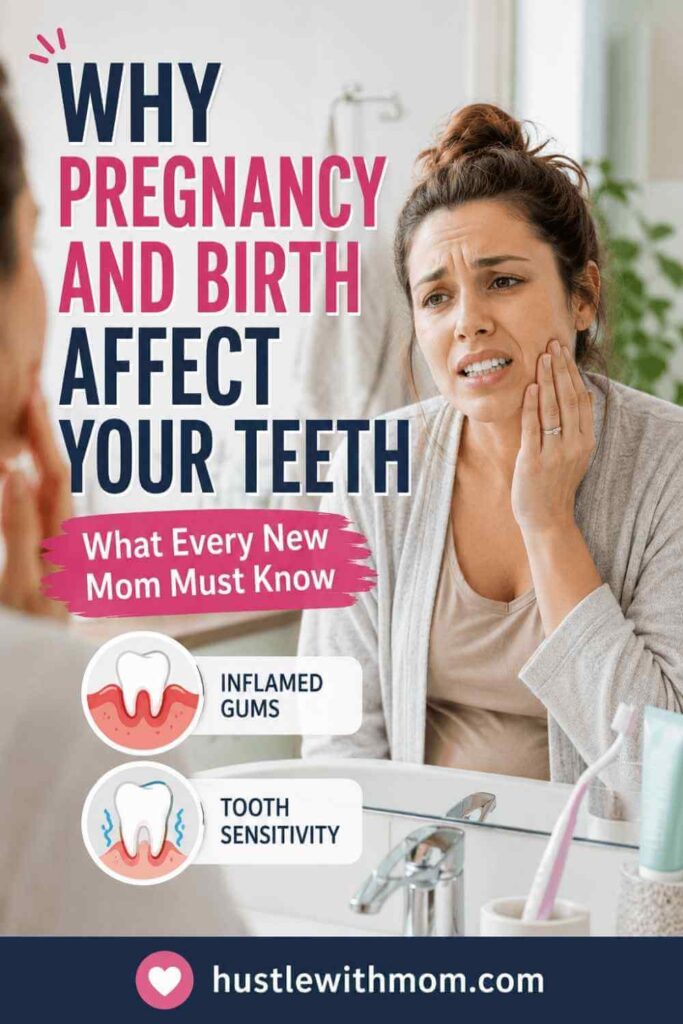
Your body goes through massive changes during pregnancy and after delivery. Hormonal changes during and after pregnancy affect almost every part of your body including your mouth.
During pregnancy, levels of estrogen and progesterone rise significantly. These hormones don’t just affect your mood or your belly. They change how your gums respond to bacteria. Your gums become more sensitive, more prone to swelling, and easier to irritate.
Elevated levels of progesterone and estrogen can contribute to a range of oral health issues, and nearly 60–75% of pregnant women experience gingivitis marked by swollen, tender gums prone to bleeding.
Then, after delivery, those hormone levels drop sharply. That drop creates its own set of problems including increased risk of gum recession, bleeding gums, and tooth sensitivity after childbirth.
The rapid drop in hormone levels after childbirth increases the risk of gum recession and bleeding, and many mothers report experiencing postpartum tooth sensitivity due to enamel weakening, hormonal shifts, and reduced saliva levels.
Add sleep deprivation, diet changes, and the sheer chaos of new parenthood and you have a perfect storm for oral health problems after having a baby.
Most Common Postpartum Dental Problems
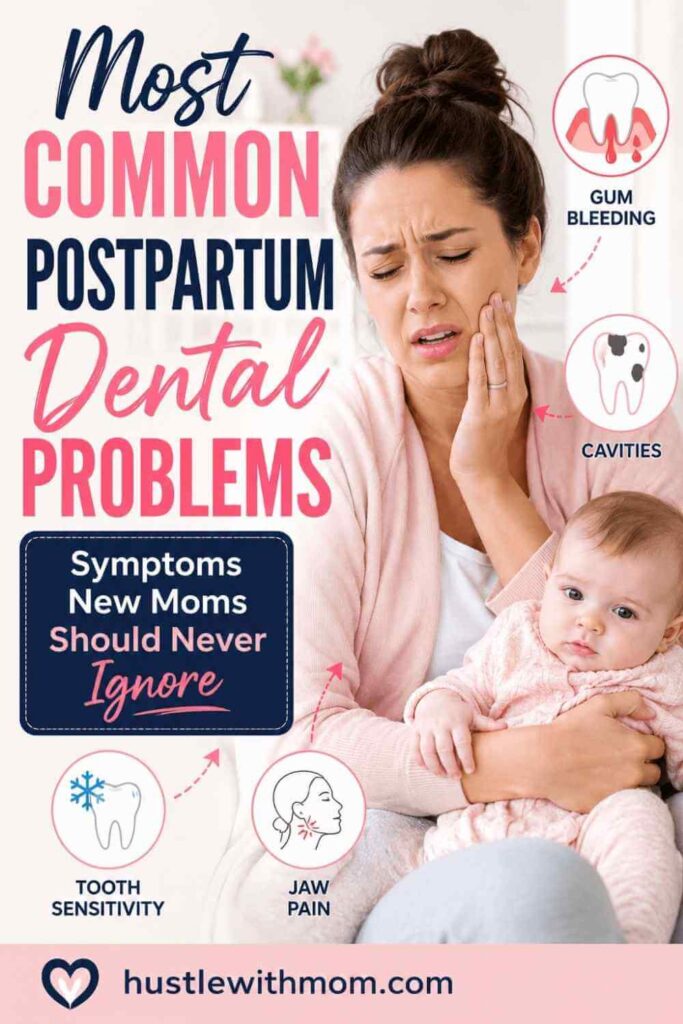
1. Bleeding or Swollen Gums (Postpartum Gingivitis)
This is the most common complaint new moms have about their teeth. You spit out blood when brushing. Your gums look puffy. They feel tender to the touch.
Gingivitis or bleeding tender gums is the most common dental problem, affecting about 60–75% of pregnant women, and postpartum women may continue to encounter dental health issues due to hormonal changes during or after pregnancy.
If left untreated, postpartum gingivitis can turn into periodontal disease a more serious infection that affects the bone and tissue holding your teeth in place. That’s when things get expensive and painful.
What to do: Brush twice a day with a soft-bristle toothbrush. Floss gently every day. Rinse with an alcohol-free fluoride mouthwash. And book a dental checkup as soon as you can.
2. Tooth Decay and Cavities After Pregnancy
If you got postpartum cavities and felt blindsided, you’re not alone. Your routine may look the same, but your mouth can change fast after birth, especially when sleep, snacking, and hormones collide.
Here’s what’s actually happening: During and after pregnancy, dry mouth becomes more common. Saliva is your mouth’s natural defense it neutralizes acid and washes away bacteria. When you have less saliva, cavity-causing bacteria thrive.
Changes in diet and dental hygiene habits, often due to the demands of caring for a newborn, can increase the risk of tooth decay and postpartum gum problems.
On top of that, late-night snacking, sugary cravings, and not brushing before bed because you’re just too tired all of these add up fast.
What to do: Brush with fluoride toothpaste every night before bed, no exceptions. Keep water at your bedside. Try sugar-free gum with xylitol it stimulates saliva and fights cavity-causing bacteria.
3. Tooth Sensitivity After Birth
Hot coffee burns. Cold water stings. Biting into something sweet sends a sharp jolt through your tooth. Postpartum tooth sensitivity is real and it’s frustrating.
Many new mothers experience postpartum teeth sensitivity, a common issue caused by hormonal changes, enamel weakening, and calcium loss after childbirth.
The primary cause is that during pregnancy, the mother’s body becomes highly sensitive and prone to deficiencies in trace elements, especially calcium, which can lead to tooth sensitivity. Additionally, if the dentin is exposed, the teeth may come into direct contact with hard, hot, or acidic foods.
What to do: Switch to a sensitivity toothpaste that contains potassium nitrate or stannous fluoride. Avoid extremely hot, cold, or acidic foods until the sensitivity eases. And get your calcium intake checked more on that below.
4. Dry Mouth During Breastfeeding
If you’re breastfeeding, you’re losing a significant amount of fluid every day. That dehydration affects your whole body including your mouth.
Breastfeeding moms can easily become dehydrated because the production of milk requires a lot of water. A dry mouth can cause many dental problems a mouth without enough saliva has a higher risk for mouth sores and ulcers, gum disease, and cavities.
What to do: Keep a large water bottle nearby during every feeding session. Aim for at least 8–10 glasses of water per day, and more if you’re exclusively breastfeeding. Staying hydrated is one of the simplest things you can do for your postpartum oral health.
5. Teeth Grinding (Bruxism) After Delivery
New motherhood is stressful. Like, really stressful. And stress often shows up at night in the form of clenching or grinding your teeth while you sleep.
The stress of being a new mother and changes in sleep patterns make teeth clenching and grinding more likely. Many patients develop headaches, teeth sensitivity, and popping sounds in the jaw joints during periods of stress.
Women who breastfeed are more likely to grind their teeth as they often have more neck and shoulder tension during feedings. Tooth sensitivity, fractures, jaw pain, and wear on the teeth can occur due to tooth grinding or clenching.
What to do: Ask your dentist about a custom night guard. It won’t fix the stress, but it will protect your teeth from the damage that grinding causes over time.
6. Gum Recession After Childbirth
Some moms notice that their gums seem to have pulled back from their teeth making teeth look longer or exposing the roots. This is called gum recession, and it can make teeth feel very sensitive.
Hormonal fluctuations after delivery, combined with aggressive brushing or untreated gingivitis, can all lead to receding gums postpartum.
What to do: Switch to a soft-bristle toothbrush and brush gently in circular motions not back and forth. Tell your dentist about any changes you’ve noticed. In some cases, a deep cleaning (scaling and root planing) may be recommended.
The Calcium and Tooth Myth Let’s Clear It Up
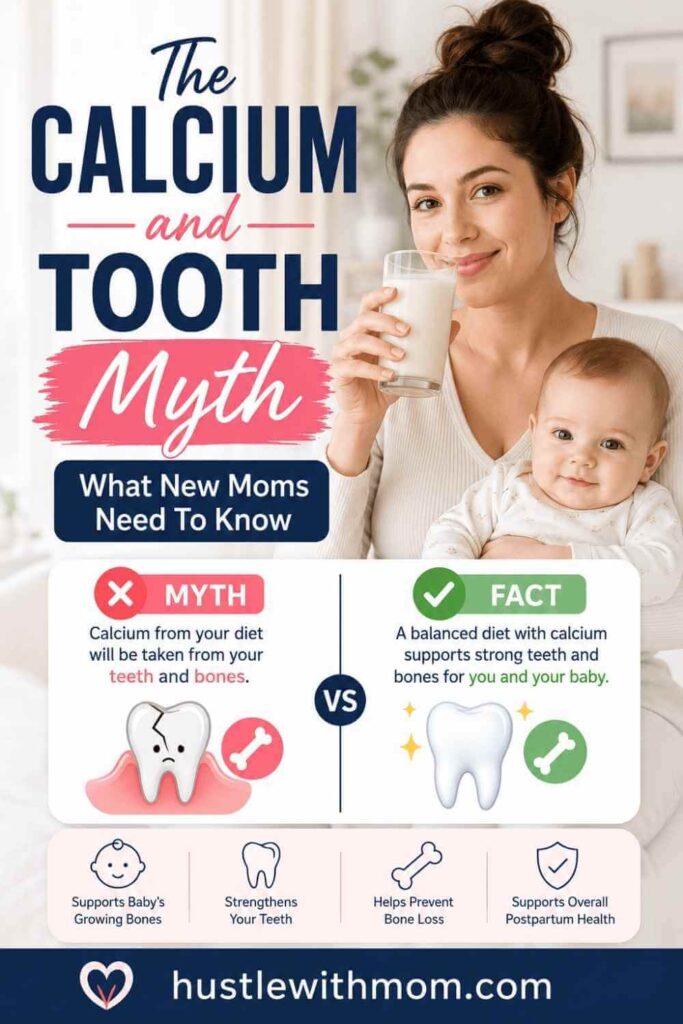
You’ve probably heard someone say “every baby costs a tooth.” The idea is that the baby takes calcium from your teeth, leaving them weak and prone to decay.
This is a common myth. Calcium is not taken from your teeth during pregnancy or breastfeeding. What can happen is that hormone changes and dry mouth make teeth feel more sensitive postpartum, which is why cavities sometimes appear during this time.
That said, calcium deficiency is still a real concern for new moms. If you’re not getting enough calcium in your diet, your body pulls it from your bones not your teeth. And weak bones in your jaw can indirectly affect your dental health after pregnancy.
During pregnancy and breastfeeding, you will need to increase the amount of calcium you eat or drink to protect your bones and meet the needs of your developing baby.
Good calcium sources include dairy products, leafy greens, almonds, tofu, and fortified plant-based milks. If your diet is limited right now, talk to your doctor about a postpartum calcium supplement.
How Morning Sickness and Acid Reflux Damage Your Teeth
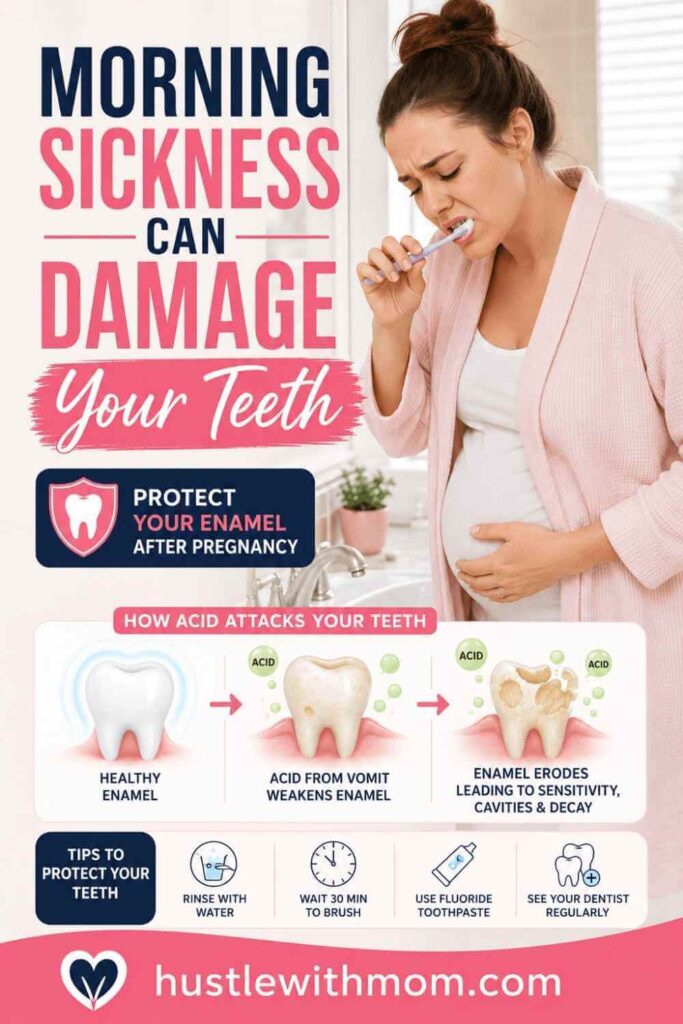
Even if you’re now postpartum, some women experience acid reflux that continues after delivery. And if you had frequent vomiting during pregnancy, your tooth enamel may have already taken a hit.
Stomach acid is corrosive. When it repeatedly contacts your teeth through vomiting or acid reflux it breaks down enamel, the hard outer layer that protects each tooth. Once enamel is gone, it doesn’t grow back.
What to do: Never brush your teeth immediately after vomiting or acid reflux. The acid softens enamel temporarily, and brushing can scrape it away.
Instead, rinse your mouth with a mixture of water and baking soda (about one teaspoon per cup of water). This neutralizes the acid. Wait at least 30–60 minutes before brushing.
Is It Safe to Go to the Dentist While Breastfeeding?
Yes. Absolutely yes.
Many new moms delay dental care because they’re worried about how it might affect their baby. But dental treatment is safe while breastfeeding.
Dental treatments like fillings are safe with local anesthesia; always consult a dentist before taking any medication.
Routine procedures like cleanings, fillings, and X-rays are all considered safe during the postpartum period. The amount of anesthesia or fluoride that would pass into breast milk is extremely small and not considered harmful.
Tell your dentist you’re breastfeeding so they can choose the safest options. And if you’re prescribed a medication after a procedure, ask specifically whether it’s safe for nursing moms.
The bigger risk? Not going at all. According to the Maternal and Child Health Journal, postpartum dentist visits are often not promoted as part of postpartum care, so many parents never receive the necessary information.
When to See a Dentist (Don’t Wait Too Long)
Some new moms wait until something really hurts before calling the dentist. But many postpartum dental problems don’t hurt in the early stages.
Early postpartum cavities and gum inflammation often cause no pain at all. Early changes often develop without discomfort, which is why gentle daily care catches them early. A full dental exam within the first three to six months postpartum is a great way to support your oral health and catch small concerns early.
Go to the dentist sooner if you notice:
- Gums that bleed every time you brush or floss
- A tooth that suddenly becomes sensitive to temperature
- Visible pits, dark spots, or holes in a tooth
- Swelling or pain in your jaw or gums
- A bad taste or smell in your mouth that doesn’t go away
- Loose teeth or teeth that feel different when you bite
Practical Tips to Protect Your Teeth Postpartum
You don’t need a complicated 10-step routine. Here’s what actually matters:
Brush twice a day especially at night. This is the single most effective thing you can do. Night brushing is more important than morning brushing because bacteria are most active while you sleep.
Use fluoride toothpaste. Fluoride strengthens tooth enamel and helps prevent cavities. Make sure it’s in your toothpaste.
Floss daily. It takes 60 seconds. Gum disease starts in the spaces between teeth that your toothbrush can’t reach.
Drink more water. Especially if you’re breastfeeding. Water washes away food particles, stimulates saliva production, and keeps your mouth from getting too acidic.
Eat calcium-rich foods. Milk, cheese, yogurt, leafy greens, and almonds all support bone and tooth health after pregnancy.
Limit sugar and acid. Sugary snacks and drinks feed the bacteria that cause cavities. Try to eat them less often, and always rinse with water afterward if you can’t brush.
Use a soft-bristle toothbrush. Hard bristles can damage already-sensitive postpartum gums. Soft is always better.
Try a water flosser (Waterpik). If regular flossing feels like too much right now, a water flosser is a great alternative. It’s gentle on gums and reaches areas that floss misses.
Ask about a night guard. If you suspect you’re grinding your teeth, mention it at your next dental appointment. A custom guard can prevent serious damage.
How Your Dental Health Affects Your Baby
Here’s something most moms don’t know: your oral health can actually impact your baby’s dental health too.
Babies often acquire oral bacteria through everyday contact with their caregivers. When your gums and teeth are healthy, you lower the amount of cavity-causing bacteria your baby is exposed to, which can support their oral health as they grow.
The bacteria that cause cavities primarily Streptococcus mutans can be passed from parent to baby through shared utensils, kissing, or even blowing on food before feeding. This is called vertical transmission.
Taking care of your teeth now isn’t just self-care. It’s genuinely good for your child.
A Note on Postpartum Mental Health and Dental Care
This might seem like an odd topic to bring up in an article about teeth, but it matters.
Postpartum depression and anxiety are real, and they affect millions of new mothers. When you’re struggling emotionally, self-care routines including brushing and flossing are often the first things to slip.
If you’re finding it hard to take care of yourself right now, that’s okay. You’re not failing. But try to anchor dental hygiene to something you already do. Brush when you feed the baby at night. Keep your toothbrush on the kitchen counter if that’s where you spend most of your time. Make it easy, not perfect.
You deserve to take care of yourself too.
Postpartum Dental Care Checklist
Here’s a simple checklist to help you stay on track:
- ✅ Book a dental checkup within the first 3–6 months after delivery
- ✅ Brush teeth twice daily with fluoride toothpaste
- ✅ Floss or use a water flosser daily
- ✅ Rinse with an alcohol-free fluoride mouthwash
- ✅ Drink at least 8–10 glasses of water per day
- ✅ Eat calcium-rich foods daily
- ✅ Avoid brushing right after vomiting. Rinse with baking soda water first
- ✅ Tell your dentist you are breastfeeding before any treatment
- ✅ Ask about a night guard if you grind your teeth
- ✅ Avoid smoking, as it significantly worsens gum disease
Final Thoughts
Postpartum dental problems are common, real, and very treatable but only if you pay attention to them. The good news is that most of what happens to your teeth after having a baby is completely preventable with a little consistency.
You don’t need to overhaul your life. You just need to brush, drink water, eat well, and book that dental appointment you’ve been putting off.
Your teeth matter. And so do you.
Related reads you might find helpful:
- How to Be a Better Mom Without Burning Out
- Second Trimester Fatigue: What’s Normal and What Isn’t
- Proven Meal Plan for Busy Moms
External resources: