

Types of Parenting Style: The 4 Main Styles, Real Examples, and Which One Works Best
Every parent has a style, even without knowing it. You may set firm bedtimes with warm hugs. You may let your child choose almost everything. Both choices come from love and good intentions. Still, each choice shapes your child in a different way. That mix of warmth and rules is your parenting style. Most parents never stop to name it. Naming it helps you parent with purpose instead of habit. Your style also shapes how your child handles feelings and rules.
This guide explains the 4 main types of parenting style in plain words. You will meet each style through real examples from daily life. You will also see what research links to each style. Finally, you will learn small steps to shift toward warmth with limits. No style here is labeled good or bad in a simple way. Every style brings strengths to family life. Every style also carries real costs for children. The goal is awareness, not guilt. Real examples make each style easy to spot in your own home.
What Is a Parenting Style?
A parenting style is your usual pattern of warmth and control. It shows in how you set rules and respond to feelings. One tired evening does not define your style. Your style is what you do most days, most of the time. Think of it like a habit, not a single choice. Habits can change once you notice them clearly. That is why naming your style matters so much. Your words, tone, and follow-through all count here.
Researchers describe parenting style with two simple dimensions. The first is demandingness, which means rules, limits, and expectations. The second is responsiveness, which means warmth, listening, and support. High control with low warmth looks very different from high control with high warmth. The four styles below come from mixing these two dimensions. Psychologist Diana Baumrind first described three of them in the 1960s. Later, Eleanor Maccoby and John Martin added the fourth style. The StatPearls guide to parenting styles explains each type in clinical detail. Warmth without limits feels kind at first. It still leaves children unsure of the rules.
The 4 Types of Parenting Style at a Glance
The four main types are authoritative, authoritarian, permissive, and uninvolved. Each one mixes warmth and control in a different way. Authoritative parents are warm and firm at the same time. Authoritarian parents are firm with little warmth. Permissive parents are warm with few rules. Uninvolved parents offer little warmth and few rules. The table below gives you a quick snapshot of all four. Keep this snapshot in mind while you read the details.
Use the table as a map, not a verdict on your family. Most parents recognize a bit of themselves in more than one row. That is normal, because real life rarely fits one neat box. Outcomes in research are averages across many families. They describe patterns, not a fixed fate for any child. Culture also shapes how warmth and control look at home. Keep that in mind as you read each style below. Your family history may also pull you toward one style.
| Style | Warmth | Control | What it looks like | What research links it to |
|---|---|---|---|---|
| Authoritative | High | High | Clear rules explained with reasons, discipline teaches | Confidence, self-regulation, better school results |
| Authoritarian | Low | High | Strict non-negotiable rules, one-way talk, punishment | Lower self-esteem, anxiety, trouble deciding alone |
| Permissive | High | Low | Few rules, friend-like bond, child leads often | Creativity, confidence, weak self-control, more behavior problems |
| Uninvolved | Low | Low | Basic needs met, little attention or guidance | Weakest outcomes, struggles with school and feelings |
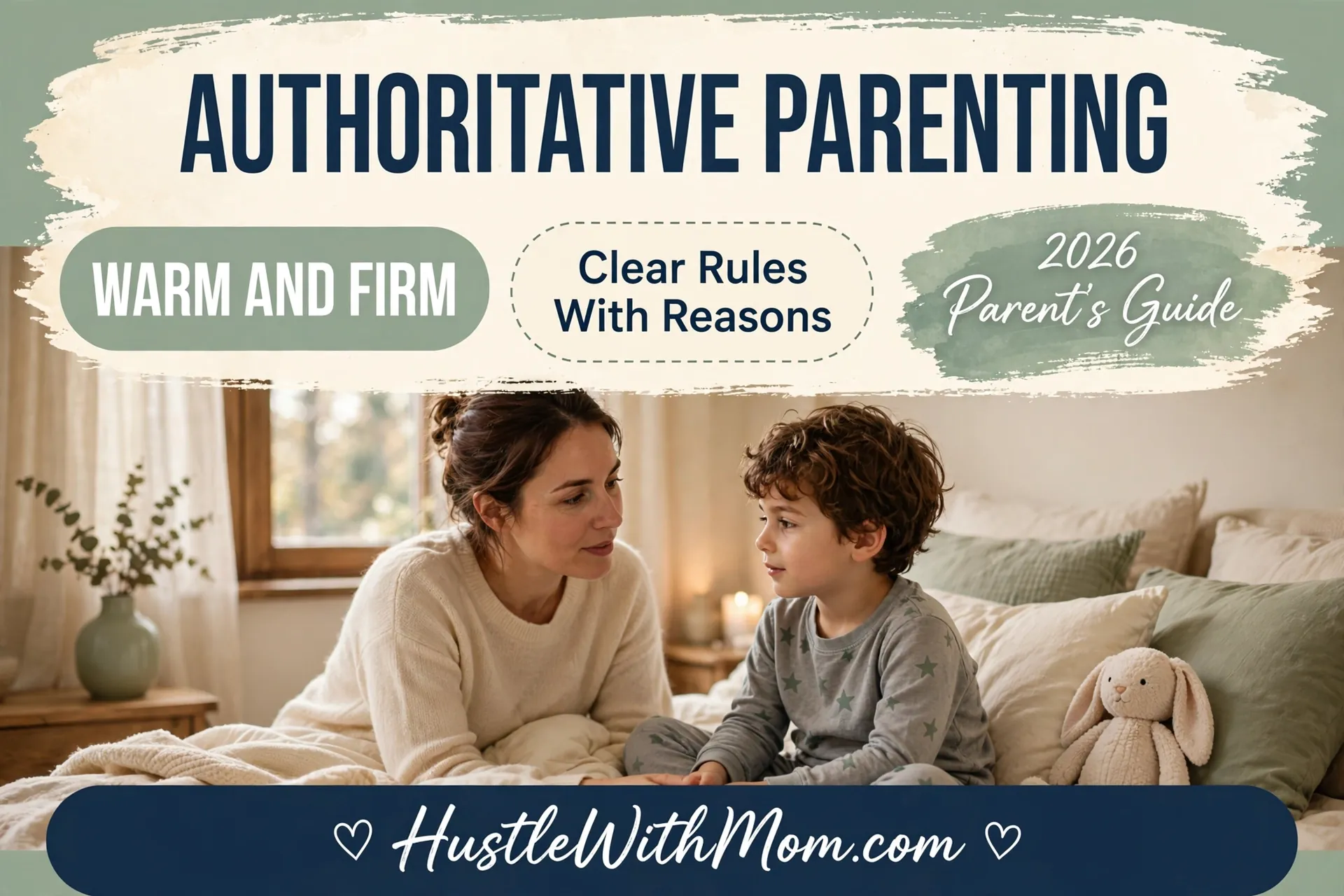
Authoritative Parenting
Authoritative parenting pairs high warmth with high control. Rules stay clear in an authoritative home. Children hear the reasons behind each rule. Here is an example of authoritative parenting at bedtime. Bedtime is 8 o’clock every school night. Your child knows the reason for the rule. You listen to your child’s protests first. Then you hold the limit with calm kindness. Discipline works as teaching, not as punishment. Examples of authoritative parenting often look just like this. Homework shows the same pattern in a clear way.
Research links this style to the healthiest outcomes overall. Children often grow more confident, responsible, and self-controlled. They tend to do better at school and with friends. They also learn to manage big feelings without falling apart. Warmth gives your child a safe base. Limits give your child clear structure. Together, that mix builds trust between parent and child. It takes more time and patience than barking orders. Our guide to baby clingy to mom shows how closeness builds trust. These children often bounce back faster after setbacks.
Authoritarian Parenting
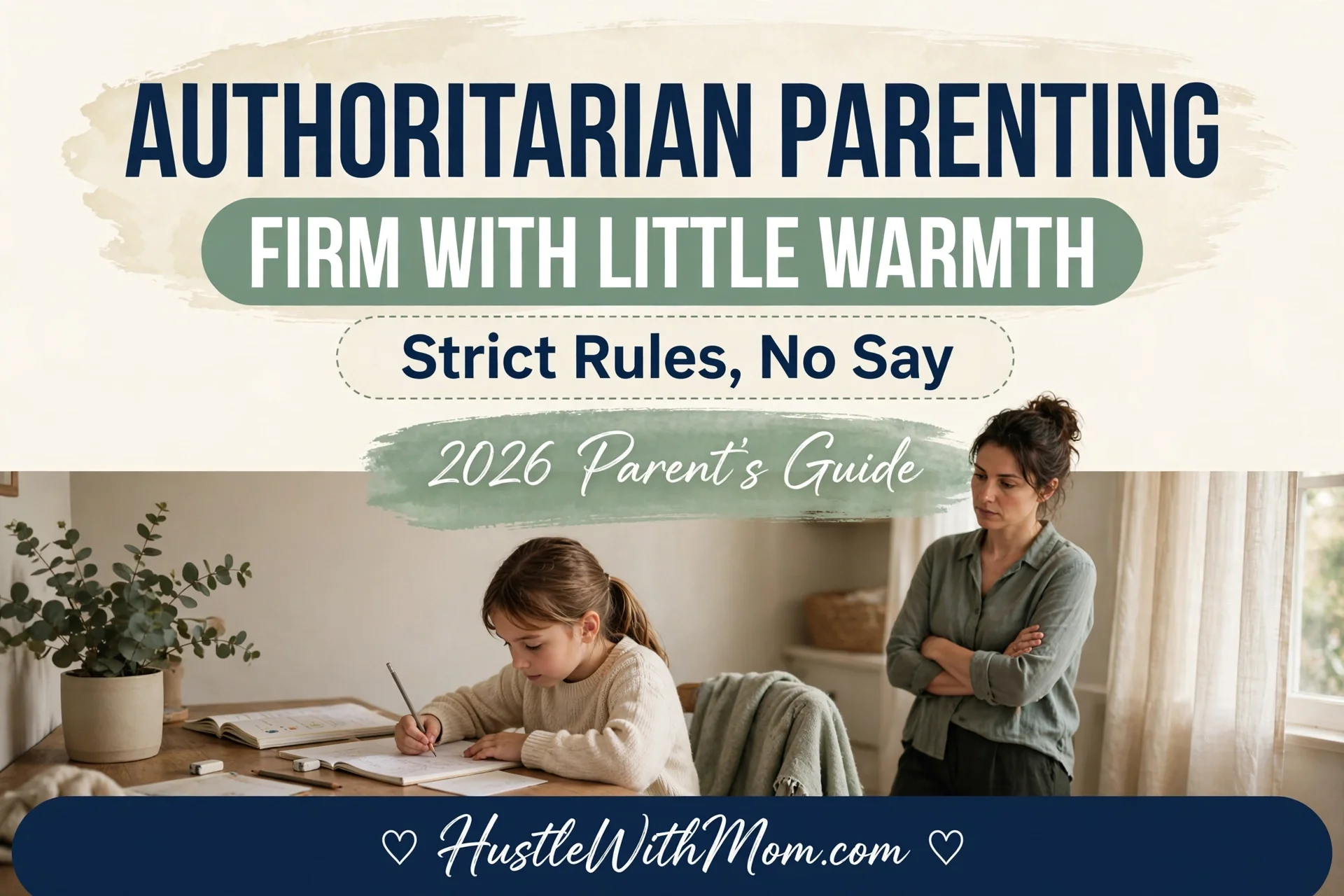
Authoritarian parenting pairs high control with low warmth. Rules stay strict in an authoritarian home. Children get almost no say in the rules. Talk flows one way, from parent down to child. Questions get shut down fast with a short reply. Picture homework time in this kind of home. Your child asks why the rule exists. Your child hears only one reply: because I said so. Punishment follows fast when a rule breaks. Meals can feel tense in the same way.
Research links this style to lower self-esteem in children. Children may feel more anxious and less sure of themselves. They often struggle to make choices on their own. Some grow quiet and obedient, while others rebel hard. Aggression can also show up more in these children. Many still do well at school. They may still feel unhappy inside. Obedience bought with fear rarely builds real confidence. They may also find it hard to trust their own judgment.
Permissive Parenting
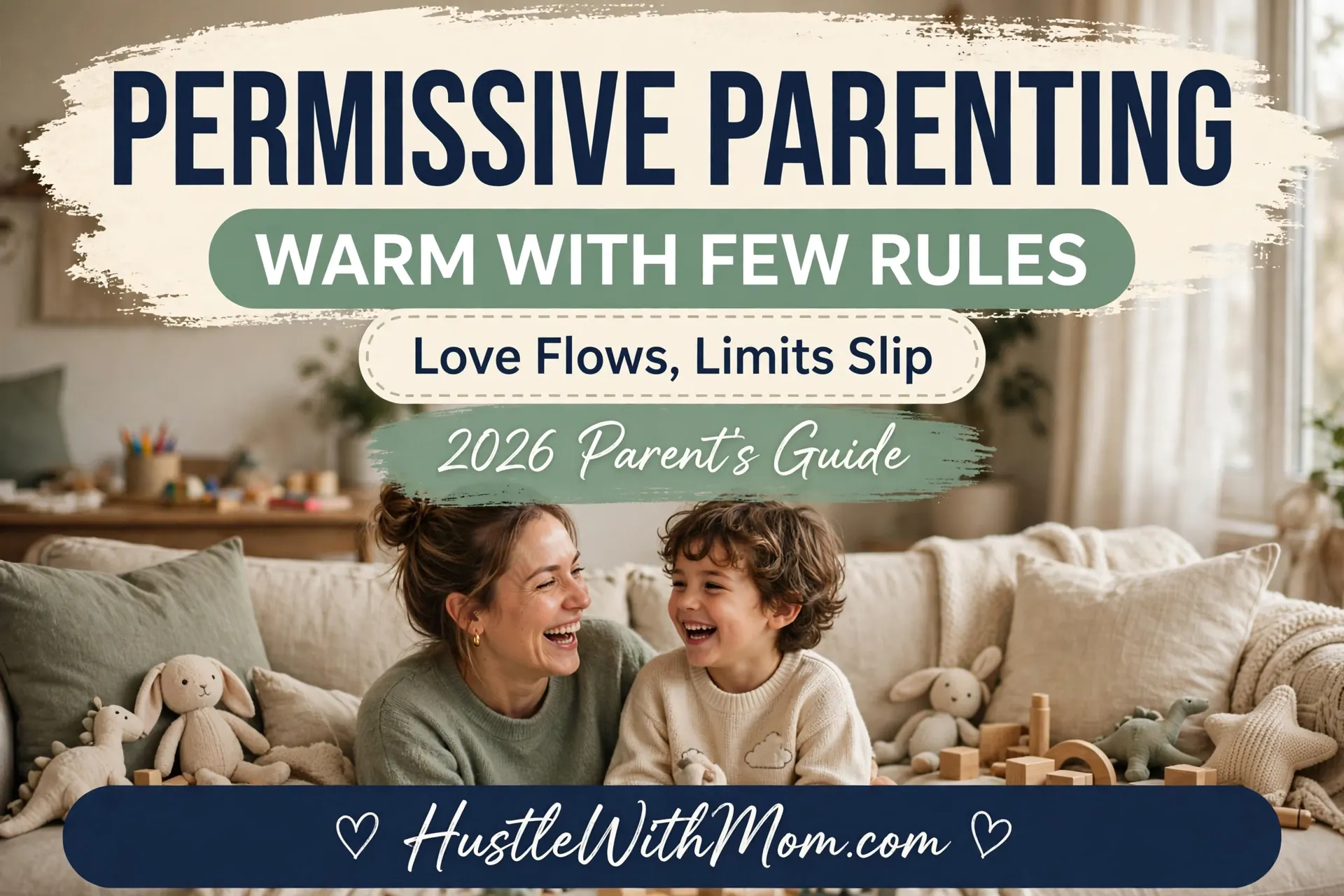
Permissive parenting pairs high warmth with low control. Love flows freely, while rules stay soft or missing. Parents act more like friends than guides. Picture bedtime in a permissive home. Your child asks for one more show and one more snack. Bedtime drifts later each night with no pushback. In authoritative vs permissive parenting, this is the key split. One style holds limits with warmth. The other style drops those limits. Screen time often runs long in these homes.
Research links this style to creativity and strong confidence. Children often feel loved, free, and full of ideas. They also show weaker self-control than their peers. Behavior problems show up more often without clear limits. School can suffer when routines and rules feel optional. In permissive parenting vs authoritative parenting, limits make the difference. Warmth alone cannot teach a child to wait or share. Routines like homework and chores often slip away.
Uninvolved Parenting
Uninvolved parenting pairs low warmth with low control. Basic needs like food and shelter get met. Little else follows in the daily routine. Parents may be present in body and absent in attention. This style often grows from stress, not from cold hearts. Exhaustion, depression, money worries, or single parenting can drain a parent. A parent running on empty has little left to give. That truth deserves kindness, not judgment. Work hours, illness, or grief can also pull parents away.
Research links this style to the weakest outcomes of all four. Children may struggle at school and with friends. They often find feelings hard to name and manage. They may also seek attention in risky ways. The good news is that small steps can change this pattern. A daily check-in, a shared meal, or a bedtime chat can help. Support for the parent matters just as much as rules for the child. Even one steady adult can change a child’s path.
Gentle Parenting: Where Does It Fit?
Gentle parenting is a modern approach built on respect and empathy. It keeps firm limits while dropping shame, fear, and punishment. That mix sounds a lot like authoritative parenting. In gentle parenting vs authoritative parenting, the overlap is large. Both styles value warmth, clear limits, and honest talk. Gentle parenting leans harder on empathy and repair after conflict. Authoritative parenting leans a bit more on structure and routine. Both styles ask parents to stay calm under pressure.
So is gentle parenting authoritative parenting? The short answer is no, though they share a lot. Authoritative parenting is a research label from the 1960s. In gentle vs authoritative parenting, the daily habits look close. In authoritative parenting vs gentle parenting, the language differs most. Gentle parenting vs authoritarian parenting shows a much wider gap. One approach leads with empathy and repair. The other approach leads with fear and control. Our guide to gentle parenting vs permissive parenting compares two close cousins. Choose the label that helps you, not the one that sounds best.

Which Parenting Style Is Best?
Research gives the clearest answer to this question. Authoritative parenting has the strongest support of all four styles. Children raised this way often show the best balance of confidence and self-control. They also tend to handle stress and school demands better. That does not make the other styles worthless. Each style grew from real family needs and real culture. The best style is the one you can sustain with warmth. School teachers often spot the difference quickly.
Most parents blend styles across the day. You may be authoritative at homework and permissive at dessert. Stress can pull anyone toward stricter or softer habits. That does not erase the good you do each day. No parent gets it right every single time. Progress counts more than perfection in family life. Aim for warmth with limits, most days, most of the time. Your worst day does not cancel your best days.
How to Shift Toward Authoritative Parenting
Small shifts work better than a full overhaul. First, explain one rule each day in plain words. Your child may not love the rule. The reason still helps them accept it. Second, listen before you correct a mistake. A short pause shows respect and calms the moment. Third, hold one limit firmly, even when it feels hard. Consistency builds trust faster than any lecture. Write your one rule on a sticky note if it helps.
Fourth, repair quickly after a hard moment. A simple sorry and a fresh start teach more than guilt. Our guide to parenting strategies coaching offers more small steps like these. If you share parenting with a partner, talk about limits together. Our guide to co-parenting with a newborn shows how to stay on one team. Pick one step this week and practice it daily. Small wins add up to a warmer home. Celebrate small wins out loud with your child.
Other Modern Parenting Styles You May Hear About
You may also hear newer labels for parenting styles. Helicopter parenting means hovering close and fixing every problem for your child. Tiger parenting means strict rules and very high hopes for school success. Both styles sit high on control, like authoritarian parenting. The drive behind them often differs, though. Helicopter parents often act from worry. Tiger parents act from high hopes. Research links heavy hovering to less independence in children. Strict pressure can also raise stress, even when grades stay high.
Free-range parenting gives children more freedom to roam and play. Parents still set clear safety rules first. Children choose much of their day. Attachment parenting keeps a close bond through touch and quick responses. Both styles sit high on warmth, like authoritative parenting. The key split stays the same across all these labels. Warmth with limits builds trust over time. Control without warmth builds fear instead. Use these labels as a map, not as a verdict on your family.
Frequently Asked Questions
Can you mix parenting styles?
Yes, most parents mix styles without even noticing it. You may be firm at homework and soft at bedtime. Mixing is normal, though one style usually leads. Watch for your main pattern, not every single moment. If warmth with limits leads most days, you are on track. Small shifts toward warmth and limits help over time.
Is gentle parenting the same as authoritative parenting?
No, they are close cousins, not twins. Both pair warmth with clear limits for children. Gentle parenting stresses empathy, repair, and no punishment. Authoritative parenting is a research term from the 1960s. Daily life in both styles often looks much the same. You can borrow the best parts of each one.
What is the difference between authoritative and authoritarian parenting?
The difference comes down to warmth, not rules. Both styles set firm limits for children. Authoritative parents explain rules and listen to feelings. Authoritarian parents demand obedience without much talk. Warmth is the line that splits the two styles. One builds trust, while the other builds fear.
Can a parenting style change?
Yes, a parenting style can change with time and effort. Styles are habits, not fixed traits in your brain. Start with one small shift, like explaining one rule. Practice it daily for a few weeks. New habits feel awkward at first. Then they start to feel natural. Ask for support if change feels hard alone.
What if my partner and I parent differently?
Different styles between partners are very common. Talk about your shared values before the next clash. Agree on a few core rules you both will hold. Let small differences go when safety is not at stake. A fair plan also lowers daily friction. Our guide to the 2-2-3 parenting schedule shows one clear split for two homes. Children cope best when parents stay kind and steady.
This guide shares general information about parenting styles for learning. It is not a substitute for professional advice or care. Every child and family is different. Use only what fits your family best. Talk with your pediatrician or a family counselor if you need support.