
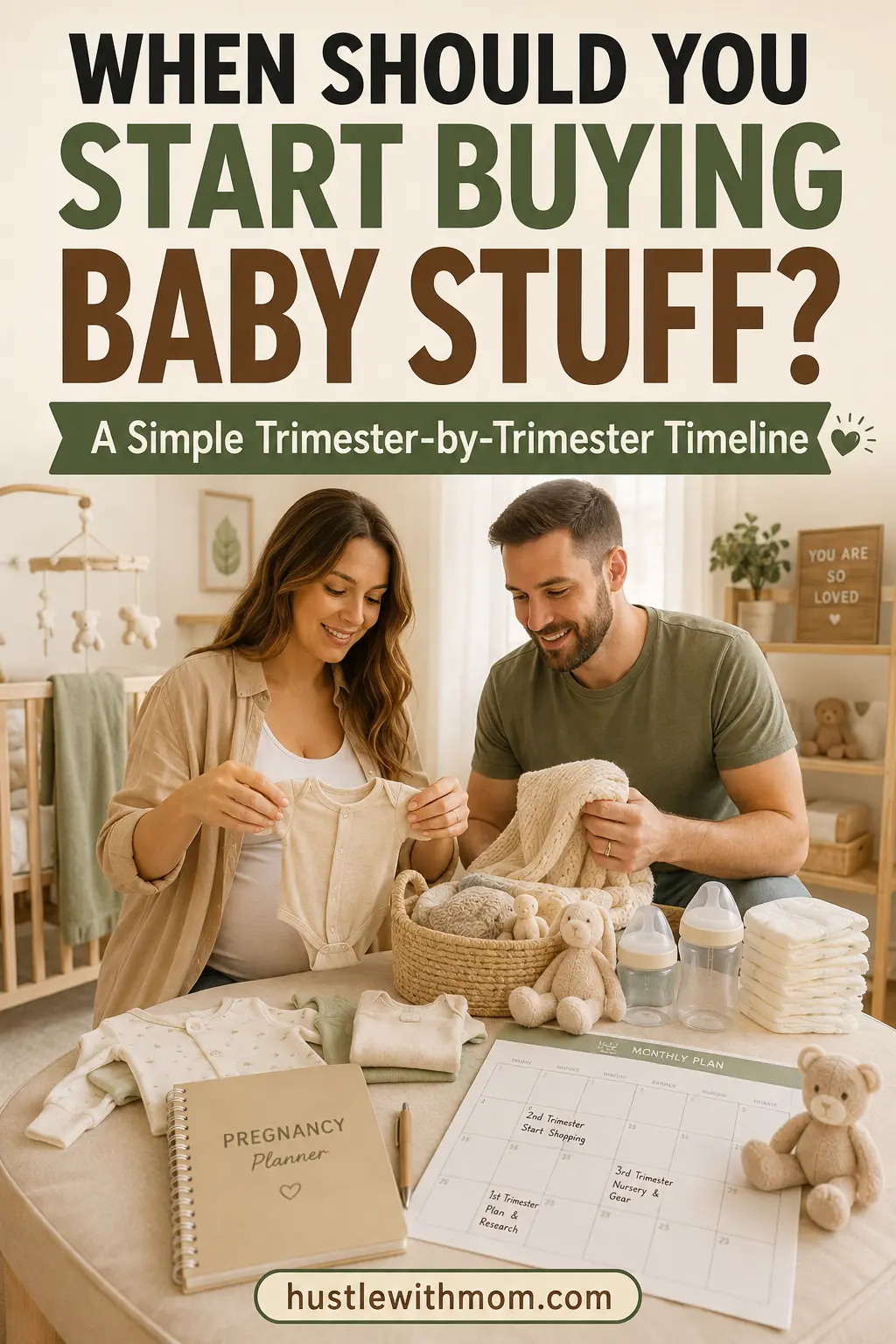
I still remember standing in a baby aisle with a positive pregnancy test in my bag, staring at a wall of tiny socks, having absolutely no idea if I was allowed to buy any of it yet. That confusion is exactly why so many expecting parents search when to start buying baby stuff the moment those two lines show up. If you’re in that same spot right now, take a breath. There’s no rulebook here, and once you understand how the timing actually works, the whole process gets a lot less stressful.
I’ve been through this twice now, once as a nervous first timer who bought way too much too soon, and once as someone who knew better and shopped smarter the second time around. What follows isn’t a generic checklist pulled from a template. It’s what actually worked, what I wasted money on, and how I’d plan it if I were starting today.
Why the Timing Question Feels So Confusing
Nobody hands you a manual when you get pregnant. Your friends all did things differently. One cousin had her nursery fully set up by 16 weeks. Another waited until her baby shower to buy a single thing. Both of them were completely fine, and that’s the part people don’t tell you enough.
The real answer is that baby shopping timeline decisions come down to your comfort level, your budget, and honestly, how your body is feeling week to week. Early pregnancy exhaustion is not a myth. Some weeks you won’t want to look at a stroller, let alone research one, and if you’re struggling to enjoy this stretch at all, you’re not alone either. It’s worth reading through why some women aren’t enjoying pregnancy if that’s where you’re at right now, because shopping timelines matter a lot less than how you’re actually feeling.
If the waiting itself feels like the hard part, finding small things to do while pregnant can make the early weeks feel less like a holding pattern.
First Trimester: The Planning Phase, Not the Buying Phase
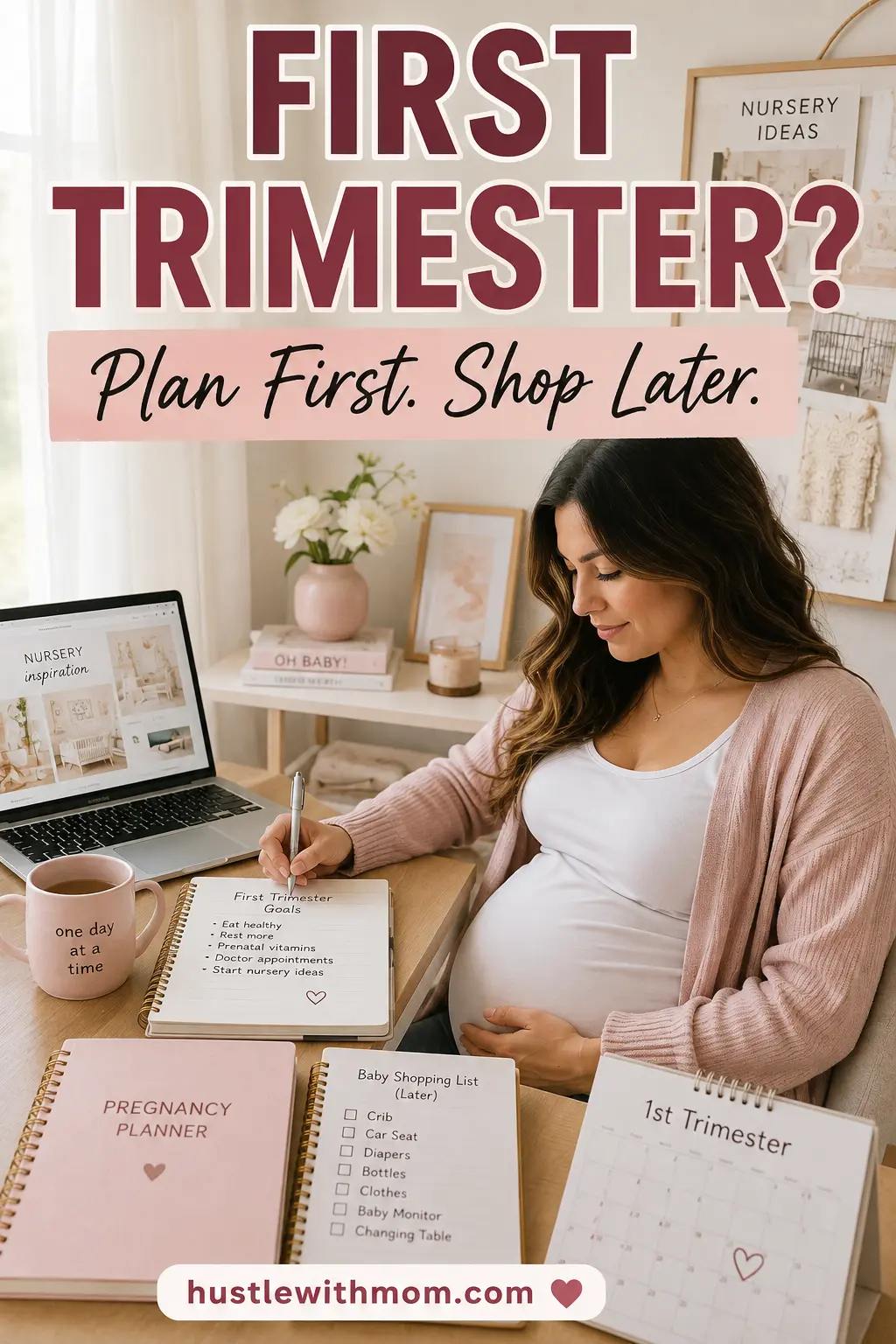
During my first pregnancy, I bought a crib at nine weeks. I was excited, nervous, and wanted something to hold onto. Looking back, I’d tell myself to slow down, not because anything went wrong, but because that crib sat in a box for five months while I second guessed the color.
The first trimester, roughly weeks one through twelve, is better spent on groundwork than on carts full of gear. I actually put together a full breakdown of first trimester of pregnancy tips if you want the bigger picture beyond just shopping. Here’s what actually helped me the second time:
Set a rough budget first. Baby gear adds up faster than people expect. Between the car seat, crib, and everyday newborn essentials, costs sneak up on you. Sitting down early and writing out a realistic number saved me from impulse buying later.
Research before you commit. This is the window to compare strollers, car seats, and baby monitors without pressure. Sites like BabyCenter and What to Expect have solid comparison guides if you want a starting point.
Stock the boring stuff. Toilet paper, laundry detergent, pantry basics. It sounds unrelated to baby shopping, but buying these in bulk now frees up both money and mental space for actual baby purchases down the line.
Hold off on big purchases and gender specific items. Many parents wait until after the anatomy scan, usually between 18 and 21 weeks, before buying anything pink or blue. There’s also a practical reason to wait a bit: according to the NHS, roughly 1 in 8 known pregnancies end in miscarriage, and that risk drops significantly after the first trimester. Waiting isn’t about superstition, it’s about giving yourself some emotional breathing room.
If you want to buy one small sentimental thing early, like a soft blanket or a onesie, go ahead. That single purchase isn’t going to throw off your plan.
Second Trimester: This Is Where the Real Shopping Happens
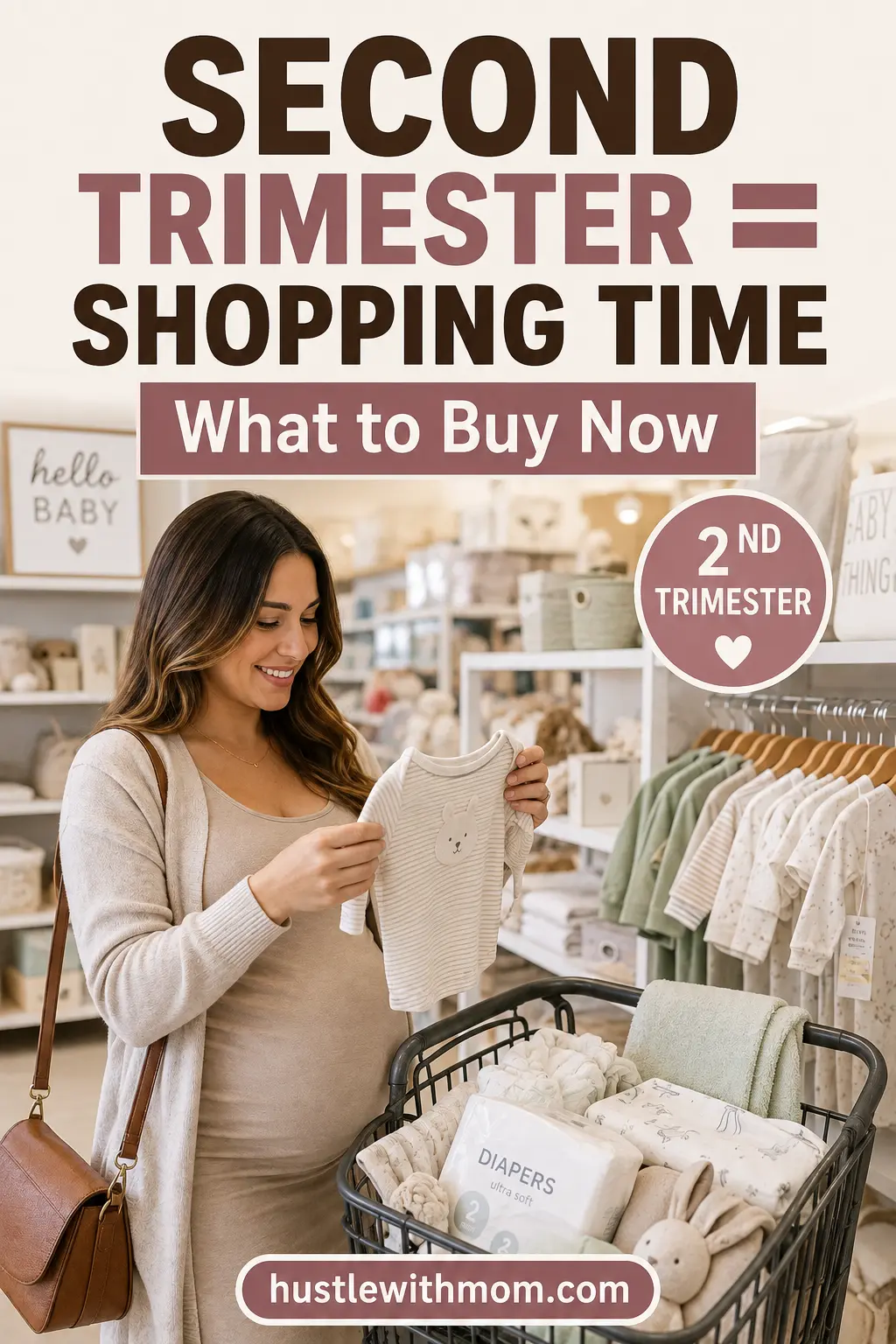
Once I hit week fourteen both times, everything shifted. The nausea faded, my energy came back, and suddenly I actually wanted to shop instead of just thinking about it. If you’re still dragging through the tail end of second trimester fatigue, don’t feel behind. It eases up for most people around this same point, and the shopping motivation tends to follow right after. This is the stretch most experienced parents point to as the real starting line, and I agree with them.
Big Ticket Nursery Items
Cribs, dressers, and gliders often take weeks to ship or arrive with assembly required. Order these early in the second trimester so you’re not scrambling later. I learned this the hard way when a crib I loved was backordered for six weeks.
Car Seat and Stroller
Your infant car seat isn’t optional. Hospitals will not let you leave without one properly installed. Start researching now, but don’t rush the final decision. This is also a good time to think ahead to the day itself. My hospital bag for dad checklist is worth a look now too, since packing tends to get rushed if you leave it for the third trimester.
Nursery Theme and Decor
Whether or not you know the gender, this is usually when a color palette or theme comes together. I went with a neutral sage green both times because I genuinely couldn’t decide on anything else, and it turned out to be the easiest choice I made.
Building Your Baby Registry
Start your baby registry now, even if your shower is months away. A registry does two things really well. It stops friends and family from guessing, and it keeps you from accidentally double buying things you’re likely to receive as gifts. I keep coming back to my own baby on the way checklist whenever I’m building a registry, since it covers the essentials in the order you’ll actually need them. And if someone’s asking what to get you before the registry is even live, a pregnancy gift box is a solid suggestion that doesn’t require guessing sizes or gender.
The Bad Luck Question
I get asked this constantly, so let’s address it directly. Is it bad luck to buy baby stuff early? No. There’s zero medical evidence connecting early shopping to pregnancy outcomes. It’s a cultural belief, not a fact. If it makes you personally uneasy, there’s nothing wrong with waiting until it feels right. I know families who wait for exactly this reason, and it doesn’t make the pregnancy any less real or any less prepared.
Third Trimester: Filling the Gaps and Getting Ready
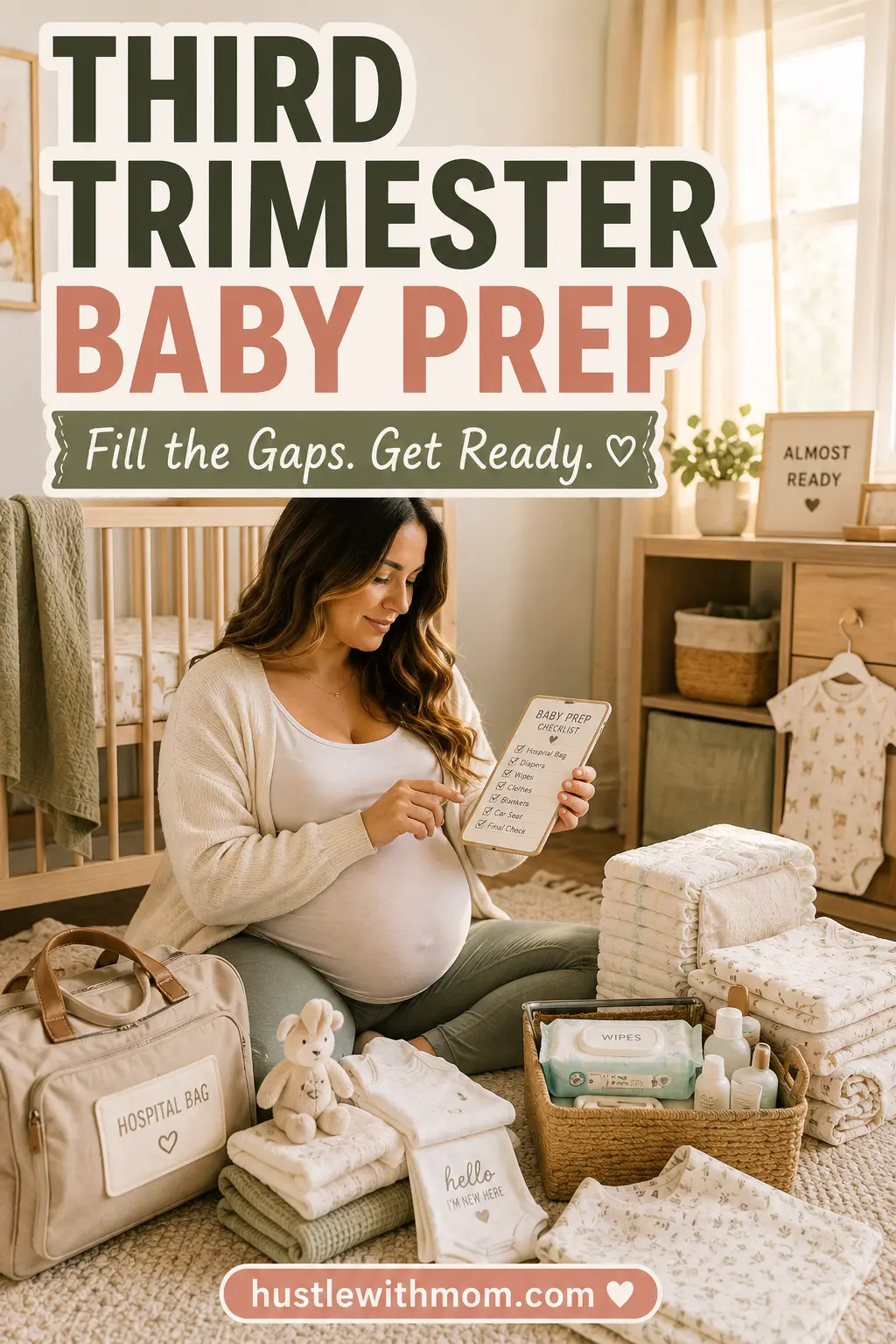
By the third trimester, something called nesting kicks in, and it is very real. I found myself reorganizing kitchen drawers at 34 weeks for no reason at all. Use that energy productively.
Here’s the checklist I actually followed:
- Have your baby shower. Most happen between weeks 30 and 34, close enough to feel prepared but early enough to avoid a last minute panic.
- Buy what’s left on your registry. After the shower, take stock of actual gaps instead of rebuying duplicates.
- Stock consumables by week 32 to 35. Diapers, wipes, fragrance free wash. Babies often arrive a week or two early, so don’t wait until your exact due date.
- Pack your hospital bag. Have it ready by week 35 at the latest, and don’t forget his bag either. That hospital bag for dad checklist I mentioned earlier covers what actually gets forgotten.
- Wash everything. Clothes, blankets, sheets, all washed in a gentle detergent and put away before week 36.
- Double check the car seat installation. Many fire stations and hospitals offer free installation checks, and it’s worth using them.
What to Actually Buy First
If you strip away all the extras, here’s the honest starting list based on what my babies actually used in the first weeks:
- Car seat
- A safe sleep space, crib or bassinet
- Diapers and wipes
- Five to seven gender neutral onesies in newborn and 0 to 3 month sizes
- Swaddles or sleep sacks
- Burp cloths and washcloths
- Baby wash and a soft hairbrush
- Bottles, even if you plan to breastfeed
- A stroller
Everything else, the wipe warmer, the twelve types of pacifiers, the fancy diaper bag, can wait until you know what your specific baby actually needs. My first baby hated pacifiers entirely, so that whole drawer of them went unused.
Common Mistakes I See Parents Make

Buying too many newborn size clothes. Babies grow out of this size shockingly fast, sometimes within two weeks. Stock more heavily in 0 to 3 and 3 to 6 month sizes instead, and once the clothes start piling up, these baby clothes storage ideas will save you from a drawer explosion by month two.
Skipping the budget conversation. Baby gear pricing is genuinely surprising. Setting a number early prevents the panic spending that happens in the third trimester.
Buying the crib and car seat last. These have the longest lead times. Order them first, not last.
Ignoring shipping delays. If you’re ordering during a holiday season or a major sale event, build in extra time. Packages can take weeks longer than usual during busy periods.
Factors That Can Shift Your Timeline
A few things can push your shopping timeline earlier regardless of trimester:
High risk pregnancy. If your doctor has flagged any concerns, it’s smart to have essentials ready earlier than the standard schedule.
Expecting multiples. Twins tend to arrive earlier than single babies, so aim to be ready by around week 32 instead of 35.
Small living space. If storage is tight, prioritize compact or multi use gear, like a bassinet stroller combo, over buying one of everything.
Season of birth. A winter baby needs warmer layers ready sooner than a summer baby does.
Final Thoughts
There’s no single correct week to start buying baby stuff, only what fits your budget, your energy, and your own comfort level. If you want one piece of advice to hold onto, it’s this: use the first trimester to plan, the second trimester to handle the big purchases, and the third trimester to fill in the gaps and get everything washed and ready. That rhythm worked for me twice, through two very different pregnancies, and it tends to hold up no matter how your first trimester actually goes.
Once your baby actually arrives and the shopping phase is behind you, the next challenge is surviving the fourth trimester with some sanity intact. My postpartum planner for moms picks up exactly where this guide leaves off.
1 thought on “When to Start Buying Baby Stuff: A Simple Timeline”