

Nobody tells you how bone-tired you’ll actually be.
Before my daughter was born, people said things like “sleep while you can!” and “it goes by so fast!” What they didn’t say was that I’d be standing in front of the open fridge at 3 a.m. holding a cold pack of wipes because my brain had genuinely stopped working.
If you’re reading this at 2 a.m. with a baby on your chest and one eye barely open, I see you. This article is for you. Not the Instagram version of new motherhood. The real one.
Let me share what actually helped me survive (and eventually thrive in) those first exhausting months.
Why New Mom Exhaustion Is So Much More Than “Being Tired”
There’s regular tired, and then there’s new mom tired. The difference is real, and it matters.
You’re not just dealing with broken sleep. You’re recovering from labor and delivery, your hormones are completely reorganizing, you’re breastfeeding or bottle-feeding every 2–3 hours, and you’re simultaneously trying to figure out this tiny person who cannot tell you what they need.
That’s not tiredness. That’s a full physiological and emotional upheaval happening all at once.
And the frustrating part? Most advice you’ll find is vague. “Sleep when the baby sleeps.” (When? The one 20-minute nap between feeds?) “Ask for help.” (From whom, exactly?)
Let me give you something more useful.
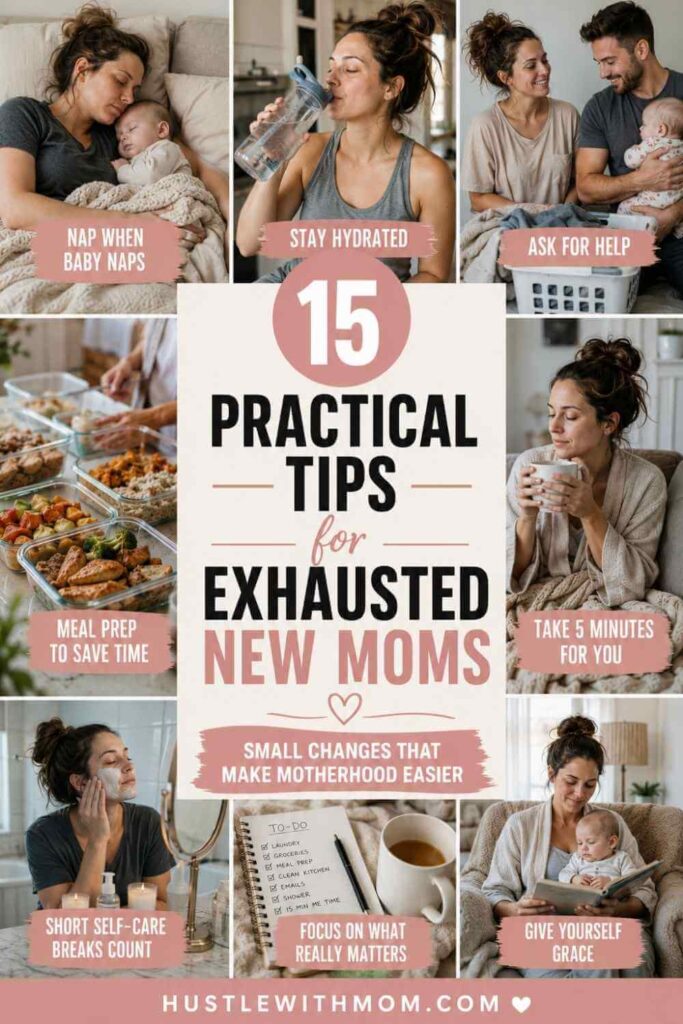
15 Practical Tips for Exhausted New Moms
1. Stop Trying to “Catch Up” on Sleep Anchor Instead
The idea of catching up on sleep is a myth when you have a newborn. Instead, aim for one “anchor sleep,” a longer, uninterrupted stretch of at least 3–4 hours. That one block does more for your brain than six fragmented naps.
Talk to your partner or a helper about who takes the first night shift so you can actually get that anchor stretch. Even every other night makes a huge difference.
2. Understand Why Your Baby Keeps Waking Up
Before you can solve the sleep problem, you need to understand it. If your baby is waking at 5 a.m. every single day, there are specific reasons for that, and knowing them helps you fix it. This guide on why your baby is waking at 5 a.m. is incredibly practical and helped me stop guessing.
3. Feed Yourself Like You Actually Matter
When you’re exhausted, eating is usually the first thing that slips. You grab whatever’s nearest, which is often nothing, or a handful of crackers standing over the counter.
But your energy, milk supply, and mood are all directly connected to what you eat. Meal prepping during and after pregnancy genuinely changed things for me. Having real food already made and ready to grab was the difference between functioning and barely surviving.
A few things that helped:
- Batch cooking on weekends (or asking someone else to)
- Keeping high-protein snacks at your nursing spot (nuts, cheese, protein bars)
- Drinking water constantly, especially if breastfeeding
- Accepting any food that someone offers to bring you
4. Set Up a Night Station Before You Go to Bed
Every single night before I went to sleep, I set up what I called my “night station,” a basket or tray next to wherever I nursed at night. In it:
- Water bottle (big one)
- Snacks
- Diapers and wipes
- Burp cloth
- Phone charger
- Nipple cream if breastfeeding
Five minutes of prep saved me from shuffling around half-asleep every night. Sounds simple, but it was genuinely one of the most helpful things I did.
5. Use the “Mom Hacks” That Actually Work (Not Just Social Media Fluff)
There are real, practical shortcuts that experienced moms have figured out. Things like using a pacifier clip to keep it from falling on the floor 400 times a night, or keeping a second changing setup on whatever floor you spend most time on. This list of 50 mom hacks that actually work is worth bookmarking. I’ve tested a lot of them.
6. Let the Housework Wait (For Real This Time)
I know you’ve heard this before. But I’m going to say it differently: dirty dishes do not have a deadline. Your baby does.
There is a window of weeks where your body is healing, and your baby is tiny and needs you specifically. The laundry will still be there. You will not get those weeks back.
Messy house during a newborn phase = normal. Okay? Let it be.
7. Talk to Someone, Even Just One Person
New mom exhaustion isn’t just physical. There’s a mental load that’s crushing, and it often gets ignored because you’re “supposed to be happy.”
Postpartum anxiety and depression are far more common than people talk about. You don’t have to be in crisis to need support. Even just texting one honest friend who won’t say “but enjoy every moment!” can take some pressure off.
If you’re struggling with symptoms that feel bigger than tiredness, persistent sadness, anxiety, feeling detached from your baby or yourself, please talk to your doctor. Postpartum mood disorders are medical, treatable, and nothing to push through alone.
8. Protect Your Dental Health (Yes, Really)
This one surprised me. After my daughter was born, I noticed my teeth felt different. More sensitive. Turns out, pregnancy and postpartum hormones, plus the acid from morning sickness, vomiting, or even just dehydration, can seriously affect your teeth. There’s a whole article on postpartum dental problems that explains why this happens and what to do about it.
Point being: your body is going through real changes. Don’t ignore the small things.
9. Lower the Bar for “Good Mom.”
This one is important.
You have probably set an invisible standard in your head for what a good mom looks like. And exhausted, barely-showered, cereal-for-dinner, you don’t match that standard.
But here’s what I genuinely believe: a good mom shows up. Not one who does everything perfectly. Your baby does not need a Pinterest nursery or homemade purees. They need you to be present, responsive, and okay.
Give yourself permission to do less and be enough.
10. Figure Out What “Help” Actually Means for You
People love saying “just ask for help!” but it’s weirdly hard to do in practice. You don’t always know what you need, or you feel guilty asking, or you’ve already said “we’re fine!” so many times it feels too late.
Try being specific. Instead of “let me know if you can help,” try telling someone: “Can you come Tuesday at 2 p.m. and hold the baby for two hours while I sleep?”
Specific asks get actual results.
11. Try Babywearing for the “Won’t-Be-Put-Down” Baby
Some babies will only sleep on you. It’s biologically normal, they just came from inside your body, after all but it makes getting anything done (including sleep) nearly impossible.
A good baby carrier or wrap can be a game-changer. Baby stays close and calm. Your hands are free. You can sometimes even nap in a recliner while the baby is snuggled in. Many moms find that carriers extend nap time significantly.
12. Check the Body Armor Drink Situation if You’re Breastfeeding
If you’re nursing and wondering about milk supply, you’ve probably heard of the Body Armor drink trend. It genuinely works for some moms. There’s solid info on Body Armor drinks and breastfeeding if you want the full picture, what’s in it, what the research says, and whether it’s worth trying.
Hydration in general is huge for nursing moms. Don’t skip it.
13. Accept That Some Days Will Just Be Hard
There will be days when everything you try doesn’t work. Baby won’t stop crying. You haven’t slept more than 90 minutes in a row. You’re touched out. You’re frustrated. Maybe you cried in the bathroom.
That is okay. It does not mean you’re failing. It means you’re doing one of the hardest things a human can do, without a manual, while running on no sleep.
Tomorrow will be different. Sometimes that’s the only thing to hold onto, and that’s enough.
14. Take Care of Your Physical Recovery Too
Your body just did something extraordinary. Leg swelling, joint pain, pelvic floor issues, these are all normal parts of the postpartum period that get glossed over in the rush to focus on the baby.
If your legs are swollen and uncomfortable, check out this guide on leg swelling after pregnancy. If you had SI joint pain during pregnancy, it often continues postpartum and is worth addressing. Don’t just push through pain; your recovery matters.
15. Know That This Phase Is Temporary (Without Dismissing How Hard It Is)
I almost didn’t include this because it can feel dismissive when you’re in the thick of it. But I mean it sincerely, not as a platitude:
The newborn phase ends. The 2 a.m. feeds taper off. Babies start sleeping longer. You will shower again. You will feel like a person again.
Not because you did everything right, but because time passes and babies grow, and you will get there.
Common Mistakes Exhausted New Moms Make
Trying to do everything themselves. The independence that worked before the baby becomes your enemy postpartum.
Comparing their experience to others. Someone else’s baby sleeping through the night at 6 weeks says nothing about yours or your parenting.
Ignoring their own health. Dental pain, swollen legs, and persistent back pain are things that deserve attention.
Feeling guilty for wanting a break. Wanting time away from your baby does not make you a bad mom. It makes you a human being.
Not knowing when to ask for professional help. Postpartum depression and anxiety are not weaknesses. They are medical conditions. Ask for help sooner rather than later.
FAQ:
How long does new mom exhaustion last?
The most intense exhaustion is usually during the first 6–12 weeks, when sleep is most fragmented. Many moms start to feel noticeably better around 3–4 months as babies develop longer sleep stretches. Every baby is different, though.
Is it normal to cry from exhaustion as a new mom?
Completely normal. Sleep deprivation and hormonal changes are real physical stressors. Crying from exhaustion does not mean something is wrong with you. If the crying is persistent and paired with feelings of hopelessness or detachment, talk to your doctor.
How can I get more sleep as a new mom?
Focus on one longer sleep block (3–4 hours) rather than trying to nap constantly. Rotate night duties with a partner or helper when possible. Reduce the effort required at night by setting up your space in advance.
What should I eat when I’m too tired to cook?
High-protein snacks like nuts, hard-boiled eggs, string cheese, and Greek yogurt are easy grabs. Accept any food people offer. Consider batch cooking once a week so real meals are always ready. Check out this meal plan for busy moms for practical ideas.
When should I be worried about postpartum fatigue?
If exhaustion is paired with persistent sadness, anxiety, feeling disconnected from your baby, or thoughts of harming yourself or your baby, please see a doctor right away. These are signs of postpartum mood disorders that are treatable and nothing to push through alone.
Can I do anything to feel more like myself again?
Yes, small things matter. A short shower, getting outside briefly, wearing clothes that aren’t spit-up stained, eating a real meal. And reading about how to be a better mom (which starts with taking care of yourself) can help reset your perspective.
Final Thoughts
You are not failing because you’re exhausted. You are exhausted because you’re doing something incredibly demanding.
The best thing you can do for your baby is survive this phase and come out the other side still standing, still yourself. That means sleeping when you can, eating when you can, asking for help, and giving yourself a lot of grace.
You don’t have to enjoy every moment. You just have to get through it. And you will.