

My cousin called me three months after her second baby was born, and the first thing she said wasn’t about sleep deprivation or feeding schedules. It was: “Why are my teeth crumbling? Nobody told me this would happen.”
She’d gone in for a routine cleaning and walked out with three new cavities after years of perfect checkups. She was brushing twice a day, same as always. She’d done nothing differently. And yet her dentist was staring at her mouth like he’d never seen anything quite like it.
That conversation is what made me dig deep into postpartum dental problems because it turns out, this is far more common than the maternity pamphlets ever let on. Almost nobody talks about it until something goes wrong.
If you’re a new mom noticing your teeth hurt after having a baby, your gums are bleeding after giving birth, or your dentist is suddenly finding cavities that didn’t exist before you’re not imagining it. You’re not doing something wrong. Your body went through one of the most intense physiological events a human can experience, and your mouth took a hit too.
Let’s go through exactly what’s happening, what to expect, and what actually helps.
Why Pregnancy Changes Your Oral Health
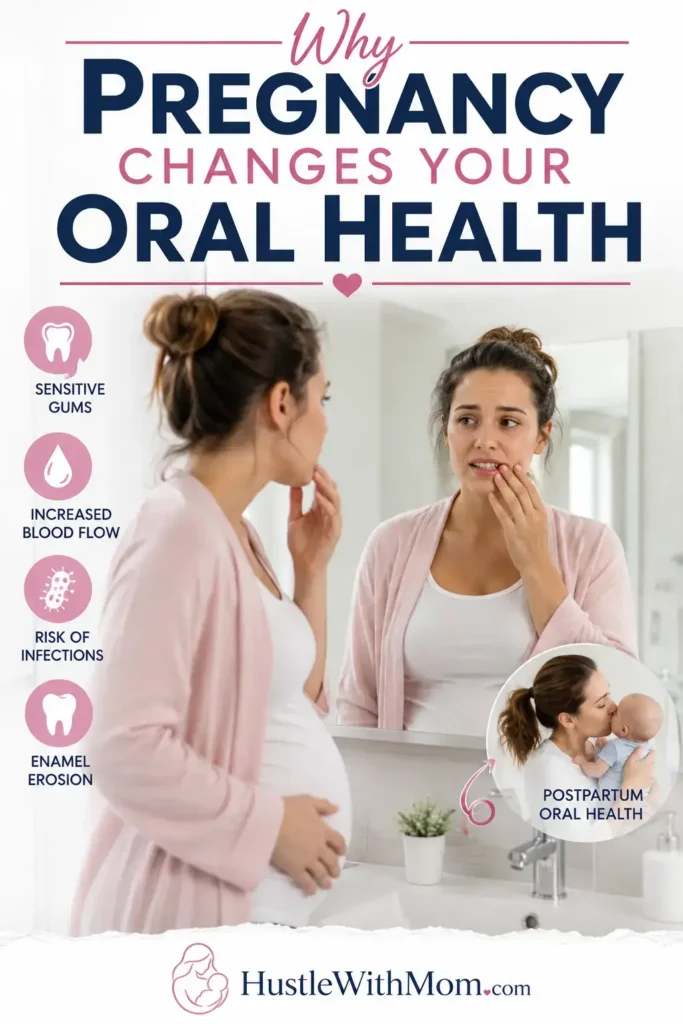
Here’s the thing that surprised me most: the changes in your mouth don’t stop when your baby is born. In many ways, the postpartum period is when things get worse before they get better.
The Hormonal Cascade Estrogen, Progesterone, and Your Gums
During pregnancy, estrogen and progesterone levels skyrocket. These hormones increase blood flow to your gum tissue, making your gums more reactive to plaque even small amounts that would normally cause no problem. That’s why gestational gingivitis is so common (roughly 60–75% of pregnant women experience it in some form).
After delivery, those hormone levels crash fast. The rapid drop in estrogen postpartum weakens the connective tissue in your gums, slowing healing and leaving them more vulnerable. And if you’re breastfeeding, progesterone gum inflammation can persist longer because hormones are still fluctuating.
How Your Oral Microbiome Shifts After Birth
After birth, the bacterial balance in your mouth changes. Streptococcus mutans the main bacteria responsible for tooth decay increases in response to the hormonal shift and the lower salivary pH that often accompanies it. A more acidic oral environment is like rolling out a welcome mat for cavity-causing bacteria. Your oral microbiome changes after birth don’t happen overnight, but within the first few weeks, conditions in your mouth are significantly more favorable to decay.
This is a big reason why new moms suddenly get cavities even with a consistent brushing routine.
Enamel Erosion From Morning Sickness The Right Way to Handle It
If you had morning sickness during pregnancy (about 70% of women do), you were repeatedly exposing your tooth enamel to stomach acid. This causes enamel demineralization the protective layer on your teeth gets softened and worn away over time.
The counterintuitive rule: don’t brush right after vomiting. It feels gross not to, but brushing immediately after acid exposure scrubs away already-weakened enamel. Instead, rinse with water (or a baking soda solution), wait 30 minutes, then brush.
Why Dry Mouth (Xerostomia) Drives Cavities in New Mothers
Here’s a big one that almost no article mentions: xerostomia in new mothers chronic dry mouth is a major, often overlooked cause of postpartum cavities.
Saliva is your mouth’s natural defense system. It neutralizes acids, remineralizes enamel, and washes away food particles and bacteria. When saliva production drops which often happens during long breastfeeding sessions at night your teeth are left unprotected for hours. Dehydration during night breastfeeding is the main culprit. Some antidepressants used for postpartum mood support can also cause dry mouth as a side effect, worth mentioning to your dentist.
The 7 Most Common Postpartum Dental Problems
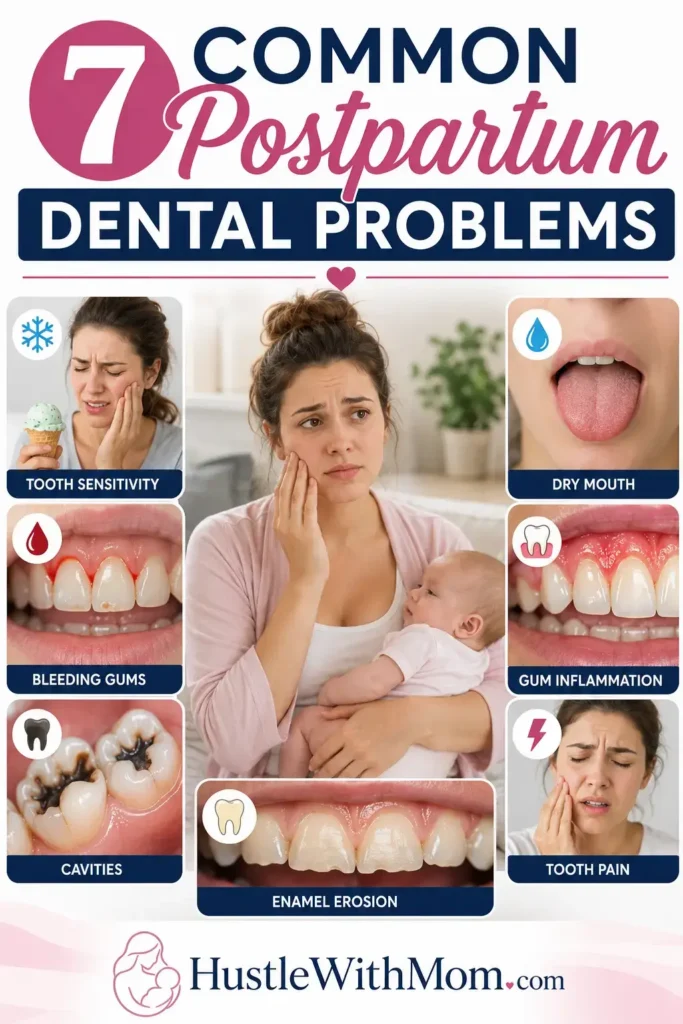
Let’s name them clearly, because knowing what you’re dealing with makes it less frightening.
- Postpartum gingivitis and bleeding gums. Swollen, tender, easily-bleeding gums are the most common complaint. If your gums are bleeding after giving birth, this is almost certainly postpartum gingivitis, but left untreated, it can progress to actual periodontal disease, which is harder to reverse.
- Increased cavity risk. Between microbiome changes, lower salivary pH, dry mouth, frequent snacking, and disrupted brushing routines the conditions for postpartum cavities are almost perfect. Studies show caries incidence is highest in the first two months after birth.
- Tooth sensitivity and pain. Dentine sensitivity is extremely common after birth. The combination of enamel erosion after pregnancy and gum recession exposes the softer dentine underneath, making teeth react to hot, cold, or sweet foods.
- Loose teeth. During pregnancy, progesterone and estrogen temporarily loosen the ligaments and bones that hold your teeth in place. For most women, this resolves after birth, but for some, that looseness persists a few weeks postpartum.
- Enamel erosion and discoloration. Enamel erosion after pregnancy from acid exposure can leave teeth looking yellowed or translucent at the edges, and more prone to staining.
- Pregnancy tumors (epulis gravidarum). Don’t let the name scare you, epulis gravidarum is a benign gum overgrowth, not a real tumor. It looks like a red, raw lump between teeth, bleeds easily, and is caused by excess plaque interacting with elevated progesterone. Most shrink and disappear on their own after birth.
- Jaw clenching and teeth grinding (postpartum bruxism). Sleep deprivation plus a newborn equals stress, and stress loves to live in your jaw. A night guard for bruxism postpartum is something dentists are recommending more frequently. If you’re waking up with headaches or a sore jaw, bring it up at your next visit.
Postpartum Oral Health Recovery Timeline
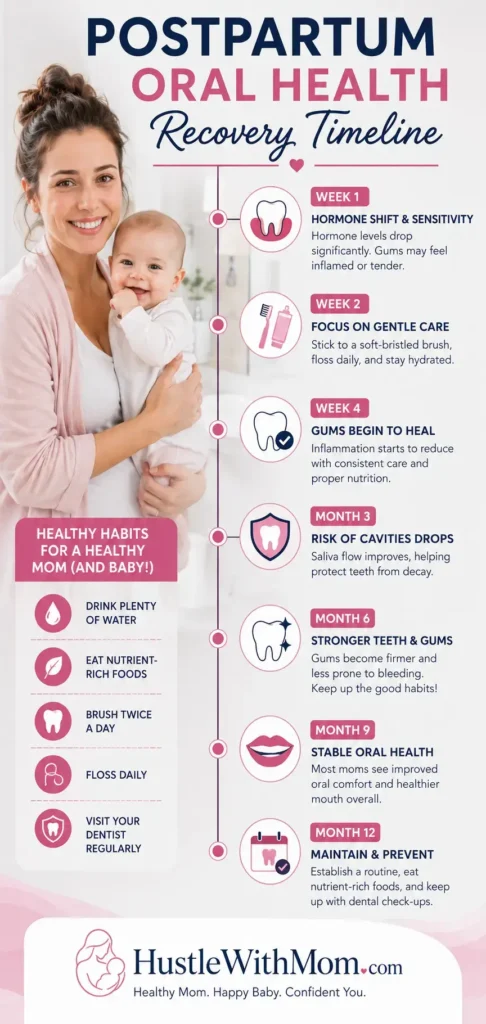
This is the question my cousin kept asking, and I couldn’t find a straight answer anywhere. So here it is, based on current research:
| Timeline | What Happens | What to Do |
| Weeks 1–4 | Hormone crash. Peak gingivitis, the highest cavity risk window. | Brush & floss diligently. Keep water nearby during feeds. |
| Months 2–3 | Early stabilization. Early cavities now detectable on X-ray. | Schedule a dental checkup in this window. |
| Months 3–6 | Enamel recovery begins. Best time for restorative work. | Treat cavities, address gum issues, boost nutrition. |
| 6–12 Months | Most issues normalize with consistent care. | Re-evaluate any persistent sensitivity or gum recession. |
Dental Treatments Safe While Breastfeeding
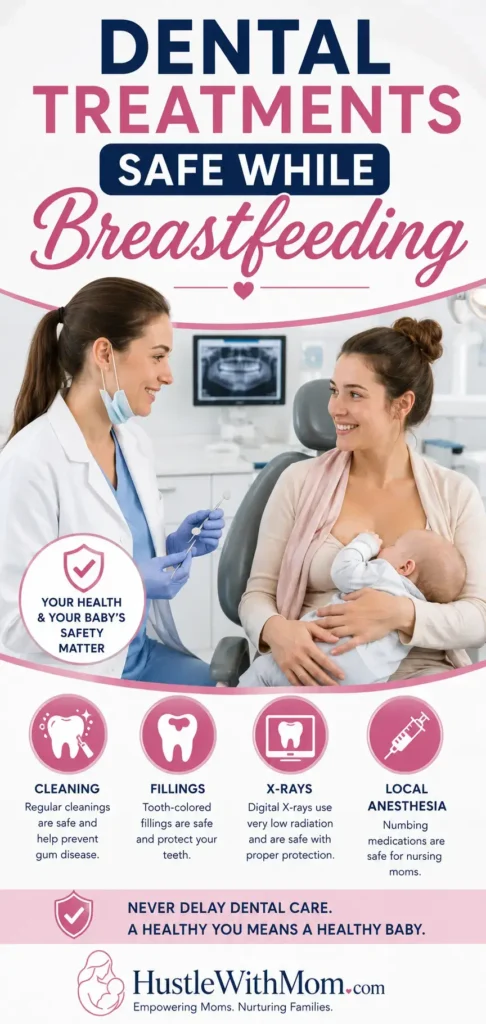
This is the question I get asked most, and the good news is: you can get most dental work done while nursing. Here’s a simple breakdown:
| Treatment | Safe While Breastfeeding? |
| Routine cleaning and X-rays (with lead apron) | ✅ Yes, completely safe |
| Local anesthesia (lidocaine) | ✅ Yes, well-established safe option |
| Composite cavity fillings | ✅ Yes |
| Dental crowns and veneers | ✅ Yes |
| Antibiotics (amoxicillin, penicillin) | ✅ Usually safe to confirm with your dentist |
| Teeth whitening treatments | ⚠️ Avoid postponement until weaning |
| General anesthesia / IV sedation | ⚠️ Consult your doctor first |
| Fluoride toothpaste | ✅ Yes, every day fluoride is fine |
The key rule: always tell your dentist you’re breastfeeding before they prescribe anything. Most dentists know what to avoid, but a quick heads-up ensures you get the right anesthetic and any prescriptions that won’t affect your milk supply.
Important: don’t put off needed dental work because you’re nursing. An untreated infection poses far more risk to you and your baby than a properly administered local anesthesia during lactation.
How Your Oral Health Affects Your Baby
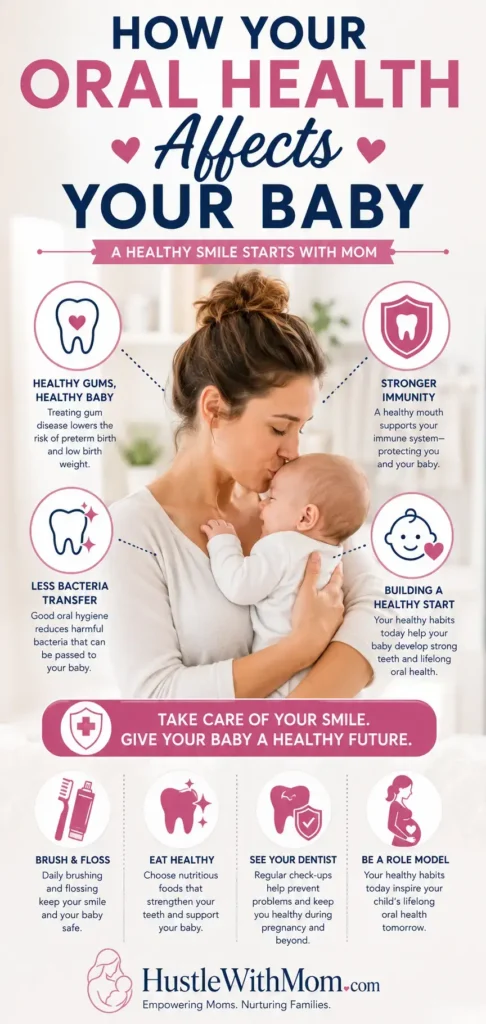
Here’s the stat that genuinely stopped me in my tracks: research shows that up to 70% of cavity-causing bacteria found in young children match the bacterial strains from their mothers. That means maternal oral health and infant caries are directly connected.
The primary route of vertical transmission of bacteria is everyday contact, sharing spoons, testing bottle temperature with your mouth, kissing your baby on the lips, or blowing on food to cool it. You’re not doing anything wrong. It’s just how the biology works.
What you can control: keeping your own Streptococcus mutans levels low by treating cavities, maintaining good gum health, and using xylitol for postpartum cavity prevention. Xylitol gum has been shown to reduce cavity bacteria counts. Healthy mom teeth = lower bacterial load transferred to baby = better start for their first teeth.
Nutrition for Postpartum Dental Recovery
Think of your teeth as needing the same rebuilding support as the rest of your postpartum body. Specific nutrients matter:
- Calcium dairy products, leafy greens (kale, broccoli), fortified plant milks, and almonds. Aim for your recommended daily intake, especially if breastfeeding.
- Vitamin D calcium’s essential partner. Without it, calcium absorption is minimal. Sun exposure plus fatty fish, eggs, or a supplement if your levels are low.
- Vitamin C for gum collagen repair your gum tissue is literally made of collagen fibers, and vitamin C is required to synthesize it. Citrus, bell peppers, strawberries, kiwi.
- Phosphorus for remineralization works alongside calcium in enamel repair. Found in meat, fish, dairy, eggs, and nuts.
What to limit: constant grazing is far more damaging than a single sweet treat, because each snacking event triggers an acid attack on your teeth. If you’re up at 3am during a feed and reach for crackers and juice, keep a glass of water nearby and rinse after. Small habit, real difference.
Postpartum Depression and Oral Health: The Hidden Link
Postpartum depression affects up to 1 in 5 new mothers, and one of the first things to go when someone is struggling with depression is self-care. Brushing teeth twice a day something most of us do on autopilot can feel genuinely impossible on your hardest days. That’s not weakness. That’s depression.
Some antidepressants commonly prescribed for postpartum mood support also cause dry mouth as a side effect, which, as we covered earlier, directly increases cavity risk.
If you’re in a period where basic oral hygiene is slipping, give yourself the lowest-bar version: even just rinsing with a fluoride mouthwash counts for something. Xylitol gum near your nursing chair is also an easy, effortless habit for late-night feeds when brushing isn’t happening.
And please talk to your healthcare provider if you’re struggling. Your mental health and your dental health are both worth caring for.
When to See a Dentist After Giving Birth
The honest answer: earlier than most people think. A staggering only 4.6% of women receive oral health advice from their OB during pregnancy. That gap is real, and it’s why so many new mothers are caught off guard.
Schedule a checkup within 3–6 months postpartum, or sooner if you’re experiencing pain, bleeding gums that won’t settle, or notice any lumps. Tell your dentist:
- That you recently gave birth and when
- Whether you’re breastfeeding
- Any medications you’re taking, including supplements
- Symptoms you’ve noticed sensitivity, bleeding, jaw pain
If you had a complicated birth or C-section involving extended antibiotic use, mention that too prolonged antibiotics can disrupt your oral microbiome and may increase risk of certain fungal overgrowths in the mouth.
Common Mistakes to Avoid
A few things my cousin did that made things worse and that I’ve heard from others too:
- Brushing immediately after vomiting or reflux. Wait 30 minutes. Always.
- Skipping dental visits during pregnancy “to be safe.” Routine care is completely safe and highly recommended. Avoidance only means a backlog of issues hitting you postpartum.
- Ignoring bleeding gums. Bleeding gums that don’t improve several weeks after birth need attention.
- Using whitening products while breastfeeding. Hold off. Address enamel health first; whitening can come later.
- Not drinking water during night feeds. Keep a water bottle at your nursing station. It’s the single easiest thing you can do for your postpartum oral health.
FAQ‘s
Do babies steal calcium from your teeth?
No this is a persistent myth. Your baby doesn’t directly pull calcium from your teeth. What happens is that hormonal changes and dry mouth create conditions where your teeth are more vulnerable to decay. Your dietary calcium intake matters for your bone density, but your baby isn’t “taking” from your teeth.
Will my teeth go back to normal after pregnancy?
For most women, yes with proper care, teeth and gums largely normalize within the first year postpartum. Any cavities or gum damage that developed won’t reverse on their own, but they can be treated, and further deterioration can absolutely be stopped.
Why did I get so many cavities after having a baby?
The combination of microbiome shifts, lower salivary pH, dry mouth from breastfeeding, disrupted oral hygiene routines, and increased snacking creates near-perfect conditions for decay. It’s not your fault but now you know what to address.
Is it safe to get a filling while breastfeeding?
Yes. Composite fillings are safe. Lidocaine safe breastfeeding is well-established in the research. Tell your dentist you’re nursing and they’ll make appropriate choices.
How long does postpartum gingivitis last?
With good brushing, flossing, and a dental cleaning, most postpartum gingivitis resolves within 6–8 weeks after birth. If it’s persisting or worsening beyond that, see your dentist it may be progressing toward deeper periodontal disease.
Conclusion:
My cousin ended up getting her cavities filled, starting a xylitol gum habit, and keeping a water bottle at her bedside. Six months later? Clean checkup. Teeth are back to normal.
The frustrating part is that none of this had to catch her off guard. Postpartum dental problems are predictable, manageable, and mostly preventable when someone actually tells you about it beforehand.
Consider this conversation. You’ve got this.
Disclaimer: This article is for informational purposes only and does not replace professional dental advice. If you are experiencing dental pain, infection, or severe gum changes after birth, please consult a licensed dentist.