
I was 14 weeks pregnant, standing in line at my favorite boba shop, staring at the menu like it owed me money. My brain kept looping the same question: can you drink bubble tea while pregnant, or am I about to ruin everything over a cup of brown sugar milk tea?
I ordered it anyway that day. Then I went home and spent an embarrassing amount of time googling, texting my sister-in-law who’s a nurse, and reading forum posts written by people who sounded way more panicked than informed. So if you’re standing in that same line right now, phone in hand, thumb hovering over a search bar, let me save you the spiral.
The short answer is yes, you can drink bubble tea while pregnant, in moderation. But “moderation” is doing a lot of heavy lifting in that sentence, and nobody really explains what that means in practice. That’s what this post is for.
Is Bubble Tea Safe During Pregnancy? The Quick Answer
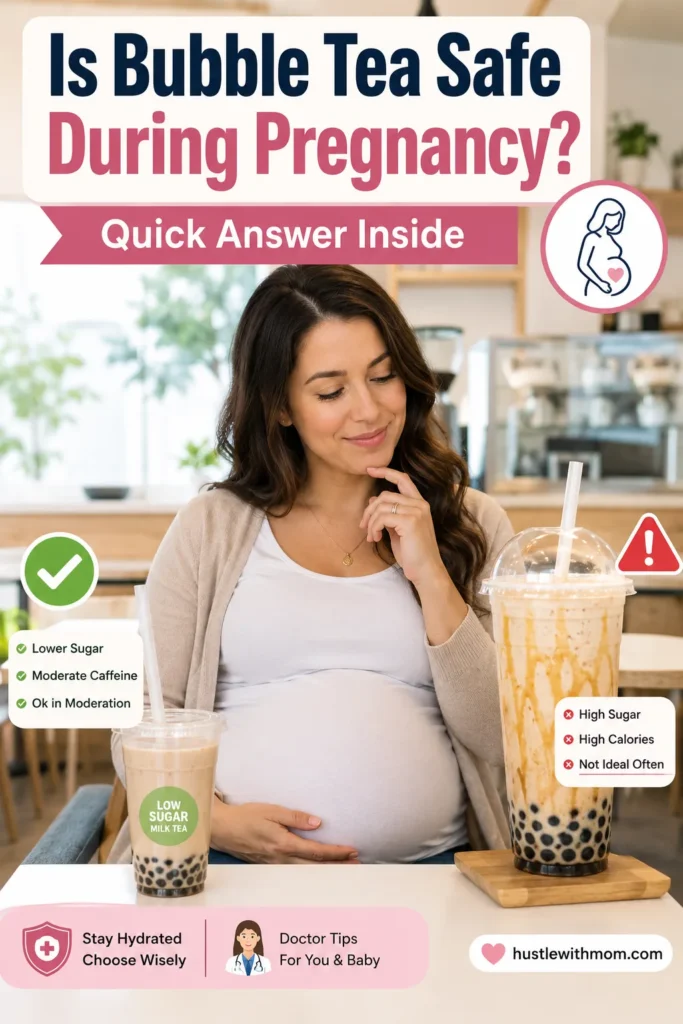
Here’s the deal. Bubble tea itself isn’t some forbidden substance. It’s tea, milk, sugar, and chewy tapioca pearls. None of those are automatically dangerous.
The things that actually matter are caffeine content, added sugar, and how the tapioca pearls and dairy are prepared. Get those three right, and there’s no real reason to skip your boba craving.
I want to be honest with you here. I didn’t cut bubble tea out of my pregnancy. I just got smarter about how I ordered it, and that made all the difference.
What’s Actually in a Cup of Bubble Tea
Before you can make a good call, it helps to know what you’re actually drinking.
The tea base is usually black, green, oolong, or jasmine tea, though a lot of shops also do fruit teas that use little to no real tea at all. This matters because the tea base is where most of your caffeine intake is coming from.
The milk or creamer can be dairy, non-dairy creamer, or condensed milk, depending on the shop.
The sweetener is typically a sugar syrup, and shops usually let you choose how much (100%, 75%, 50%, 25%, or 0%).
The tapioca pearls are made from cassava starch, cooked in a brown sugar syrup, which is why they’re dark and slightly sweet on their own.
Once you know those four pieces, the “is it safe” question gets a lot easier to answer, because you’re not guessing anymore.
Caffeine in Bubble Tea While Pregnant
This is the part that actually matters most, and it’s the part most people skip past too fast.
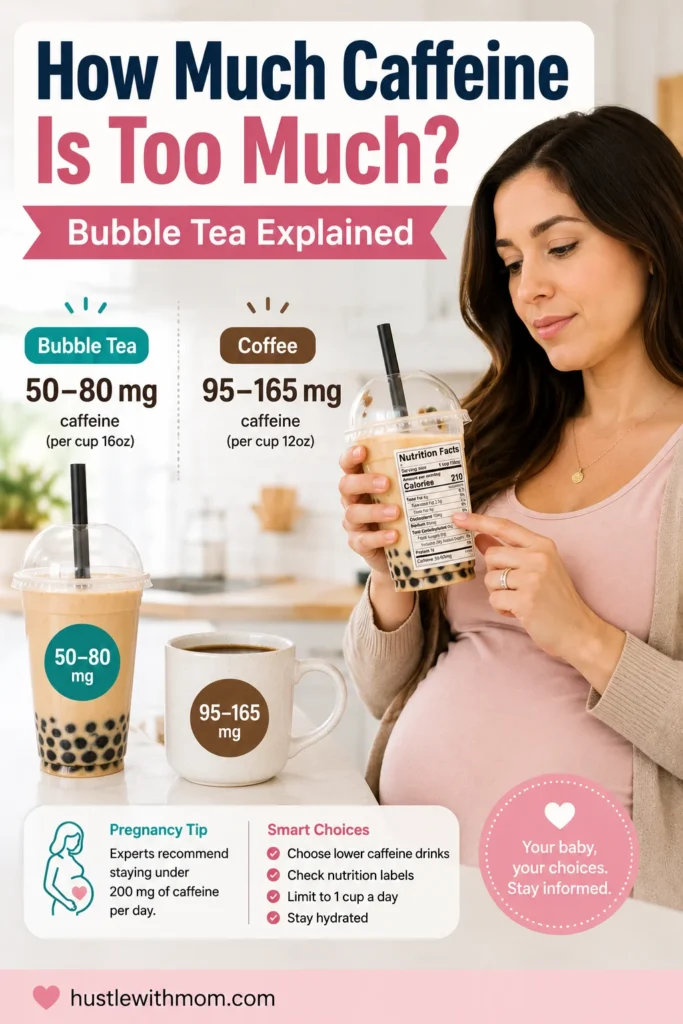
The American College of Obstetricians and Gynecologists (ACOG) recommends staying under 200 milligrams of caffeine per day during pregnancy, roughly the amount in one 12-ounce cup of coffee, according to ACOG’s own guidance. The NHS gives the same 200mg ceiling, and specifically calls out tea, coffee, cola, and energy drinks as sources to track, per the NHS foods-to-avoid page.
Here’s roughly what you’re working with per typical serving:
- Black tea base (16oz): around 60 to 100mg
- Green tea base (16oz): around 35 to 60mg
- Oolong tea base (16oz): around 40 to 70mg
- Fruit tea (no real tea, just flavored base): usually 0mg
- Decaf tea base: close to 0mg
Notice how wide that range is. One large black milk tea can eat up half your entire daily caffeine budget in a single order. That’s the part nobody warned me about early on. I’d already had a cup of coffee that morning, then ordered a large black tea boba in the afternoon, and only later rsecond-trimestercally maxed out my day without even trying.
If you’re also dealing with second trimester fatigue and reaching for caffeine to get through the afternoon slump, it’s worth reading up on other ways to manage that energy dip so boba isn’t your only tool for staying awake.
Quick math tip that actually helped me: before ordering, mentally tally what you’ve already had that day (coffee, chocolate, soda, tea) and subtract it from 200mg. Whatever’s left is your boba budget. If it’s tight, ask for a decaf or fruit tea base instead of your usual black tea.
Sugar in Bubble Tea: The Part That Sneaks Up On You
Caffeine gets all the attention, but sugar is honestly the bigger everyday issue with bubble tea.
A standard large bubble tea can carry 40 to 50 grams of sugar, and that’s before you count the sugar already cooked into the tapioca pearls themselves, which adds another 10 to 15 grams even if you order your tea unsweetened. For comparison, general health guidance suggests keeping added sugar closer to 25 grams a day for women, which means one large classic milk tea can blow past that in one sitting.
That doesn’t mean you can never have it. It means the sugar percentage option on the menu is your best friend. Ordering 50% or even 25% sugar barely changes the taste of most drinks, and it makes a real dent in the total.
I also noticed my sugar-heavy boba orders tended to line up with days I felt more bloated afterward, which lines up with what I later read about bloating in early pregnancy and how sugary, carbonated, or heavy drinks can make that feeling worse.
Are Tapioca Pearls Safe During Pregnancy?
This is where a lot of the internet panic lives, and honestly, most of it isn’t backed by much.
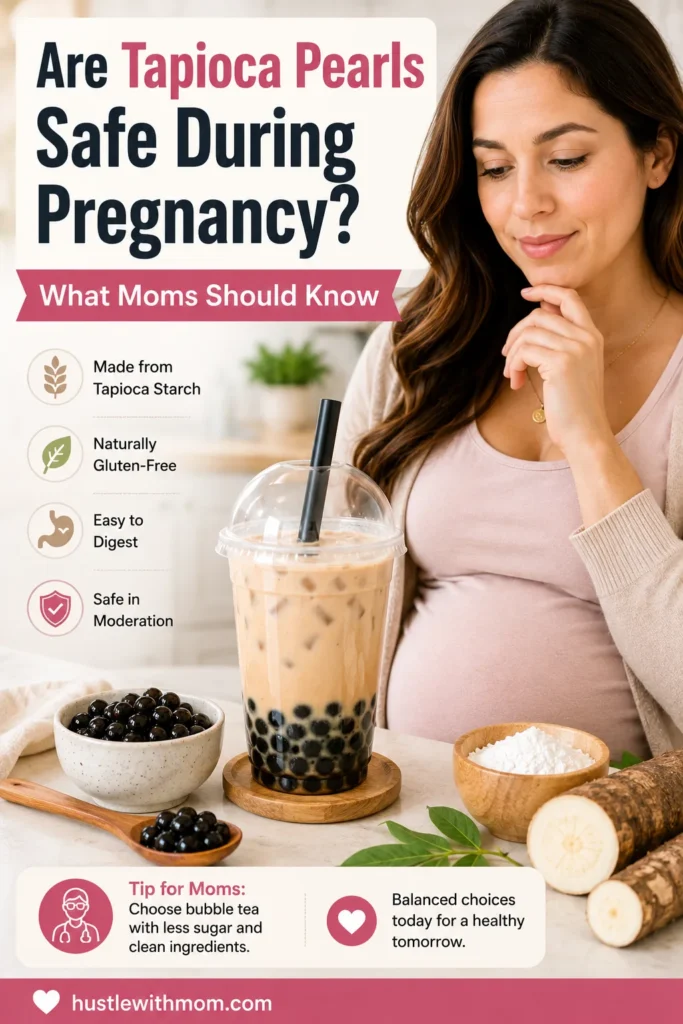
Tapioca pearls are made from cassava starch, water, and sugar. They’re cooked, not raw, and they’re nutritionally pretty plain, mostly just carbohydrates with very little fiber, protein, or vitamins. That’s fine occasionally, but it’s not something to build a meal around.
You may have seen the old rumor floating around that boba pearls contain plastic. That claim traces back to a small, widely misreported 2012 study and has never been confirmed by food safety regulators. Cassava starch pearls are a real food product, not a synthetic one.
The bigger practical concerns with pearls are texture and freshness. They should be chewy but not rock hard, and they shouldn’t taste sour or smell off, which can happen if a shop lets cooked pearls sit out too long. If a drink tastes strange, trust your gut and skip it, pregnant or not.
Bubble Tea and Pregnancy, Trimester by Trimester
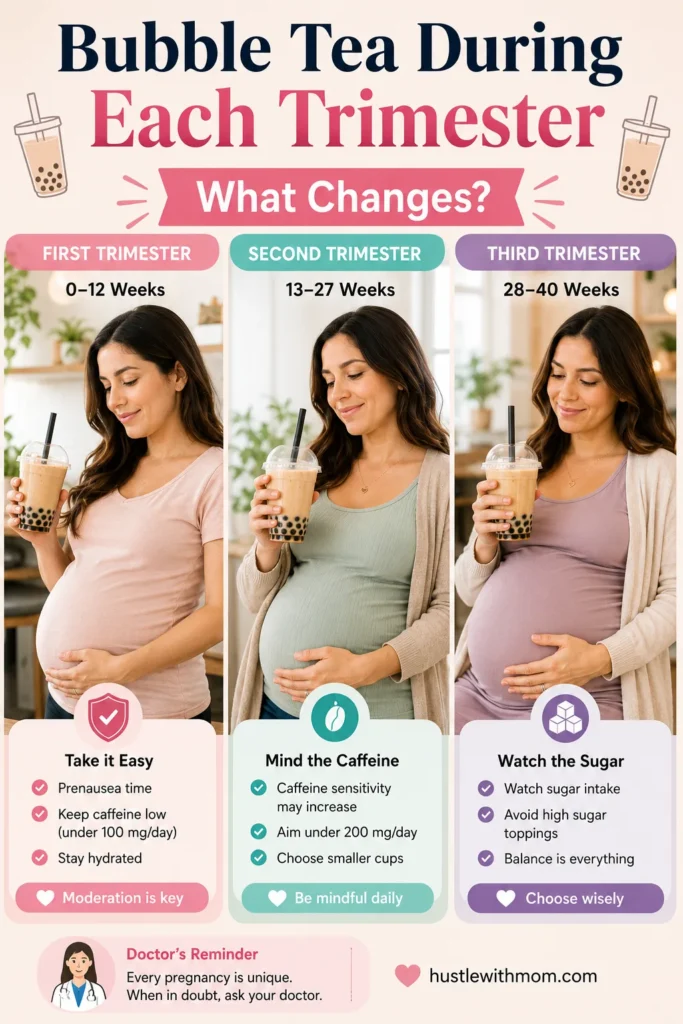
First trimester. This is usually when nausea and food aversions are at their worst, so a cold, sweet drink can genuinely help some people get fluids and calorifirst-trimester else sounds good. If you’re navigating those early weeks, my post on first trimester of pregnancy tips goes into more of what actually helped me get through the roughest days.
Second trimester. Energy usually comes back a bit here, and cravings tend to get more specific (hello, boba). This is also around when odd little body changes start showing up, things like skin tags during pregnancy, that have nothing to do with your diet but still catch you off guard. It’s a good window to build the habit of checking your sugar percentage and caffeine source before you order, since you’ll likely be reaching for it more often.
Third trimester. Heartburn and reflux tend to ramp up, and cold, sugary, milky drinks can sometimes make that worse for some people. This is also the stretch where a lot of women deal with leg cramps during pregnancy and general achiness, so if you’re already managing discomfort, it’s worth paying attention to whether boba is adding to it. If bubble tea has started giving you heartburn late in pregnancy, that’s your body telling you something, not a sign you’re doing anything wrong.
When You Might Want to Skip It
There are a few situations where it’s worth being more cautious:
- You’ve been diagnosed with gestational diabetes and need to watch blood sugar spikes closely
- You’ve already hit your caffeine limit for the day from coffee, soda, or chocolate
- You’re dealing with active heartburn or acid reflux that flares with cold, sugary drinks
- The shop can’t tell you what’s in the drink or how the pearls were stored
None of these mean bubble tea is banned forever. They just mean today might not be the day for it, and that’s a completely reasonable call to make.
How I Order Pregnancy-Friendly Bubble Tea Now
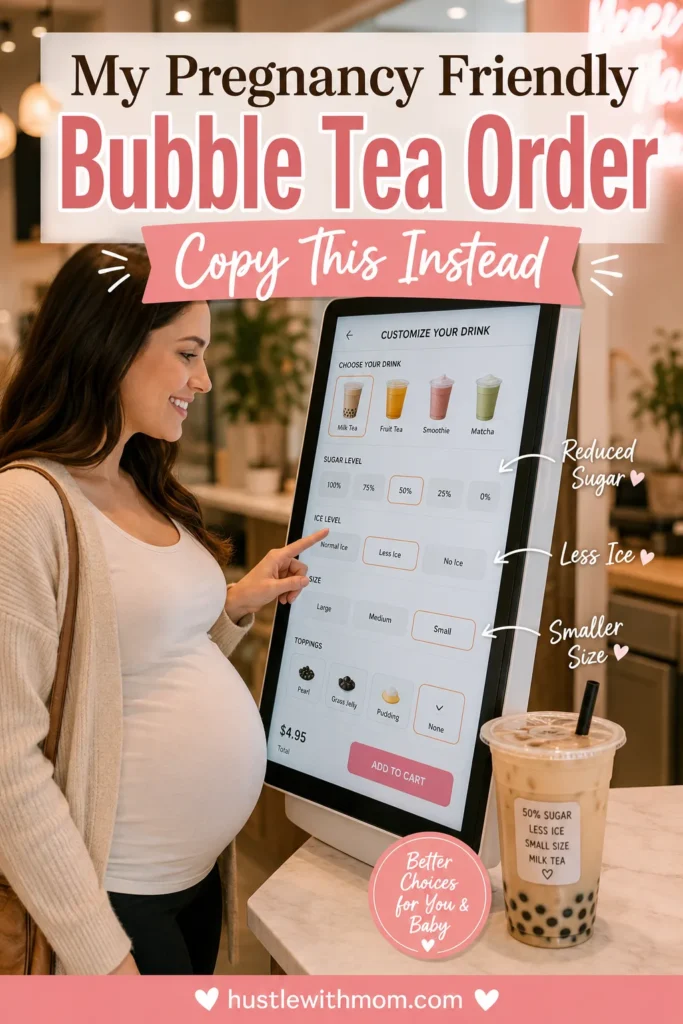
This is the exact script I use at the counter, and it works at pretty much every shop I’ve tried:
- Pick a smaller size (small or medium instead of large)
- Ask for 25% to 50% sugar instead of 100%
- Choose a decaf, herbal, or fruit tea base if you’re close to your caffeine limit
- Ask for the pearls to be freshly cooked if you’re at a shop you don’t know well
- Skip extra toppings like flavored syrups or artificial popping boba if you’re watching sugar closely
It sounds fussy written out, but in real life it’s a ten-second conversation with the cashier, and it turns a caffeine-and-sugar bomb into a treat you can actually feel good about.
Pregnancy-Safe Alternatives Worth Trying
On days I wanted something different, a few swaps worked well:
- Fruit tea with no tapioca, just fruit jelly or fresh fruit pieces
- Homemade milk tea using decaf tea bags, so I controlled both caffeine and sugar completely
- Plain iced herbal tea with a splash of milk for that creamy feel without the caffeine
If you’re already exploring what else is safe to sip, my post on whether cranberry juice is good for pregnancy covers another drink question that comes up almost as often as this one. And if you’re breastfeeding on top of pregnancy questions or planning ahead for after baby arrives, I also broke down whether Body Armor and breastfeeding mix well, since electrolyte drinks come up a lot in that stage too.
Common Mistakes I See (and Made Myself)
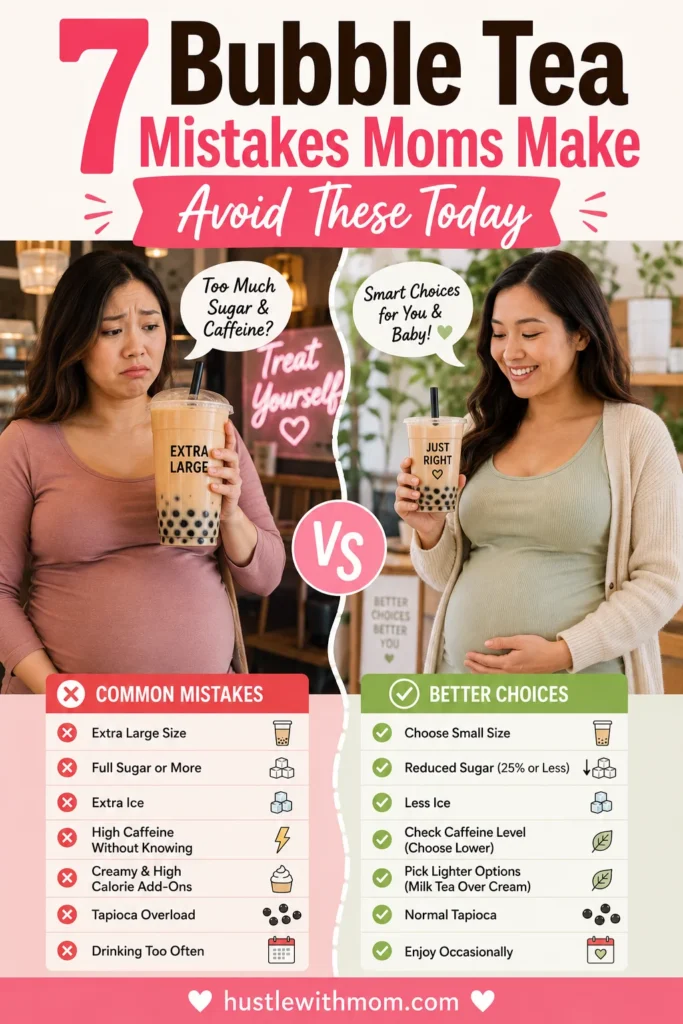
Ordering on autopilot. Getting your usual 100% sugar, full-caffeine order out of habit, without thinking about what else you’ve had that day.
Assuming fruit tea is always caffeine-free. Some fruit teas are actually brewed with a black or green tea base and just flavored with fruit syrup. Always ask.
Ignoring how you feel afterward. If a certain drink consistently gives you heartburn, jitters, or bloating, that’s useful information, not something to push through out of stubbornness.
Skipping it entirely out of fear, then binging later. A few friends told me they cut out boba completely for months, then way overdid it in one sitting because the craving never actually went away. Moderate, regular indulging tends to work better than total restriction followed by a blowout.
Forgetting cravings spike around certain seasons. My boba orders always jumped around November and December, right along with everything else. If you’re pregnant heading into the holidays, my post on pregnancy during the holidays has more on managing cravings and stress when the whole season is working against your good intentions.
Final Thoughts
Craving bubble tea while pregnant isn’t something to feel guilty about. It’s one of the more manageable cravings out there, honestly, especially once you know which levers to pull: tea base, sugar percentage, and size.
I still get boba regularly, and my kid is a very happy, very healthy toddler who has zero idea her mom spent an entire trimester overthinking milk tea. If you’re planning meals and snacks around your pregnancy anyway, it’s worth folding your boba habit into a broader pregnancy meal prep routine so it fits naturally instead of feeling like a rule you’re breaking every time you order one.
And once baby arrives, the questions don’t stop, they just shift. I dealt with unexpected stuff like leg swelling after pregnancy in those first few weeks postpartum, so if you’re already curious what’s coming next, that one’s worth bookmarking too.
Enjoy your drink. Just order it a little smarter than I did that first time in line.