
It’s 6:47 in the morning, my toddler is standing on a chair she’s not supposed to be standing on, my six-month-old is fussing in the high chair, and I’m staring into the fridge like it owes me answers. If you’ve ever felt that specific kind of morning panic, you already know why I started keeping a running list of breakfast ideas for babies and toddlers taped inside my kitchen cabinet. It wasn’t fancy. It was survival.
Three kids and a lot of trial and error later, that scrappy list turned into something I actually trust. Not Pinterest-perfect food art, just real, doable toddler breakfast ideas and baby-friendly options that get everyone fed without a meltdown (usually mine, not theirs).
This guide is everything I wish someone had handed me in the newborn haze: age-specific ideas, safety tips that actually matter, and a printable plan so you’re not reinventing breakfast every single day.
Why Breakfast Actually Matters for Babies and Toddlers
I used to think breakfast was just “the meal before the real meals.” Then a pediatric dietitian friend explained it to me differently. Toddlers have tiny stomachs and huge energy needs, so skipping or skimping on breakfast means they’re running on empty by mid-morning, which is exactly when the tantrums show up.
A solid breakfast gives babies and toddlers iron, protein, and healthy fats they need for brain development, especially between six months and two years when growth is happening fast. The American Academy of Pediatrics points out that this window is critical for building lifelong eating habits, not just filling a belly.
So yes, breakfast matters. But it doesn’t have to be complicated.
How Much Should Babies and Toddlers Eat for Breakfast? (Portion Guide by Age)
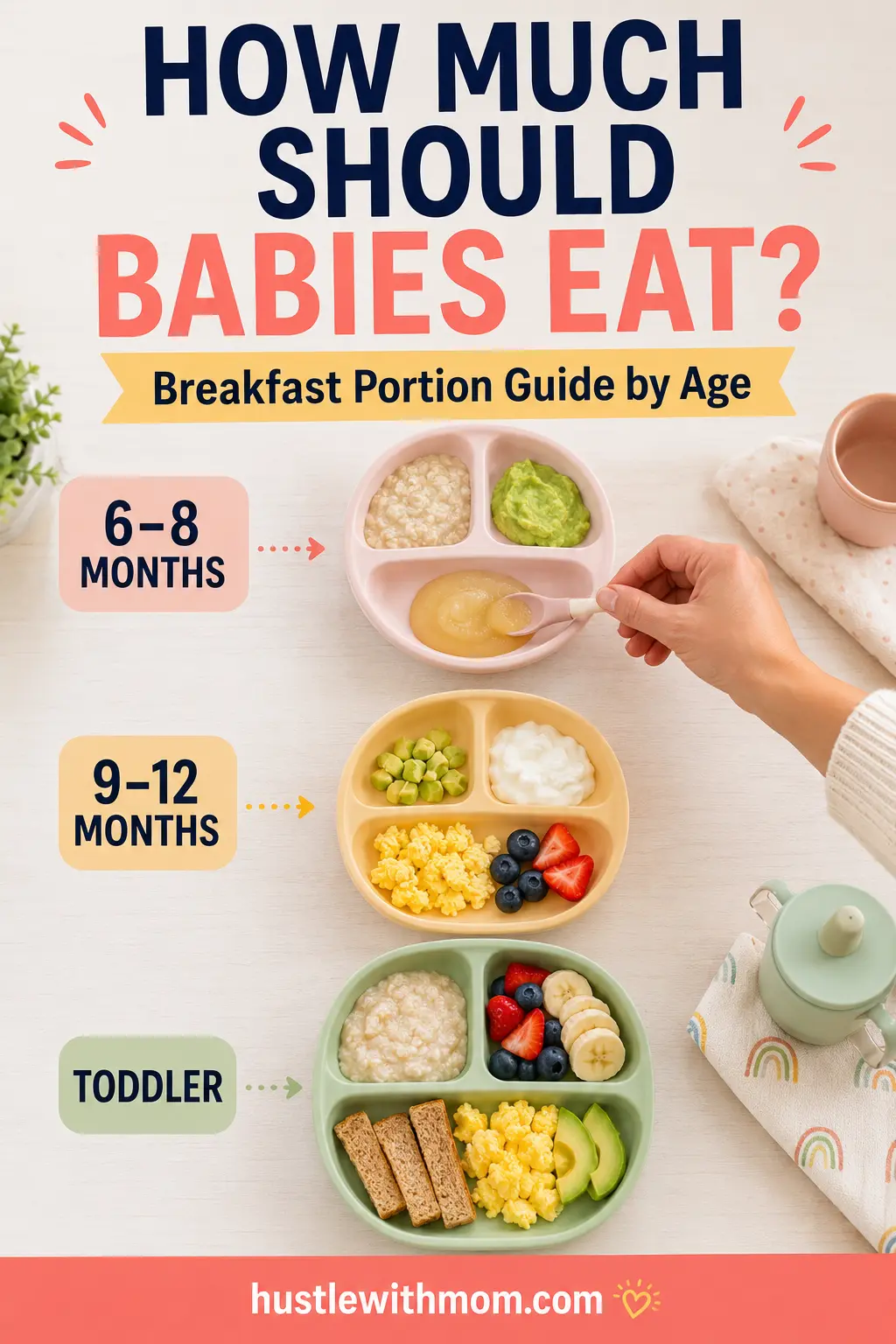
This is the part nobody explained to me clearly, so here’s the breakdown I now use with all three kids.
6 to 9 Months
At this stage, breakfast is mostly about exploration, not calories. Think one or two tablespoons of mashed fruit, iron-fortified baby oatmeal, or soft finger foods like a strip of ripe avocado. Milk (breast milk or formula) is still their main source of nutrition.
9 to 12 Months
Portions grow a bit. Aim for around a quarter to half cup of food total, split across two or three items, like scrambled egg plus a few soft banana pieces.
12 to 24 Months
Toddlers this age typically eat a quarter to a third of an adult portion. A small bowl of oatmeal with fruit, plus a few bites of protein, is usually enough.
2 to 3 Years
By now, appetite varies wildly day to day (mine can eat like a linebacker one morning and refuse everything the next). Offer a balanced plate and let them decide how much to eat. That’s normal toddler behavior, not a feeding failure on your part.
Breakfast Safety First: Choking Hazards and Allergens
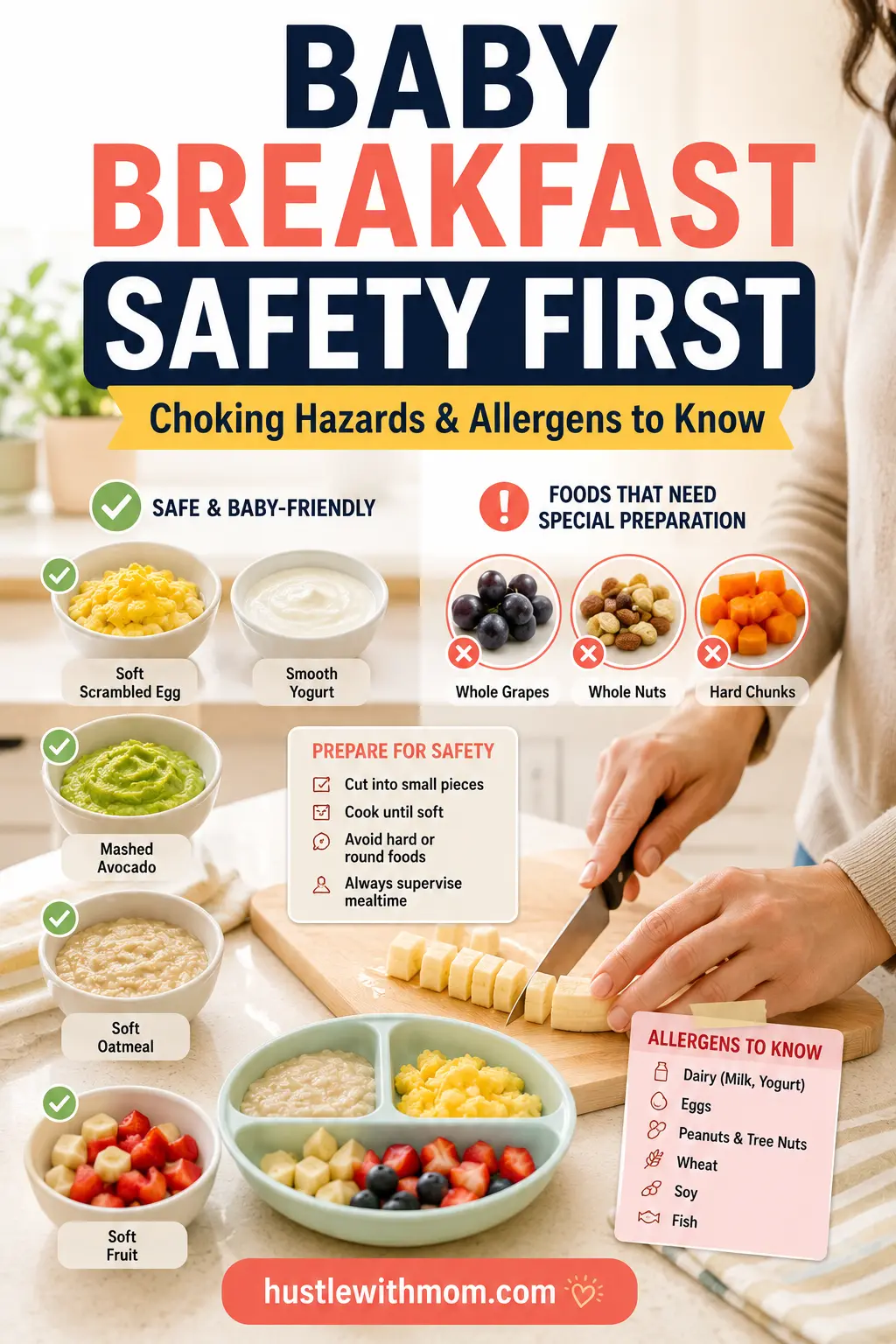
I’ll be honest, this is the section I get the most questions about from other parents, and it’s also where a lot of blog posts get vague. Let’s fix that.
Foods to Avoid or Modify
Some foods are genuinely risky for babies and toddlers under four, according to HealthyChildren.org:
- Whole grapes or cherry tomatoes (always quarter them lengthwise)
- Whole nuts and popcorn
- Hard raw vegetables like carrot coins
- Hot dogs or sausages cut into round slices
- Sticky dried fruit served whole
- Thick globs of nut butter (thin it out instead)
Safe Cutting Techniques by Age
Around six months, babies use a palmar grasp, so foods should be cut into long, finger-sized strips they can hold in a fist. By nine months or so, most develop a pincer grasp, meaning smaller, pea-sized or chickpea-sized pieces work better. Every food, regardless of size, should be soft enough to squish easily between your fingers.
Introducing the Top Allergens Safely
Waiting to introduce allergens is outdated advice at this point. Current guidance from pediatric allergy researchers actually recommends introducing common allergens like egg, peanut, and dairy early and often, around six months, unless your pediatrician says otherwise. I introduced peanut butter thinned with warm water on toast strips, one new allergen at a time, watching for reactions over a couple of days before trying the next one.
Breakfast Ideas for Babies (6 to 12 Months): Baby-Led Weaning Friendly
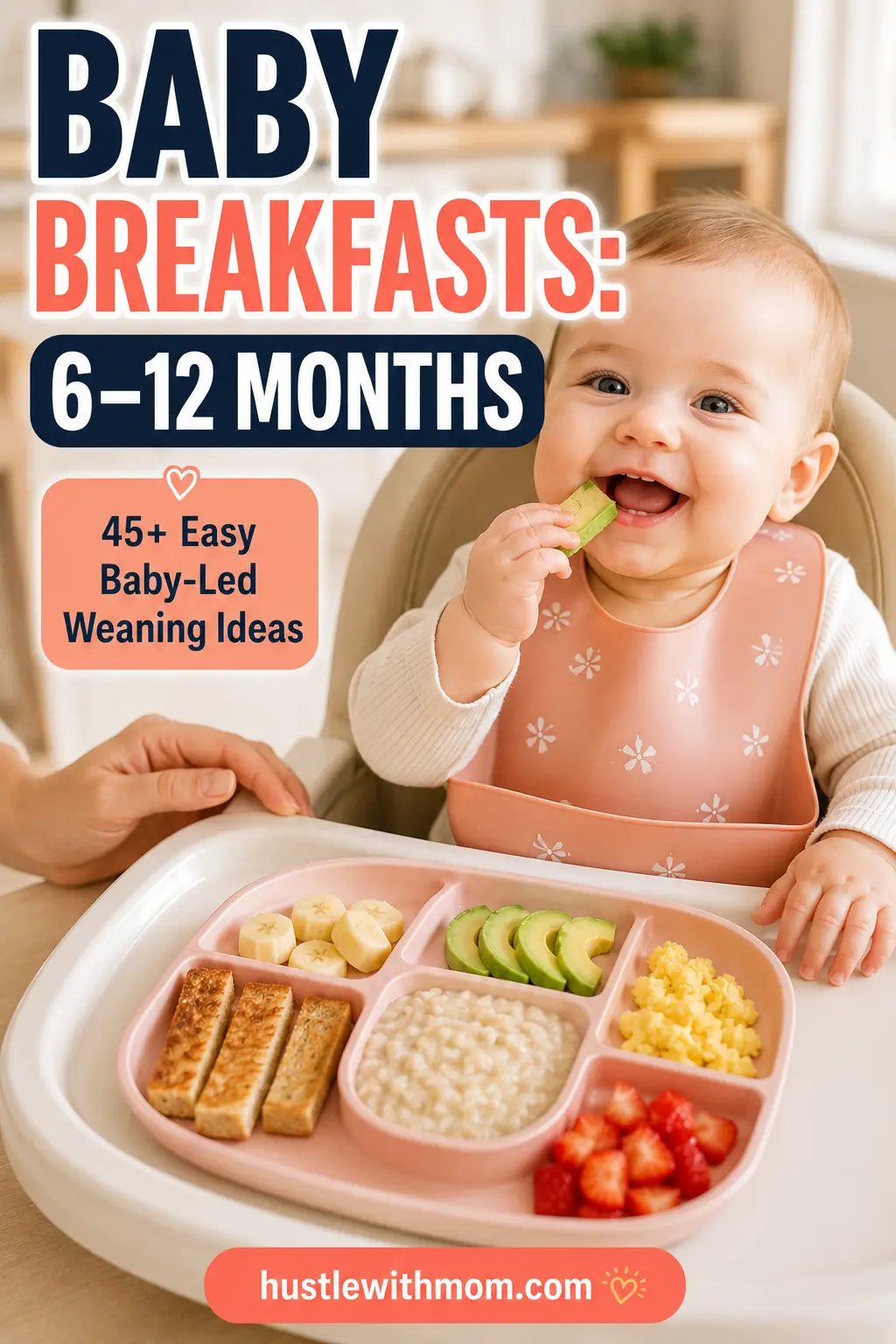
If you’re doing baby-led weaning, here’s what actually worked in my house, not just what looked good in a recipe card.
- Iron-fortified oatmeal mixed with mashed banana and a splash of breast milk or formula
- Soft scrambled eggs with a sprinkle of shredded cheese
- Avocado toast strips on soft whole-grain bread
- Steamed sweet potato sticks, cut into palmar-grasp-friendly strips
- Mashed pear with a dusting of cinnamon
- Ricotta or cottage cheese with soft mashed berries
- Thin pancake strips made with mashed banana and oats (no added sugar)
These were the ones my babies actually ate more than once, which honestly feels like the real benchmark.
Breakfast Ideas for Toddlers (1 to 3 Years)
Once toddlers get more opinionated (and they will), variety becomes your best friend.
Egg-Based Breakfasts
Egg muffins are the MVP in my kitchen. Whisk eggs with shredded veggies and a little cheese, pour into a muffin tin, bake at 350°F for about 15 minutes, and freeze the extras. My kids eat these more willingly than plain scrambled eggs, probably because they get to hold them.
Oatmeal and Overnight Oats
Overnight oats saved my mornings more times than I can count. Mix rolled oats, milk, and yogurt the night before, then top with soft fruit in the morning. Zero cooking required.
Yogurt-Based Breakfasts
Plain, whole-milk yogurt with mashed fruit and a spoon of nut butter is a five-minute win. Skip flavored yogurts loaded with added sugar if you can.
Pancakes, Waffles, and Muffins
Make a double batch on Sunday and freeze them flat on a tray before bagging. Toaster reheats them in two minutes, which has bailed me out more mornings than I’d like to admit.
Savory Breakfasts
Beans, mashed avocado, and a little shredded cheese on a warm tortilla is a toddler-approved savory option that doesn’t feel like “kid food.”
Smoothies and Smoothie Bowls
Blend spinach, banana, yogurt, and a splash of milk. My toddler has no idea there are vegetables in there, and I’m not telling her.
Fruit and Veggie-Packed Ideas
Steamed veggie sticks alongside fruit slices round out any of the above without extra cooking.
Make-Ahead and Freezer-Friendly Breakfast Ideas
If there’s one habit that changed my mornings, it’s meal prepping breakfast on the weekend. Egg muffins, pancakes, and waffles all freeze well for up to three months. I actually built a full weekend routine around this after realizing chaotic mornings were draining me more than anything else, which I wrote about in my pregnancy meal prep guide and expanded on later in my proven meal plan for busy moms.
Reheating tip: use the microwave for oatmeal and eggs, but the toaster or oven for pancakes and waffles so they don’t turn soggy.
Quick 5-Minute Breakfasts for Busy Mornings
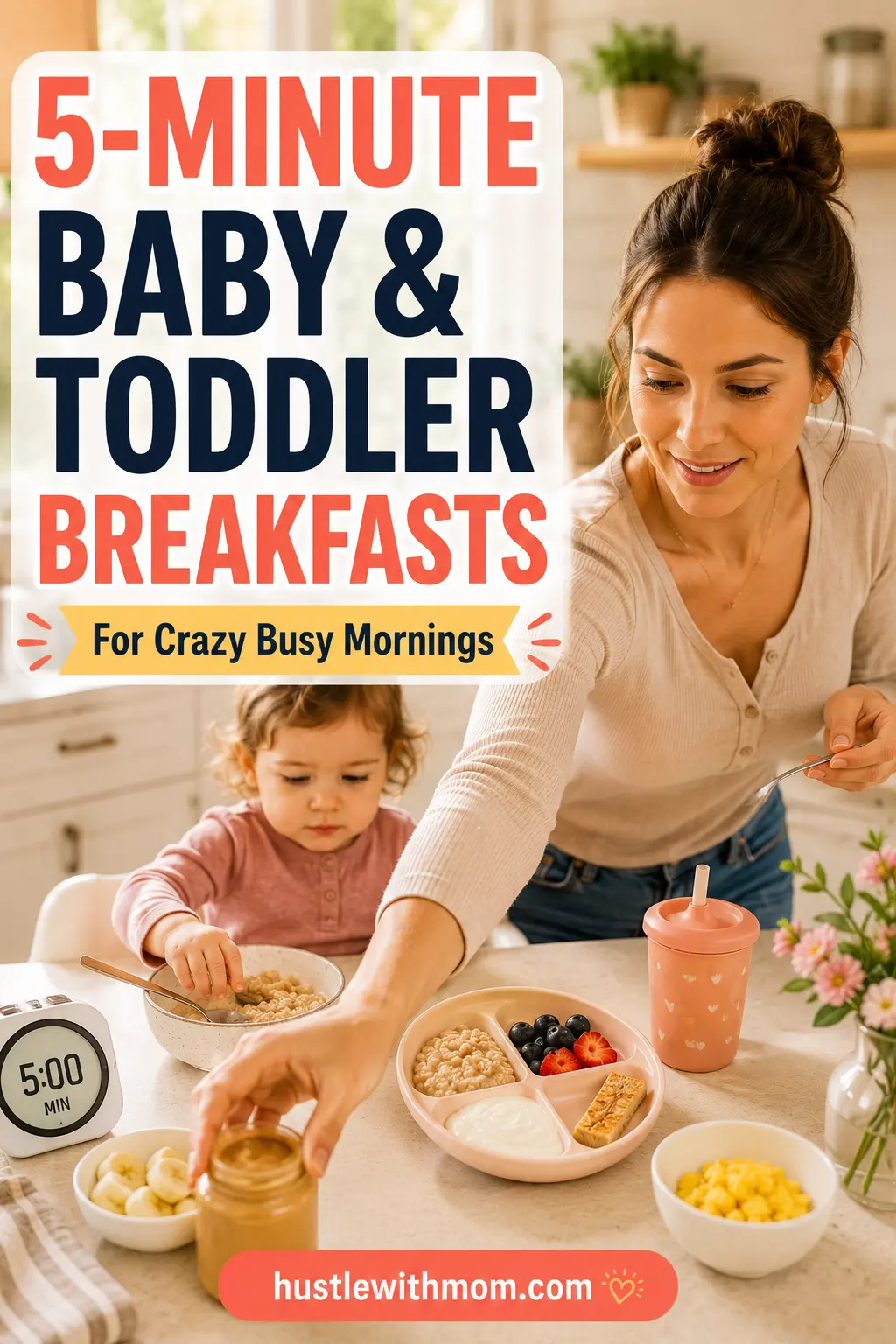
Some mornings, five minutes is genuinely all you’ve got. On those days, I lean on:
- Yogurt cups with pre-cut fruit
- Toast with nut butter, sliced into strips
- A frozen waffle straight from the toaster
- A banana and a hard-boiled egg (boiled in bulk on Sundays)
These aren’t glamorous, but they’re consistent, and consistency is what actually matters when you’re this tired. If mornings feel like your hardest hour, you’re not alone. I talk through a lot of these survival strategies in my tips for exhausted new moms.
Tips for Feeding Picky Eaters at Breakfast
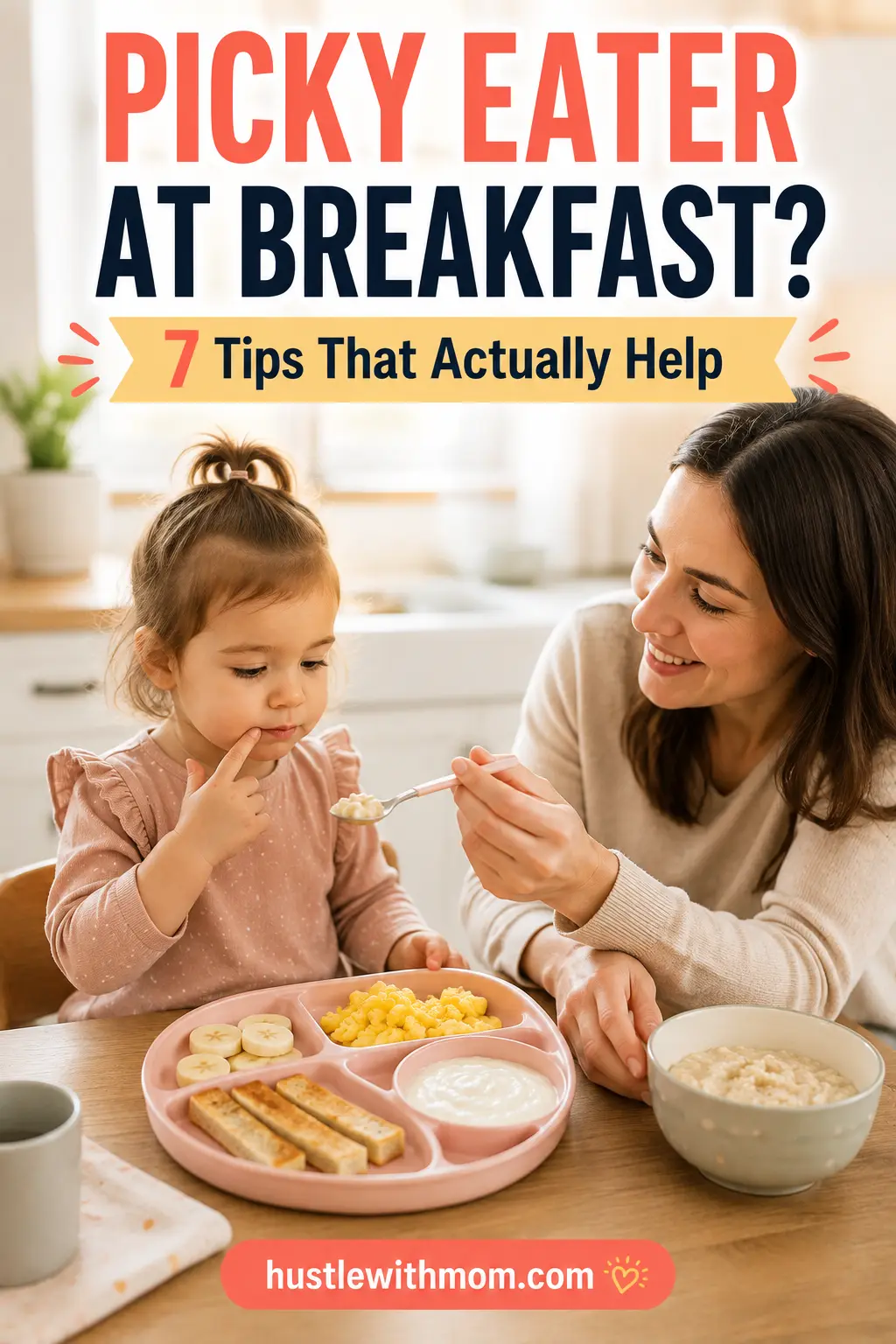
My middle child went through a stretch where he’d only eat plain toast for weeks. Here’s what actually helped, based on what a feeding therapist told me:
- Keep offering the food without pressure, even if it’s rejected ten times in a row.
- Pair new foods with familiar ones on the same plate.
- Let toddlers help stir, pour, or choose between two options.
- Avoid turning meals into negotiations or bribery sessions.
- Stay calm even when the plate comes back untouched. Repetition works better than pressure.
Staying patient through this stage is honestly a parenting skill in itself, one I keep coming back to in my notes on staying calm as a mom every single day.
Sample 7-Day Breakfast Meal Plan
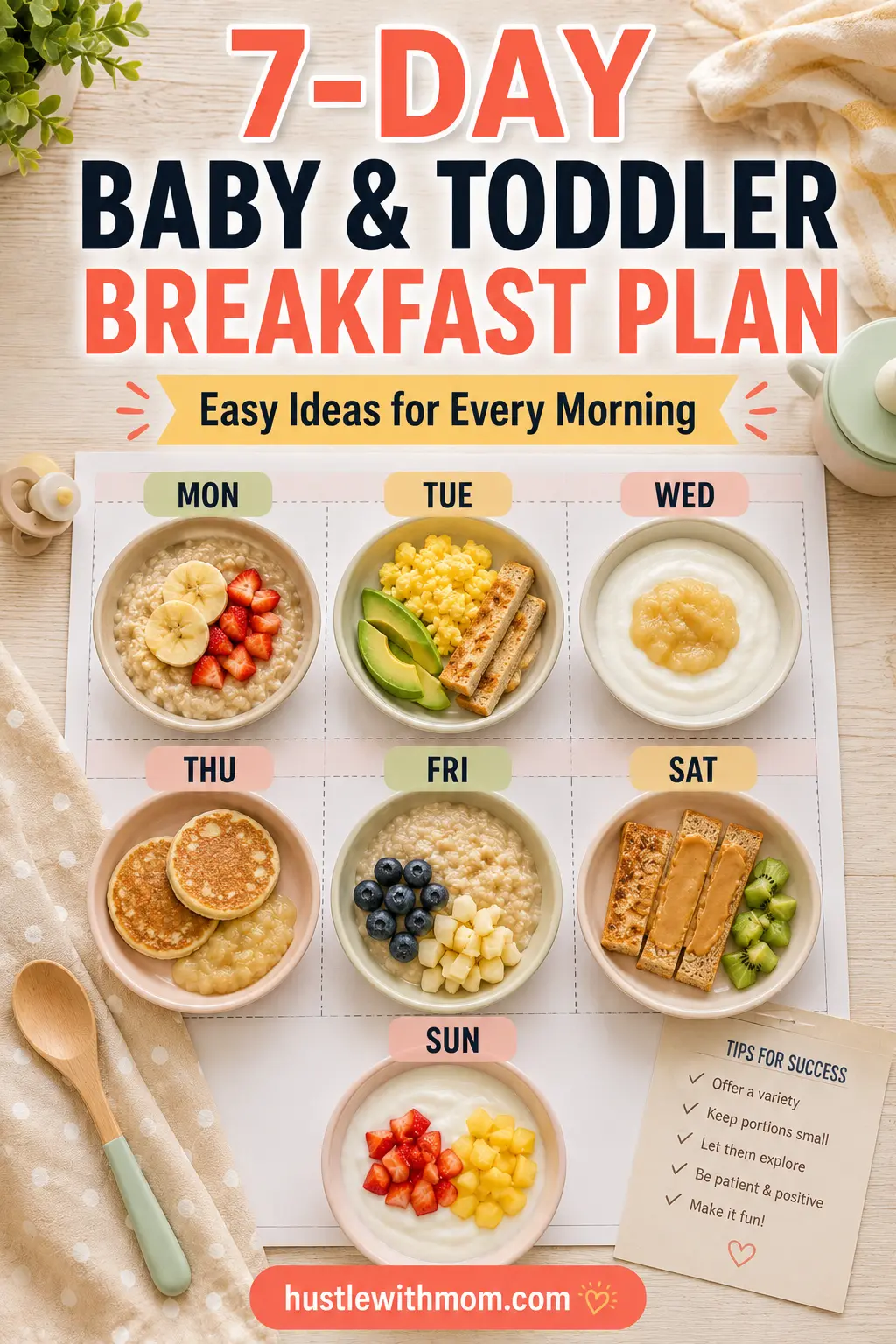
| Day | Breakfast Idea |
| Monday | Overnight oats with mashed berries |
| Tuesday | Egg muffins with steamed veggie sticks |
| Wednesday | Yogurt with banana and nut butter |
| Thursday | Whole-grain pancakes (frozen batch) |
| Friday | Avocado toast strips with scrambled egg |
| Saturday | Smoothie bowl with fruit topping |
| Sunday | Savory bean and cheese tortilla |
Print this out, stick it on the fridge, and rotate it weekly. It’s saved me more decision fatigue than almost anything else in my routine.
Common Mistakes to Avoid
- Serving the same three foods on repeat out of fear of rejection. Variety early on actually reduces picky eating later.
- Skipping allergen introduction because it feels intimidating. Delaying it doesn’t reduce risk, according to current pediatric guidance.
- Cutting round foods incorrectly. Always quarter grapes, tomatoes, and similar foods lengthwise, not just in half.
- Adding honey before age one. It’s a genuine botulism risk for babies under 12 months.
- Assuming a “bad” breakfast day means you’re failing. Toddler appetite is wildly inconsistent, and that’s developmentally normal, not a reflection of your parenting.
Final Thoughts
Breakfast doesn’t need to be Pinterest-worthy to count. Some of the best mornings I’ve had with my kids involved reheated egg muffins and a banana eaten in the car. What matters is consistency, safe textures, and giving your baby or toddler a real shot at trying new foods without pressure.
If you’re building your whole morning routine, not just breakfast, my 50 mom hacks that actually work has a few more shortcuts that pair well with everything on this list. And if your partner wants to take over breakfast duty some mornings, it’s honestly one of the easiest ways I’ve found in our dad-baby bonding tips to get more hands in the kitchen.
You’ve got this, even on the mornings that don’t feel like it.
FAQs About Breakfast Ideas for Babies and Toddlers
How much milk or dairy should toddlers have at breakfast?
Around half a cup to a cup of whole milk or dairy equivalent is typical for toddlers over one year, though this can be split across meals rather than all at breakfast.
Can babies have breakfast cereal?
Yes, as long as it’s iron-fortified and low in added sugar. Check that pieces are soft enough to dissolve easily or are appropriately sized for your baby’s grasp stage.
Is it okay to give the same breakfast every day?
Occasionally, yes, but rotating options helps expose toddlers to more textures, flavors, and nutrients over time, which can also reduce picky eating later on.
How do I introduce allergens safely at breakfast?
Offer one new allergen at a time in a soft, age-appropriate form, like thinned peanut butter or soft scrambled egg, and watch for reactions over the next couple of hours to days before introducing another.
What are the best iron-rich breakfast foods for babies?
Iron-fortified infant oatmeal, soft scrambled eggs, and pureed or mashed beans are strong options recommended by pediatric nutrition guidelines.
Key Takeaways
- Breakfast fuels early brain development, so it’s worth prioritizing even on chaotic mornings.
- Portion sizes and food textures should shift as your baby or toddler grows, from palmar-grasp strips to pincer-grasp bites.
- Introducing allergens early and consistently is now considered safer than delaying them.
- Make-ahead and freezer-friendly breakfast ideas for babies and toddlers are the real secret to surviving busy mornings.
- Picky eating is normal. Patience and repeated, pressure-free exposure work better than forcing bites.
2 thoughts on “45+ Best Breakfast Ideas for Babies and Toddlers (Easy & Safe)”