

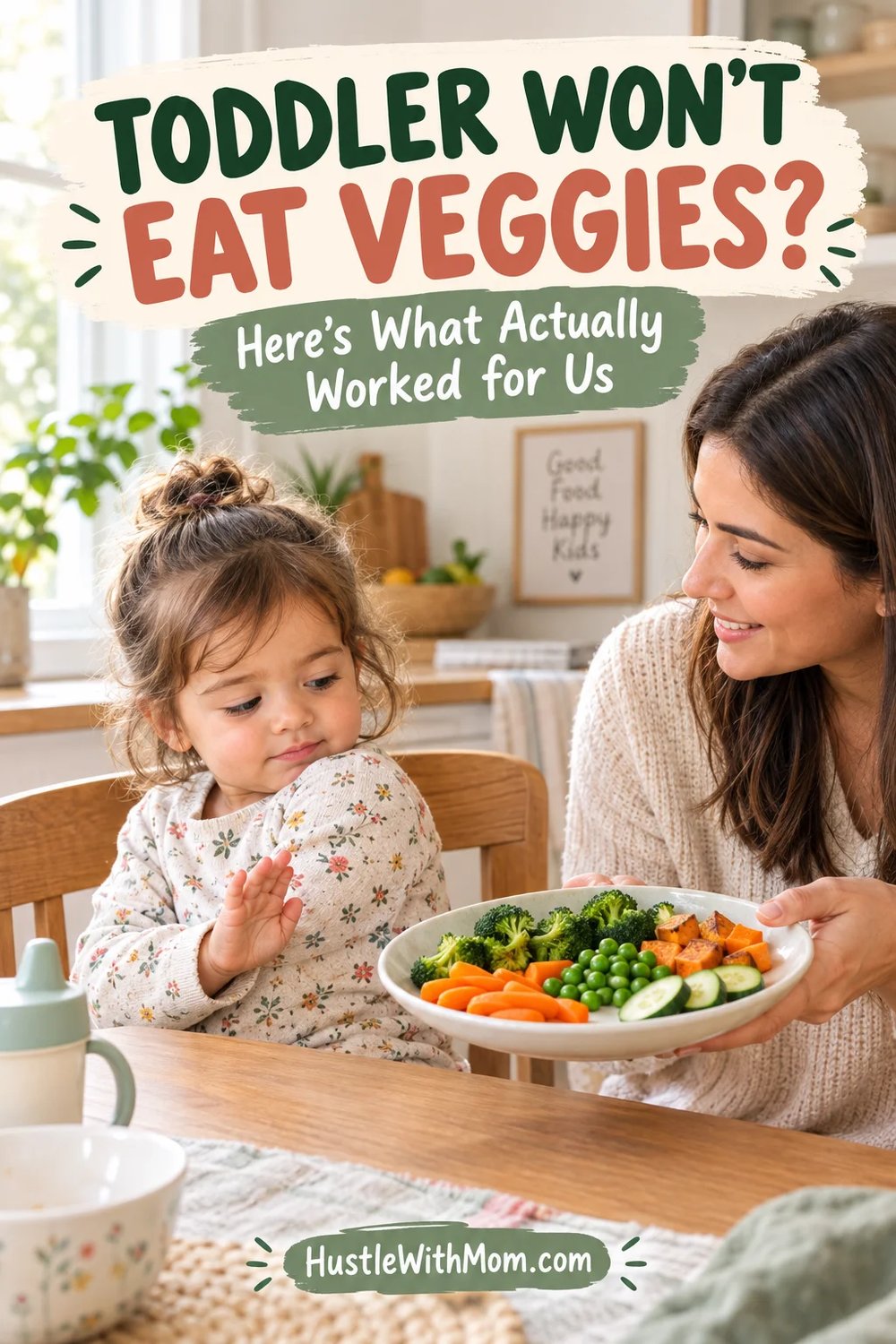
Dinner used to end the same way every single night. A plate full of color on one side, a small pile of pasta or rice on the other, and a toddler who would eat everything except the green stuff. If you’re dealing with picky toddlers eat vegetables battles right now, I want you to know something first: you are not doing anything wrong, and your child is not broken. This is one of the most common stages of toddler development, and there is a real, practical way through it that does not involve bribing, begging, or hiding broccoli in a brownie and hoping for the best.
I have been through the “one bite or no dessert” phase, the “I will only eat orange food” phase, and the phase where a single stray pea touching the rice was treated like a personal insult. What finally worked was not a magic recipe. It was a shift in how I approached mealtime altogether.
Why Toddlers Get So Picky About Vegetables
Toddlers are not being difficult on purpose. Around age one to three, kids go through a stage called food neophobia, which is basically a built-in caution around new or unfamiliar foods. Evolutionarily, it kept little ones from eating something toxic before they could tell the difference. Today it just means your toddler eyes a piece of zucchini like it personally offended them.
A few other things are working against vegetables specifically:
- Their taste buds are more sensitive than ours, so bitter flavors (which many vegetables have) feel stronger to them.
- Texture sensitivity is real. Mushy, stringy, or slimy textures can be a bigger dealbreaker than the actual flavor.
- Toddlers are also asserting independence, and mealtime is one of the few places they have full control. Saying no to a vegetable is often less about the food and more about testing boundaries.
Once I understood this, I stopped taking the food refusal personally. It genuinely changed how I handled dinner.
Is It Normal for a Toddler to Refuse Vegetables?
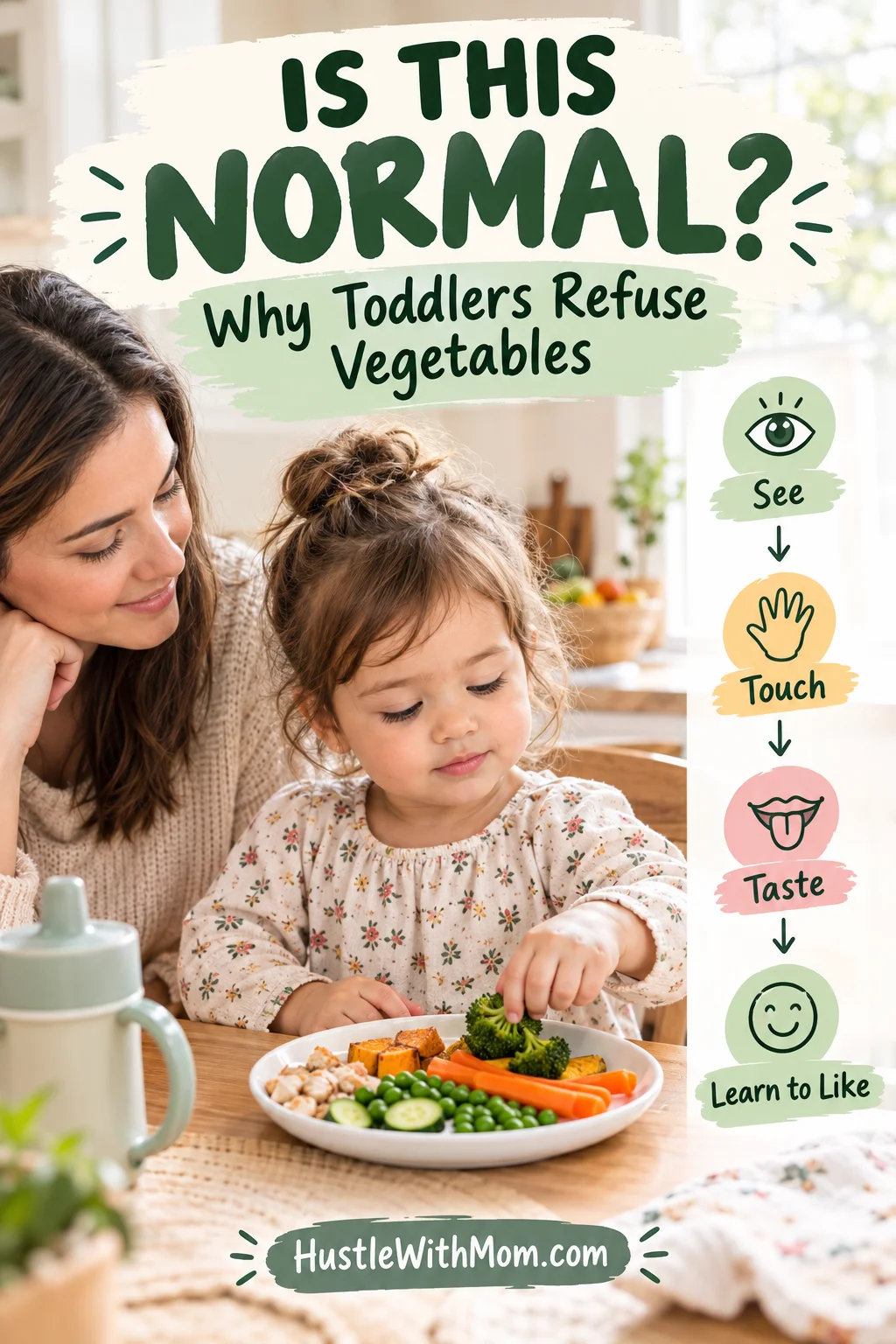
Yes, and more common than most parents realize. Most toddlers go through a picky eating phase, and pediatric health resources like Cleveland Clinic’s guide on getting kids to eat veggies confirm this is developmentally normal, especially between ages one and four.
That said, there are times to check in with your pediatrician, such as if your toddler:
- Refuses entire food groups, not just vegetables
- Is losing weight or falling off their growth curve
- Gags or chokes frequently, which could point to a sensory or oral motor issue
- Shows extreme distress around food beyond typical pickiness
For the average toddler who just does not want to touch a carrot, this is a phase, not a crisis.
Mistakes That Actually Make Picky Eating Worse
I made almost every one of these before I figured out a better approach.
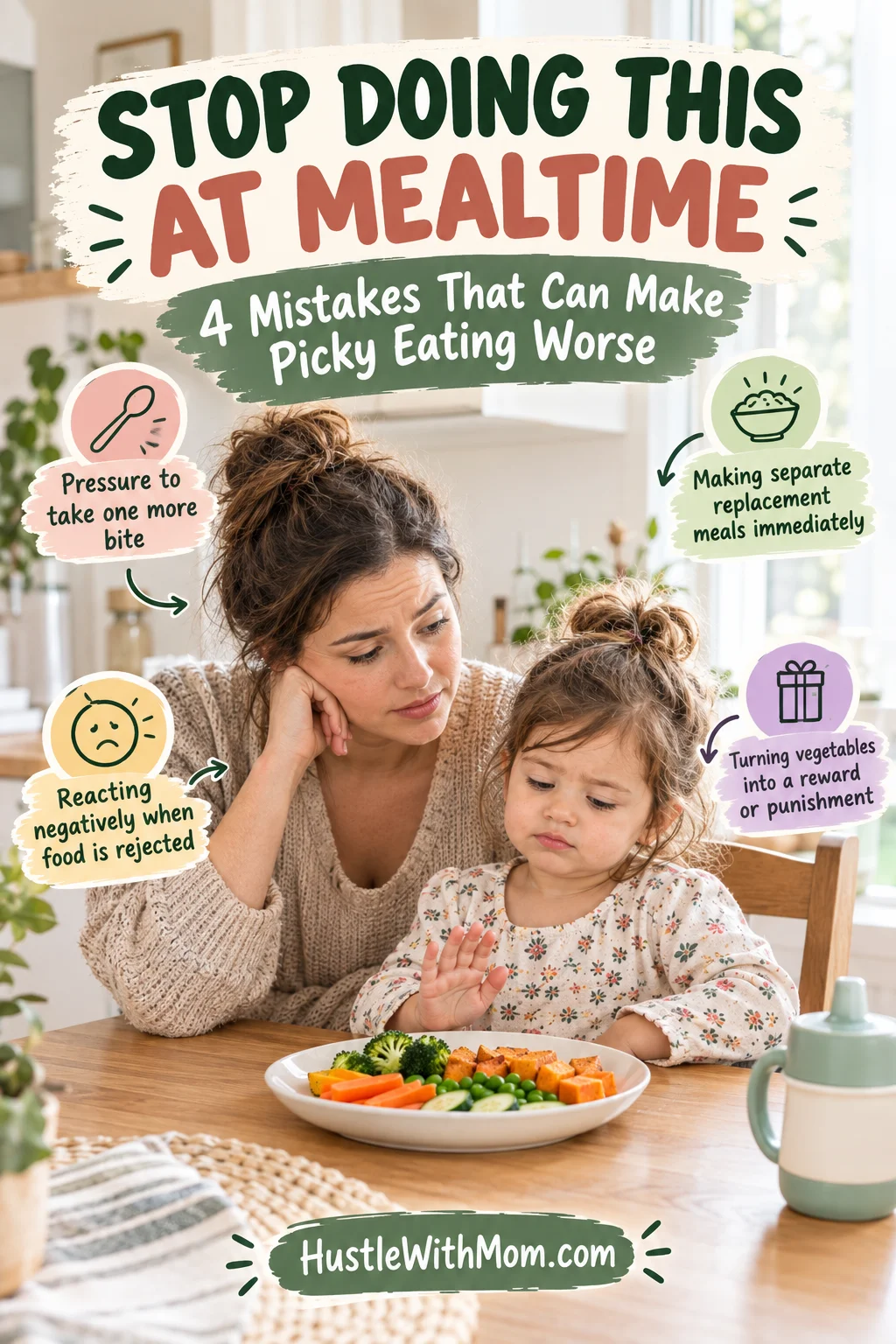
Bribing with dessert. Telling a toddler “eat your peas and you get ice cream” teaches them that vegetables are a chore and dessert is the real prize. It backfires almost every time.
Forcing a bite. Making a toddler sit until the plate is clean creates mealtime battles and can actually build a negative association with that food long term.
Hiding vegetables without ever showing them. Blending spinach into a smoothie is fine, but if you never let your toddler see or touch real vegetables too, they never learn to accept them on their own.
Making a big deal out of refusal. Toddlers pick up on tension fast. The calmer you stay, the less power the vegetable battle has.
If this pattern feels familiar and you are also navigating bigger parenting style questions around structure versus flexibility at the table, it’s worth reading gentle parenting vs permissive parenting to see where a pressure-free feeding approach fits into your overall parenting philosophy.
The Approach That Actually Works: Division of Responsibility
This concept changed everything for us. The basic idea is simple: the parent decides what food is offered, when, and where. The child decides whether to eat it and how much. That’s it. Once I stopped trying to control the “whether,” the power struggle mostly disappeared.
It sounds small, but it removes the fight entirely. You are not asking your toddler to eat the vegetable tonight. You are just putting it on the plate, again and again, without pressure.
Step-by-Step: How to Get a Picky Toddler to Actually Eat Vegetables
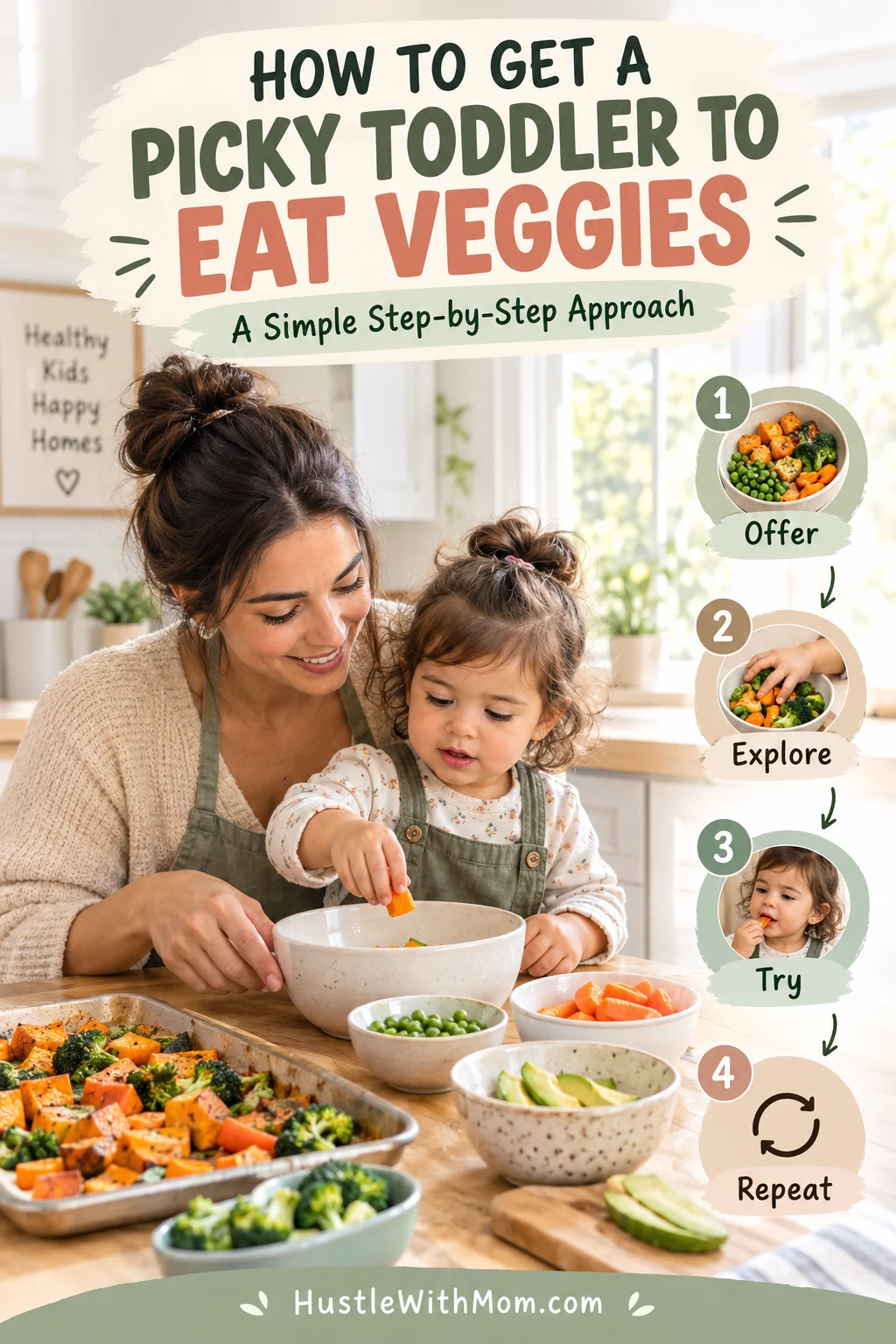
1. Serve vegetables when they’re hungriest, not at dinner.
By dinnertime, toddlers are often tired and less adventurous. Try offering veggies at breakfast or as an afternoon snack instead. Pairing this with easy morning options from breakfast ideas for babies and toddlers made mornings a much easier place to sneak in a win.
2. Keep portions tiny.
One pea. One matchstick of carrot. A “just try it” portion feels far less overwhelming than a full serving, and toddlers are more likely to attempt something small.
3. Pair new vegetables with familiar favorites.
Put the new food next to something you already know they’ll eat. This lowers the stakes and keeps the plate from feeling like a threat.
4. Offer a dip.
Ranch, hummus, or plain yogurt can turn a rejected vegetable into a fun food. Dipping also gives toddlers a sense of control over how they eat it.
5. Get them involved in prep.
Letting your toddler wash, tear, or “help” cook vegetables builds familiarity before it ever hits the plate. This kind of hands-on exploration is very similar to the sensory-based learning encouraged by tools like the ones listed in best Montessori toys for toddlers, where independence and touch drive the learning.
6. Try texture and temperature swaps.
If your toddler hates mushy peas, try them frozen or lightly roasted instead. Texture matters more than most parents expect.
7. Model eating vegetables yourself.
Toddlers copy what they see. If they watch you enjoying vegetables without comment, it normalizes the food far more than any lecture ever could.
8. Practice repeated exposure without pressure.
Research consistently shows kids may need to see a new food ten to fifteen times before accepting it. According to Nemours KidsHealth, persistence without forcing is the most reliable long-term strategy.
Easiest Vegetables to Start With
Some vegetables are simply more toddler-friendly to begin with:
- Carrots, especially shredded or steamed with a touch of butter
- Peas, served frozen for a milder taste and fun texture
- Corn, naturally sweet and easy to pick up
- Cucumber, mild and crunchy with almost no bitterness
- Sweet potato, naturally sweet and soft enough for early eaters
- Cauliflower, blended into sauces or roasted until slightly crispy
Starting with these builds confidence before introducing stronger-flavored options like broccoli or spinach.
Sample Meal Ideas With Veggies Built In
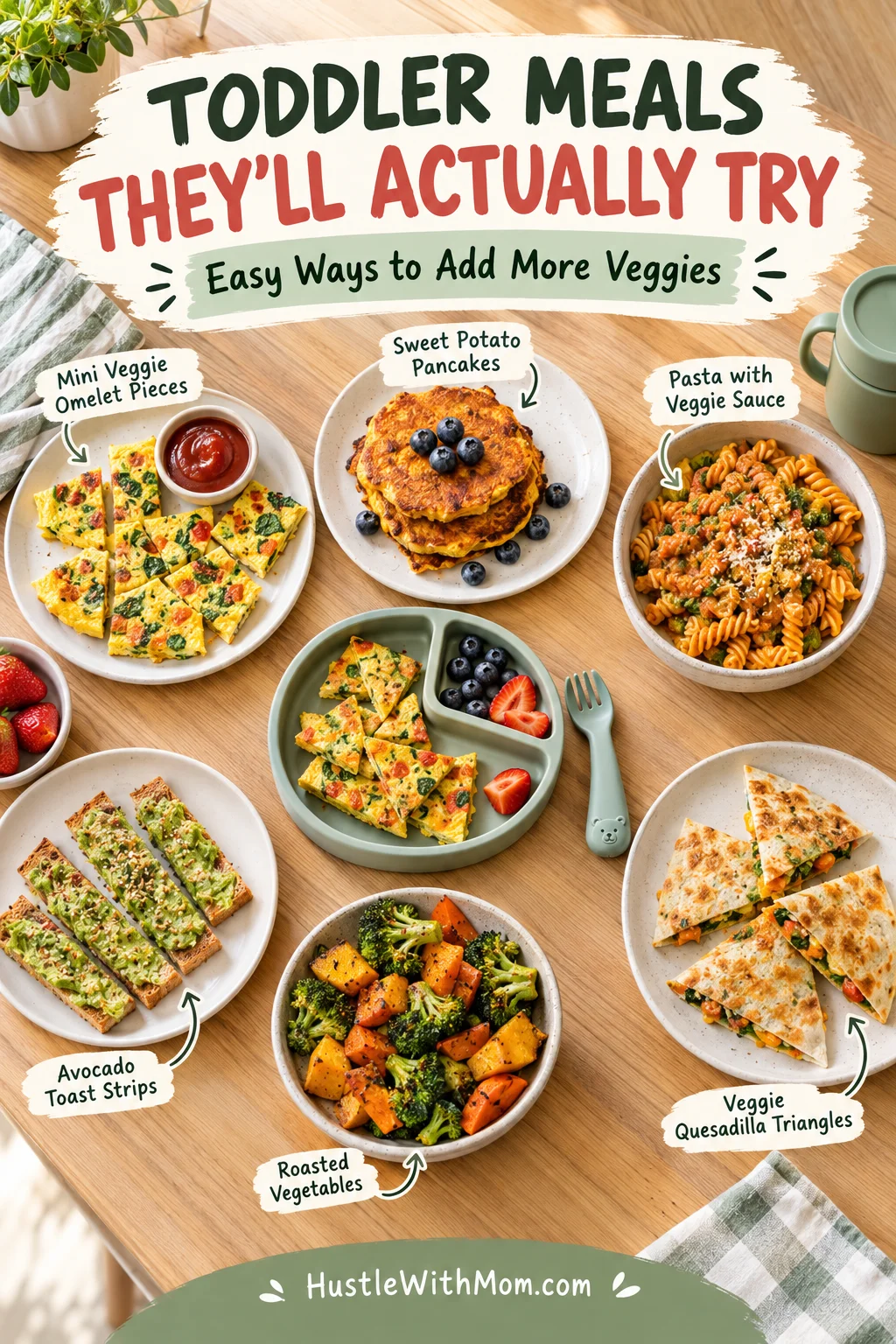
Instead of treating vegetables as a separate battle, work them into meals your toddler already likes. Grated zucchini in pancakes, mashed sweet potato mixed into mac and cheese, or shredded carrots in a quesadilla all work well. If mealtime planning feels overwhelming on top of everything else, a proven meal plan for busy moms can take some of that pressure off so you’re not reinventing dinner every night.
And on the days your toddler is under the weather and appetite drops completely, it helps to have a separate game plan. Our guide on what to feed a sick toddler covers gentler options for those tougher days when vegetables are not the priority.
Common Mistakes to Avoid Along the Way
- Giving up after one or two rejections instead of continuing repeated exposure
- Turning every vegetable into a fight instead of staying neutral
- Only offering vegetables at dinner when appetite is lowest
- Comparing your toddler’s eating to another child’s
- Assuming a food jag, where they only want one food for weeks, will last forever. It usually does not.
When to Talk to a Professional
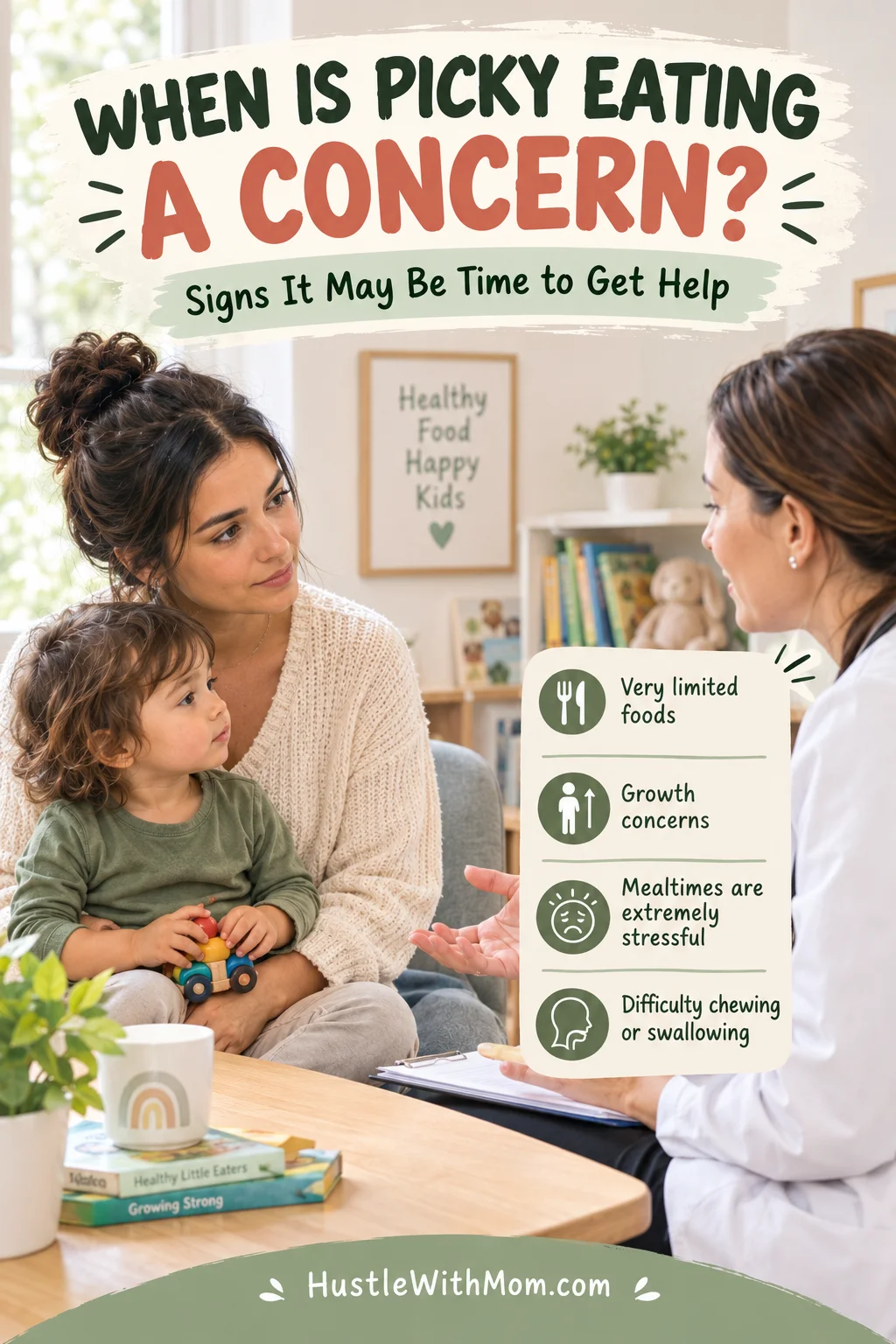
If picky eating starts affecting growth, causes significant weight loss, or comes with extreme sensory reactions to food, a pediatrician or a pediatric dietitian can help rule out anything beyond typical picky eating. For most toddlers though, this is simply a stage that improves with patience and a consistent, low-pressure approach.
Frequently Asked Questions
My toddler won’t eat any vegetables at all. Is that okay?
It is common and usually temporary. Keep offering a variety without pressure, and lean on fruit in the meantime since it offers many similar nutrients.
Should I hide vegetables in other foods?
Blending vegetables into sauces or baked goods is fine occasionally, but it should not replace also offering vegetables in their visible, whole form so your toddler learns to recognize and eventually accept them.
How long does the picky eating phase usually last?
It varies by child, but many toddlers become noticeably more flexible eaters between ages four and six as their taste preferences and independence needs shift.
Do fruits count if my toddler refuses vegetables?
Fruits share many of the same vitamins and fiber, so they are a reasonable stand-in while you keep working on vegetable acceptance.
Final Thoughts
The vegetable battle with a toddler rarely gets solved overnight, and honestly, some nights still end with an untouched pile of green beans at our house too. What changed things for us was dropping the pressure, staying consistent, and trusting that small, repeated exposure adds up over time. Your toddler is not rejecting you when they push away a plate of broccoli. They are just being a toddler, and that part passes faster than it feels like it will.