

My daughter spent almost three weeks doing what I can only describe as “the worm.” She’d get up on her hands and knees, rock back and forth like she was winding up for something big, and then just… flop forward onto her belly. Every single time. I remember calling my sister in a panic asking if this was normal, and she just laughed and said, “That’s the crawling countdown, enjoy the quiet while it lasts.”
She was right. Two weeks later, my living room turned into an obstacle course overnight.
If you’re noticing your baby doing something similar, rocking, pushing up, getting frustrated when a toy is just out of reach, you’re probably looking for the real signs baby ready to crawl and not just a generic checklist. So let’s talk about what actually happens before crawling starts, based on what I lived through and what pediatric research backs up.
What “Crawling Readiness” Actually Looks Like
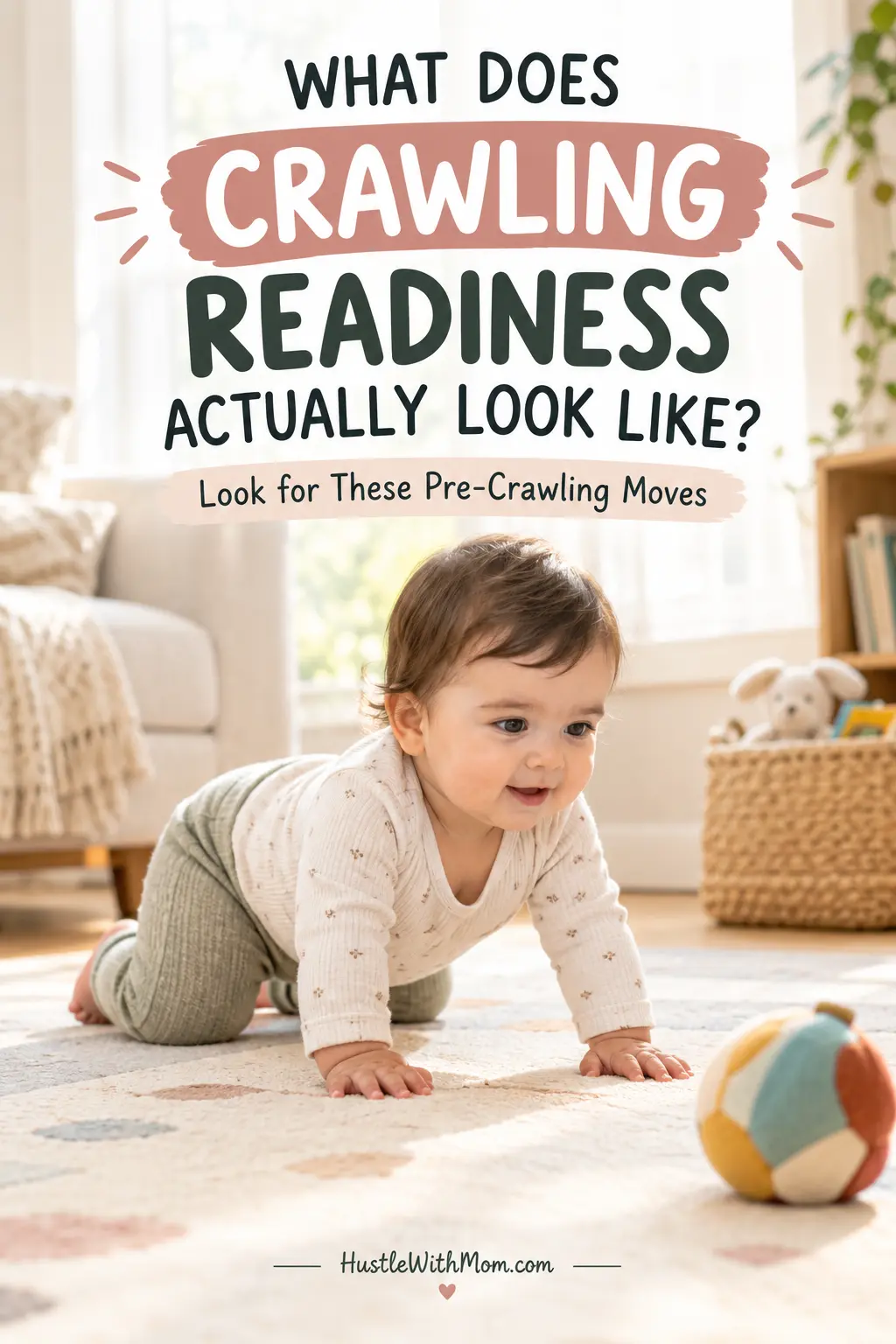
Before your baby can crawl, three things need to line up: core strength, coordination, and honestly, plain old motivation. A baby who has strong arms but zero interest in moving might sit content for weeks. A baby who’s dying to reach the dog’s tail will figure out movement fast, even if their form is messy.
This is why some babies crawl at 6 months and others wait until closer to their first birthday. Both are completely normal. The American Academy of Pediatrics notes that crawling typically develops somewhere between 6 and 10 months, though the range on either side is wide.
If you’re still in the newborn haze and this all feels far off, it might help to first get through preparing for the fourth trimester before worrying about mobility milestones. That stage passes faster than you think.
When Do Babies Usually Start Crawling?
Most babies show early crawling readiness signs around 6 to 7 months, and actually start moving somewhere between 7 and 10 months. Some babies (mine included) take their sweet time and don’t get going until closer to 11 or 12 months.
Here’s the timeline I noticed with my own kids, and one that lines up with what most pediatricians describe:
- 4 to 5 months: Strong head control, pushing up during tummy time
- 6 to 7 months: Rolling both ways, sitting with support, rocking on hands and knees
- 8 to 9 months: Scooting, pivoting, army crawling, sitting independently
- 9 to 10+ months: Classic hands and knees crawling, pulling up to stand
If your baby is still working through the earlier stages of this, it might also be worth checking whether they’re going through a growth spurt or a baby sleep regression, since a lot of moms notice sleep gets weird right around the same time as a big motor skill jump. It’s not a coincidence, their brain is busy. If mornings have gotten rough on top of it, this often overlaps with the same stretch covered in why your baby is waking at 5am.
9 Real Signs Your Baby Is Ready to Crawl
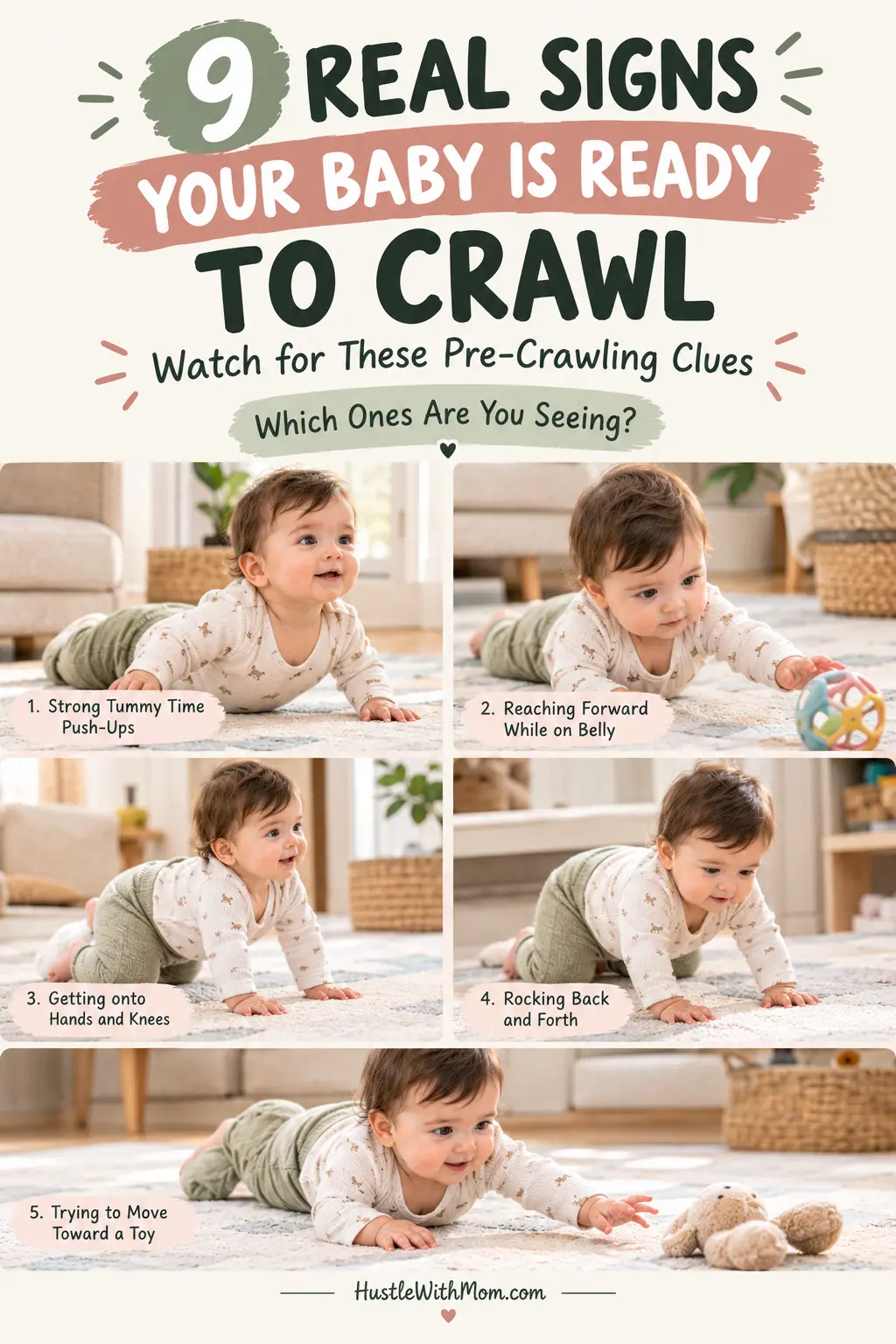
These are the actual physical cues I watched for, and the ones that show up consistently in pediatric development guides too.
1. Strong Push-Ups During Tummy Time
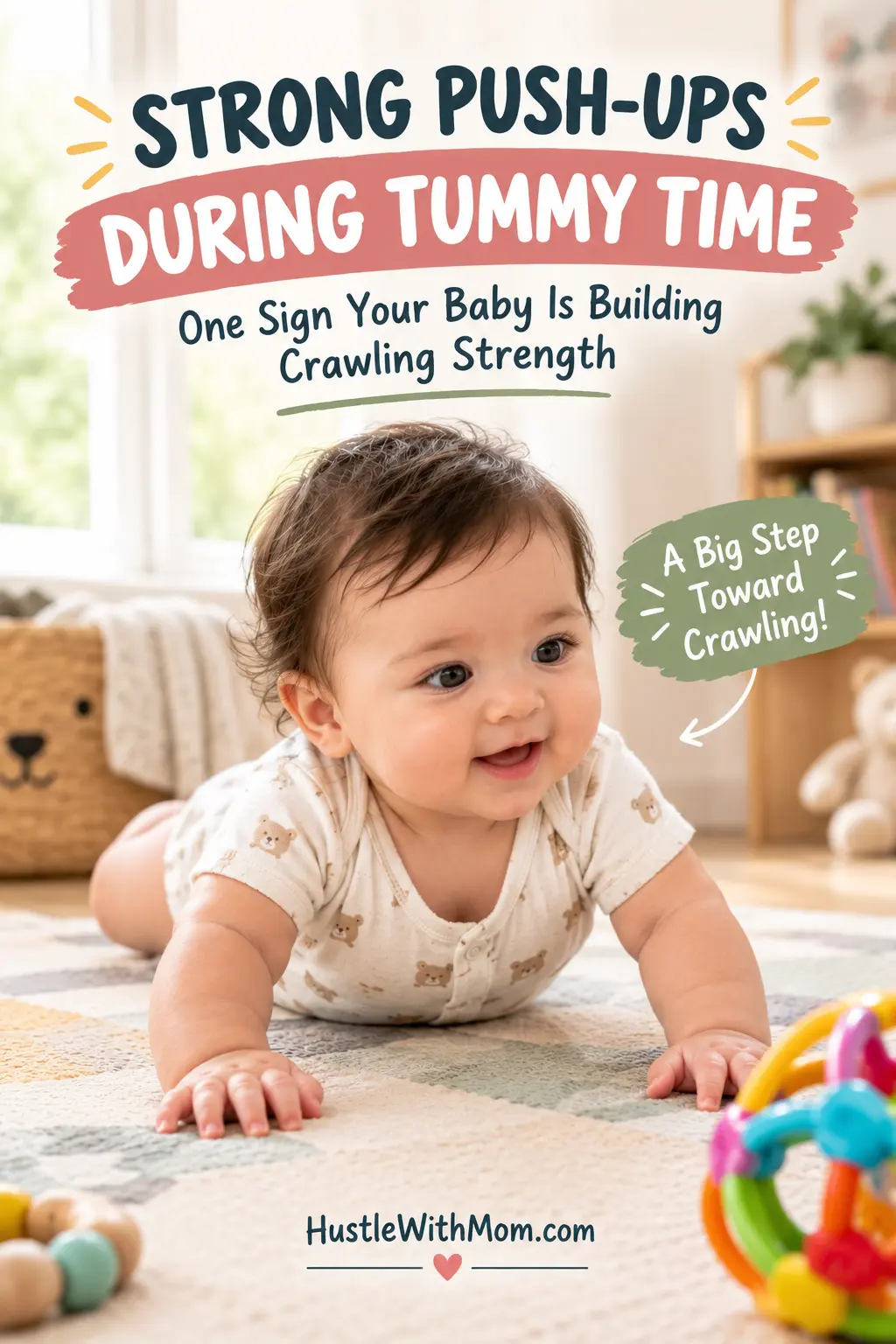
If your baby can push their chest and head up off the floor using straight arms during tummy time, that’s a huge strength indicator. This is basically baby weightlifting, and it builds the shoulder and arm strength needed to support their body weight later.
2. Rocking on Hands and Knees
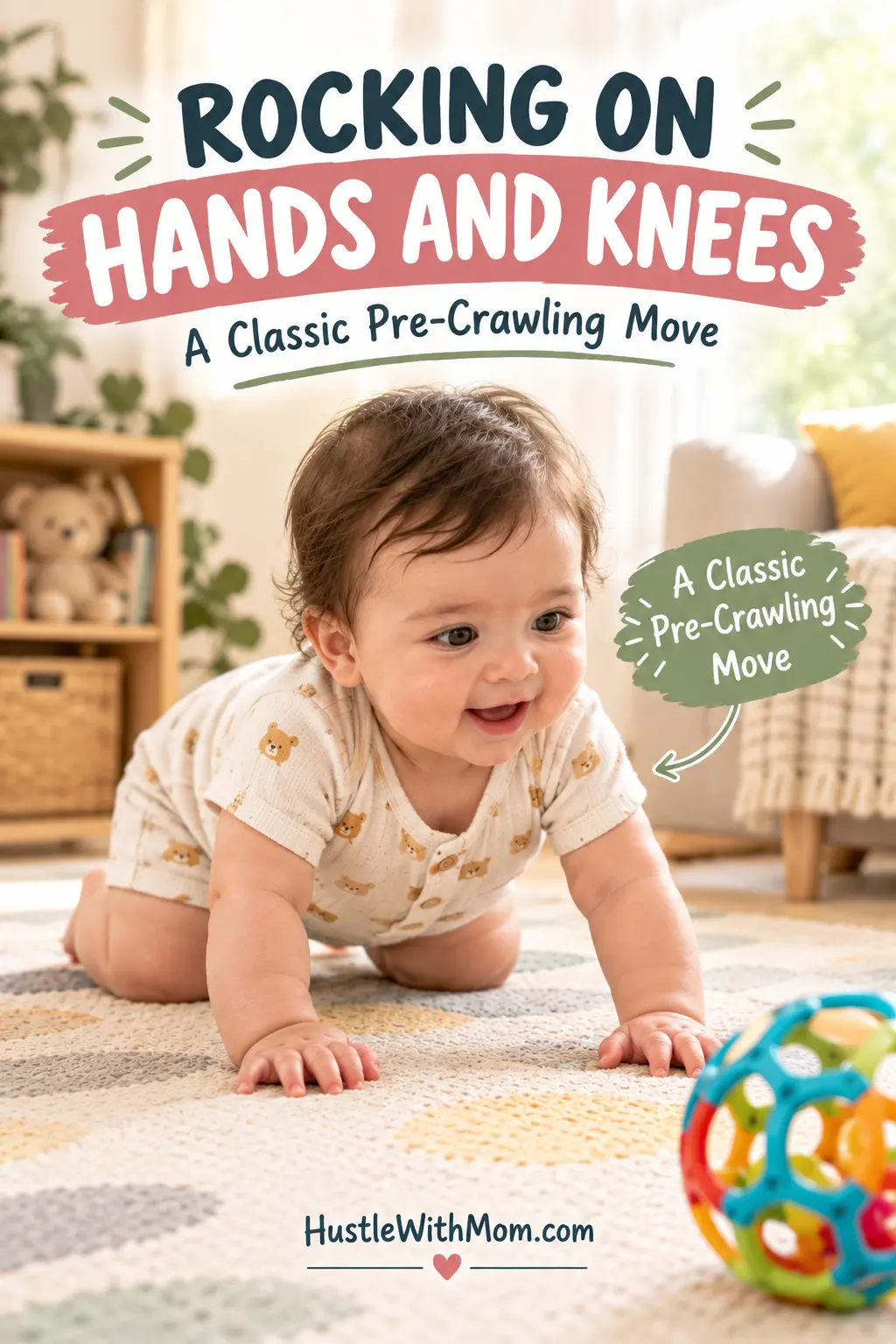
This is the classic “about to launch” sign. Your baby gets into an all-fours position and rocks forward and backward like they’re testing the waters. It looks funny, but it’s actually your baby practicing weight-shifting, which is the exact motion needed for real crawling.
3. Rolling Confidently in Both Directions
Rolling from back to belly and belly to back means your baby has good core strength and body awareness. This usually shows up a few weeks before any real crawling attempts.
4. Lifting Their Belly Off the Floor
Somewhere in the middle stage, babies start pushing their tummy up off the ground while keeping their hands and knees planted. It’s an awkward, wobbly little bridge position, and it’s a strong sign that crawling is close.
5. Reaching or Lunging for Things Out of Reach
Motivation matters more than people think. If your baby gets visibly frustrated reaching for a toy just out of arm’s length, that frustration is doing a lot of the developmental heavy lifting. It pushes them to figure out movement.
6. Moving Between Sitting and All-Fours
When a baby can shift from sitting up straight into a hands-and-knees position (and back again) without falling over, their balance and coordination are catching up to their strength.
7. Scooting or Pivoting on Their Belly
Some babies scoot backward before they ever go forward, which honestly confused me the first time. It’s totally normal. Others pivot in circles while lying on their belly, trying to face whatever caught their attention.
8. Increased Kicking and Arm Coordination
You’ll notice more purposeful kicking and less random flailing. The arms and legs start working together instead of independently, which is a direct precursor to the alternating crawl pattern.
9. Pulling Up to Stand (Yes, Even This Counts)
Some babies skip traditional crawling altogether and go straight for pulling up on furniture. If your baby is doing this instead of the hands-and-knees stuff, that’s still forward progress, just a different route.
The Different Crawling Styles Babies Actually Use

Nobody warned me that crawling doesn’t always look like the picture-perfect version in baby books. Here are the common styles you might actually see:
- Classic crawl: Opposite hand and knee moving together, textbook style
- Commando (army) crawl: Belly stays on the floor, arms do all the pulling
- Bear crawl: Hands and feet on the ground, legs straight instead of bent
- Crab crawl: Moving sideways or backward before going forward
- Bottom scoot: Sitting up and scooting along using hands and legs
My son did the commando crawl for almost a month before he ever lifted his belly off the ground, and honestly, he got around faster than my daughter did with her “proper” crawl. There’s no wrong way to do this.
How to Encourage Crawling Without Forcing It
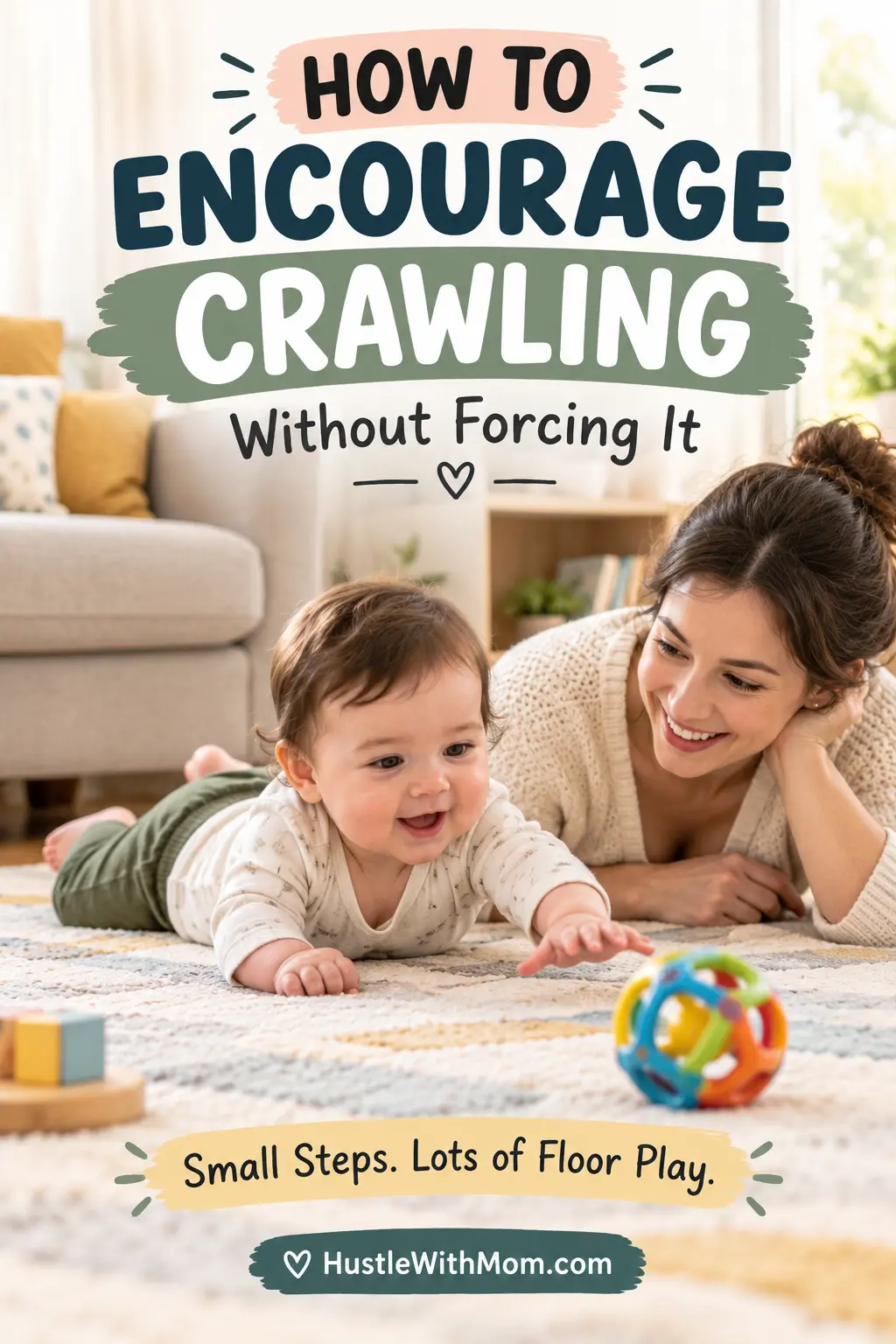
You can’t rush this milestone, but you can definitely support it.
Give plenty of tummy time. Even 10 to 15 minutes spread throughout the day builds the strength needed for crawling. If your baby hates tummy time, try doing it on your chest while lying back, it’s less intimidating for them.
Get down on the floor with them. This is also a great excuse to pull dad into the process. If you’re looking for ways to make this more of a shared job, helping dads bond with baby through floor time and tummy time sessions is a genuinely great way to build that connection early.
Place toys just slightly out of reach. Not so far that they get discouraged, just enough to motivate that first push forward. Simple, open-ended toys work best here, similar to the kind found in our roundup of the best Montessori toys for toddlers, since those tend to encourage independent movement instead of passive play.
Clear a safe crawling zone. Once your baby starts actually moving, they move fast. This is the point where a lot of parents realize they should have started baby-proofing sooner. If you haven’t already stocked up on gates, outlet covers, and corner guards, our guide on when to start buying baby stuff covers exactly when to get ahead of this. It’s also worth thinking about where all this new gear will actually go, our baby clothes and gear storage ideas post has some practical fixes for the clutter that comes with this stage.
Common Mistakes Parents Make During This Stage
Comparing timelines with other babies. I did this constantly with my first, checking baby forums and comparing notes with friends. It only made me anxious. Every baby genuinely moves at their own pace.
Skipping tummy time because the baby cries. A few minutes of fussing is normal. Skipping it entirely just delays the strength-building process.
Baby-proofing too late. Babies go from rocking on all fours to crossing the room in what feels like 48 hours. Get ahead of it before you’re chasing them out of the kitchen cabinets.
Worrying too much about “correct” crawling form. Commando crawling, scooting, bear crawling, none of it is wrong. Pediatricians care more about whether a baby is using both sides of their body than the specific style.
Running yourself into the ground trying to keep up. This stage is exhausting, full stop. If you’re feeling stretched thin chasing a newly mobile baby, these honest tips for exhausted new moms are worth a read before you burn out.
Common Mistakes Parents Make During This Stage
Comparing timelines with other babies. I did this constantly with my first, checking baby forums and comparing notes with friends. It only made me anxious. Every baby genuinely moves at their own pace.
Skipping tummy time because the baby cries. A few minutes of fussing is normal. Skipping it entirely just delays the strength-building process.
Baby-proofing too late. Babies go from rocking on all fours to crossing the room in what feels like 48 hours. Get ahead of it before you’re chasing them out of the kitchen cabinets.
Worrying too much about “correct” crawling form. Commando crawling, scooting, bear crawling, none of it is wrong. Pediatricians care more about whether a baby is using both sides of their body than the specific style.
When to Check In With Your Pediatrician
Most crawling delays are nothing to worry about, but it’s worth mentioning to your doctor if your baby:
- Shows a strong preference for one side of their body over the other
- Isn’t bearing any weight on their legs by 12 months
- Isn’t showing any interest in movement (rolling, scooting, reaching) by 9 to 10 months
- Skips crawling entirely and also isn’t pulling to stand by their first birthday
According to Healthline’s guide on infant crawling, skipping crawling altogether isn’t automatically a red flag, plenty of babies go straight to cruising and walking. But a pediatrician can rule out anything else going on with a quick check.
For a deeper breakdown of month-by-month motor milestones, Pathways.org’s crawling basics guide is a solid resource I’ve referenced more than once with my own kids.
Final Thoughts
Watching your baby figure out crawling is one of those stretches of parenting that feels endless in the moment and then is suddenly over. One day they’re rocking on all fours getting nowhere, and a few weeks later you’re pulling them out from under the couch.
Trust the process, keep the floor time consistent, and don’t stress too much about the calendar. Your baby will get there in their own way, on their own schedule, and probably at the exact moment you’ve stopped watching the clock.